A junior copywriter, a tier-one support agent, a paralegal, and a junior data analyst walk into 2026 — and three of them find an AI agent already doing 70% of their old workload. This is no longer a thought experiment. The generative AI wave that started with chatbots has matured into autonomous agents, multimodal copilots, and domain-specific systems that can reason, plan, and execute complete workflows. The top AI tools that will replace jobs in 2026 are not coming — they are already deployed inside Fortune 500 companies, eating tasks one ticket, one document, and one line of code at a time.
This guide breaks down the ten most disruptive systems, the specific roles each one targets, and — more importantly — how you can position yourself on the right side of the automation curve. You will see real product names, real capabilities, and a clear-eyed assessment of where the human edge still matters.
What Does It Mean for AI Tools to Replace Jobs in 2026?
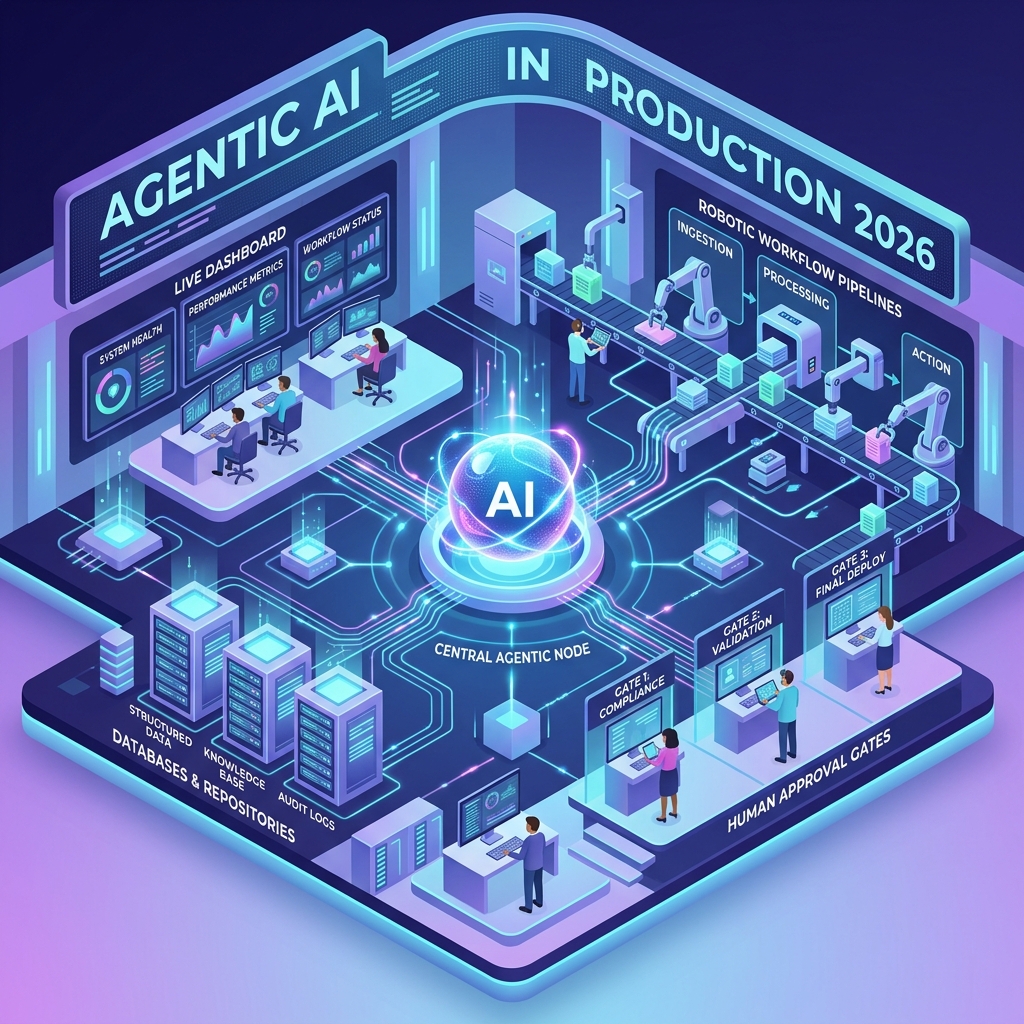
AI job replacement in 2026 refers to the automation of complete role-level workflows — not isolated tasks — by autonomous AI agents capable of perception, reasoning, tool use, and self-correction. Unlike earlier large language models that needed constant prompting, modern systems chain dozens of steps, call APIs, browse the web, write and execute code, and complete multi-hour projects with minimal supervision. The result is a measurable shift from AI assisting a worker to AI becoming the worker.
According to research summarized by the World Economic Forum’s Future of Jobs Report, structured cognitive tasks — data entry, basic accounting, customer scripting, routine writing — are the first dominoes. The roles most exposed are not blue-collar; they are the entry-level white-collar jobs that taught a generation how to climb the career ladder.
1. Autonomous Coding Agents (Replacing Junior Developers)
Tools like Devin, Cursor Composer, GitHub Copilot Workspace, and Anthropic’s Claude-powered coding agents now take a Jira ticket, clone the repo, write the patch, run the tests, and open a pull request. In 2026, the bottleneck for shipping a feature is rarely typing speed — it is judgment. That makes the junior developer’s traditional moat (writing CRUD endpoints, fixing bugs from the backlog, building boilerplate UIs) the most exposed surface in the industry.
Here is the kind of orchestration that used to take a sprint and now takes a coffee break:
# A simplified pattern of how a 2026 coding agent loops
def autonomous_coding_agent(ticket):
    plan = llm.plan(ticket)              # decompose into sub-tasks
    for step in plan:
        code = llm.write_code(step)      # generate diff
        result = sandbox.run(code)       # execute in isolated env
        if result.failed:
            code = llm.repair(code, result.error)  # self-correct
        repo.apply(code)
    repo.open_pull_request(summary=llm.summarize(plan))
The loop above — plan, act, observe, repair — is the architectural shift. It removes the need for a human to babysit each compile error. Senior engineers who learn to review, architect, and direct these agents will compound their output. Those who only write tickets-to-code will compete directly with the machine.
2. Customer Support Agents (Replacing Tier-1 and Tier-2 Reps)
Sierra, Decagon, and Intercom’s Fin are voice- and chat-native AI agents that handle full conversations end-to-end: authenticating users, refunding orders, escalating fraud cases, and updating CRM records. Unlike the scripted bots of 2020, these systems hold context across channels and resolve roughly 70–85% of inbound tickets without human handoff.
The roles most exposed: tier-1 chat reps, email support, and increasingly, voice agents in call centers. The roles still safe (for now): senior CX leads who design the agent’s policies, tone, and escalation rules.
3. AI Copywriters and Content Operations Tools
Jasper, Copy.ai, Writer, and a wave of vertical-specific tools (e.g., for SEO blog production, ad copy, or email drips) have collapsed the production cost of mid-quality content to near zero. A marketing team that needed three writers and an editor in 2022 now ships the same volume with one strategist directing an AI pipeline.
The job is not “writer” anymore — the job is “editor with taste.” The AI produces the draft; you produce the judgment about whether the draft deserves to exist.
This is one of the most visible AI tools that will replace jobs in 2026, especially for entry-level content marketing roles. The defensible skill is editorial judgment, distribution strategy, and original reporting — none of which a generator can fake without ground-truth sources.
4. Legal AI: Harvey, Spellbook, and Contract Review Agents
Harvey AI, used by firms like Allen & Overy, drafts memos, summarizes deposition transcripts, and reviews contracts at speeds no associate can match. Spellbook lives inside Microsoft Word and redlines agreements clause-by-clause. Paralegal and junior associate hours billed for document review — historically the cash cow that subsidized law firm training programs — are shrinking fast.
The interesting second-order effect: when junior work disappears, the apprenticeship pipeline that produced senior partners breaks. Law firms in 2026 are still figuring out how to train the next generation of lawyers when the AI handles what juniors used to learn from.
5. AI Data Analysts and BI Copilots
Tools like ThoughtSpot Sage, Hex Magic, Snowflake Cortex, and Tableau’s Einstein Copilot let a non-technical operator ask questions in English and receive correct SQL, charts, and narrative insights. The role of “the analyst who pulls a number for the VP” is disappearing because the VP can now pull it themselves.
What the AI cannot do well: framing the right question, knowing which data is dirty, and recognizing when a correlation is a coincidence. Senior analysts who own the question, not the query, remain indispensable.
-- A natural language prompt:
-- "Show me weekly active users in Q1 2026, broken down by acquisition channel"

-- The AI generates:
SELECT
    DATE_TRUNC('week', event_ts) AS week,
    acquisition_channel,
    COUNT(DISTINCT user_id) AS wau
FROM events
WHERE event_ts BETWEEN '2026-01-01' AND '2026-03-31'
GROUP BY 1, 2
ORDER BY 1, 2;
The query above used to be a 30-minute task for a junior analyst, including the back-and-forth to clarify “which week” and “which channel definition.” In 2026, it is a 15-second turnaround inside the BI tool itself.
6. AI Recruiters and Sourcing Agents
Eightfold, Paradox (Olivia), and Moveworks’ HR agents now read resumes, schedule interviews, run pre-screening conversations, and rank candidates. For high-volume roles — retail, logistics, contact centers — the entire top-of-funnel is automated. Recruiters who spent their day on LinkedIn InMail are being repositioned into candidate experience and hiring manager partnership roles.
7. Design AI: Figma AI, Canva Magic Studio, and Generative UI
Figma’s AI features generate full screen designs from a prompt, fill in placeholder copy, and propose component variants. Canva Magic Studio does the same for marketing collateral. The exposed roles are junior visual designers and production artists who built decks, ad creatives, and landing-page mockups by hand.
The skills that hold value: brand strategy, design systems thinking, and the rare ability to know why a layout works — not just to produce twenty variants and pick one.
8. AI Accountants and Bookkeeping Agents
Pilot, Digits, and Intuit’s generative AI features now auto-categorize transactions, reconcile accounts, flag anomalies, and even draft month-end close narratives. Small business bookkeeping — historically a stable freelance career — is one of the most directly disrupted niches. The CPAs who survive are those who specialize in advisory work: tax strategy, M&A, and complex compliance.
9. AI Sales Development Reps (SDRs)
11x.ai, Artisan, and Regie.ai sell themselves as “digital workers” — full SDRs with names, photos, and quota responsibilities. They scrape lead data, write personalized outreach, book meetings, and update Salesforce. Companies that previously hired ten human SDRs at $70K each are now running two human reps plus a fleet of AI ones at a fraction of the cost.
10. Multimodal Personal Assistants and Knowledge Workers
The final and most general category: AI agents that act as a chief-of-staff. Microsoft Copilot, Google’s Gemini for Workspace, and Anthropic’s computer-use capabilities can read your inbox, summarize meetings, draft replies, prepare slide decks, and run multi-step research. The role under pressure here is the executive assistant — and increasingly, the operations associate who lived in spreadsheets and Slack.
Comparison: Which AI Tools Replace Which Jobs?
| AI Tool Category | Primary Roles Affected | Risk Level (2026) | Where Humans Still Win |
|---|---|---|---|
| Autonomous coding agents | Junior dev, QA tester | High | Architecture, code review, ambiguity |
| CX agents (Sierra, Decagon) | Tier-1/2 support | Very high | Edge cases, escalation design |
| AI copywriters | Content writer, copywriter | High | Original reporting, editorial taste |
| Legal AI (Harvey, Spellbook) | Paralegal, junior associate | High | Negotiation, court strategy |
| BI copilots | Junior data analyst | High | Question framing, data ethics |
| HR / sourcing agents | Recruiter (high-volume) | Medium-high | Executive search, culture fit |
| Design AI | Production designer | Medium-high | Brand strategy, systems thinking |
| AI bookkeeping | Bookkeeper, AP/AR clerk | Very high | Tax strategy, advisory |
| AI SDRs | Sales development rep | Very high | Complex enterprise sales |
| Multimodal assistants | EA, ops associate | Medium-high | Judgment, discretion, trust |
Common Pitfalls When Predicting AI Job Replacement
Plenty of confident takes about AI replacing jobs turn out to be wrong. A few traps to avoid in your own thinking:
- Confusing demos with deployments. A flashy product launch video is not the same as a system that survives a Monday morning at a real company. Most enterprises are still 12–24 months behind the frontier.
- Ignoring the “last 20%” problem. AI handles 80% of a workflow easily; the remaining 20% — exceptions, edge cases, regulated steps — often requires more human time than the original 80%.
- Underestimating Jevons paradox. When a task gets cheaper, demand for it often grows. Cheap code generation may produce more software jobs overall, just different ones.
- Overlooking liability. A human accountant is legally accountable in ways an AI is not. Regulated professions degrade slower than unregulated ones.
How to Future-Proof Your Career Against AI Tools in 2026
The honest answer is not “learn to code” — that ship has changed direction. The durable strategies in 2026 look more like this:
- Become an AI orchestrator in your domain. Whatever your field, the person who knows how to direct, evaluate, and improve AI output for that field will out-earn pure executors by a wide margin.
- Move up the abstraction stack. If you wrote SQL, learn data modeling. If you wrote copy, learn brand strategy. If you wrote code, learn system design. The AI eats the executable layer, not the strategic one.
- Develop tacit, human-only skills. Negotiation, taste, leadership, in-person trust-building, ethics — these compound when machines commoditize the explicit skills.
- Build with AI publicly. Ship a side project, write about it, and demonstrate fluency. The label “AI-native” on your resume in 2026 means more than any specific certification.
For a deeper foundation, the Andrew Ng Machine Learning specialization and the official OpenAI API documentation are still the highest-leverage starting points to understand what these systems actually do under the hood.
Frequently Asked Questions
Will AI tools really replace jobs in 2026, or just augment them?
Both — and the framing matters. Tasks within jobs are being replaced; entire jobs are being restructured. A 2026 marketing role still exists, but it now produces five times the output with one person plus AI instead of a five-person team. Net effect for the displaced four people: they need to find a new role.
Which jobs are safest from AI replacement in 2026?
Roles that require physical presence in unstructured environments (electricians, nurses, plumbers), high-trust human relationships (therapists, executive coaches, sales to the C-suite), and regulated decision-making with personal liability (surgeons, judges, senior auditors) remain the most resilient. Highly creative leadership roles also stay safe because they trade on taste and reputation, not throughput.
How fast will these AI tools be adopted by employers?
Adoption is bimodal. Tech-forward startups deploy AI agents within weeks of release. Regulated enterprises (banks, hospitals, government) move on a 2–5 year cycle because of compliance, security review, and change management. If you work at a Fortune 500, you have more runway than headlines suggest — but not unlimited.
Should I learn to code if AI is writing code?
Yes, but with a different goal than ten years ago. You are not learning to compete with the code generator on speed; you are learning to read, review, and direct it. A literate AI orchestrator who understands code beats a non-technical product manager every time, even if neither writes code from scratch.
What is the difference between an AI agent and a chatbot?
A chatbot answers a single message. An AI agent receives a goal, plans a sequence of steps, calls external tools (browsers, APIs, databases), observes the results, and adapts. Agents are the architecture behind most of the AI tools that will replace jobs in 2026 — the autonomy is the disruption.
Are there ethical concerns with AI replacing workers?
Yes, and they are unsolved. Mass displacement of entry-level white-collar workers concentrates economic gains among capital holders, breaks traditional career ladders, and raises serious questions about retraining, social safety nets, and inequality. Organizations like the Partnership on AI are studying these dynamics, but policy is moving slower than deployment.
Conclusion: Position Yourself Above the Automation Line
The top AI tools that will replace jobs in 2026 are not science fiction — they are line items in next quarter’s enterprise software budget. Coding agents, customer support agents, content generators, legal AI, BI copilots, recruiting bots, design AI, bookkeeping agents, AI SDRs, and multimodal assistants together cover a meaningful share of entry-level white-collar work.
The takeaway is not panic; it is repositioning. The workers who thrive in 2026 will be those who treat AI as a force multiplier, climb the abstraction stack, and double down on the human-only skills — judgment, taste, relationships, and accountability — that no agent can clone. The automation line is moving up. Your job is to make sure you are above it before the next model release.