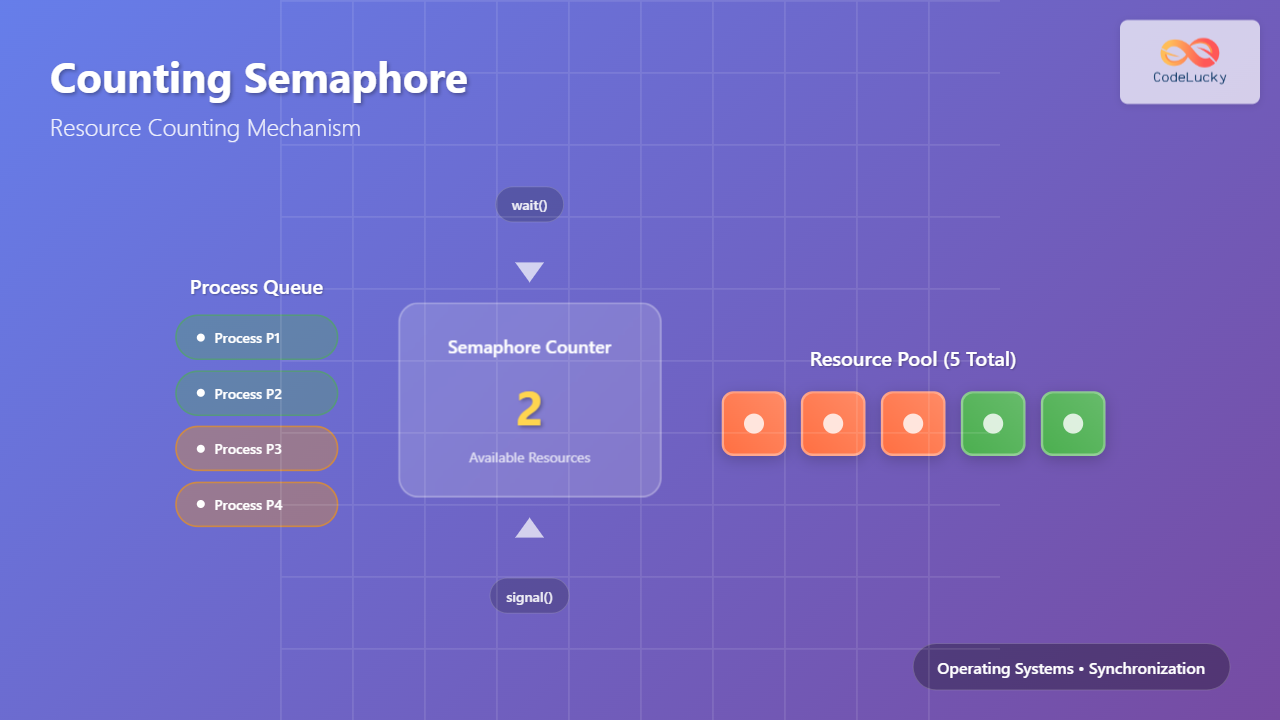
Counting semaphores are fundamental synchronization primitives in operating systems that manage access to a finite number of identical resources. Unlike binary semaphores that allow only one process at a time, counting semaphores can permit multiple processes to access shared resources simultaneously, making them essential for resource management in concurrent programming.
What is a Counting Semaphore?
A counting semaphore is a synchronization mechanism that maintains an integer value representing the number of available resources. This value can range from zero to a predefined maximum, allowing multiple processes to acquire resources concurrently until the limit is reached. When no resources are available, processes must wait until another process releases a resource.

Key Components and Operations
Semaphore Structure
A counting semaphore consists of two main components:
- Counter Value: An integer representing available resources
- Process Queue: A list of processes waiting for resources
Primary Operations
Wait Operation (P or Down)
wait(semaphore S) {
    S.value--;
    if (S.value < 0) {
        // Add calling process to S.queue
        block();
    }
}
Signal Operation (V or Up)
signal(semaphore S) {
    S.value++;
    if (S.value <= 0) {
        // Remove a process from S.queue
        wakeup(process);
    }
}
Implementation Example
Let’s examine a practical implementation of a counting semaphore in C:
#include
#include
#include
#include

#define MAX_RESOURCES 3
#define NUM_PROCESSES 5

sem_t resource_semaphore;

void* process_function(void* arg) {
    int process_id = *(int*)arg;

    printf("Process %d requesting resource...\n", process_id);

    // Wait for resource (decrement semaphore)
    sem_wait(&resource_semaphore);

    printf("Process %d acquired resource\n", process_id);

    // Simulate resource usage
    sleep(2);

    printf("Process %d releasing resource\n", process_id);

    // Release resource (increment semaphore)
    sem_post(&resource_semaphore);

    return NULL;
}

int main() {
    pthread_t processes[NUM_PROCESSES];
    int process_ids[NUM_PROCESSES];

    // Initialize counting semaphore with 3 resources
    sem_init(&resource_semaphore, 0, MAX_RESOURCES);

    // Create processes
    for (int i = 0; i < NUM_PROCESSES; i++) {
        process_ids[i] = i + 1;
        pthread_create(&processes[i], NULL, process_function, &process_ids[i]);
    }

    // Wait for all processes to complete
    for (int i = 0; i < NUM_PROCESSES; i++) {
        pthread_join(processes[i], NULL);
    }

    sem_destroy(&resource_semaphore);
    return 0;
}
Expected Output:
Process 1 requesting resource...
Process 2 requesting resource...
Process 3 requesting resource...
Process 4 requesting resource...
Process 5 requesting resource...
Process 1 acquired resource
Process 2 acquired resource
Process 3 acquired resource
Process 1 releasing resource
Process 4 acquired resource
Process 2 releasing resource
Process 5 acquired resource
Process 3 releasing resource
Process 4 releasing resource
Process 5 releasing resource
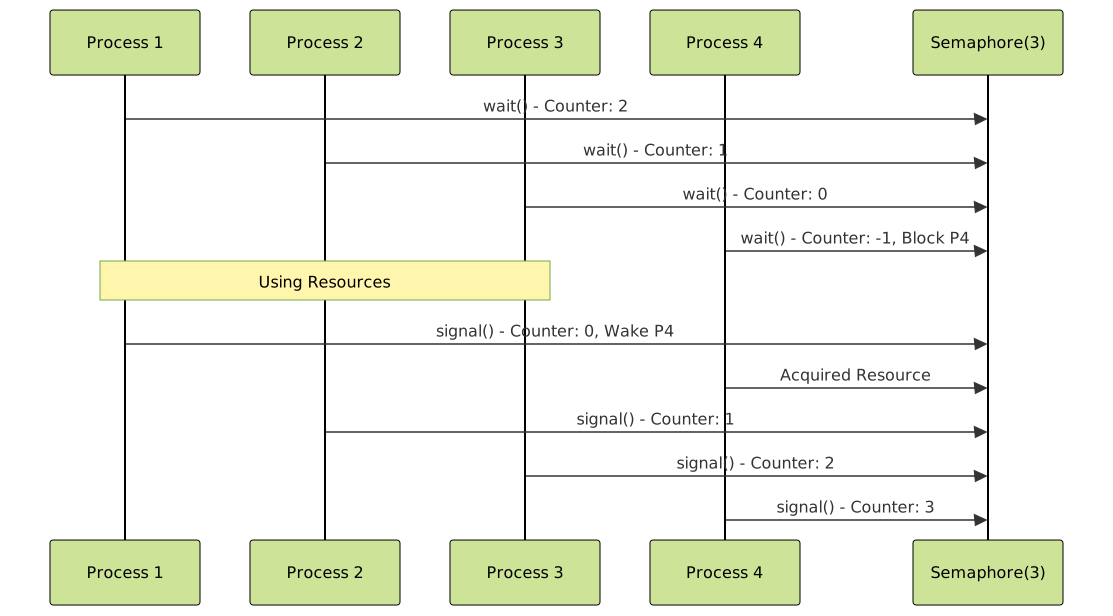
Resource Allocation Visualization
Common Use Cases
Database Connection Pool
import threading
import time
import random

class DatabaseConnectionPool:
    def __init__(self, max_connections):
        self.semaphore = threading.Semaphore(max_connections)
        self.connections = []

    def get_connection(self):
        self.semaphore.acquire()  # Wait for available connection
        print(f"Thread {threading.current_thread().name} acquired connection")
        return "Database Connection"

    def release_connection(self, connection):
        print(f"Thread {threading.current_thread().name} released connection")
        self.semaphore.release()  # Signal connection availability

def worker(pool, worker_id):
    connection = pool.get_connection()

    # Simulate database operation
    time.sleep(random.uniform(1, 3))

    pool.release_connection(connection)

# Create connection pool with 2 connections
pool = DatabaseConnectionPool(2)

# Create 5 worker threads
threads = []
for i in range(5):
    t = threading.Thread(target=worker, args=(pool, i), name=f"Worker-{i}")
    threads.append(t)
    t.start()

for t in threads:
    t.join()
Print Spooler Management

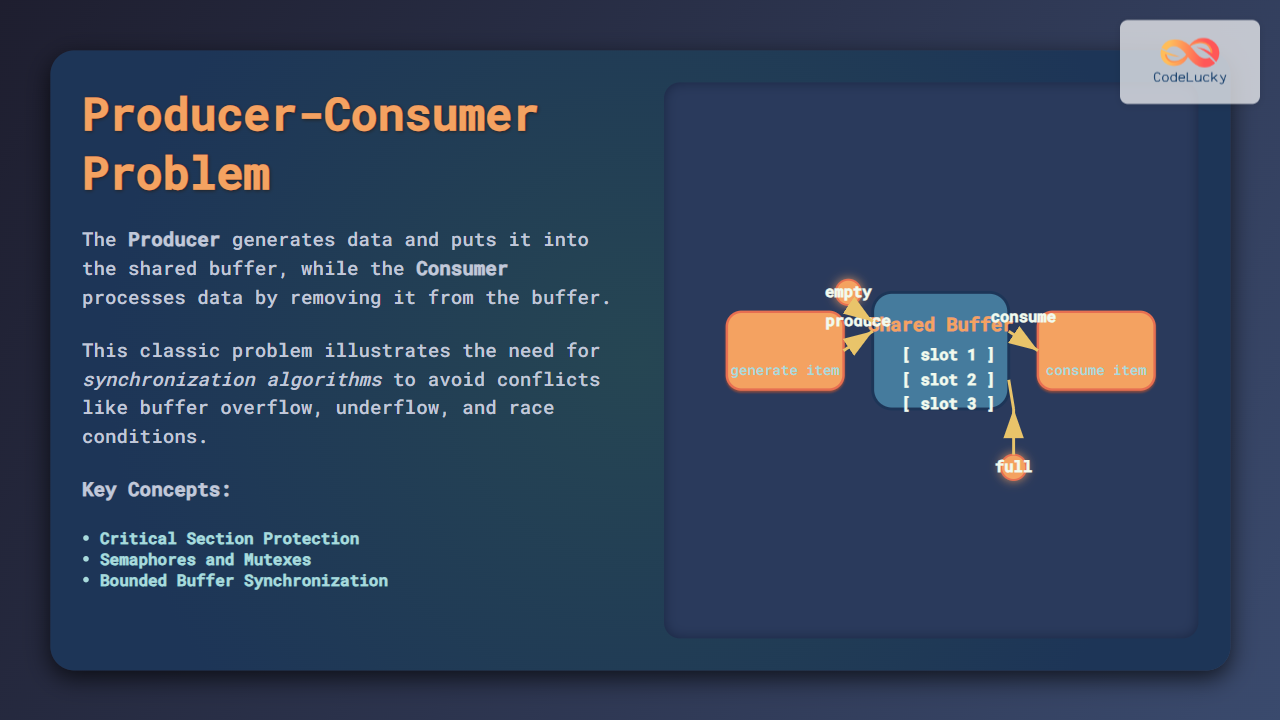
Producer-Consumer with Buffer Limit
#include
#include
#include
#include

#define BUFFER_SIZE 5

int buffer[BUFFER_SIZE];
int in = 0, out = 0;

sem_t empty_slots;  // Count of empty buffer slots
sem_t full_slots;   // Count of filled buffer slots
pthread_mutex_t buffer_mutex;

void* producer(void* arg) {
    int producer_id = *(int*)arg;

    for (int i = 0; i < 3; i++) {
        int item = producer_id * 10 + i;

        // Wait for empty slot
        sem_wait(∅_slots);

        // Lock buffer access
        pthread_mutex_lock(&buffer_mutex);

        buffer[in] = item;
        printf("Producer %d produced item %d at position %d\n",
               producer_id, item, in);
        in = (in + 1) % BUFFER_SIZE;

        pthread_mutex_unlock(&buffer_mutex);

        // Signal filled slot
        sem_post(&full_slots);

        sleep(1);
    }
    return NULL;
}

void* consumer(void* arg) {
    int consumer_id = *(int*)arg;

    for (int i = 0; i < 2; i++) {
        // Wait for filled slot
        sem_wait(&full_slots);

        // Lock buffer access
        pthread_mutex_lock(&buffer_mutex);

        int item = buffer[out];
        printf("Consumer %d consumed item %d from position %d\n",
               consumer_id, item, out);
        out = (out + 1) % BUFFER_SIZE;

        pthread_mutex_unlock(&buffer_mutex);

        // Signal empty slot
        sem_post(∅_slots);

        sleep(2);
    }
    return NULL;
}

int main() {
    pthread_t producers[2], consumers[3];
    int producer_ids[2] = {1, 2};
    int consumer_ids[3] = {1, 2, 3};

    // Initialize semaphores
    sem_init(∅_slots, 0, BUFFER_SIZE);  // All slots empty initially
    sem_init(&full_slots, 0, 0);             // No slots filled initially
    pthread_mutex_init(&buffer_mutex, NULL);

    // Create producers
    for (int i = 0; i < 2; i++) {
        pthread_create(&producers[i], NULL, producer, &producer_ids[i]);
    }

    // Create consumers
    for (int i = 0; i < 3; i++) {
        pthread_create(&consumers[i], NULL, consumer, &consumer_ids[i]);
    }

    // Wait for completion
    for (int i = 0; i < 2; i++) {
        pthread_join(producers[i], NULL);
    }
    for (int i = 0; i < 3; i++) {
        pthread_join(consumers[i], NULL);
    }

    // Cleanup
    sem_destroy(∅_slots);
    sem_destroy(&full_slots);
    pthread_mutex_destroy(&buffer_mutex);

    return 0;
}
Counting Semaphore vs Binary Semaphore

| Aspect | Binary Semaphore | Counting Semaphore |
|---|---|---|
| Value Range | 0 or 1 | 0 to N |
| Purpose | Mutual Exclusion | Resource Counting |
| Concurrent Access | One process only | Multiple processes (up to N) |
| Use Cases | Critical sections | Resource pools, buffers |
Implementation Considerations
Atomic Operations
Semaphore operations must be atomic to prevent race conditions:
// Non-atomic implementation (WRONG)
void unsafe_wait(semaphore* s) {
    s->value--;           // Not atomic
    if (s->value < 0) {   // Race condition possible
        block_process();
    }
}

// Atomic implementation (CORRECT)
void safe_wait(semaphore* s) {
    disable_interrupts();
    s->value--;
    if (s->value < 0) {
        add_to_queue(current_process);
        enable_interrupts();
        block_process();
    } else {
        enable_interrupts();
    }
}
Starvation Prevention
To prevent starvation, implement fair queuing mechanisms:
- FIFO Queue: First process to wait gets first access
- Priority Queue: Higher priority processes served first
- Aging: Increase priority of waiting processes over time
Best Practices and Common Pitfalls
Best Practices
- Initialize Properly: Set initial value equal to available resources
- Balanced Operations: Every wait() should have corresponding signal()
- Error Handling: Check return values of semaphore operations
- Resource Cleanup: Always destroy semaphores when done
Common Pitfalls
Deadlock Example
// DEADLOCK SCENARIO
sem_t resource1, resource2;

void process_a() {
    sem_wait(&resource1);  // Acquire resource1
    sem_wait(&resource2);  // Wait for resource2 (may deadlock)

    // Critical section

    sem_post(&resource2);
    sem_post(&resource1);
}

void process_b() {
    sem_wait(&resource2);  // Acquire resource2
    sem_wait(&resource1);  // Wait for resource1 (may deadlock)

    // Critical section

    sem_post(&resource1);
    sem_post(&resource2);
}
Solution: Ordered Resource Allocation
// DEADLOCK PREVENTION
void process_a() {
    sem_wait(&resource1);  // Always acquire resource1 first
    sem_wait(&resource2);  // Then resource2

    // Critical section

    sem_post(&resource2);  // Release in reverse order
    sem_post(&resource1);
}

void process_b() {
    sem_wait(&resource1);  // Same order as process_a
    sem_wait(&resource2);

    // Critical section

    sem_post(&resource2);
    sem_post(&resource1);
}
Performance Analysis
Time Complexity
- Wait Operation: O(1) – Constant time for counter decrement and queue operations
- Signal Operation: O(1) – Constant time for counter increment and process wakeup
Space Complexity
- Semaphore Structure: O(1) – Fixed size regardless of process count
- Process Queue: O(n) – Where n is the number of waiting processes
Advanced Applications
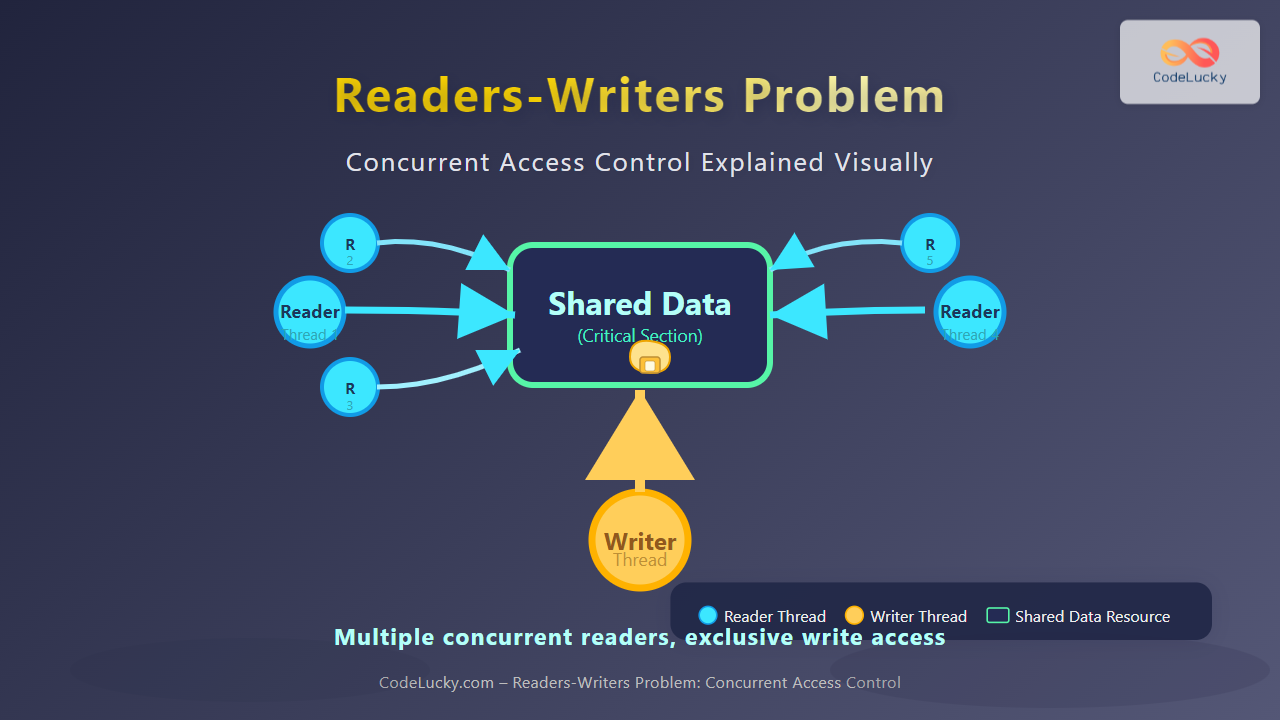
Read-Write Lock Implementation
typedef struct {
    sem_t readers_sem;     // Controls reader access
    sem_t writers_sem;     // Controls writer access
    int reader_count;      // Number of active readers
    pthread_mutex_t count_mutex;  // Protects reader_count
} rwlock_t;

void rwlock_init(rwlock_t* lock) {
    sem_init(&lock->readers_sem, 0, 1);
    sem_init(&lock->writers_sem, 0, 1);
    lock->reader_count = 0;
    pthread_mutex_init(&lock->count_mutex, NULL);
}

void read_lock(rwlock_t* lock) {
    pthread_mutex_lock(&lock->count_mutex);
    lock->reader_count++;
    if (lock->reader_count == 1) {
        sem_wait(&lock->writers_sem);  // First reader blocks writers
    }
    pthread_mutex_unlock(&lock->count_mutex);
}

void read_unlock(rwlock_t* lock) {
    pthread_mutex_lock(&lock->count_mutex);
    lock->reader_count--;
    if (lock->reader_count == 0) {
        sem_post(&lock->writers_sem);  // Last reader unblocks writers
    }
    pthread_mutex_unlock(&lock->count_mutex);
}

void write_lock(rwlock_t* lock) {
    sem_wait(&lock->writers_sem);  // Exclusive access for writers
}

void write_unlock(rwlock_t* lock) {
    sem_post(&lock->writers_sem);  // Release exclusive access
}
Conclusion
Counting semaphores are powerful synchronization primitives that enable efficient resource management in concurrent systems. They provide a flexible mechanism for controlling access to multiple identical resources while preventing race conditions and ensuring proper synchronization between processes.
Key takeaways include understanding the fundamental operations, implementing proper error handling, avoiding common pitfalls like deadlocks, and choosing appropriate use cases. Whether managing database connections, printer queues, or buffer pools, counting semaphores provide the foundation for robust concurrent programming in operating systems.
Mastering counting semaphores is essential for system programmers working with multi-threaded applications, operating system kernels, and distributed systems where resource contention and synchronization are critical concerns.
Related Posts
Binary Semaphore: Complete Guide to Mutual Exclusion Implementation in Operating Systems
What is a Binary Semaphore? A binary semaphore is a synchronization primitive in operating systems that can hold only two...

Mutex vs Semaphore: Complete Guide to Synchronization Primitives in Operating Systems
In the world of concurrent programming and operating systems, synchronization primitives are essential tools that prevent race conditions and ensure...

Thread Synchronization: Mutexes, Semaphores and Deadlocks in Operating Systems
Introduction to Thread Synchronization Thread synchronization is a fundamental concept in operating systems that ensures multiple threads can safely access...
Thread in Operating System: Lightweight Processes and Multithreading Explained
What are Threads in Operating Systems? A thread is the smallest unit of execution within a process that can be...
Multithreading in Operating Systems: Benefits, Challenges, and Implementation Guide
What is Multithreading in Operating Systems? Multithreading is a fundamental concept in modern operating systems that allows a single process...

Critical Section Problem: Complete Guide to Mutual Exclusion Solutions in Operating Systems
What is the Critical Section Problem? The critical section problem is a fundamental challenge in operating systems where multiple processes...

Process Synchronization: Critical Sections and Race Conditions in Operating Systems
Introduction to Process Synchronization Process synchronization is a fundamental concept in operating systems that ensures multiple processes can safely access...

Lamport’s Bakery Algorithm: Complete Guide to N-Process Mutual Exclusion
Lamport's Bakery Algorithm stands as one of the most elegant solutions to the N-process mutual exclusion problem in concurrent programming....

Thread vs Process: Complete Guide to Differences and When to Use Each
Understanding the fundamental differences between threads and processes is crucial for system programming, application design, and performance optimization. While both...

Monitor in Operating System: High-level Synchronization for Process Coordination
What is a Monitor in Operating System? A monitor is a high-level synchronization construct in operating systems that provides a...
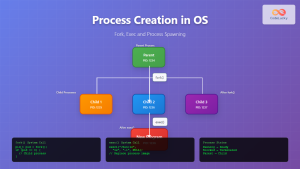
Process Creation in OS: Fork, Exec and Process Spawning Complete Guide
Introduction to Process Creation in Operating Systems Process creation is one of the fundamental concepts in operating systems that enables...
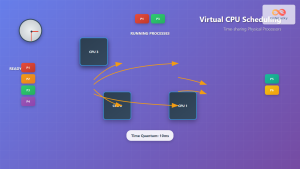
Virtual CPU Scheduling: Complete Guide to Time-sharing Physical Processors
Virtual CPU scheduling is the cornerstone of modern operating systems, enabling multiple processes to share limited physical processors efficiently. This...