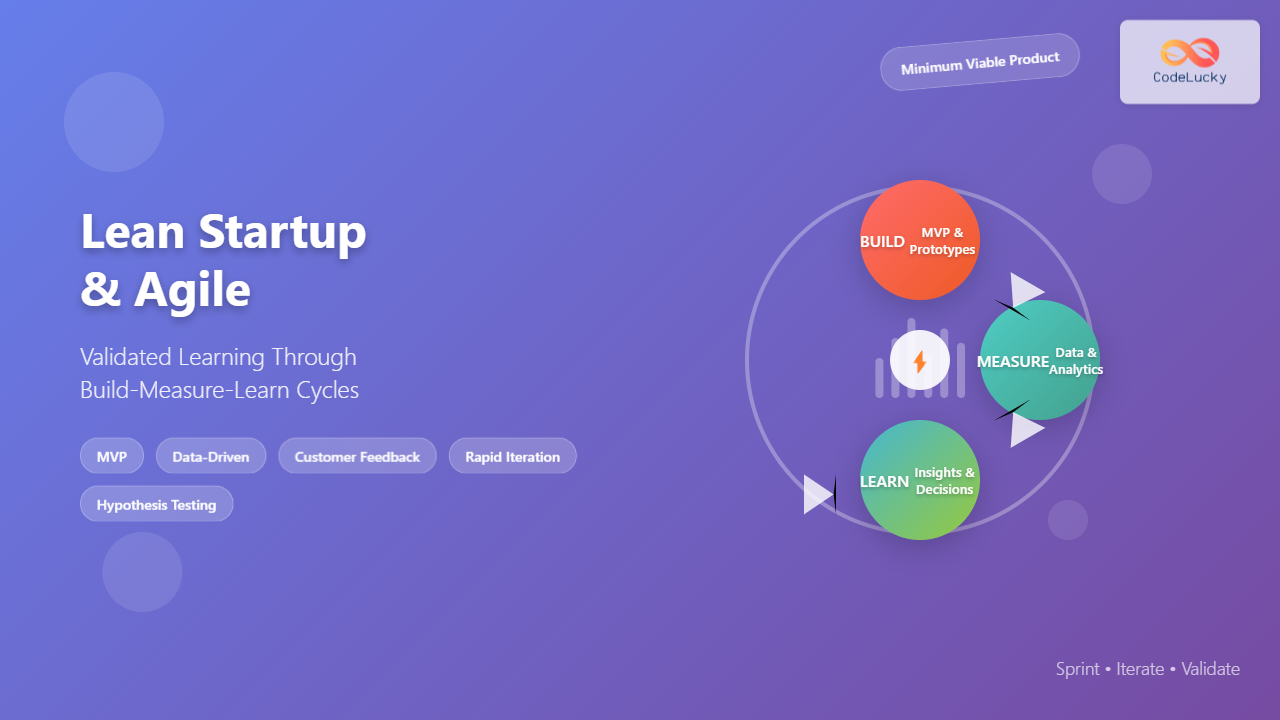
The Build-Measure-Learn cycle stands as one of the most powerful frameworks in modern product development, transforming how teams approach innovation and reduce the risk of building products nobody wants. This iterative methodology, popularized by Eric Ries in “The Lean Startup,” has become essential for agile teams seeking to create customer-centric solutions efficiently.
What is the Build-Measure-Learn Cycle?
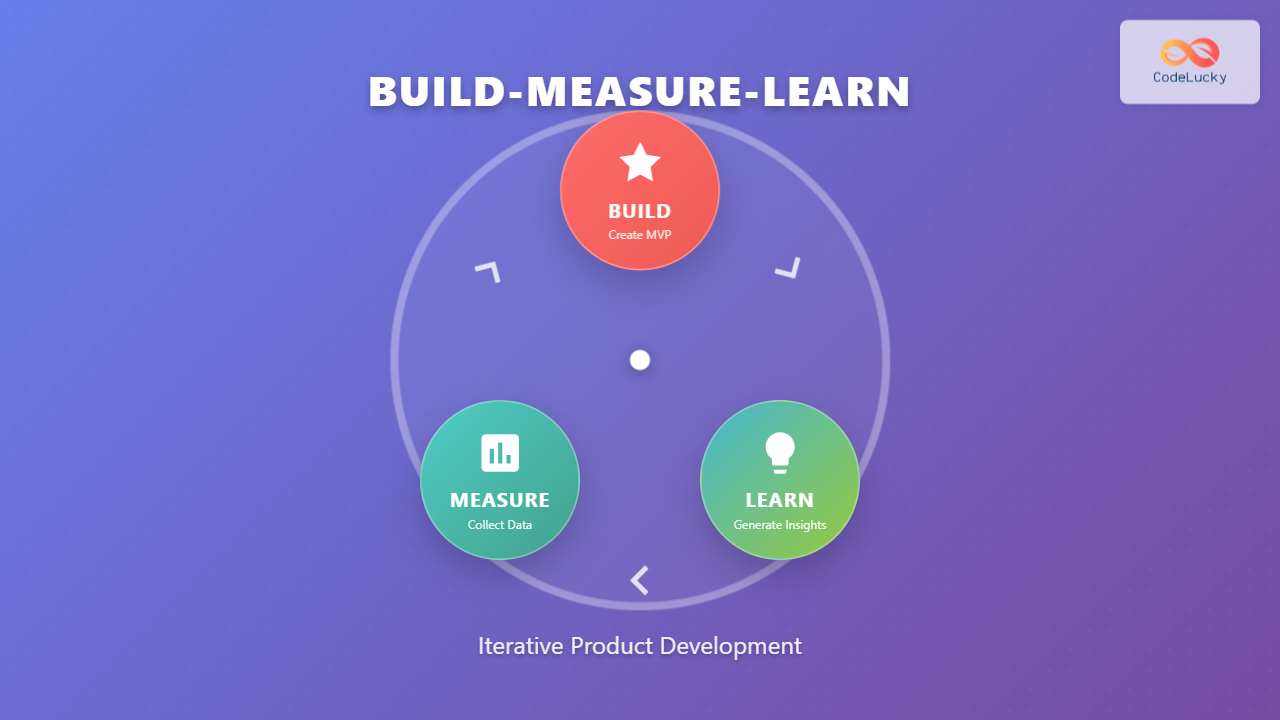
The Build-Measure-Learn cycle is a feedback loop that helps product teams validate their assumptions quickly and cost-effectively. Rather than spending months or years developing a complete product based on untested hypotheses, teams build minimal viable products (MVPs), measure real user behavior, and learn from the data to inform their next iteration.
This approach fundamentally shifts the traditional product development mindset from “build it and they will come” to “learn what they want, then build it.” The cycle consists of three core phases that work together to minimize waste and maximize learning.
The Three Phases of Build-Measure-Learn
Build Phase: Creating Your MVP
The Build phase focuses on creating the smallest possible version of your product that can test your core hypothesis. This isn’t about building a feature-complete product—it’s about building just enough to learn something valuable about your customers and their needs.
Key principles for the Build phase:
- Start with the riskiest assumptions: Identify the biggest unknowns in your product hypothesis and build specifically to test those first.
- Embrace simplicity: Remove any features that don’t directly contribute to testing your hypothesis. Every additional feature increases development time and complexity.
- Focus on learning objectives: Before building anything, clearly define what you want to learn and how you’ll measure success or failure.
- Speed over perfection: Build quickly to get feedback fast. Polish can come later once you’ve validated the core concept.
Common MVP formats include landing pages, mockups, wizard of oz prototypes, concierge services, and single-feature applications. The key is choosing the format that best tests your specific hypothesis with minimal investment.
Measure Phase: Gathering Meaningful Data
The Measure phase involves collecting data about how users interact with your MVP. This goes beyond vanity metrics like page views or downloads to focus on actionable metrics that inform decision-making.
Essential measurement strategies:
- Define success metrics upfront: Before launching your MVP, establish clear criteria for what constitutes success, failure, or the need for pivoting.
- Use cohort analysis: Track user behavior over time to understand retention patterns and identify when users find real value in your product.
- Implement A/B testing: Compare different versions of features to understand what resonates best with your target audience.
- Gather qualitative feedback: Combine quantitative data with user interviews and surveys to understand the “why” behind user behavior.
Innovation accounting, a concept central to lean startup methodology, helps teams track progress when traditional financial metrics don’t apply. This involves measuring learning milestones, validated learning, and progress toward product-market fit.
Learn Phase: Turning Data into Insights
The Learn phase transforms raw data into actionable insights that guide your next iteration. This is where teams decide whether to persevere with their current approach, pivot to a new strategy, or abandon the idea entirely.
Critical learning activities:
- Pattern recognition: Analyze data to identify trends, user segments, and unexpected behaviors that reveal opportunities or problems.
- Hypothesis validation: Determine whether your original assumptions were correct, partially correct, or completely wrong based on the evidence.
- Root cause analysis: When metrics don’t meet expectations, dig deeper to understand the underlying reasons rather than jumping to quick fixes.
- Strategic decision making: Use insights to make informed decisions about feature priorities, target markets, and resource allocation.
The learning phase often reveals that initial assumptions were incorrect, leading to valuable pivots that redirect the product toward genuine market needs.
Implementing Build-Measure-Learn in Agile Teams
Integration with Scrum and Kanban
Build-Measure-Learn integrates naturally with existing agile frameworks. In Scrum, each sprint can represent a complete Build-Measure-Learn cycle, with sprint planning focused on hypothesis formation, sprint execution on building and measuring, and retrospectives on learning and planning the next cycle.
For Kanban teams, the workflow can include columns for “Hypothesis,” “Building,” “Measuring,” and “Learning,” allowing work to flow continuously through the cycle while maintaining visibility into each phase.
Cross-Functional Collaboration
Successful implementation requires tight collaboration between product managers, developers, designers, and data analysts. Product managers define hypotheses and success criteria, developers build MVPs quickly, designers create user-friendly experiences for testing, and analysts provide insights from the data.
Regular cross-functional meetings during each phase ensure alignment and prevent silos that can slow down the learning process. These teams often use shared dashboards and communication tools to maintain visibility into progress and blockers.
Common Pitfalls and How to Avoid Them
Building Too Much Too Soon
Teams often fall into the trap of building more than necessary for their MVP, either due to perfectionist tendencies or fear that users won’t take a simple prototype seriously. This increases development time and makes it harder to isolate what’s actually driving user behavior.
Solution: Establish clear learning objectives before building anything, and resist the urge to add features that don’t directly contribute to testing your hypothesis.
Measuring Vanity Metrics
Focusing on metrics that look impressive but don’t indicate real business value can lead teams astray. Page views, social media followers, and download counts might feel good but don’t necessarily correlate with product success.
Solution: Identify actionable metrics that directly relate to your business model and user value proposition. Focus on engagement, retention, and conversion metrics that indicate genuine user interest.
Learning Without Action
Some teams excel at gathering data and generating insights but fail to act on what they learn. This turns the Build-Measure-Learn cycle into a Build-Measure-Analyze loop that doesn’t drive progress.
Solution: Establish clear decision-making criteria upfront and commit to acting on the insights you generate, even when they challenge your original assumptions.
Tools and Technologies for Build-Measure-Learn
Building Tools
Modern development tools enable rapid prototyping and MVP creation. No-code platforms like Webflow, Bubble, and Airtable allow teams to build functional prototypes without extensive development resources. For teams with development capacity, frameworks like React, Vue.js, and Django support rapid application development.
Measurement Tools
Analytics platforms like Google Analytics, Mixpanel, and Amplitude provide detailed insights into user behavior. A/B testing tools such as Optimizely, VWO, and Google Optimize enable controlled experiments. Customer feedback tools like Hotjar, FullStory, and Intercom help teams understand the qualitative aspects of user experience.
Learning Tools
Data visualization tools like Tableau, Power BI, and Google Data Studio help teams identify patterns in their data. Project management tools like Jira, Trello, and Notion can track hypotheses, experiments, and learnings across cycles.
Measuring Success in Build-Measure-Learn Cycles
Key Performance Indicators
Success in Build-Measure-Learn cycles is measured differently than traditional product development. Key indicators include cycle time (how quickly teams move through each phase), learning velocity (how much validated learning occurs per time period), and pivot efficiency (how effectively teams change direction based on insights).
Long-term Success Metrics
Over multiple cycles, teams should track progress toward product-market fit, customer acquisition cost improvements, and user lifetime value increases. These metrics indicate whether the iterative approach is driving real business value.
Advanced Build-Measure-Learn Strategies
Parallel Experimentation
Advanced teams run multiple Build-Measure-Learn cycles simultaneously, testing different aspects of their product or exploring multiple market segments. This parallel approach accelerates learning but requires careful coordination to avoid conflicting experiments.
Continuous Deployment and Feature Flags
Technical practices like continuous deployment and feature flags enable teams to move through Build-Measure-Learn cycles more rapidly. Features can be deployed to production but enabled only for specific user segments, allowing for controlled testing and rapid rollback if needed.
Customer Development Integration
Combining Build-Measure-Learn with customer development interviews provides deeper insights into user motivations and needs. This qualitative data complements quantitative metrics and often reveals opportunities that data alone might miss.
Case Studies and Real-World Applications
Startup Success Stories
Companies like Dropbox, Airbnb, and Instagram used Build-Measure-Learn principles to validate their concepts before major investments. Dropbox’s famous explainer video served as an MVP that tested demand without building the complete product. Airbnb’s founders manually photographed listings to test their marketplace concept before building automated systems.
Enterprise Applications
Large organizations increasingly adopt Build-Measure-Learn for internal innovation projects and new product lines. Companies like GE, Intuit, and Microsoft use lean startup principles to validate new business models and reduce the risk of large-scale product failures.
Building a Culture of Experimentation
Psychological Safety
Successful Build-Measure-Learn implementation requires a culture that treats failures as learning opportunities rather than career setbacks. Teams need psychological safety to propose bold hypotheses, admit when assumptions are wrong, and pivot quickly based on evidence.
Leadership Support
Leadership plays a crucial role in supporting experimentation by providing resources for rapid prototyping, accepting that not all experiments will succeed, and rewarding teams for generating valuable insights even when initial hypotheses prove incorrect.
Future of Build-Measure-Learn
AI and Machine Learning Integration
Artificial intelligence is beginning to accelerate Build-Measure-Learn cycles by automating data analysis, predicting user behavior, and even suggesting experiment designs. Machine learning algorithms can identify patterns in user data that might take human analysts much longer to discover.
Real-time Experimentation
Advances in cloud computing and analytics enable real-time experimentation where changes can be tested and measured within minutes rather than days or weeks. This acceleration allows for more rapid iteration and faster time to market.
Getting Started with Build-Measure-Learn
Teams new to Build-Measure-Learn should start small with low-risk experiments that test specific assumptions about user behavior or market demand. Begin by identifying your biggest unknown, designing a simple test to validate or invalidate that assumption, and committing to act on what you learn.
Success requires discipline to resist over-building, courage to face contradictory evidence, and persistence to iterate through multiple cycles. The teams that master this approach consistently outperform those that rely on intuition and extensive upfront planning.
The Build-Measure-Learn cycle represents a fundamental shift in how we think about product development—from a linear process of planning and execution to a continuous cycle of hypothesis testing and validated learning. By embracing this methodology, teams can reduce waste, accelerate innovation, and build products that truly serve their customers’ needs.
Related Posts
Lean Startup and Agile: Validated Learning Through Build-Measure-Learn Cycles
The intersection of Lean Startup methodology and Agile development creates a powerful framework for validated learning that transforms how organizations...
Minimum Viable Product (MVP): Complete Guide to Lean Product Development Success
In today's fast-paced digital landscape, launching a perfect product can be a recipe for disaster. The Minimum Viable Product (MVP)...
Product Metrics: Key Performance Indicators for Measuring Agile Product Success
Understanding Product Metrics in Agile Development Product metrics serve as the compass that guides Agile teams toward delivering genuine value...
Product Discovery: Complete Guide to Understanding Customer Needs in Agile Development
Product discovery is the systematic process of understanding what customers truly need before building solutions. In agile development, this foundational...
Marketing Sprints: Complete Guide to Iterative Campaign Development
Marketing sprints revolutionize how teams approach campaign development by applying agile methodologies to marketing activities. This iterative approach enables rapid...
Quality Metrics: Defect Rates and Trends – Complete Guide for Agile Teams
Understanding Quality Metrics in Agile Development Quality metrics serve as the compass for Agile teams navigating the complex landscape of...
Customer Development: Complete Guide to Market-Driven Innovation in Agile
Customer development represents a fundamental shift from traditional product development, placing market validation and customer feedback at the core of...
Agile Metrics: Complete Guide to Measuring Team Performance and Productivity
Measuring team performance in agile environments requires a strategic approach that goes beyond traditional project management metrics. Agile metrics provide...
Customer Feedback: Closing the Loop in Agile Development
Understanding the Customer Feedback Loop in Agile The customer feedback loop represents the cornerstone of successful Agile development, transforming how...
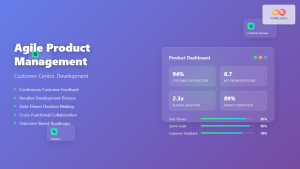
Agile Product Management: Complete Guide to Customer-Centric Development Success
What is Agile Product Management? Agile Product Management is a strategic approach that combines traditional product management principles with agile...
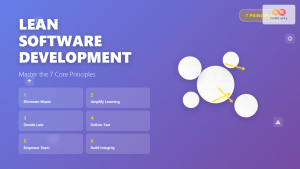
Lean Software Development: 7 Principles for Efficient Software Delivery
Lean Software Development represents a revolutionary approach to software engineering that adapts manufacturing principles from Toyota's Lean Production System to...
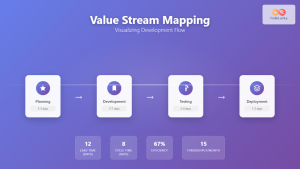
Value Stream Mapping: Complete Guide to Visualizing Development Flow for Agile Teams
What is Value Stream Mapping in Software Development? Value Stream Mapping (VSM) is a lean management technique that visualizes the...