Kadane’s Algorithm is one of the most elegant and efficient algorithms in computer science. It is primarily used to solve the Maximum Subarray Sum Problem, which is a classic question in algorithm design. Given an array of positive and negative integers, the problem asks: What is the largest sum of any contiguous subarray?
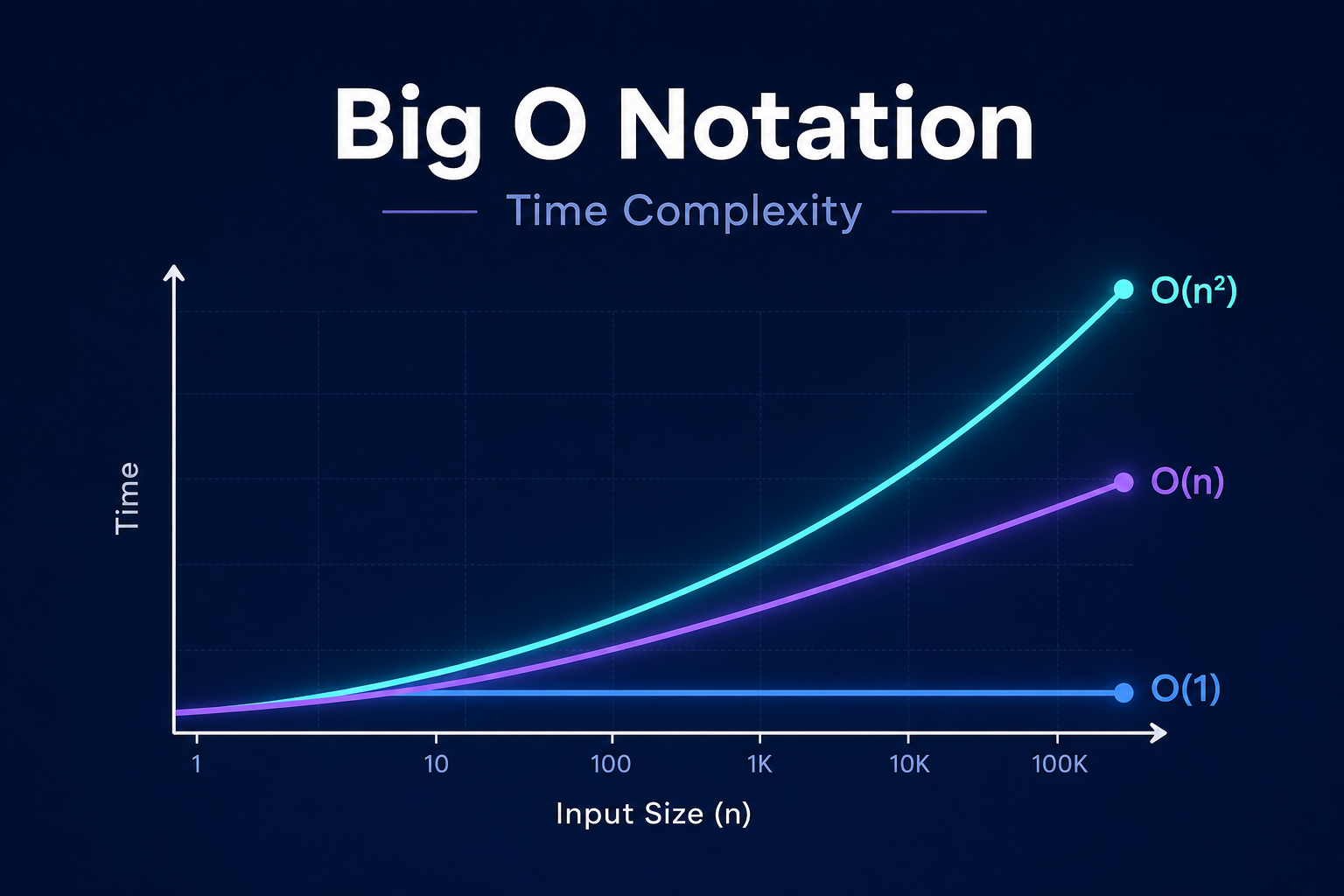
This may sound simple, but the naive approach of checking all possible subarrays requires O(n²) or O(n³) time, which is inefficient for large arrays. Kadane’s Algorithm solves it in just O(n) time by using a clever dynamic programming approach.
Problem Statement
Given an array of integers (both positive and negative), find the maximum sum of a contiguous subarray. The subarray must contain at least one element.
Example
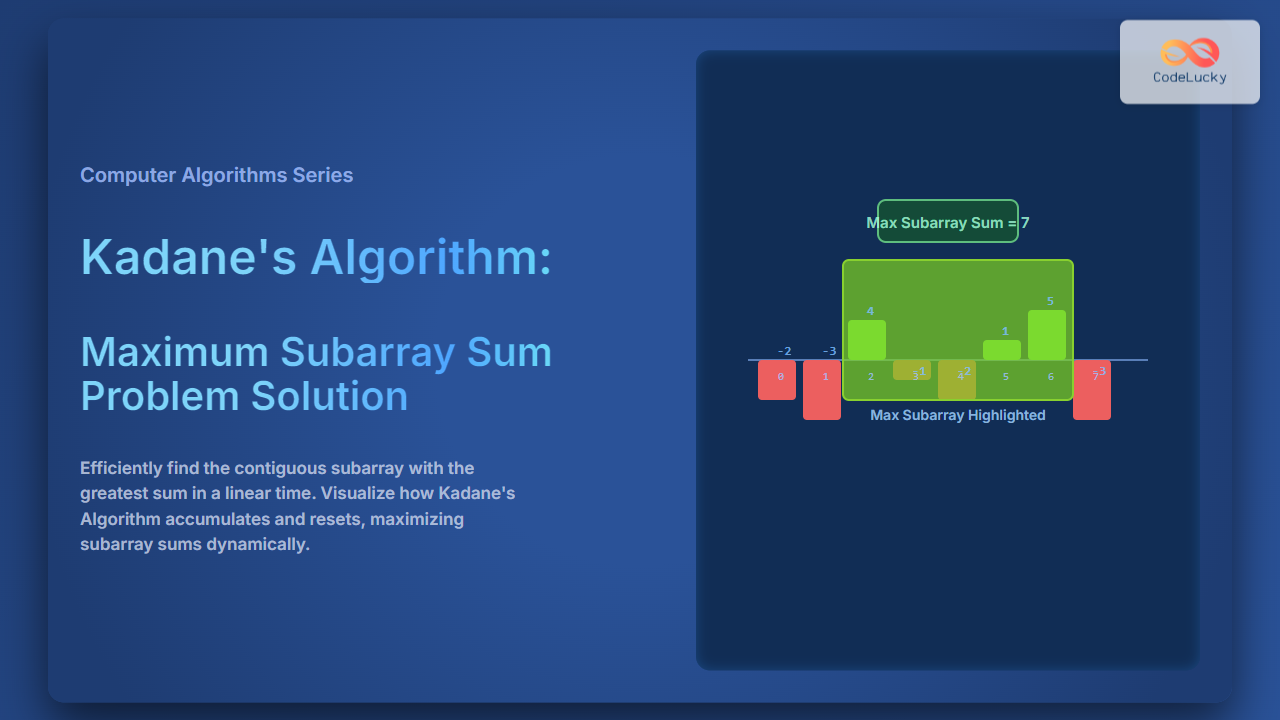
Input: [-2, -3, 4, -1, -2, 1, 5, -3]
Output: 7 (subarray [4, -1, -2, 1, 5])
How Kadane’s Algorithm Works
- We iterate through the array while keeping track of:
max_ending_here: Maximum sum of subarray ending at the current element.max_so_far: Global maximum sum found so far.
- At each step, we check:
max_ending_here = max(arr[i], max_ending_here + arr[i]) max_so_far = max(max_so_far, max_ending_here) - This ensures we either start a new subarray at the current element or extend the previous subarray.
Kadane’s Algorithm in Python
def kadane_algorithm(arr):
    max_ending_here = arr[0]
    max_so_far = arr[0]

    for i in range(1, len(arr)):
        max_ending_here = max(arr[i], max_ending_here + arr[i])
        max_so_far = max(max_so_far, max_ending_here)

    return max_so_far

# Example usage
arr = [-2, -3, 4, -1, -2, 1, 5, -3]
result = kadane_algorithm(arr)
print("Maximum Subarray Sum:", result)
Output:
Maximum Subarray Sum: 7
Step-by-Step Example Walkthrough
Let’s break down how the algorithm works for [-2, -3, 4, -1, -2, 1, 5, -3]:
| Index | Element | max_ending_here | max_so_far |
|---|---|---|---|
| 0 | -2 | -2 | -2 |
| 1 | -3 | -3 | -2 |
| 2 | 4 | 4 | 4 |
| 3 | -1 | 3 | 4 |
| 4 | -2 | 1 | 4 |
| 5 | 1 | 2 | 4 |
| 6 | 5 | 7 | 7 |
| 7 | -3 | 4 | 7 |

Visualization of Algorithm Decision at Each Step

Complexity Analysis
- Time Complexity:
O(n)(single pass over the array). - Space Complexity:
O(1)(only two variables are needed).
Advantages of Kadane’s Algorithm
- Efficient: Works in linear time.
- Simple and elegant.
- Can be extended to handle variations like 2D maximum sum subarray (Maximum Sub-rectangle problem).
Interactive Example
Try running this example interactively (e.g., in Jupyter Notebook or Code Sandbox):
arr = [1, -2, 3, 5, -3, 2]
print("Input Array:", arr)
print("Maximum Subarray Sum:", kadane_algorithm(arr))
Conclusion
Kadane’s Algorithm is a must-know dynamic programming approach for any programmer as it demonstrates how to reduce a seemingly complex problem into a simple linear traversal. Its application ranges from stock market profit analysis to resource allocation problems.