You can now study the same algorithms, operating systems, and machine learning courses taught at top universities from your kitchen table at 6 a.m. before work — and walk away with an identical diploma that says nothing about where you sat. That shift is why so many career-changers, working parents, and self-taught coders are asking the same practical question: how do you actually earn a computer science degree online without wasting years or tens of thousands of dollars on a program that employers shrug at?
This guide walks you through the entire path to getting a computer science degree online in 2026: what the credential really is, how to vet a program for accreditation, what it costs, how long it takes, and how to convert that diploma into a paycheck. No marketing fluff — just the decisions that matter and the traps that quietly cost people money and momentum.
What Is an Online Computer Science Degree?
An online computer science degree is an accredited academic credential — usually an Associate, Bachelor, or Master of Science — earned by completing the same curriculum as an on-campus program, but delivered through a learning management system instead of physical classrooms. The coursework, exams, and degree awarded are identical to the in-person version; only the delivery format changes.
That last point is the one people miss. At most regionally accredited universities, the diploma and transcript do not distinguish between online and on-campus enrollment. An employer reading your résumé sees “B.S. in Computer Science, [University Name]” — full stop. The format is invisible once you graduate, which is exactly why the online route has become a serious option rather than a fallback.
You’ll cover the same core territory as any CS student: programming, data structures and algorithms, discrete mathematics, computer architecture, operating systems, databases, and a capstone or electives in areas like security, AI, or software engineering. The difference is that lectures are recorded, labs are virtual or cloud-based, and you progress on a schedule that flexes around your life.
Online vs. On-Campus vs. Bootcamp: Which Path Fits You?
Before committing years and tuition, it helps to see the three common routes side by side. Each solves a different problem, and picking the wrong one is the most expensive mistake in this whole process.
| Factor | Online CS Degree | On-Campus CS Degree | Coding Bootcamp |
|---|---|---|---|
| Typical duration | 2–4 years (self-paced options faster) | 4 years | 3–9 months |
| Cost range | $10k–$60k | $40k–$200k+ | $7k–$20k |
| Credential | Accredited degree | Accredited degree | Certificate (no degree) |
| CS theory depth | High | High | Low (job-focused) |
| Schedule flexibility | High | Low | Medium |
| Best for | Working adults, career changers | Recent high-school grads | Fast job entry, existing degree holders |
The honest trade-off: a bootcamp gets you job-ready fastest and cheapest, but it skips the theory (algorithms, complexity analysis, operating systems) that unlocks senior roles, many big-tech interviews, and graduate study. A degree opens more doors long-term and satisfies “Bachelor’s required” filters in job applications and visa processes — at the cost of more time. If you already hold a degree in another field, a bootcamp or a focused online computer science degree at the master’s level may be the smarter play.
Step 1: Verify Accreditation Before Anything Else
Accreditation is the single factor that determines whether your degree is worth the paper it’s printed on. Skip this step and you risk paying real money for a credential that employers reject, credits that won’t transfer, and ineligibility for federal financial aid or graduate school.
There are two types you need to understand:
- Institutional accreditation — accredits the whole university. In the U.S., look for regional accreditation (now formally just “institutional accreditation”), which is the gold standard. Verify any school through the U.S. Department of Education’s official database.
- Programmatic accreditation — accredits the specific CS program. For computing degrees, the key body is ABET. ABET accreditation signals the curriculum meets industry-recognized standards, and it matters for some government and engineering-adjacent roles.
Rule of thumb: institutional accreditation is non-negotiable; ABET programmatic accreditation is a strong bonus, not a strict requirement for most software jobs. A regionally accredited degree without ABET is still highly respected. An unaccredited degree — even with ABET claims — is not.
You can confirm a U.S. institution’s status using the Department of Education’s Database of Accredited Postsecondary Institutions and Programs, and check program-level accreditation directly through the official ABET accredited program finder. If a school can’t be found in these databases, treat that as a hard stop.
Step 2: Choose the Right Degree Level and Program Type
Your starting point dictates which degree level makes sense. Be realistic about where you are now.
Associate Degree (2 years)
A good on-ramp if you’re new to higher education entirely. It covers programming fundamentals and general education credits that later transfer into a bachelor’s. On its own, it qualifies you for some support and junior roles, but most software engineering jobs expect a bachelor’s.
Bachelor’s Degree (the standard)
This is the credential most employers mean when they list “CS degree required.” A Bachelor of Science in Computer Science is the most versatile choice for breaking into the field and the safest default for career changers.
Master’s Degree (1–2 years)
Built for people who already hold a bachelor’s — in CS or another field. Several well-regarded universities now offer affordable online master’s programs in computer science, including conversion master’s designed for students with no prior CS background. If you have any degree already, this can be faster and cheaper than starting a second bachelor’s.
Beyond level, watch the pacing model. Programs fall into two camps: cohort-based (fixed terms, deadlines, classmates moving with you) and competency-based or self-paced (you advance by proving mastery, so motivated students finish faster and pay less). Self-paced suits disciplined, full-time workers; cohort structure suits people who need external deadlines to stay on track.
Step 3: Plan the Real Cost and Find Funding
Tuition is only part of the picture. Build a realistic budget before you enroll, because surprise costs are what derail students mid-program.
- Tuition — often charged per credit hour. A bachelor’s is typically 120 credits; a master’s around 30–36. Multiply the per-credit rate by total credits for a true number.
- Fees — technology fees, exam proctoring fees, and graduation fees add up.
- Materials — textbooks, software licenses, and a reliable laptop.
- Opportunity cost — time spent studying is time not spent earning or resting.
To bring the number down, stack these strategies:
- Transfer credits. Prior college coursework, military training, or even some industry certifications can shave off entire courses. Always ask the admissions office for a transfer credit evaluation before enrolling.
- Credit-by-exam. Programs like CLEP let you test out of general education requirements for a fraction of tuition.
- Financial aid. In the U.S., complete the FAFSA — accredited online programs qualify for the same federal grants and loans as on-campus ones.
- Employer tuition assistance. Many tech and non-tech companies reimburse a few thousand dollars a year in tuition. Check your benefits before paying out of pocket.
The most reliable cost-cutter is transferring in an associate degree from a low-cost community college, then completing only the upper-division CS courses at a four-year institution. This “2+2” approach can cut a bachelor’s bill in half.
Step 4: Build the Technical Setup and Study Routine
Online CS is hands-on. You’ll spend most of your time writing and running code, so a working development environment matters from day one. A typical first-week setup looks like this:
# Check whether Python is already installed
python --version

# Install Git for version control (essential for every CS course)
# macOS (with Homebrew):
brew install git

# Ubuntu/Debian Linux:
sudo apt update && sudo apt install git

# Verify the install
git --version

# Configure your identity for assignment submissions
git config --global user.name "Your Name"
git config --global user.email "[email protected]"
These commands confirm your two most-used tools — a programming language runtime and version control — are ready. Nearly every assignment you submit will live in a Git repository, so configuring it on day one saves friction later. Most introductory courses use Python’s official documentation as a reference, so bookmark it early.
Here’s a small example of the kind of work an early course expects — implementing a classic algorithm rather than just calling a built-in function:
# Binary search: find a target in a sorted list in O(log n) time
def binary_search(items, target):
    low, high = 0, len(items) - 1

    while low <= high:
        mid = (low + high) // 2  # midpoint of the current range
        if items[mid] == target:
            return mid           # found it; return the index
        elif items[mid] < target:
            low = mid + 1         # discard the lower half
        else:
            high = mid - 1       # discard the upper half

    return -1                    # target not present

# Example usage
numbers = [2, 5, 8, 12, 16, 23, 38, 56, 72]
print(binary_search(numbers, 23))  # Output: 5
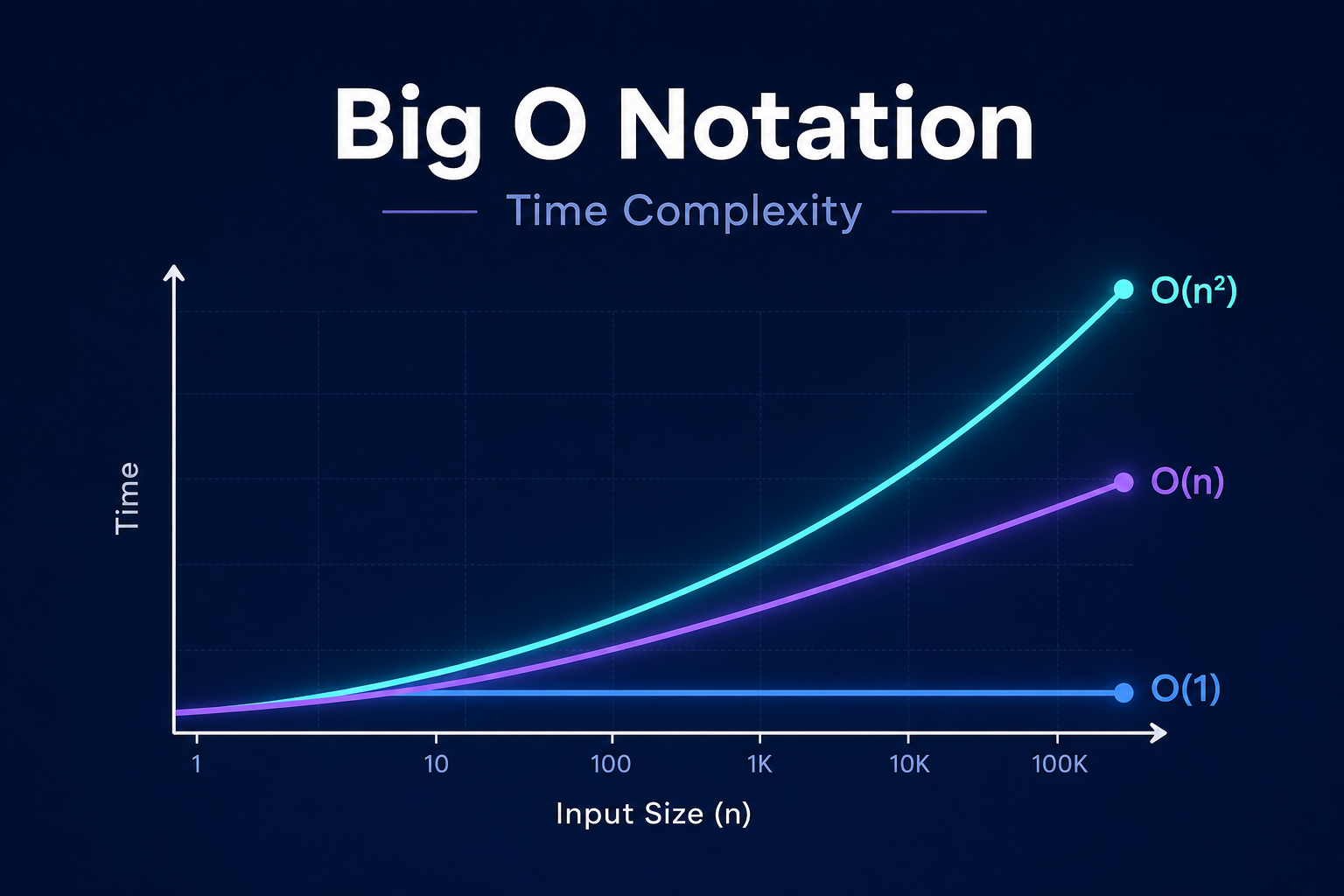
This code halves the search space on every step instead of checking each element one by one, which is the difference between O(log n) and O(n) performance. Understanding why that matters — not just that the function returns the right answer — is exactly the kind of theory an online degree teaches and a bootcamp often glosses over.
On routine: treat the program like a part-time job with fixed hours. Block specific times on your calendar, study in focused sessions, and ship assignments early rather than at the deadline. Online learning fails most often from drift, not difficulty.
Step 5: Gain Experience While You Study
A degree gets you past résumé filters; demonstrated skill gets you hired. Don’t wait until graduation to build a portfolio. Throughout your program, you should:
- Publish projects on GitHub. Turn course assignments into polished, documented repositories that hiring managers can actually read.
- Contribute to open source. Even small fixes to real projects show you can work in an existing codebase — a skill classrooms rarely test.
- Pursue internships. Many online students assume internships are off-limits; they aren’t. Apply the same as any student.
- Earn targeted certifications. A cloud certification (AWS, Azure, or Google Cloud) pairs well with a CS degree and signals job-ready skills.
By graduation you want two things in hand: the diploma and a portfolio of three to five substantial projects you can talk through in an interview. The degree opens the door; the projects walk you through it.
Common Pitfalls to Avoid
Most people who struggle with an online CS degree trip over the same avoidable mistakes. Watch for these:
- Chasing “fast and cheap” diploma mills. If a program promises a degree in months with no coursework, it’s not accredited and not worth it.
- Ignoring math. Computer science is mathematical. Underestimating discrete math and the calculus or statistics requirements stalls more students than programming does.
- Treating it as passive. Watching lecture videos isn’t studying. You learn CS by writing code and solving problems, not by watching someone else do it.
- Skipping the accreditation check. The cost of this mistake is the entire tuition bill plus lost time.
- Isolating yourself. Online students who join study groups, Discord servers, and office hours finish at far higher rates than those who go it alone.
Frequently Asked Questions
Is an online computer science degree respected by employers?
Yes, provided it comes from a regionally (institutionally) accredited university. Since most transcripts and diplomas don’t note the online format, employers generally treat it the same as an on-campus degree. What they care about most is the school’s accreditation and what you can actually build.
How long does it take to get a computer science degree online?
A bachelor’s typically takes three to four years full-time, though self-paced and competency-based programs let motivated students finish faster. With transfer credits or an existing associate degree, you can shorten that significantly. A master’s usually takes one to two years.
Can I get a computer science degree online with no prior experience?
Absolutely. Bachelor’s programs assume no coding background and start from fundamentals. If you already hold a degree in another field, look for “conversion” master’s programs designed specifically for newcomers to computer science.
How much does an online computer science degree cost in 2026?
Expect anywhere from roughly $10,000 to $60,000 for a bachelor’s, depending heavily on the school and how many credits you transfer in. Some online master’s programs from major universities cost well under $20,000 total, making them among the best values in higher education.
Is a degree or a bootcamp better for getting a tech job?
A bootcamp is faster and cheaper for entering the field, but a degree carries more long-term weight, teaches deeper theory, and satisfies “Bachelor’s required” filters. If you already have any bachelor’s degree, a bootcamp or online master’s may serve you better than a second bachelor’s.
Do online CS degrees qualify for financial aid?
Yes. Accredited online programs in the U.S. are eligible for the same federal grants and loans as on-campus programs. Complete the FAFSA and check for employer tuition assistance to reduce out-of-pocket costs.
Conclusion
Getting a computer science degree online in 2026 is no longer a compromise — it’s a legitimate, flexible, and often cheaper route to the same credential on-campus students earn. The path comes down to a handful of disciplined decisions: verify accreditation first, choose the degree level that matches where you’re starting, budget for the true cost while stacking transfer credits and aid, and treat the program as active, hands-on work rather than a video subscription.
Do those things and an online computer science degree becomes one of the highest-leverage investments you can make in your career. Pair the diploma with a real portfolio, stay consistent week after week, and you’ll graduate with both the qualification that clears HR filters and the skills that win the interview. Pick one accredited program this week, run its transfer-credit evaluation, and take the first concrete step — the rest is just showing up.