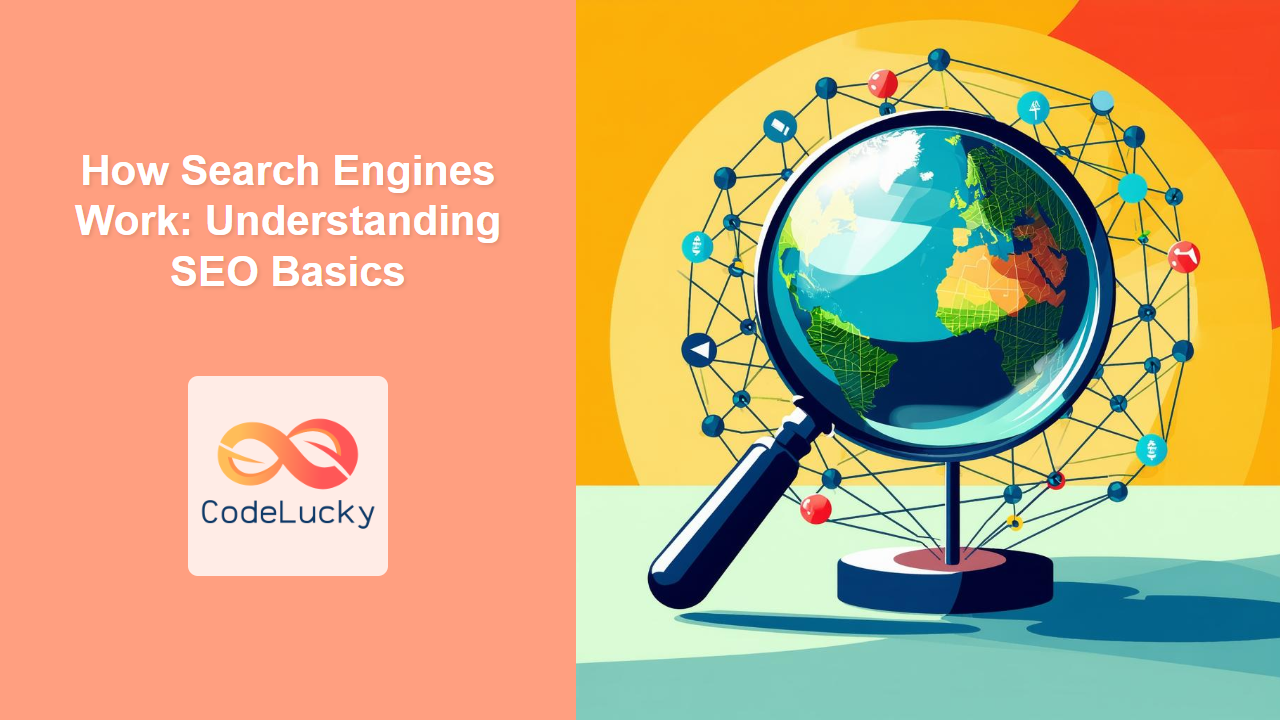
How Search Engines Work: Understanding SEO Basics
Search engines are the gatekeepers of the internet, connecting users with the information they seek. Understanding how they operate is crucial for anyone who wants to make their website visible and accessible online. This article will demystify the inner workings of search engines and introduce you to the fundamental concepts of Search Engine Optimization (SEO).
What Are Search Engines?
Search engines are software systems designed to search for information on the World Wide Web. They use algorithms to crawl the web, index content, and rank websites based on their relevance to a user’s query. The most popular search engine is Google, followed by Bing, Yahoo, and others.
Purpose of Search Engines
The primary purpose of a search engine is to provide users with the most relevant and accurate results for their search queries. They aim to:
- Organize Information: Structure the vast amount of data available online.
- Retrieve Content: Locate and present websites that match the user’s search intent.
- Rank Results: Order search results based on relevance, authority, and user experience.
- Provide a Seamless Experience: Offer a fast, efficient, and user-friendly search experience.
The Three Core Functions of Search Engines
Search engines perform three primary functions: crawling, indexing, and ranking. Let’s explore each of these in detail.
1. Crawling
Crawling is the process by which search engines discover new and updated content on the web. Search engines use bots, also known as spiders or crawlers, to navigate the internet by following links from one page to another.
How Crawling Works
- Discovery: Crawlers start with a list of known URLs, often obtained from sitemaps or previous crawls.
- Link Following: They visit these URLs and follow the links they find, adding new URLs to their list for future crawling.
- Content Extraction: As they visit each page, crawlers extract the content, including text, images, and other media.
Crawlability Factors
- Website Structure: A well-organized website with a clear hierarchy makes it easier for crawlers to navigate.
- Internal Linking: Strategic internal linking helps crawlers discover and index all your important pages.
- Sitemaps: Submitting a sitemap to search engines provides a roadmap of your website’s content.
- Robots.txt: This file tells crawlers which parts of your website they are allowed to access and which they should avoid.
2. Indexing
Indexing is the process of analyzing the content of crawled pages and storing it in a massive database called an index. This index allows search engines to quickly retrieve relevant results for user queries.
How Indexing Works
- Content Analysis: Search engines analyze the content of each page, identifying keywords, topics, and other relevant information.
- Data Storage: This information is stored in the index, along with the URL and other metadata.
- Index Organization: The index is organized in a way that allows search engines to quickly find pages that match a user’s query.
Indexing Factors
- Keyword Relevance: Using relevant keywords in your content helps search engines understand what your page is about.
- Content Quality: High-quality, original content is more likely to be indexed and ranked well.
- Meta Tags: Meta descriptions and title tags provide additional information about your page’s content.
- Schema Markup: Structured data markup helps search engines understand the context and meaning of your content.
3. Ranking
Ranking is the process of ordering search results based on their relevance and authority. Search engines use complex algorithms to determine which pages are most likely to satisfy a user’s search intent.
How Ranking Works
- Algorithm Application: Search engines apply a variety of ranking factors to each page in the index.
- Relevance Assessment: They assess the relevance of each page to the user’s query, considering factors such as keywords, content quality, and user experience.
- Authority Evaluation: They evaluate the authority of each page, considering factors such as backlinks, domain authority, and social signals.
- Result Ordering: Based on these factors, search engines order the search results, with the most relevant and authoritative pages appearing at the top.
Ranking Factors
- Relevance: How well the content matches the user’s search query.
- Authority: The credibility and trustworthiness of the website.
- User Experience: How easy and enjoyable the website is to use.
- Content Quality: The originality, accuracy, and depth of the content.
- Mobile Friendliness: How well the website performs on mobile devices.
- Page Speed: How quickly the website loads.
- Security: Whether the website uses HTTPS.
- Backlinks: The number and quality of links from other websites.
SEO Basics: Optimizing for Search Engines
Now that you understand how search engines work, let’s dive into the basics of Search Engine Optimization (SEO). SEO is the practice of optimizing your website to improve its visibility and ranking in search engine results pages (SERPs).
Key SEO Strategies
- Keyword Research: Identify the keywords that your target audience is using to search for information related to your business.
- On-Page Optimization: Optimize your website’s content, meta tags, and HTML code to improve its relevance to target keywords.
- Off-Page Optimization: Build high-quality backlinks from other websites to improve your website’s authority.
- Technical SEO: Ensure that your website is crawlable, indexable, and mobile-friendly.
- Content Marketing: Create valuable, engaging content that attracts and retains your target audience.
- Local SEO: Optimize your website and online presence for local search queries.
Example: On-Page Optimization
Let’s illustrate on-page optimization with a basic example. Suppose you have a webpage about “best coffee beans.” Here’s how you can optimize it:
- Title Tag: Include the keyword “best coffee beans” in your title tag.
html

<title>Best Coffee Beans: A Comprehensive Guide</title>
- Meta Description: Write a compelling meta description that includes the keyword and entices users to click.
html

<meta

  name="description"

  content="Discover the best coffee beans from around the world. Our guide covers everything from arabica to robusta, helping you find your perfect cup."

/>
- Heading Tags: Use heading tags (H1, H2, H3) to structure your content and include the keyword in at least one heading.
html¨K22K
¨K23K
- Content: Naturally incorporate the keyword throughout your content, providing valuable information to your readers.
html¨K24K
- Image Alt Text: Use descriptive alt text for your images, including the keyword where relevant.
html

<img

  src="coffee-beans.jpg"

  alt="A variety of best coffee beans"

/>
The Importance of User Experience
Search engines prioritize websites that provide a positive user experience. Factors such as page speed, mobile-friendliness, and ease of navigation can significantly impact your website’s ranking.
Measuring User Experience
- Bounce Rate: The percentage of visitors who leave your website after viewing only one page.
- Time on Page: The average amount of time visitors spend on a page.
- Page Views per Session: The average number of pages visitors view during a session.
- Conversion Rate: The percentage of visitors who complete a desired action, such as making a purchase or filling out a form.
Visualizing the Search Engine Process
To further clarify the search engine process, let’s use a Mermaid diagram to visualize the steps involved in crawling, indexing, and ranking.

This diagram visually represents how a user’s search query triggers the crawling, indexing, and ranking processes, ultimately leading to the display of search results on the SERP.
Conclusion
Understanding how search engines work is the foundation of effective SEO. By optimizing your website for crawling, indexing, and ranking, you can improve its visibility in search results and attract more organic traffic. Remember to focus on providing valuable content, creating a positive user experience, and staying up-to-date with the latest SEO best practices.
Related Posts
Google Algorithm Updates: How They Impact Your Website’s Rankings
Google Algorithm Updates: How They Impact Your Website's Rankings Google's algorithm is the engine that drives search results, and it's...

SEO vs SEM: What’s the Difference and Which One Should You Focus On?
SEO vs. SEM: Understanding the Key Differences and Choosing the Right Strategy In the world of digital marketing, Search Engine...

Google Ranking Factors: What Really Matters for SEO in 2025
Google Ranking Factors: What Really Matters for SEO in 2025 In the ever-evolving world of Search Engine Optimization (SEO), staying...

HTML Search type Property: Search Input Type
HTML Search Input Type: A Comprehensive Guide The HTML <input> element with the type="search" attribute is specifically designed for creating...

HTML Semantics: Structuring Content for Accessibility and SEO
Introduction Have you ever looked at a website and wondered how the browser knows what's a header, what's a navigation...

HTML DOM Search Object: Accessing Search Input Elements
HTML DOM Search Object: A Deep Dive into Accessing Search Input Elements The HTML DOM (Document Object Model) Search object...

HTML Location search Property: Mastering URL Query Strings
HTML Location search Property: Mastering URL Query Strings The search property of the HTML Location object is an essential tool...

SQL Indexes: Speeding Up Database Queries
In the world of database management, performance is king. As your database grows, so does the time it takes to...

SQL CREATE INDEX Statement: Optimizing Queries with Indexes
In the world of database management, performance is king. As your database grows, so does the time it takes to...

HTML Search form Property: Search Input Form
HTML Search form Property: Associating Search Inputs with Forms The HTML form property for the <input type="search"> element allows you...
elasticsearch Linux: Complete Guide to Search and Analytics Engine Installation and Usage
Elasticsearch is a powerful, distributed search and analytics engine built on Apache Lucene that enables real-time search, analysis, and visualization...

PHP AJAX Live Search: Implementing Real-Time Search Functionality
In today's fast-paced digital world, users expect instant results. One feature that has become increasingly popular is live search functionality,...