Introduction to Blockchain Operating Systems
A blockchain operating system represents a paradigm shift from traditional centralized computing models to decentralized, distributed architectures. Unlike conventional operating systems that rely on single points of control, blockchain-based OS leverages distributed ledger technology to create transparent, immutable, and trustless computing environments.
These revolutionary systems combine the core principles of blockchain technology with operating system functionalities, enabling applications to run across distributed networks without requiring trust in centralized authorities. This approach addresses critical limitations of traditional systems including single points of failure, censorship vulnerabilities, and lack of transparency.
Core Architecture of Blockchain Operating Systems

Layered Architecture Components
Application Layer: Houses decentralized applications (dApps) that interact with users and external systems. These applications leverage the underlying blockchain infrastructure for execution and data storage.
Smart Contract Runtime: Provides the execution environment for smart contracts, handling code compilation, execution, and state management across the distributed network.
Consensus Layer: Implements consensus mechanisms like Proof of Work, Proof of Stake, or Byzantine Fault Tolerance to ensure network agreement on system state and transaction validity.
Network Layer: Manages peer-to-peer communication, node discovery, and data propagation across the distributed network infrastructure.
Storage Layer: Handles distributed data storage, ensuring data availability, redundancy, and integrity across multiple nodes in the network.
Key Characteristics and Benefits
Decentralization and Fault Tolerance
Blockchain operating systems eliminate single points of failure by distributing system components across multiple nodes. If individual nodes fail, the system continues operating seamlessly, ensuring high availability and resilience against attacks or hardware failures.
Transparency and Immutability
All system operations, transactions, and state changes are recorded on the blockchain, creating an immutable audit trail. This transparency enables users to verify system behavior and ensures accountability in system operations.
Trustless Operations
Users can interact with the system without trusting centralized authorities. Cryptographic proofs and consensus mechanisms ensure system integrity without requiring faith in specific entities or organizations.
Popular Blockchain Operating System Implementations
Ethereum as a Computing Platform
While primarily known as a blockchain platform, Ethereum functions as a distributed computing system with operating system characteristics:
- Ethereum Virtual Machine (EVM): Provides runtime environment for smart contracts
- Gas System: Resource allocation mechanism preventing infinite loops and managing computational costs
- State Management: Maintains global state across all network participants
- Transaction Processing: Handles state transitions through transaction execution
EOS.IO
EOS.IO implements a more traditional OS approach with blockchain characteristics:
- Account System: Human-readable account names with permission structures
- Resource Management: CPU, RAM, and bandwidth allocation similar to traditional OS resource management
- Inter-Contract Communication: Enables complex application architectures through contract interactions
- Governance Model: On-chain governance for system upgrades and parameter changes
Dfinity Internet Computer
Internet Computer Protocol (ICP) provides a comprehensive blockchain-based computing platform:
- Canister Smart Contracts: Containerized applications with persistent memory
- Web-Speed Performance: Sub-second finality for responsive user experiences
- Reverse Gas Model: Applications pay for user interactions, improving user experience
- Native Internet Integration: Direct HTTP requests without bridges or oracles
Technical Implementation Deep Dive
Smart Contract Execution Model
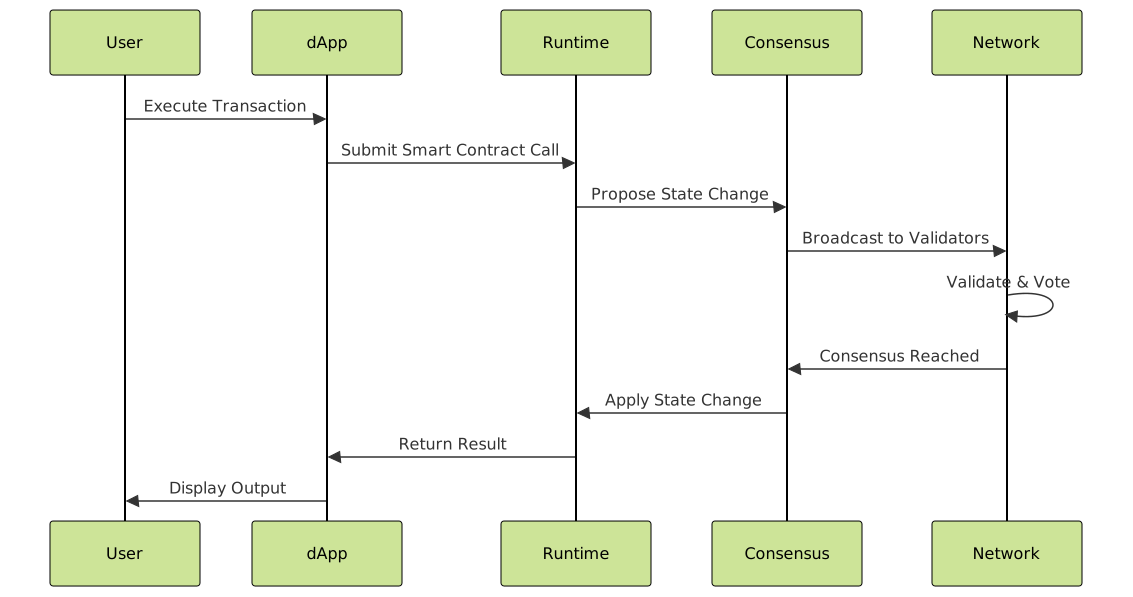
Blockchain operating systems execute code through virtual machines that ensure deterministic execution across all network nodes. The execution process involves:
- Code Deployment: Smart contract bytecode is stored on the blockchain
- Transaction Initiation: Users submit transactions calling contract functions
- Execution Environment: Virtual machine loads and executes contract code
- State Updates: Execution results update the global system state
- Consensus Verification: Network validators verify execution results
Resource Management
Unlike traditional operating systems with unlimited local resources, blockchain OS must manage scarce network resources:
| Resource Type | Management Mechanism | Purpose |
|---|---|---|
| Computational Power | Gas fees or token staking | Prevent infinite loops and spam |
| Storage | Storage fees or rent mechanisms | Manage blockchain size growth |
| Bandwidth | Transaction throughput limits | Ensure network stability |
| Memory | State size limitations | Maintain node synchronization |
Consensus Mechanisms in Blockchain OS

Proof of Work (PoW)
Mining-based consensus where nodes compete to solve cryptographic puzzles. While secure, PoW systems consume significant energy and have limited transaction throughput.
Proof of Stake (PoS)
Validators are selected based on their stake in the network, providing energy efficiency and faster finality compared to PoW systems.
Delegated Proof of Stake (DPoS)
Token holders vote for a limited number of block producers, offering high throughput and fast confirmation times suitable for operating system requirements.
Practical Byzantine Fault Tolerance (pBFT)
Provides immediate finality and can tolerate up to one-third of malicious nodes, making it suitable for permissioned blockchain operating systems.
Real-World Applications and Use Cases
Decentralized Cloud Computing
Blockchain operating systems enable distributed cloud services where computing resources are provided by network participants rather than centralized providers:
- Compute Sharing: Unused computational power becomes available to the network
- Storage Networks: Distributed file storage with cryptographic integrity guarantees
- Content Delivery: Decentralized CDNs with tokenized incentive structures
Autonomous Organizations
Decentralized Autonomous Organizations (DAOs) operate entirely on blockchain operating systems:
- Governance Protocols: On-chain voting and proposal systems
- Treasury Management: Automated fund allocation based on governance decisions
- Member Management: Tokenized membership with programmable rights
Identity and Access Management
Self-sovereign identity systems built on blockchain OS provide:
- Cryptographic Identity: Public-key based identity without central authorities
- Verifiable Credentials: Tamper-proof digital certificates
- Privacy Preservation: Zero-knowledge proofs for selective disclosure
Challenges and Limitations

Scalability Constraints
Current blockchain operating systems face significant throughput limitations. Bitcoin processes ~7 transactions per second, while Ethereum handles ~15 TPS, compared to traditional systems processing thousands of operations per second.
Energy and Environmental Concerns
Proof-of-Work consensus mechanisms consume substantial energy, raising sustainability questions for widespread adoption of blockchain operating systems.
User Experience Complexity
Blockchain systems require users to manage private keys, understand gas fees, and navigate complex interfaces, creating adoption barriers for mainstream users.
Regulatory and Legal Challenges
Uncertain regulatory frameworks create compliance difficulties for organizations considering blockchain operating system adoption.
Future Developments and Innovations
Layer 2 Scaling Solutions
State channels, sidechains, and rollup technologies address scalability limitations by processing transactions off-chain while maintaining security guarantees through periodic on-chain settlement.
Quantum-Resistant Cryptography
Development of post-quantum cryptographic schemes ensures blockchain operating systems remain secure against future quantum computing threats.
Interoperability Protocols
Cross-chain communication protocols enable blockchain operating systems to interact and share resources, creating a more connected decentralized computing ecosystem.
Enhanced Privacy Features
Zero-knowledge proofs and advanced cryptographic techniques provide privacy-preserving computation while maintaining transparency and verifiability.
Implementation Considerations
Network Architecture Design
Organizations implementing blockchain operating systems must consider:
- Consensus Mechanism Selection: Balancing decentralization, security, and performance requirements
- Node Distribution: Ensuring geographic diversity for fault tolerance
- Governance Structure: Defining upgrade and parameter change processes
- Economic Incentives: Designing tokenomics to sustain network participation
Security Considerations
Blockchain operating systems require comprehensive security measures:
- Smart Contract Auditing: Formal verification of critical system components
- Key Management: Secure generation, storage, and rotation of cryptographic keys
- Network Monitoring: Real-time detection of malicious activities and anomalies
- Incident Response: Procedures for handling security breaches and system failures
Conclusion
Blockchain operating systems represent a fundamental shift toward decentralized computing infrastructure, offering unprecedented transparency, fault tolerance, and trustless operation. While current implementations face scalability and usability challenges, ongoing technological developments promise to address these limitations.
The transition from centralized to decentralized operating systems parallels the evolution from mainframe to personal computing, potentially revolutionizing how we interact with digital systems. Organizations considering blockchain OS adoption should carefully evaluate their specific requirements against the current capabilities and limitations of available platforms.
As the technology matures, blockchain operating systems may become the foundation for a new generation of applications that prioritize user sovereignty, data ownership, and censorship resistance over traditional performance metrics. The future of computing may well be decentralized, transparent, and trustless.