HTML Responsive Web Design: Crafting Websites for Every Device
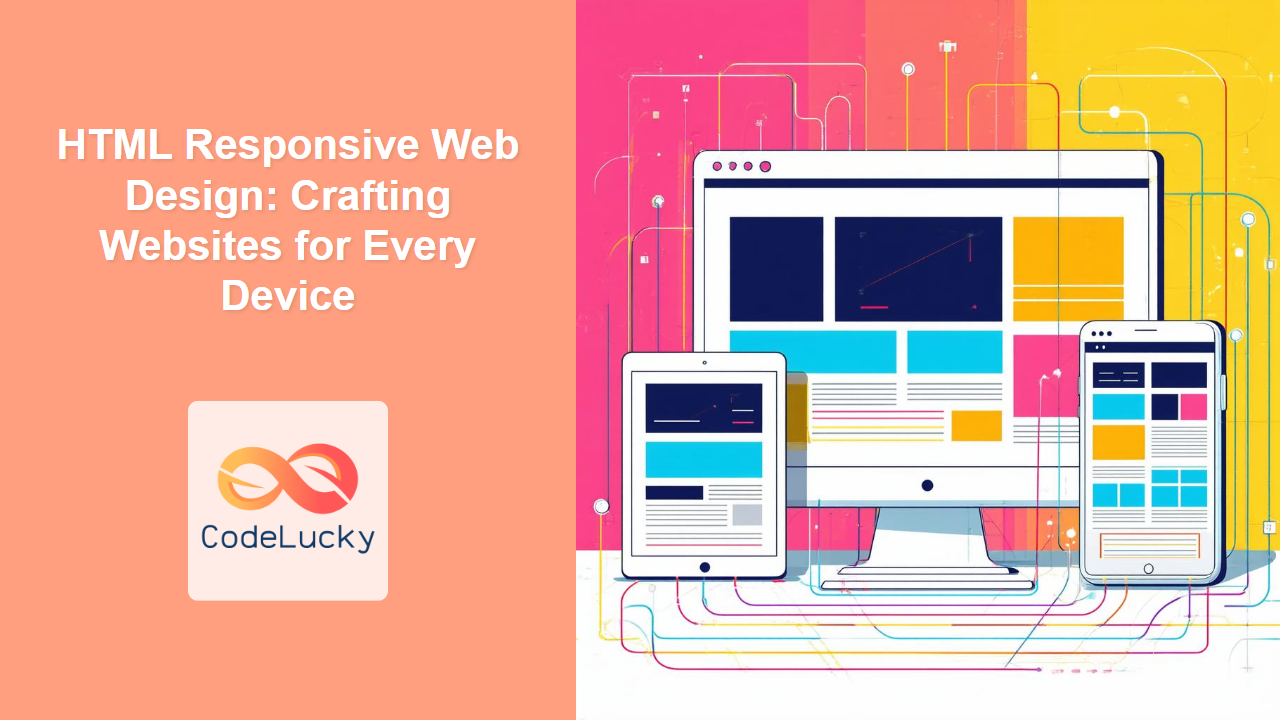
Learn the fundamentals of responsive web design using HTML, including media queries, the viewport meta tag, and mobile-first approaches, ensuring your website looks great on any device.

Learn the fundamentals of responsive web design using HTML, including media queries, the viewport meta tag, and mobile-first approaches, ensuring your website looks great on any device.
Learn how to use the HTML `id` attribute to uniquely identify elements, enabling specific styling with CSS and dynamic behavior with JavaScript. Understand the crucial difference between `id` and `class`.
Learn how to include JavaScript in your HTML to make your web pages interactive. Understand inline and external scripts, and the importance of script tag placement.
Learn how to use the HTML `<title>` tag effectively for better SEO, improved user experience, and successful social media sharing. Master the art of crafting perfect page titles.
Master the art of creating hyperlinks with the HTML `` tag. Learn about absolute and relative URLs, target attributes, email links, and more.
Dive into the world of CSS! Learn how to style your HTML with selectors, properties, and understand the crucial concepts of the cascade and specificity to create beautiful and engaging web pages.
Explore the various ways to specify colors in HTML and CSS, including color names, hexadecimal codes, RGB, and HSL values. Learn about color palettes and how to use them effectively in your web projects.
Learn how to effectively use HTML comments to document your code, improve readability, and organize your projects efficiently. Master the art of commenting with best practices and examples.
Learn how to properly use HTML tags for quotations, citations, and other attribution elements to enhance semantic meaning and accessibility.
Learn how to use HTML formatting tags like bold, italics, underline, and more to style text, and understand the difference between semantic and presentational elements.