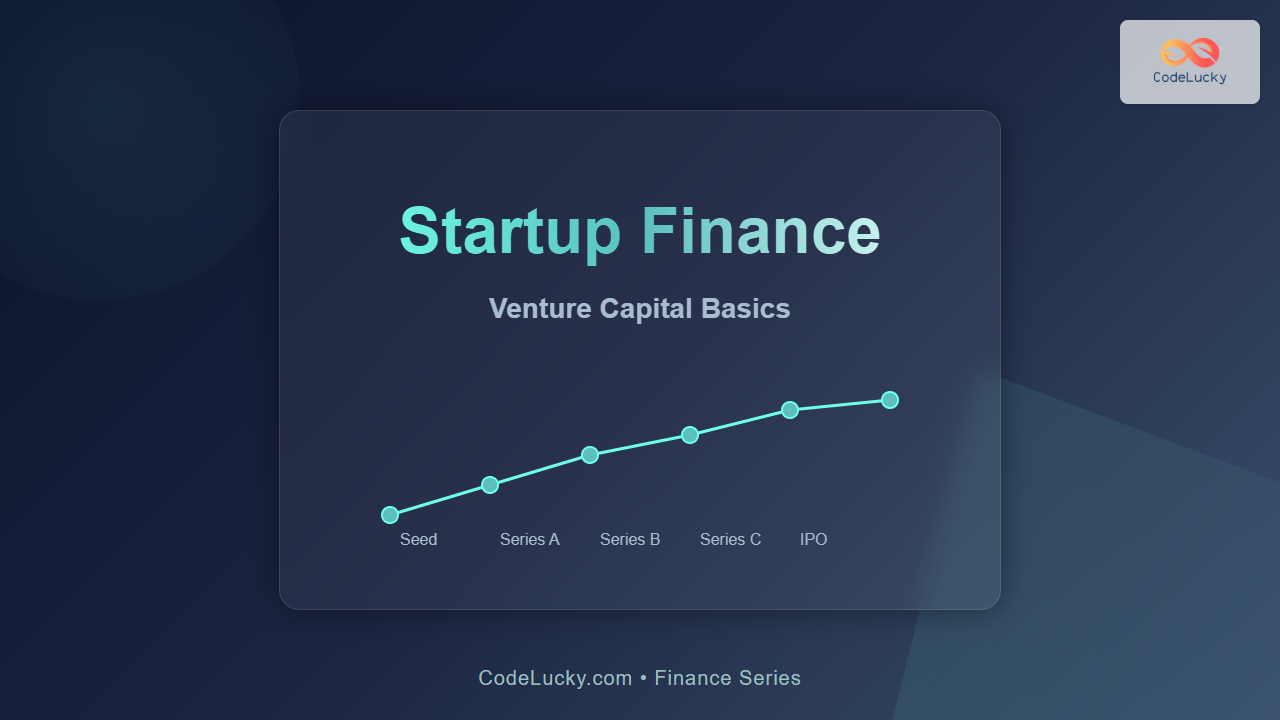
Venture Capital (VC) plays a pivotal role in scaling startups that have high growth potential but limited financial resources. Understanding how VC works can help founders make informed decisions, structure their funding rounds effectively, and align with investors’ expectations. This guide dives deep into the core mechanics of venture capital, key stakeholders, stages of investment, and tips for navigating the journey from seed to Series C.
What Is Venture Capital?
Venture capital is a type of private equity financing provided by investors to startups and small businesses with significant growth potential. Unlike bank loans, venture capital investment often comes in exchange for equity or ownership stakes in the company. This means VC investors profit when the startup grows in value or exits through an acquisition or IPO.

How Venture Capital Works
The VC process involves multiple stakeholders and stages before investment is finalized. Generally, it begins with sourcing deals, evaluating startups, conducting due diligence, negotiating terms, and finally, investing capital.

Key Players in Venture Capital
- Limited Partners (LPs): High-net-worth individuals or institutional investors who provide funds to VC firms.
- General Partners (GPs): VC fund managers who decide where to invest the capital and manage portfolio companies.
- Startup Founders: Entrepreneurs seeking capital in exchange for equity and mentorship.
Stages of Venture Capital Funding
Venture capital investment usually progresses in stages as a startup matures. Each stage represents a different level of risk and capital requirement.
| Funding Stage | Purpose | Average Investment | Equity Given |
|---|---|---|---|
| Pre-Seed | Build MVP, early market validation | $50K – $250K | 5% – 10% |
| Seed | Product launch, initial customer traction | $250K – $2M | 10% – 20% |
| Series A | Scale operations, refine business model | $2M – $10M | 15% – 25% |
| Series B & beyond | Expansion, international entry | $10M+ | Varies |

Pros and Cons of Venture Capital Funding
Pros
- High capital infusion: Access to large sums of money for scaling fast.
- Expert mentorship: Investors often offer guidance, valuable contacts, and strategic input.
- Validation and visibility: Securing VC funding builds brand credibility and investor confidence.
Cons
- Equity dilution: Founders give up ownership and control in exchange for funding.
- Pressure for rapid growth: VCs expect quick returns, leading to aggressive scaling.
- Exit-oriented: VCs often push for IPOs or acquisitions within 5–10 years.
How to Prepare for Venture Capital Funding
Investors are drawn to startups with high scalability, innovative products, and a clear path to profitability. To attract VC interest:
- Craft a strong pitch deck: Highlight problem, solution, target market, traction, and financial forecasts.
- Build traction metrics: Early user growth, monthly recurring revenue (MRR), and product-market fit indicators.
- Understand your valuation: Don’t overprice your startup; align value with growth potential.
- Network actively: Attend industry events and connect through investor platforms.
Visual Example: VC Ownership Over Time

Term Sheet Essentials
The term sheet defines the investment relationship between startup and investor. It includes details like valuation, equity stake, liquidation preference, board composition, and exit clauses. Founders should negotiate carefully since this sets the tone for future funding rounds.
Common Term Sheet Components:
- Valuation: Pre-money and post-money company value.
- Liquidation preference: Determines who gets paid first in case of sale or liquidation.
- Anti-dilution: Protects investors if future funding happens at a lower valuation.
- Exit rights: Specifies exit conditions such as IPO or buyout.
Interactive Exercise: Estimate Your VC Dilution
Try this simple thought exercise. Suppose your startup is valued at $2 million (pre-money) and you raise $500,000 in funding. The new valuation is $2.5 million (post-money). Your dilution is:
Dilution % = Investment / Post-Money Valuation = 500,000 / 2,500,000 = 20%This means you own 80% after the funding round, and investors collectively own 20%.
Conclusion
Venture capital is a powerful enabler for startups aiming to grow rapidly and scale beyond early stages. However, it’s not a one-size-fits-all solution. Founders should balance the benefits of funding with the trade-offs of equity dilution and control. With the right preparation, clarity, and execution, VC funding can accelerate innovation and open doors to global success.
By CodeLucky.com Finance Editorial Team