
Introduction to Shared Memory IPC
Shared Memory is one of the most efficient Inter-Process Communication (IPC) mechanisms available in modern operating systems. Unlike other IPC methods such as pipes or message queues, shared memory allows multiple processes to access the same physical memory region directly, eliminating the overhead of data copying between kernel and user space.
This approach provides the fastest method for processes to exchange large amounts of data, making it ideal for high-performance applications, real-time systems, and scenarios where multiple processes need to work with the same dataset simultaneously.

How Shared Memory Works
Shared memory operates by mapping the same physical memory pages into the virtual address spaces of multiple processes. The operating system’s memory management unit (MMU) handles the translation between virtual addresses in each process and the shared physical memory location.
Key Components
- Memory Segment: A contiguous block of memory allocated by the system
- Key/Identifier: A unique identifier used to reference the shared segment
- Permissions: Access controls defining read/write privileges
- Attachment: Process of mapping shared memory into a process’s address space
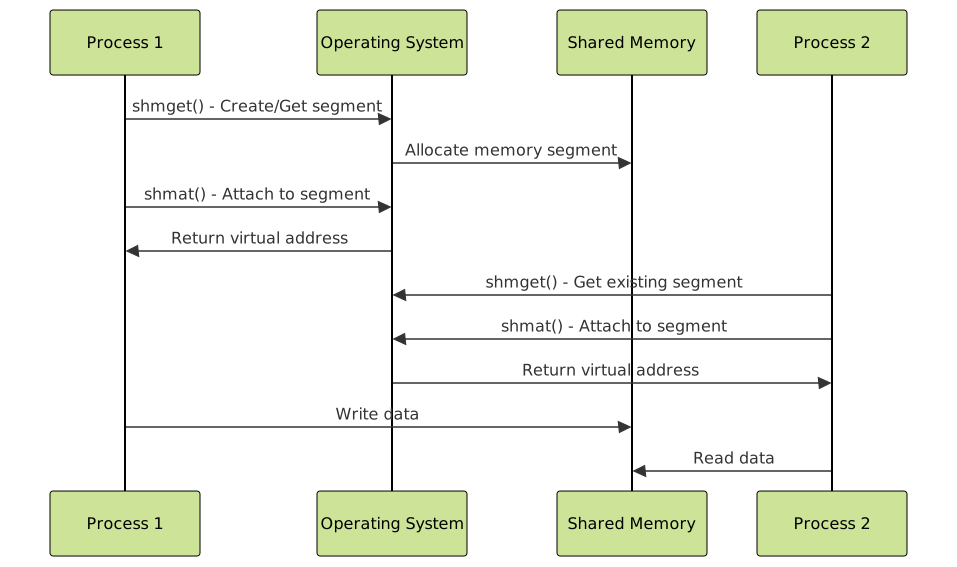
POSIX Shared Memory Implementation
POSIX provides a standardized interface for shared memory operations. Let’s examine the core functions and their usage:
Creating and Opening Shared Memory
#include <sys/mman.h>
#include <sys/stat.h>
#include <fcntl.h>
#include <unistd.h>
#include <stdio.h>
#include <stdlib.h>
#include <string.h>

#define SHARED_MEM_NAME "/my_shared_memory"
#define SHARED_MEM_SIZE 4096

int main() {
    int shm_fd;
    char *shared_data;

    // Create shared memory object
    shm_fd = shm_open(SHARED_MEM_NAME, O_CREAT | O_RDWR, 0666);
    if (shm_fd == -1) {
        perror("shm_open failed");
        exit(1);
    }

    // Set the size of shared memory
    if (ftruncate(shm_fd, SHARED_MEM_SIZE) == -1) {
        perror("ftruncate failed");
        exit(1);
    }

    // Map shared memory into process address space
    shared_data = mmap(0, SHARED_MEM_SIZE,
                      PROT_READ | PROT_WRITE, MAP_SHARED, shm_fd, 0);
    if (shared_data == MAP_FAILED) {
        perror("mmap failed");
        exit(1);
    }

    // Write data to shared memory
    strcpy(shared_data, "Hello from shared memory!");
    printf("Data written to shared memory: %s\n", shared_data);

    // Keep the program running for demonstration
    printf("Press Enter to continue...\n");
    getchar();

    // Cleanup
    munmap(shared_data, SHARED_MEM_SIZE);
    close(shm_fd);
    shm_unlink(SHARED_MEM_NAME);

    return 0;
}
Expected Output:
Data written to shared memory: Hello from shared memory!
Press Enter to continue...
System V Shared Memory
System V IPC provides an alternative shared memory interface that’s widely supported across Unix-like systems. Here’s how to implement it:
Producer Process Example
#include <sys/ipc.h>
#include <sys/shm.h>
#include <stdio.h>
#include <stdlib.h>
#include <string.h>
#include <unistd.h>

#define SHM_SIZE 1024
#define SHM_KEY 12345

typedef struct {
    int counter;
    char message[256];
    int ready;
} shared_data_t;

int main() {
    int shmid;
    shared_data_t *shared_mem;

    // Create shared memory segment
    shmid = shmget(SHM_KEY, sizeof(shared_data_t), IPC_CREAT | 0666);
    if (shmid == -1) {
        perror("shmget failed");
        exit(1);
    }

    // Attach shared memory
    shared_mem = (shared_data_t *)shmat(shmid, NULL, 0);
    if (shared_mem == (shared_data_t *)(-1)) {
        perror("shmat failed");
        exit(1);
    }

    // Initialize shared data
    shared_mem->counter = 0;
    shared_mem->ready = 0;
    strcpy(shared_mem->message, "Initial message");

    printf("Producer: Shared memory initialized\n");
    printf("Shared memory ID: %d\n", shmid);

    // Simulate data production
    for (int i = 0; i < 5; i++) {
        shared_mem->counter = i + 1;
        sprintf(shared_mem->message, "Message number %d from producer", i + 1);
        shared_mem->ready = 1;

        printf("Producer: Sent message %d\n", i + 1);
        sleep(2);

        shared_mem->ready = 0; // Reset for next message
    }

    // Detach shared memory
    shmdt(shared_mem);

    printf("Producer: Finished\n");
    return 0;
}
Consumer Process Example
#include <sys/ipc.h>
#include <sys/shm.h>
#include <stdio.h>
#include <stdlib.h>
#include <unistd.h>

#define SHM_KEY 12345

typedef struct {
    int counter;
    char message[256];
    int ready;
} shared_data_t;

int main() {
    int shmid;
    shared_data_t *shared_mem;

    // Get existing shared memory segment
    shmid = shmget(SHM_KEY, sizeof(shared_data_t), 0666);
    if (shmid == -1) {
        perror("shmget failed - make sure producer is running first");
        exit(1);
    }

    // Attach shared memory
    shared_mem = (shared_data_t *)shmat(shmid, NULL, 0);
    if (shared_mem == (shared_data_t *)(-1)) {
        perror("shmat failed");
        exit(1);
    }

    printf("Consumer: Connected to shared memory\n");
    printf("Shared memory ID: %d\n", shmid);

    // Read data from shared memory
    int last_counter = 0;
    for (int i = 0; i < 5; i++) {
        // Wait for new data
        while (shared_mem->ready == 0 || shared_mem->counter == last_counter) {
            usleep(100000); // Sleep for 100ms
        }

        printf("Consumer: Received - Counter: %d, Message: %s\n",
               shared_mem->counter, shared_mem->message);
        last_counter = shared_mem->counter;
    }

    // Detach shared memory
    shmdt(shared_mem);

    // Remove shared memory segment
    shmctl(shmid, IPC_RMID, NULL);

    printf("Consumer: Finished and cleaned up\n");
    return 0;
}
Expected Output (Producer):
Producer: Shared memory initialized
Shared memory ID: 32768
Producer: Sent message 1
Producer: Sent message 2
Producer: Sent message 3
Producer: Sent message 4
Producer: Sent message 5
Producer: Finished
Expected Output (Consumer):
Consumer: Connected to shared memory
Shared memory ID: 32768
Consumer: Received - Counter: 1, Message: Message number 1 from producer
Consumer: Received - Counter: 2, Message: Message number 2 from producer
Consumer: Received - Counter: 3, Message: Message number 3 from producer
Consumer: Received - Counter: 4, Message: Message number 4 from producer
Consumer: Received - Counter: 5, Message: Message number 5 from producer
Consumer: Finished and cleaned up
Synchronization in Shared Memory
Since multiple processes can access shared memory simultaneously, synchronization mechanisms are crucial to prevent race conditions and ensure data consistency.

Using Semaphores for Synchronization
#include <sys/ipc.h>
#include <sys/shm.h>
#include <sys/sem.h>
#include <stdio.h>
#include <stdlib.h>
#include <unistd.h>

#define SHM_KEY 54321
#define SEM_KEY 56789

// Semaphore operations
struct sembuf sem_lock = {0, -1, 0};    // P operation (wait)
struct sembuf sem_unlock = {0, 1, 0};   // V operation (signal)

typedef struct {
    int data[100];
    int count;
} shared_buffer_t;

void semaphore_wait(int semid) {
    semop(semid, &sem_lock, 1);
}

void semaphore_signal(int semid) {
    semop(semid, &sem_unlock, 1);
}

int main() {
    int shmid, semid;
    shared_buffer_t *buffer;

    // Create shared memory
    shmid = shmget(SHM_KEY, sizeof(shared_buffer_t), IPC_CREAT | 0666);
    buffer = (shared_buffer_t *)shmat(shmid, NULL, 0);

    // Create semaphore
    semid = semget(SEM_KEY, 1, IPC_CREAT | 0666);
    semctl(semid, 0, SETVAL, 1); // Initialize semaphore to 1

    // Critical section with synchronization
    printf("Process %d: Entering critical section\n", getpid());

    semaphore_wait(semid); // Acquire lock

    // Simulate critical section work
    int old_count = buffer->count;
    sleep(1); // Simulate processing time
    buffer->count = old_count + 1;
    buffer->data[buffer->count - 1] = getpid();

    printf("Process %d: Updated count to %d\n", getpid(), buffer->count);

    semaphore_signal(semid); // Release lock

    printf("Process %d: Exiting critical section\n", getpid());

    // Cleanup (only last process should do this)
    shmdt(buffer);

    return 0;
}
Memory Mapping and Virtual Memory
Understanding how shared memory interacts with the virtual memory system is crucial for effective implementation:

Advanced Memory Mapping Example
#include <sys/mman.h>
#include <fcntl.h>
#include <unistd.h>
#include <stdio.h>
#include <stdlib.h>
#include <string.h>

#define MEMORY_SIZE (1024 * 1024) // 1MB

typedef struct {
    size_t size;
    int process_count;
    char data[MEMORY_SIZE - sizeof(size_t) - sizeof(int)];
} large_shared_data_t;

int main() {
    int shm_fd;
    large_shared_data_t *shared_mem;
    const char *shm_name = "/large_shared_memory";

    // Create and configure shared memory
    shm_fd = shm_open(shm_name, O_CREAT | O_RDWR, 0666);
    if (shm_fd == -1) {
        perror("shm_open");
        exit(1);
    }

    if (ftruncate(shm_fd, sizeof(large_shared_data_t)) == -1) {
        perror("ftruncate");
        exit(1);
    }

    // Map memory with specific flags
    shared_mem = mmap(NULL, sizeof(large_shared_data_t),
                     PROT_READ | PROT_WRITE,
                     MAP_SHARED | MAP_POPULATE, // Pre-populate pages
                     shm_fd, 0);

    if (shared_mem == MAP_FAILED) {
        perror("mmap");
        exit(1);
    }

    // Initialize if first process
    if (shared_mem->process_count == 0) {
        shared_mem->size = sizeof(large_shared_data_t);
        memset(shared_mem->data, 0, sizeof(shared_mem->data));
        printf("Initialized shared memory segment\n");
    }

    shared_mem->process_count++;
    printf("Process %d attached. Total processes: %d\n",
           getpid(), shared_mem->process_count);

    // Write some data
    snprintf(shared_mem->data, sizeof(shared_mem->data),
             "Data from process %d at address %p", getpid(), shared_mem);

    printf("Memory segment size: %zu bytes\n", shared_mem->size);
    printf("Virtual address: %p\n", shared_mem);
    printf("Data: %s\n", shared_mem->data);

    // Keep memory mapped for demonstration
    printf("Press Enter to detach...\n");
    getchar();

    shared_mem->process_count--;

    // Unmap memory
    if (munmap(shared_mem, sizeof(large_shared_data_t)) == -1) {
        perror("munmap");
    }

    close(shm_fd);

    // Remove shared memory if last process
    if (shared_mem->process_count == 0) {
        shm_unlink(shm_name);
        printf("Cleaned up shared memory\n");
    }

    return 0;
}
Performance Considerations and Best Practices
Shared memory offers excellent performance characteristics, but proper implementation is key to realizing its benefits:
Performance Comparison
| IPC Method | Data Copy Operations | Kernel Involvement | Performance Rating |
|---|---|---|---|
| Shared Memory | 0 | Minimal | Excellent |
| Message Queues | 2 | High | Good |
| Pipes | 2 | High | Good |
| Sockets | 2+ | Very High | Fair |
Optimization Techniques
#include <sys/mman.h>
#include <numa.h>
#include <stdio.h>

// Cache-aligned data structure for better performance
typedef struct __attribute__((aligned(64))) {
    volatile int producer_index;
    char padding1[60]; // Ensure cache line separation

    volatile int consumer_index;
    char padding2[60];

    int buffer[1024];
} optimized_ring_buffer_t;

int create_optimized_shared_memory() {
    int shm_fd;
    optimized_ring_buffer_t *buffer;

    shm_fd = shm_open("/optimized_buffer", O_CREAT | O_RDWR, 0666);
    ftruncate(shm_fd, sizeof(optimized_ring_buffer_t));

    // Map with optimizations
    buffer = mmap(NULL, sizeof(optimized_ring_buffer_t),
                 PROT_READ | PROT_WRITE,
                 MAP_SHARED | MAP_POPULATE | MAP_HUGETLB, // Use huge pages
                 shm_fd, 0);

    if (buffer == MAP_FAILED) {
        // Fallback without huge pages
        buffer = mmap(NULL, sizeof(optimized_ring_buffer_t),
                     PROT_READ | PROT_WRITE,
                     MAP_SHARED | MAP_POPULATE,
                     shm_fd, 0);
    }

    // Lock pages in memory to prevent swapping
    mlock(buffer, sizeof(optimized_ring_buffer_t));

    printf("Optimized shared memory created at %p\n", buffer);
    printf("Cache line size: %d bytes\n", sysconf(_SC_LEVEL1_DCACHE_LINESIZE));

    return shm_fd;
}
Error Handling and Debugging
Robust shared memory applications require comprehensive error handling and debugging capabilities:
#include <sys/shm.h>
#include <errno.h>
#include <string.h>

void print_shared_memory_info(int shmid) {
    struct shmid_ds shm_info;

    if (shmctl(shmid, IPC_STAT, &shm_info) == -1) {
        perror("shmctl IPC_STAT failed");
        return;
    }

    printf("=== Shared Memory Information ===\n");
    printf("Segment size: %zu bytes\n", shm_info.shm_segsz);
    printf("Last attach time: %s", ctime(&shm_info.shm_atime));
    printf("Last detach time: %s", ctime(&shm_info.shm_dtime));
    printf("Number of attached processes: %lu\n", shm_info.shm_nattch);
    printf("Creator PID: %d\n", shm_info.shm_cpid);
    printf("Last operation PID: %d\n", shm_info.shm_lpid);
    printf("Permission mode: %o\n", shm_info.shm_perm.mode);
}

int safe_shared_memory_create(key_t key, size_t size) {
    int shmid;

    // Try to create new segment
    shmid = shmget(key, size, IPC_CREAT | IPC_EXCL | 0666);

    if (shmid == -1) {
        if (errno == EEXIST) {
            // Segment already exists, try to get it
            shmid = shmget(key, 0, 0666);
            if (shmid == -1) {
                fprintf(stderr, "Cannot access existing segment: %s\n",
                       strerror(errno));
                return -1;
            }

            // Verify size matches
            struct shmid_ds info;
            shmctl(shmid, IPC_STAT, &info);
            if (info.shm_segsz != size) {
                fprintf(stderr, "Size mismatch: expected %zu, got %zu\n",
                       size, info.shm_segsz);
                return -1;
            }

            printf("Using existing shared memory segment\n");
        } else {
            fprintf(stderr, "shmget failed: %s\n", strerror(errno));
            return -1;
        }
    } else {
        printf("Created new shared memory segment\n");
    }

    print_shared_memory_info(shmid);
    return shmid;
}
Conclusion
Shared Memory IPC provides unparalleled performance for inter-process communication by eliminating data copying overhead and minimizing kernel involvement. However, this efficiency comes with the responsibility of proper synchronization and careful memory management.
Key takeaways for implementing shared memory successfully:
- Choose the right approach: POSIX shared memory for portability, System V for legacy compatibility
- Implement proper synchronization: Use semaphores, mutexes, or atomic operations to prevent race conditions
- Handle errors gracefully: Check return values and provide meaningful error messages
- Optimize for performance: Consider cache alignment, huge pages, and memory locking for critical applications
- Clean up resources: Always detach and remove shared memory segments when done
By following these principles and understanding the underlying mechanisms, you can leverage shared memory to build high-performance, scalable applications that efficiently share data between multiple processes.
Related Posts

Message Passing: Complete Guide to Inter-Process Communication in Operating Systems
Message passing is a fundamental inter-process communication (IPC) mechanism that enables processes to exchange data and synchronize their activities in...

Multithreading in Operating Systems: Benefits, Challenges, and Implementation Guide
What is Multithreading in Operating Systems? Multithreading is a fundamental concept in modern operating systems that allows a single process...

Virtual Memory in OS: Complete Guide to Paging, Segmentation and Address Translation
Virtual memory is one of the most fundamental concepts in modern operating systems, enabling efficient memory management and providing crucial...

Socket Programming: Complete Guide to Network Inter-process Communication in Operating Systems
Socket programming forms the backbone of network communication in modern operating systems, enabling processes to communicate across different machines or...

Thread vs Process: Complete Guide to Differences and When to Use Each
Understanding the fundamental differences between threads and processes is crucial for system programming, application design, and performance optimization. While both...

Memory Management in Operating System: Virtual and Physical Memory Fundamentals
Introduction to Memory Management Memory management is one of the most critical functions of an operating system, responsible for efficiently...

Producer Consumer Problem: Complete Guide to Bounded Buffer Implementation with Code Examples
The Producer Consumer Problem, also known as the bounded buffer problem, is one of the most fundamental synchronization problems in...

Memory Allocation Techniques: Contiguous vs Non-contiguous Management Strategies
Memory allocation is a fundamental aspect of operating system design that determines how programs and data are stored and accessed...

Garbage Collection in Operating System: Complete Guide to Automatic Memory Management
What is Garbage Collection in Operating Systems? Garbage collection is an automatic memory management technique used by operating systems and...

Buffering in Operating System: Complete Guide to Single, Double and Circular Buffer Implementation
What is Buffering in Operating System? Buffering in operating systems is a fundamental technique used to temporarily store data in...

C++ Threads: Basics of Multithreading
In today's world of multi-core processors, understanding and implementing multithreading is crucial for developing efficient C++ applications. This article delves...
Pipes in Operating System: Complete Guide to Anonymous and Named Pipes
Pipes are one of the most fundamental and widely used Inter-Process Communication (IPC) mechanisms in Unix-like operating systems. They provide...