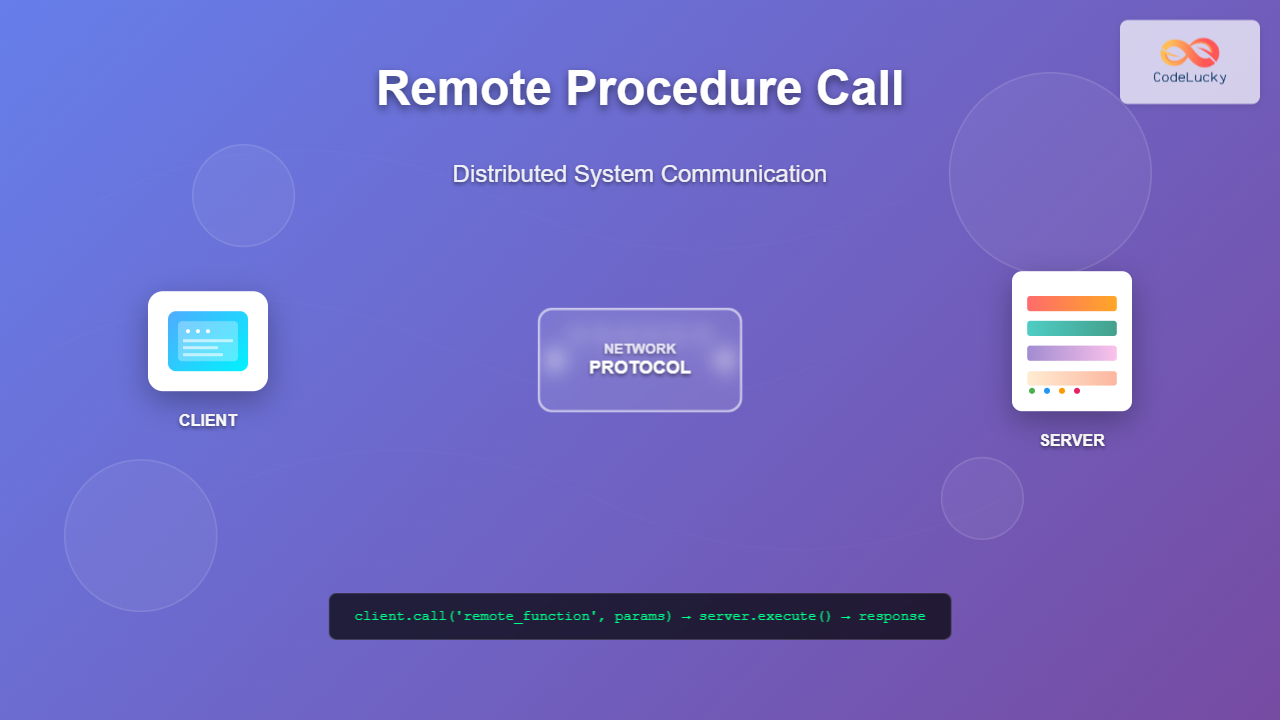
Remote Procedure Call (RPC) is a fundamental communication protocol that enables programs to execute procedures or functions on remote systems as if they were local calls. This powerful mechanism forms the backbone of modern distributed systems, allowing seamless interaction between processes running on different machines across networks.
What is Remote Procedure Call (RPC)?
RPC abstracts the complexities of network communication by providing a programming model where developers can invoke functions on remote servers using the same syntax as local function calls. The underlying network operations, data serialization, and error handling are transparently managed by the RPC framework.
Core Components of RPC Architecture
Client and Server Stubs
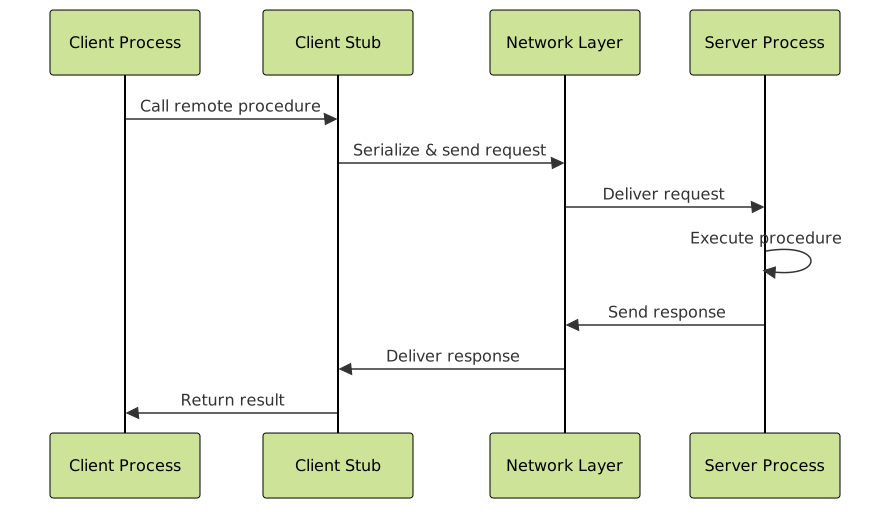
Client Stub: Acts as a local proxy for the remote procedure. It handles parameter marshaling, network communication initiation, and result unmarshaling.
Server Stub: Receives incoming requests, unmarshals parameters, invokes the actual procedure, and marshals the return values for transmission back to the client.
RPC Runtime System
The runtime system manages the underlying network communication, handles connection establishment, implements transport protocols, and provides error recovery mechanisms.
Interface Definition Language (IDL)
IDL serves as a contract specification that defines the remote procedures, their parameters, return types, and data structures. This language-neutral specification ensures compatibility across different programming languages and platforms.
RPC Communication Flow

The communication process involves eight distinct steps:
- Procedure Invocation: Client calls the remote procedure through the client stub
- Parameter Marshaling: Arguments are serialized into a network-transmittable format
- Message Transmission: Serialized data is sent over the network
- Server Reception: Server stub receives and processes the incoming request
- Parameter Unmarshaling: Server deserializes the parameters
- Procedure Execution: Actual procedure runs on the server
- Result Transmission: Return values are marshaled and sent back
- Client Processing: Client stub unmarshals the response and returns results
Types of RPC Implementation
Synchronous RPC
In synchronous RPC, the client blocks execution until the server responds. This model simplifies programming logic but can lead to performance bottlenecks in high-latency environments.
# Synchronous RPC Example (Python-like pseudocode)
client = RPCClient("server_address")
result = client.calculate_sum(10, 20)  # Blocks until response
print(f"Result: {result}")
Asynchronous RPC
Asynchronous RPC allows clients to continue processing while waiting for responses. This approach improves system throughput and responsiveness.
# Asynchronous RPC Example
client = AsyncRPCClient("server_address")
future = client.calculate_sum_async(10, 20)  # Non-blocking
# Continue other processing...
result = future.get()  # Retrieve result when ready
One-Way RPC
One-way RPC sends requests without expecting responses, suitable for fire-and-forget operations like logging or notifications.
Popular RPC Frameworks and Protocols
gRPC (Google RPC)
gRPC uses Protocol Buffers for serialization and HTTP/2 for transport. It supports multiple programming languages and provides features like streaming, authentication, and load balancing.
// Protocol Buffer definition
service Calculator {
    rpc Add(AddRequest) returns (AddResponse);
    rpc Multiply(MultiplyRequest) returns (MultiplyResponse);
}

message AddRequest {
    int32 a = 1;
    int32 b = 2;
}

message AddResponse {
    int32 result = 1;
}
JSON-RPC
JSON-RPC uses JSON for data exchange, making it lightweight and web-friendly. It’s commonly used in web applications and APIs.
{
    "jsonrpc": "2.0",
    "method": "calculate_sum",
    "params": {"a": 10, "b": 20},
    "id": 1
}

{
    "jsonrpc": "2.0",
    "result": 30,
    "id": 1
}
Apache Thrift
Developed by Facebook, Thrift supports multiple protocols and transport layers, offering flexibility in deployment scenarios.
RPC vs Other Communication Paradigms

| Aspect | RPC | REST | Message Queues |
|---|---|---|---|
| Abstraction Level | Function calls | Resource operations | Message exchange |
| Coupling | Tight coupling | Loose coupling | Very loose coupling |
| Performance | High (binary protocols) | Moderate (HTTP overhead) | Variable (depends on broker) |
| Complexity | Low for developers | Moderate | High (infrastructure) |
Implementation Example: Simple RPC System
Let’s examine a basic RPC implementation to understand the underlying mechanisms:
Server Implementation
import socket
import pickle
import threading

class RPCServer:
    def __init__(self, host='localhost', port=8888):
        self.host = host
        self.port = port
        self.functions = {}

    def register_function(self, func, name=None):
        """Register a function to be callable via RPC"""
        function_name = name or func.__name__
        self.functions[function_name] = func

    def handle_request(self, request_data):
        """Process incoming RPC request"""
        try:
            request = pickle.loads(request_data)
            function_name = request['function']
            args = request.get('args', ())
            kwargs = request.get('kwargs', {})

            if function_name in self.functions:
                result = self.functions[function_name](*args, **kwargs)
                response = {'result': result, 'error': None}
            else:
                response = {'result': None, 'error': f'Unknown function: {function_name}'}

        except Exception as e:
            response = {'result': None, 'error': str(e)}

        return pickle.dumps(response)

    def start_server(self):
        """Start the RPC server"""
        server_socket = socket.socket(socket.AF_INET, socket.SOCK_STREAM)
        server_socket.setsockopt(socket.SOL_SOCKET, socket.SO_REUSEADDR, 1)
        server_socket.bind((self.host, self.port))
        server_socket.listen(5)

        print(f"RPC Server listening on {self.host}:{self.port}")

        while True:
            client_socket, address = server_socket.accept()
            client_thread = threading.Thread(
                target=self.handle_client,
                args=(client_socket,)
            )
            client_thread.start()

    def handle_client(self, client_socket):
        """Handle individual client connections"""
        try:
            request_data = client_socket.recv(4096)
            response_data = self.handle_request(request_data)
            client_socket.send(response_data)
        finally:
            client_socket.close()

# Example server functions
def add_numbers(a, b):
    return a + b

def multiply_numbers(a, b):
    return a * b

def get_user_info(user_id):
    # Simulate database lookup
    users = {
        1: {"name": "Alice", "email": "[email protected]"},
        2: {"name": "Bob", "email": "[email protected]"}
    }
    return users.get(user_id, {"error": "User not found"})

# Start server
if __name__ == "__main__":
    server = RPCServer()
    server.register_function(add_numbers)
    server.register_function(multiply_numbers)
    server.register_function(get_user_info)
    server.start_server()
Client Implementation
import socket
import pickle

class RPCClient:
    def __init__(self, host='localhost', port=8888):
        self.host = host
        self.port = port

    def call(self, function_name, *args, **kwargs):
        """Make a remote procedure call"""
        request = {
            'function': function_name,
            'args': args,
            'kwargs': kwargs
        }

        # Establish connection
        client_socket = socket.socket(socket.AF_INET, socket.SOCK_STREAM)

        try:
            client_socket.connect((self.host, self.port))

            # Send request
            request_data = pickle.dumps(request)
            client_socket.send(request_data)

            # Receive response
            response_data = client_socket.recv(4096)
            response = pickle.loads(response_data)

            if response['error']:
                raise Exception(f"RPC Error: {response['error']}")

            return response['result']

        finally:
            client_socket.close()

# Example client usage
if __name__ == "__main__":
    client = RPCClient()

    # Make remote calls
    try:
        result1 = client.call('add_numbers', 15, 25)
        print(f"15 + 25 = {result1}")

        result2 = client.call('multiply_numbers', 7, 8)
        print(f"7 × 8 = {result2}")

        user_info = client.call('get_user_info', 1)
        print(f"User info: {user_info}")

    except Exception as e:
        print(f"Error: {e}")
Expected Output
15 + 25 = 40
7 × 8 = 56
User info: {'name': 'Alice', 'email': '[email protected]'}
Advanced RPC Features
Authentication and Security
Modern RPC systems implement various security mechanisms:
- TLS/SSL Encryption: Secures data transmission
- Authentication Tokens: Validates client identity
- Authorization: Controls access to specific procedures
- Rate Limiting: Prevents abuse and ensures fair usage
Load Balancing and Service Discovery

Enterprise RPC systems often include:
- Service Discovery: Automatic detection of available services
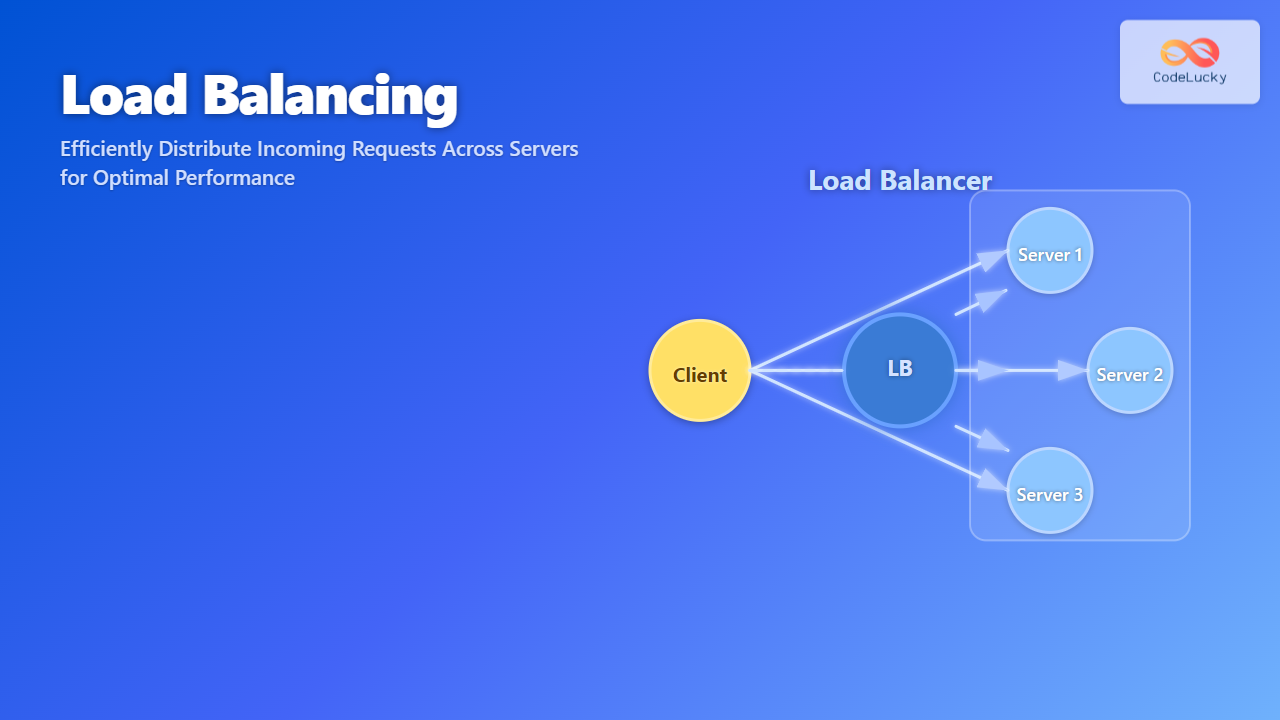
- Load Balancing: Distribution of requests across multiple server instances
- Health Monitoring: Continuous service health assessment
- Circuit Breakers: Fault tolerance mechanisms
Error Handling and Fault Tolerance
Robust RPC implementations handle various failure scenarios:
class RobustRPCClient:
    def __init__(self, servers, max_retries=3, timeout=5):
        self.servers = servers
        self.max_retries = max_retries
        self.timeout = timeout

    def call_with_retry(self, function_name, *args, **kwargs):
        """Call with automatic retry and failover"""
        for attempt in range(self.max_retries):
            for server in self.servers:
                try:
                    client = RPCClient(server['host'], server['port'])
                    return client.call(function_name, *args, **kwargs)

                except ConnectionError:
                    print(f"Server {server} unavailable, trying next...")
                    continue
                except Exception as e:
                    if attempt == self.max_retries - 1:
                        raise e
                    print(f"Attempt {attempt + 1} failed, retrying...")
                    break

        raise Exception("All servers unavailable")
Performance Optimization Strategies
Connection Pooling
Maintaining persistent connections reduces the overhead of establishing new connections for each RPC call.
Batching
Combining multiple procedure calls into a single request minimizes network round trips.
# Batch RPC example
batch_request = [
    {'function': 'get_user', 'args': [1]},
    {'function': 'get_user', 'args': [2]},
    {'function': 'calculate_sum', 'args': [10, 20]}
]

results = client.batch_call(batch_request)
Compression
Data compression reduces bandwidth usage, especially for large payloads.
Caching
Client-side and server-side caching improves response times for frequently requested data.
Real-World Applications
Microservices Architecture
RPC enables efficient inter-service communication in microservices architectures, allowing services to interact seamlessly while maintaining separation of concerns.
Distributed Database Systems
Database clusters use RPC for coordination, replication, and distributed query processing.
Content Delivery Networks (CDNs)
CDNs utilize RPC for cache invalidation, content distribution, and performance monitoring across geographically distributed nodes.
Financial Trading Systems
High-frequency trading platforms rely on low-latency RPC implementations for real-time market data processing and order execution.
Best Practices and Design Considerations
Interface Design
- Keep interfaces simple: Design procedures with clear, focused responsibilities
- Use strong typing: Define precise parameter and return types
- Version compatibility: Plan for interface evolution and backward compatibility
- Documentation: Provide comprehensive API documentation
Error Handling
- Explicit error types: Define specific error categories and codes
- Timeout management: Implement appropriate timeout values
- Graceful degradation: Handle partial failures elegantly
- Logging: Maintain detailed logs for troubleshooting
Performance Monitoring
- Metrics collection: Track latency, throughput, and error rates
- Distributed tracing: Monitor request flows across services
- Alerting: Set up proactive monitoring and alerting
- Performance testing: Regular load and stress testing
Common Challenges and Solutions
Network Partitions
Challenge: Network failures can isolate parts of the distributed system.
Solution: Implement partition tolerance through data replication and eventual consistency models.
Latency Variations
Challenge: Network latency can vary significantly, affecting application performance.
Solution: Use adaptive timeout strategies and implement local caching where appropriate.
Serialization Overhead
Challenge: Data serialization and deserialization can become performance bottlenecks.
Solution: Choose efficient serialization formats like Protocol Buffers or MessagePack, and consider schema evolution strategies.
Service Dependencies
Challenge: Complex service dependencies can create cascading failures.
Solution: Implement circuit breakers, bulkhead patterns, and asynchronous communication where possible.

Future Trends in RPC Technology
HTTP/3 and QUIC Integration
Next-generation RPC frameworks are adopting HTTP/3 and QUIC protocols for improved performance over unreliable networks.
WebAssembly (WASM) Support
RPC systems are beginning to support WebAssembly modules, enabling portable and secure code execution across different environments.
AI and Machine Learning Integration
Modern RPC frameworks are incorporating AI-driven features like intelligent load balancing, predictive scaling, and automated fault detection.
Edge Computing Optimization
RPC implementations are being optimized for edge computing scenarios, where low latency and bandwidth efficiency are critical.
Remote Procedure Call remains a cornerstone technology in distributed systems, enabling developers to build scalable, maintainable applications that span multiple machines and networks. By understanding RPC principles, implementation patterns, and best practices, developers can leverage this powerful communication paradigm to create robust distributed applications that meet modern performance and reliability requirements.
As distributed systems continue to evolve, RPC technology adapts to meet new challenges, incorporating advanced features like intelligent routing, adaptive security, and cross-platform compatibility. Mastering RPC concepts and implementation techniques is essential for any developer working with distributed systems, microservices architectures, or cloud-native applications.
Related Posts
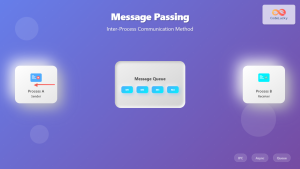
Message Passing: Complete Guide to Inter-Process Communication in Operating Systems
Message passing is a fundamental inter-process communication (IPC) mechanism that enables processes to exchange data and synchronize their activities in...

Socket Programming: Complete Guide to Network Inter-process Communication in Operating Systems
Socket programming forms the backbone of network communication in modern operating systems, enabling processes to communicate across different machines or...

C Socket Programming: Network Communication Basics
In the world of modern computing, network communication is the backbone of countless applications and services. Whether you're building a...
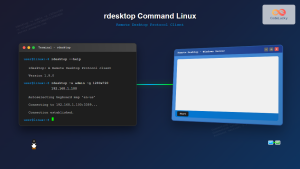
rdesktop Command Linux: Complete Guide to Remote Desktop Protocol Client
The rdesktop command is a powerful Remote Desktop Protocol (RDP) client for Linux systems that enables seamless connections to Windows...
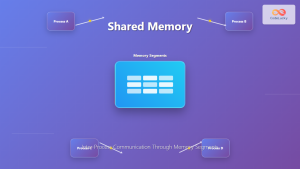
Shared Memory: Complete Guide to IPC Through Memory Segments
Introduction to Shared Memory IPC Shared Memory is one of the most efficient Inter-Process Communication (IPC) mechanisms available in modern...
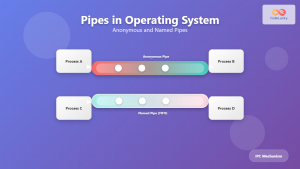
Pipes in Operating System: Complete Guide to Anonymous and Named Pipes
Pipes are one of the most fundamental and widely used Inter-Process Communication (IPC) mechanisms in Unix-like operating systems. They provide...

Python Asyncio: Asynchronous Programming in Python
Python's asyncio module is a game-changer in the world of concurrent programming. It provides a framework for writing single-threaded concurrent...

PHP Socket Programming: Network Communication
In the world of web development, understanding network communication is crucial. PHP, a versatile server-side scripting language, offers powerful tools...
Distributed Operating System: Complete Guide to Network-based OS Architecture
What is a Distributed Operating System? A distributed operating system is a sophisticated software system that manages and coordinates multiple...

Java Networking: Socket Programming
Java's robust networking capabilities make it an excellent choice for developing distributed applications. At the heart of Java's networking prowess...
Python await Keyword: Handling Asynchronous Operations
The await keyword is a powerful tool in Python's arsenal for handling asynchronous operations. It allows you to write code...
vncserver Command Linux: Complete Guide to VNC Server Setup and Management
The vncserver command is a powerful tool in Linux that enables remote desktop access by starting a Virtual Network Computing...
- What is Remote Procedure Call (RPC)?
- Core Components of RPC Architecture
- RPC Communication Flow
- Types of RPC Implementation
- Popular RPC Frameworks and Protocols
- RPC vs Other Communication Paradigms
- Implementation Example: Simple RPC System
- Advanced RPC Features
- Performance Optimization Strategies
- Real-World Applications
- Best Practices and Design Considerations
- Common Challenges and Solutions
- Future Trends in RPC Technology