Introduction to Performance Testing in Agile Development
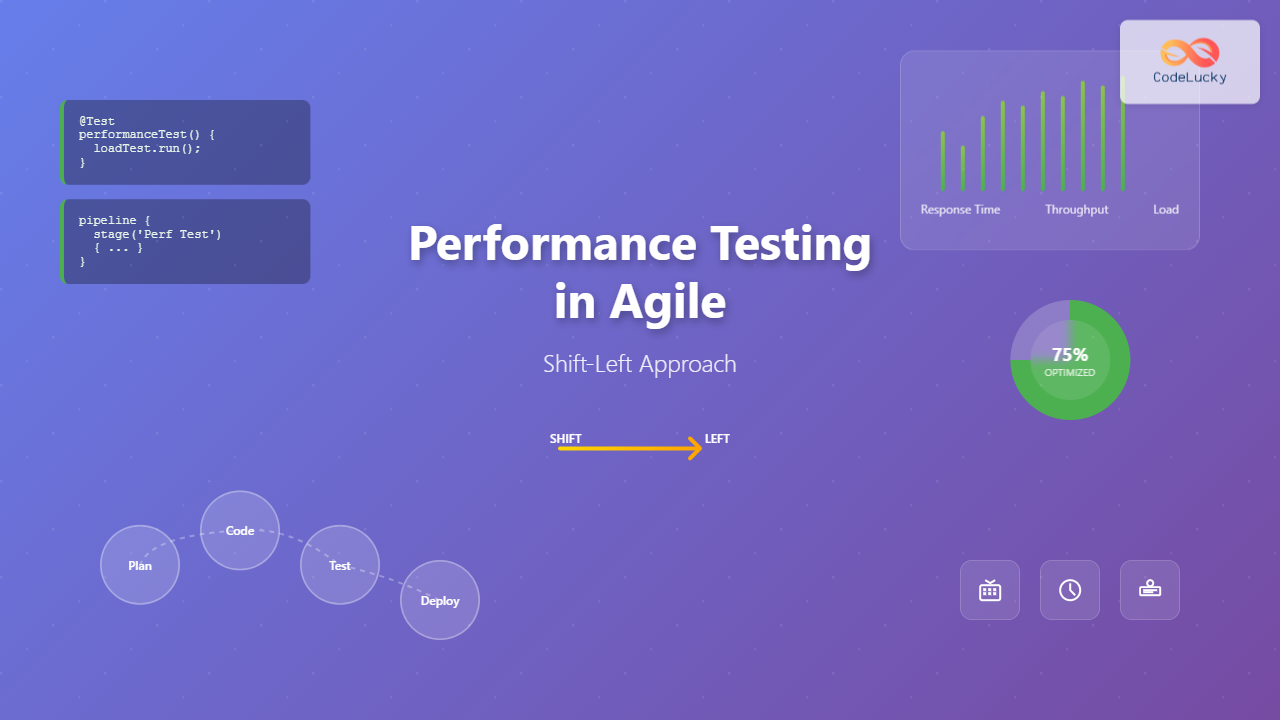
Performance testing has traditionally been relegated to the final phases of software development, often resulting in costly fixes and delayed releases. In today’s fast-paced Agile environments, this approach no longer suffices. The shift-left methodology revolutionizes performance testing by integrating it early and continuously throughout the development lifecycle.
The shift-left approach in performance testing means moving testing activities earlier in the software development process, rather than waiting until the end. This proactive strategy enables teams to identify and resolve performance issues before they become expensive problems, ultimately delivering better user experiences and more reliable software.
Understanding the Shift-Left Testing Philosophy
Shift-left testing represents a fundamental paradigm shift in how we approach software quality assurance. Instead of treating performance testing as a gate at the end of development, it becomes an integral part of every sprint and development iteration.
Core Principles of Shift-Left Performance Testing
The shift-left approach is built on several foundational principles that guide its implementation. Early detection focuses on identifying performance bottlenecks during the design and coding phases, when fixes are significantly less expensive. Continuous validation ensures that performance criteria are checked with every code commit and build, preventing regression issues from accumulating.
Collaborative responsibility makes performance testing everyone’s concern, not just the QA team’s responsibility. Developers, testers, and operations teams work together to maintain performance standards. Rapid feedback loops provide immediate insights into performance impacts, enabling quick course corrections.
Benefits of Early Performance Testing
Implementing performance testing early in the Agile process delivers substantial benefits across multiple dimensions. Cost reduction is perhaps the most immediate advantage, as fixing performance issues during development costs significantly less than addressing them in production. Studies show that bugs fixed during the requirements phase cost 100 times less than those fixed in production.
Risk mitigation becomes more effective when performance testing is integrated early. Teams can identify architectural issues, resource constraints, and scalability problems before they impact user experience. This proactive approach prevents the cascade of problems that often occur when performance issues are discovered late in the development cycle.
Improved team collaboration emerges naturally when performance testing becomes everyone’s responsibility. Developers gain deeper understanding of performance implications, while testers provide valuable insights during the design phase. This collaborative approach leads to better architectural decisions and more performance-conscious coding practices.
Traditional vs. Agile Performance Testing Approaches
Understanding the differences between traditional and Agile performance testing approaches is crucial for successful implementation of shift-left strategies.
Traditional Performance Testing Challenges
Traditional performance testing typically occurs at the end of the development cycle, creating several significant challenges. Late discovery of issues means that performance problems are often found when they’re most expensive to fix. By this time, architectural changes may be nearly impossible, forcing teams to accept suboptimal solutions.
Limited feedback cycles in traditional approaches mean that developers may not receive performance feedback for weeks or months after writing code. This delay makes it difficult to correlate performance issues with specific code changes, complicating the debugging process.
Resource bottlenecks frequently occur when all performance testing is concentrated at the end of the project. Testing teams become overwhelmed, and environments may not be available when needed, leading to rushed or incomplete testing.
Agile Performance Testing Advantages
Agile performance testing addresses these traditional challenges through continuous integration and early validation. Immediate feedback allows developers to understand the performance impact of their code changes within hours or days, rather than weeks or months.
Incremental validation ensures that each sprint’s deliverables meet performance criteria before moving forward. This approach prevents the accumulation of performance debt that can cripple application performance over time.
Distributed responsibility means that performance considerations are built into every role and phase of development. Developers write performance-conscious code, architects design with scalability in mind, and testers validate performance continuously.
Implementing Shift-Left Performance Testing Strategy
Successful implementation of shift-left performance testing requires careful planning and systematic execution across multiple phases of the development lifecycle.
Phase 1: Requirements and Design Integration
Performance testing should begin during the requirements gathering phase. Performance requirements definition involves establishing clear, measurable performance criteria for response times, throughput, and resource utilization. These requirements should be specific, such as “95% of API calls must respond within 200ms under normal load conditions.”
Architecture performance review ensures that system design decisions consider performance implications from the outset. This includes evaluating database design, caching strategies, service architectures, and integration patterns for their potential performance impact.
Risk assessment during the design phase helps identify potential performance bottlenecks before code is written. Teams can analyze expected load patterns, identify high-risk components, and plan appropriate testing strategies.
Phase 2: Development Integration
Integrating performance testing into the development phase requires establishing automated processes and developer-friendly tools. Unit performance testing involves creating performance tests for individual components and methods, allowing developers to validate performance at the code level.
Code review integration includes performance considerations in the standard code review process. Reviewers evaluate code changes for potential performance impacts, ensuring that performance-conscious practices are followed consistently.
Continuous integration integration automatically runs performance tests as part of the build process. This ensures that performance regressions are detected immediately, rather than being discovered later in the development cycle.
Phase 3: Sprint-Level Performance Validation
Each Agile sprint should include performance validation activities that ensure incremental progress toward performance goals. Sprint performance testing validates that new features and modifications meet established performance criteria before sprint completion.
Performance debt tracking monitors the accumulation of performance-related technical debt, ensuring that teams address performance issues before they become critical problems.
Stakeholder communication keeps all team members informed about performance status, risks, and improvements throughout the sprint cycle.
Essential Tools and Technologies
Implementing shift-left performance testing effectively requires the right combination of tools and technologies that support early and continuous testing.
Performance Testing Tools for Agile Environments
JMeter remains one of the most popular open-source performance testing tools, offering excellent integration with CI/CD pipelines and comprehensive reporting capabilities. Its scripting flexibility and extensive protocol support make it suitable for testing various application types.
Gatling provides high-performance load testing with excellent CI/CD integration and detailed performance metrics. Its code-as-configuration approach appeals to development teams and supports version control integration.
K6 offers developer-centric performance testing with JavaScript-based test scripts and excellent integration with modern development workflows. Its cloud and on-premise deployment options provide flexibility for different organizational needs.
Artillery focuses on modern web applications and APIs, providing simple configuration and powerful performance testing capabilities. Its emphasis on ease of use makes it accessible to developers who may be new to performance testing.
Monitoring and Observability Tools
Effective shift-left performance testing requires comprehensive monitoring and observability capabilities. Application Performance Monitoring (APM) tools like New Relic, Dynatrace, and AppDynamics provide deep insights into application performance and help identify bottlenecks quickly.
Infrastructure monitoring tools such as Prometheus, Grafana, and DataDog offer visibility into system resources and infrastructure performance. This information is crucial for understanding the relationship between application performance and underlying infrastructure.
Log aggregation and analysis tools like ELK Stack (Elasticsearch, Logstash, Kibana) and Splunk help teams correlate performance issues with application behavior and system events.
CI/CD Integration Tools
Seamless integration with CI/CD pipelines is essential for shift-left performance testing success. Jenkins provides extensive plugin support for performance testing tools and offers flexible pipeline configuration options.
GitLab CI/CD offers built-in performance testing capabilities and excellent integration with version control workflows. Its container-based execution model simplifies test environment management.
Azure DevOps and GitHub Actions provide cloud-native CI/CD capabilities with good performance testing tool integration and scalable execution environments.
Best Practices for Agile Performance Testing
Implementing shift-left performance testing successfully requires following established best practices that have been proven effective in Agile environments.
Test Design and Strategy
Realistic test scenarios form the foundation of effective performance testing. Tests should reflect actual user behavior patterns, including typical navigation flows, data volumes, and usage patterns. This realism ensures that test results provide meaningful insights into production performance.
Incremental test complexity involves starting with simple performance tests and gradually increasing complexity as the application evolves. This approach allows teams to establish baseline performance and track improvements or regressions over time.
Risk-based testing focuses performance testing efforts on the most critical and high-risk components of the application. This targeted approach ensures that limited testing resources are used effectively.
Environment and Data Management
Production-like environments are essential for meaningful performance test results. While exact production replication may not be feasible, test environments should reflect production characteristics in terms of hardware specifications, network conditions, and data volumes.
Test data management ensures that performance tests use realistic data sets that reflect production conditions. This includes appropriate data volumes, complexity, and distribution patterns that mirror real-world usage.
Environment consistency maintains stable test environments that provide reliable and repeatable test results. Environmental variations can significantly impact performance test results, making it difficult to identify genuine performance improvements or regressions.
Metrics and Reporting
Meaningful metrics selection focuses on performance indicators that directly relate to user experience and business objectives. Common metrics include response time percentiles, throughput rates, error rates, and resource utilization levels.
Trend analysis tracks performance metrics over time to identify patterns, improvements, and regressions. This longitudinal view helps teams understand the impact of changes and make informed decisions about performance optimization.
Automated reporting provides stakeholders with regular updates on performance status without requiring manual intervention. Automated reports should highlight key metrics, trends, and any performance issues that require attention.
Overcoming Common Implementation Challenges
Organizations implementing shift-left performance testing often encounter predictable challenges that can be addressed through proper planning and execution.
Cultural and Organizational Challenges
Resistance to change is natural when introducing new processes and responsibilities. Success requires demonstrating the value of early performance testing through quick wins and clear communication of benefits. Starting with pilot projects can help build confidence and support for broader implementation.
Skill gaps may exist when development teams are asked to take on performance testing responsibilities. Addressing this challenge requires comprehensive training programs and mentoring support to build necessary capabilities across the team.
Tool and process integration can be complex when existing development workflows must accommodate new performance testing activities. Success requires careful planning and gradual implementation to minimize disruption to existing processes.
Technical Implementation Challenges
Test environment limitations often constrain performance testing efforts. Organizations may need to invest in additional infrastructure or cloud resources to support adequate performance testing capabilities.
Test data complexity can make it difficult to create realistic performance test scenarios. Teams may need to develop sophisticated test data generation and management strategies to support effective performance testing.
CI/CD pipeline integration requires careful balance between test coverage and build execution time. Performance tests must provide meaningful feedback without significantly slowing down the development process.
Solutions and Mitigation Strategies
Phased implementation allows organizations to gradually introduce shift-left performance testing without overwhelming teams or disrupting existing processes. Starting with critical components and expanding coverage over time helps build expertise and confidence.
Cross-functional collaboration ensures that all team members understand their role in performance testing success. Regular communication and shared responsibility help overcome organizational silos and build collective ownership of performance quality.
Continuous improvement processes help teams refine their performance testing approaches based on experience and changing requirements. Regular retrospectives and process adjustments ensure that performance testing practices evolve with organizational needs.
Performance Testing Metrics and KPIs
Effective performance testing requires careful selection and monitoring of metrics that provide meaningful insights into application performance and user experience.
User Experience Metrics
Response time percentiles provide more valuable insights than average response times by showing the distribution of user experiences. The 95th percentile response time, for example, indicates that 95% of users experience response times at or below this threshold, helping identify outliers that may indicate performance problems.
Page load times directly impact user satisfaction and business outcomes. Research shows that even small increases in page load time can significantly impact user engagement and conversion rates. Monitoring these metrics helps teams understand the business impact of performance improvements.
Error rates indicate system stability under load and help teams understand the relationship between performance and reliability. High error rates often accompany performance degradation and can indicate system capacity limits.
System Performance Metrics
Throughput measurements indicate system capacity and help teams understand how many concurrent users or transactions the system can handle effectively. This information is crucial for capacity planning and scaling decisions.
Resource utilization metrics including CPU usage, memory consumption, disk I/O, and network utilization help identify system bottlenecks and guide optimization efforts. Understanding resource consumption patterns helps teams make informed infrastructure and architecture decisions.
Database performance indicators such as query execution times, connection pool utilization, and lock contention provide insights into one of the most common sources of application performance problems.
Business Impact Metrics
Conversion rate impacts help teams understand how performance improvements translate into business value. Tracking the relationship between performance metrics and business outcomes helps justify performance improvement investments.
User engagement metrics such as session duration, page views, and user retention rates often correlate with application performance. Improved performance typically leads to better user engagement and higher satisfaction levels.
Cost optimization metrics track the financial impact of performance improvements, including reduced infrastructure costs, improved resource efficiency, and decreased support overhead.
Case Studies and Real-World Examples
Learning from real-world implementations helps teams understand how to apply shift-left performance testing principles effectively in their own environments.
E-commerce Platform Transformation
A major e-commerce platform struggling with seasonal performance issues implemented shift-left performance testing with remarkable results. By integrating performance testing into their sprint cycles, they reduced performance-related production issues by 75% and improved average page load times by 40%.
The transformation began with establishing performance requirements during the planning phase of each sprint. Developers were provided with performance testing tools and training, enabling them to validate performance at the unit and integration levels. Automated performance tests were integrated into their CI/CD pipeline, providing immediate feedback on performance impacts.
The results were dramatic: deployment frequency increased by 300% while performance incidents decreased significantly. The team’s confidence in their releases improved, and customer satisfaction scores increased due to better application performance.
Financial Services API Optimization
A financial services company providing APIs to partner organizations faced strict performance requirements and regulatory compliance needs. Their shift-left implementation focused on API performance testing integrated into their development workflow.
By implementing performance testing at the API level during development, they were able to identify and resolve performance bottlenecks before they impacted partner integrations. Their approach included automated performance regression testing, continuous monitoring, and proactive capacity planning.
The implementation resulted in 50% fewer production performance issues and improved partner satisfaction due to more reliable API performance. The early detection of performance problems saved an estimated 200 hours of debugging and remediation effort per quarter.
Future Trends and Evolution
The landscape of performance testing continues to evolve, driven by new technologies, methodologies, and changing user expectations.
Artificial Intelligence and Machine Learning Integration
Predictive performance analysis uses machine learning algorithms to predict potential performance issues based on code changes, system metrics, and historical data. This capability enables teams to address performance problems before they impact users.
Intelligent test generation leverages AI to automatically create performance test scenarios based on application usage patterns and user behavior analysis. This approach reduces the manual effort required to maintain comprehensive performance test suites.
Anomaly detection uses machine learning to identify unusual performance patterns that may indicate emerging issues. This capability helps teams detect subtle performance degradations that might otherwise go unnoticed.
Cloud-Native Performance Testing
Containerized testing environments provide consistent, scalable performance testing capabilities that can be easily integrated into modern development workflows. Container-based testing reduces environment setup time and improves test reliability.
Serverless performance testing enables cost-effective, on-demand performance testing that scales automatically based on testing needs. This approach reduces infrastructure costs and simplifies test environment management.
Microservices performance testing addresses the unique challenges of testing distributed systems, including service interdependencies, network latency, and failure propagation patterns.
Enhanced Developer Experience
IDE integration brings performance testing capabilities directly into development environments, making it easier for developers to create and run performance tests as part of their normal workflow.
Real-time performance feedback provides immediate insights into the performance impact of code changes, enabling developers to optimize performance continuously rather than addressing issues reactively.
Simplified tooling reduces the complexity of performance testing, making it more accessible to developers who may not have specialized performance testing expertise.
Conclusion and Next Steps
Implementing shift-left performance testing in Agile environments represents a fundamental improvement in how organizations approach software quality and user experience. By moving performance testing earlier in the development process, teams can identify and resolve issues when they’re least expensive to fix, ultimately delivering better software more efficiently.
Success requires commitment from all team members, appropriate tooling and infrastructure, and a culture that values performance as a key quality attribute. Organizations that successfully implement shift-left performance testing typically see significant improvements in software quality, development efficiency, and user satisfaction.
The journey toward effective shift-left performance testing begins with small steps: establishing performance requirements, integrating basic performance tests into development workflows, and building team capabilities over time. As teams gain experience and confidence, they can expand their performance testing practices to cover more scenarios and provide deeper insights into application performance.
The future of performance testing lies in intelligent, automated approaches that provide developers with the insights they need to build high-performance applications from the ground up. Organizations that embrace this evolution will be better positioned to deliver exceptional user experiences in an increasingly competitive digital landscape.
Related Posts
Automated Testing: Complete Strategy Guide for Agile Development Teams
Understanding Automated Testing in Agile Context Automated testing serves as the backbone of successful Agile development, enabling teams to deliver...
Continuous Testing: Quality at Speed in Modern Agile Development
Understanding Continuous Testing in the Agile Era Continuous testing has emerged as a cornerstone of modern Agile development, fundamentally transforming...

Unit Testing: Best Practices for Agile Development Teams
Unit testing forms the backbone of quality assurance in Agile development environments. As teams embrace rapid iteration cycles and continuous...
Quality Metrics: Defect Rates and Trends – Complete Guide for Agile Teams
Understanding Quality Metrics in Agile Development Quality metrics serve as the compass for Agile teams navigating the complex landscape of...
Performance Management: Agile Approach to Modern Reviews and Continuous Feedback
Understanding Agile Performance Management Traditional performance reviews often fail to capture the dynamic nature of modern software development teams. Agile...
Integration Testing: Continuous Integration Best Practices and Implementation Guide
Understanding Integration Testing in Continuous Integration Integration testing within a continuous integration (CI) framework represents a critical shift from traditional...

Exploratory Testing: Complete Guide to Unscripted Testing Methods in Agile
Exploratory testing represents one of the most dynamic and investigative approaches to software quality assurance. Unlike traditional scripted testing, this...
Test-Driven Development (TDD): Master the Red-Green-Refactor Cycle for Better Code Quality
Test-Driven Development (TDD) revolutionizes how developers approach software creation by flipping the traditional coding process upside down. Instead of writing...
Pilot Projects: Testing Agile Adoption – Complete Implementation Guide
Transitioning to Agile methodologies represents a significant organizational shift that requires careful planning and execution. Pilot projects serve as crucial...
Agile Metrics: Complete Guide to Measuring Team Performance and Productivity
Measuring team performance in agile environments requires a strategic approach that goes beyond traditional project management metrics. Agile metrics provide...
Acceptance Testing: Complete Guide to Validating User Requirements in Agile Development
Acceptance testing stands as the final gatekeeper between development and production, ensuring that software meets user expectations and business requirements....

Analysis Paralysis: Breaking Free from Over-Planning in Agile Development
Analysis paralysis is one of the most insidious enemies of Agile development teams. While thorough planning seems like a virtue,...