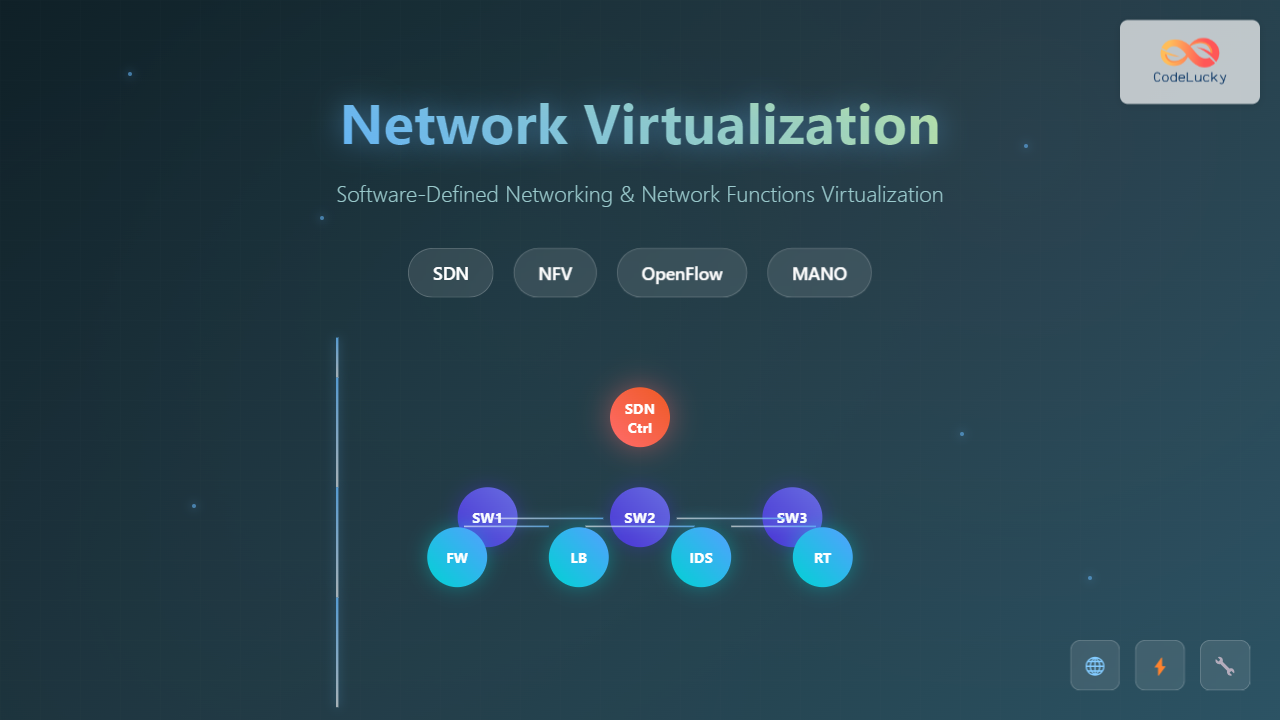
Network virtualization has revolutionized modern IT infrastructure by decoupling network functions from physical hardware, enabling unprecedented flexibility and efficiency. This comprehensive guide explores Software-Defined Networking (SDN) and Network Functions Virtualization (NFV), two foundational technologies that are reshaping how organizations design, deploy, and manage their network infrastructure.
Understanding Network Virtualization
Network virtualization creates multiple virtual networks on a single physical network infrastructure, similar to how server virtualization creates multiple virtual machines on one physical server. This abstraction layer enables network administrators to manage resources more efficiently while reducing hardware dependencies and operational costs.
The concept emerged from the need to address traditional networking limitations: rigid hardware-centric architectures, complex manual configurations, and limited scalability. By virtualizing network functions, organizations can achieve dynamic resource allocation, centralized management, and rapid service deployment.
Software-Defined Networking (SDN) Architecture
SDN fundamentally changes network architecture by separating the control plane from the data plane. This separation enables centralized network intelligence and programmable network behavior through software applications.

Key SDN Components
SDN Controller: The brain of the SDN architecture, maintaining a global view of the network topology and making routing decisions. Popular controllers include OpenDaylight, ONOS, and Floodlight.
OpenFlow Protocol: The most widely adopted southbound API that enables communication between the controller and network devices. It defines how the controller installs flow rules on switches.
Northbound APIs: Interfaces that allow applications to communicate with the controller, typically using REST APIs or custom protocols.
SDN Implementation Example
Consider a enterprise network implementing SDN for dynamic traffic management:
# Example: SDN Controller Flow Rule Installation
def install_flow_rule(controller, switch_id, match_criteria, actions):
    flow_rule = {
        "switch": switch_id,
        "priority": 100,
        "match": {
            "in_port": match_criteria["port"],
            "eth_type": "0x0800",  # IPv4
            "ipv4_dst": match_criteria["destination"]
        },
        "actions": [
            {"type": "OUTPUT", "port": actions["output_port"]}
        ]
    }

    controller.install_flow(flow_rule)
    return flow_rule["flow_id"]

# Traffic Engineering Example
def implement_load_balancing(controller, traffic_data):
    for flow in traffic_data:
        if flow["bandwidth"] > THRESHOLD:
            # Redirect high-bandwidth flows to alternate path
            alternate_path = calculate_alternate_path(flow["src"], flow["dst"])
            install_flow_rule(controller, flow["switch"],
                            {"port": flow["in_port"], "destination": flow["dst"]},
                            {"output_port": alternate_path["next_hop"]})
Network Functions Virtualization (NFV) Framework
NFV transforms traditional network appliances into software-based Virtual Network Functions (VNFs) running on standard hardware platforms. This approach eliminates the need for proprietary hardware while providing the same network services.

NFV Architecture Components
Virtual Network Functions (VNFs): Software implementations of network functions such as firewalls, load balancers, intrusion detection systems, and WAN accelerators.
NFV Infrastructure (NFVI): The hardware and software foundation that supports VNF deployment, including compute, storage, and networking resources.
Management and Orchestration (MANO): The framework responsible for VNF lifecycle management, resource orchestration, and service chaining.
VNF Deployment Example
Here’s how a service provider might deploy a virtualized firewall service:
# VNF Descriptor Example
vnfd:
  id: firewall-vnf-v1.0
  name: Virtual Firewall Service
  version: "1.0"

  virtual_compute_desc:
    - id: firewall-compute
      virtual_cpu:
        num_virtual_cpu: 4
      virtual_memory:
        size: 8 GB

  virtual_storage_desc:
    - id: firewall-storage
      size_of_storage: 50 GB

  int_virtual_link_desc:
    - id: management-network
      connectivity_type: E-LAN
    - id: data-network
      connectivity_type: E-LINE

  vnf_ext_cpd:
    - id: mgmt-interface
      layer_protocol: IPv4
    - id: wan-interface
      layer_protocol: IPv4
    - id: lan-interface
      layer_protocol: IPv4

  deployment_flavour:
    - id: small
      instantiation_level: basic
      vdu_profile:
        - id: firewall-vdu
          min_number_of_instances: 1
          max_number_of_instances: 2
SDN and NFV Integration
While SDN and NFV are distinct technologies, their integration creates powerful synergies. SDN provides the programmable network infrastructure, while NFV delivers virtualized network services that can be dynamically orchestrated through SDN controllers.

Service Function Chaining
Service Function Chaining (SFC) enables traffic to traverse multiple VNFs in a predefined order. This integration example shows how SDN and NFV work together:
{
  "service_chain": {
    "id": "web-security-chain",
    "name": "Web Traffic Security Processing",
    "vnf_sequence": [
      {
        "order": 1,
        "vnf_type": "firewall",
        "instance_id": "fw-001",
        "policies": ["block_malicious_ips", "rate_limiting"]
      },
      {
        "order": 2,
        "vnf_type": "ids",
        "instance_id": "ids-001",
        "policies": ["deep_packet_inspection", "threat_detection"]
      },
      {
        "order": 3,
        "vnf_type": "load_balancer",
        "instance_id": "lb-001",
        "policies": ["round_robin", "health_check"]
      }
    ],
    "traffic_classifier": {
      "source_port": "80,443",
      "protocol": "TCP",
      "destination": "web_servers"
    }
  }
}
Implementation Technologies and Platforms
SDN Controllers and Frameworks
OpenDaylight: An open-source SDN controller platform supporting multiple southbound protocols and providing extensive northbound APIs for application development.
ONOS (Open Network Operating System): Designed for service provider networks with high availability and scalability requirements.
Floodlight: A Java-based OpenFlow controller with a modular architecture and RESTful API.
NFV Orchestration Platforms
OpenStack: Provides NFVI capabilities through Nova (compute), Neutron (networking), and Cinder (storage) services.
ETSI MANO: The reference architecture for NFV management and orchestration, implemented by various vendors.
Open Source MANO (OSM): An ETSI-aligned NFV orchestrator supporting VNF onboarding, instantiation, and lifecycle management.
Real-World Use Cases and Benefits
Data Center Networking
Modern data centers leverage SDN for micro-segmentation, enabling granular security policies and traffic isolation. Network administrators can define security zones programmatically and automatically apply policies based on workload requirements.

Telecommunications Service Delivery
Service providers use NFV to deliver network services without deploying physical appliances at customer premises. A VPN service, for example, can be instantiated as VNFs in the provider’s data center.
Example Benefits:
- Reduced Time-to-Market: Service deployment from months to hours
- Operational Efficiency: 40-60% reduction in operational costs
- Resource Utilization: 70-80% improvement in hardware utilization
- Service Agility: Dynamic scaling and modification of network services
Enterprise Network Transformation
Enterprises implement SD-WAN solutions combining SDN and NFV technologies to optimize branch connectivity and reduce MPLS dependency.
# SD-WAN Policy Example
class SDWANPolicy:
    def __init__(self):
        self.policies = []

    def add_application_policy(self, app_type, bandwidth, priority, path_preference):
        policy = {
            "application": app_type,
            "bandwidth_guarantee": bandwidth,
            "priority_level": priority,
            "preferred_path": path_preference,
            "failover_enabled": True
        }
        self.policies.append(policy)

    def apply_policies(self, traffic_flow):
        for policy in self.policies:
            if traffic_flow["application"] == policy["application"]:
                return self.configure_path(traffic_flow, policy)

# Example Usage
sdwan = SDWANPolicy()
sdwan.add_application_policy("video_conference", "2Mbps", "high", "broadband")
sdwan.add_application_policy("file_transfer", "1Mbps", "low", "mpls")
Security Considerations
Network virtualization introduces new security challenges that organizations must address:
Controller Security: The centralized SDN controller becomes a critical attack target. Implementing controller clustering, secure communication protocols, and access controls is essential.
VNF Security: Virtual network functions require the same security measures as physical appliances, including regular updates, vulnerability management, and secure configurations.
East-West Traffic: Traditional perimeter security models are insufficient for virtualized environments where traffic flows between VMs require inspection and control.
Performance Optimization
Optimizing network virtualization performance requires attention to several key areas:
Hardware Acceleration: Utilizing SR-IOV, DPDK, and hardware-based packet processing to minimize virtualization overhead.
Resource Allocation: Proper CPU, memory, and network resource allocation for VNFs to ensure performance SLAs.
Network Topology: Designing efficient virtual network topologies that minimize latency and maximize throughput.

Future Trends and Evolution
Network virtualization continues evolving with emerging technologies:
Intent-Based Networking (IBN): Combining SDN with artificial intelligence to translate business intent into network configurations automatically.
Edge Computing Integration: Extending NFV to edge locations for low-latency applications and 5G network slicing.
Cloud-Native Network Functions (CNFs): Containerized network functions using Kubernetes for improved scalability and resource efficiency.
Zero Trust Architecture: Leveraging SDN’s granular control capabilities to implement comprehensive zero trust security models.
Implementation Best Practices
Successful network virtualization implementation requires careful planning and execution:
Start with Proof of Concept: Begin with non-critical applications to validate technology and build expertise before full-scale deployment.
Invest in Training: Network teams require new skills in software development, automation, and cloud technologies.
Plan for Migration: Develop comprehensive migration strategies that minimize service disruption and maintain performance.
Monitor and Optimize: Implement comprehensive monitoring solutions to track performance, identify bottlenecks, and optimize resource utilization.
Security Integration: Design security into the virtualized architecture from the beginning rather than adding it as an afterthought.
Network virtualization through SDN and NFV technologies represents a fundamental shift in networking paradigms, enabling organizations to build more agile, efficient, and scalable network infrastructures. As these technologies mature and integrate with emerging trends like edge computing and artificial intelligence, they will continue to drive innovation in network design and operations. Organizations that successfully implement these technologies will gain significant competitive advantages through improved operational efficiency, reduced costs, and enhanced service delivery capabilities.
Related Posts
Virtual Network: Complete Guide to Software-Defined Networking Architecture
Introduction to Virtual Networks and Software-Defined Networking Virtual networks represent a fundamental shift in how we design, implement, and manage...
Server Virtualization: Complete Guide to Consolidation and Resource Optimization
Introduction to Server Virtualization Server virtualization is a revolutionary technology that enables multiple virtual machines (VMs) to run on a...
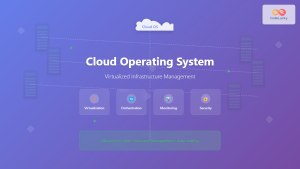
Cloud Operating System: Complete Guide to Virtualized Infrastructure Management
Cloud Operating Systems represent a paradigm shift in how we manage and orchestrate computing resources across distributed environments. Unlike traditional...
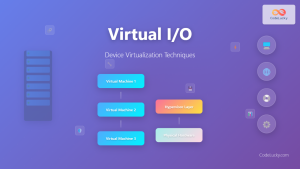
Virtual I/O: Complete Guide to Device Virtualization Techniques and Implementation
Introduction to Virtual I/O and Device Virtualization Virtual Input/Output (Virtual I/O) represents one of the most critical components in modern...
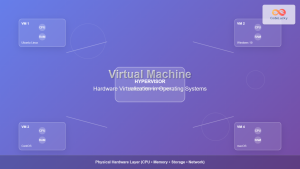
Virtual Machine in Operating System: Complete Guide to Hardware Virtualization Technology
What is a Virtual Machine in Operating System? A Virtual Machine (VM) is a software-based emulation of a physical computer...
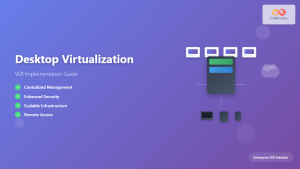
Desktop Virtualization: Complete VDI Implementation Guide for Modern Enterprises
Introduction to Desktop Virtualization Desktop virtualization represents a paradigm shift in how organizations deliver computing resources to end users. By...

Migration in Virtual Machines: Complete Guide to Live Migration Process
Virtual machine live migration represents one of the most critical capabilities in modern virtualization environments, enabling seamless movement of running...
Distributed Operating System: Complete Guide to Network-based OS Architecture
What is a Distributed Operating System? A distributed operating system is a sophisticated software system that manages and coordinates multiple...
Storage Virtualization: Complete Guide to Abstract Storage Resources in Modern Computing
Storage virtualization represents one of the most critical technologies in modern computing infrastructure, enabling organizations to abstract physical storage resources...
Full Virtualization: Complete Hardware Abstraction and Implementation Guide
Full virtualization represents one of the most significant breakthroughs in modern computing, enabling complete hardware abstraction that allows multiple operating...
Virtual Machine Monitor: Complete Guide to Resource Management and Isolation
A Virtual Machine Monitor (VMM), also known as a hypervisor, is a critical software layer that creates and manages virtual...

Kubernetes Linux: Complete Guide to Container Orchestration Platform
Kubernetes has revolutionized how we deploy, manage, and scale containerized applications on Linux systems. As the leading container orchestration platform,...