Understanding Continuous Testing in the Agile Era
Continuous testing has emerged as a cornerstone of modern Agile development, fundamentally transforming how organizations approach quality assurance. Unlike traditional testing methodologies that operate in isolated phases, continuous testing integrates quality validation seamlessly throughout the entire software development lifecycle, enabling teams to maintain velocity while ensuring robust product quality.
This approach represents a paradigm shift from the conventional “test-after-development” model to a “test-with-development” philosophy, where quality becomes everyone’s responsibility rather than being relegated to a separate QA team. By embedding testing activities into every stage of the development process, organizations can identify and resolve issues faster, reduce costs, and deliver superior products to market.
The Foundation of Continuous Testing
Continuous testing builds upon several key principles that distinguish it from traditional testing approaches. The methodology emphasizes rapid feedback loops, automated test execution, and comprehensive coverage across all application layers. This foundation enables development teams to maintain confidence in their code changes while supporting the rapid iteration cycles that Agile methodologies demand.
The practice extends beyond simple test automation, encompassing risk assessment, test data management, and environment provisioning. It requires a cultural shift where testing becomes an integral part of the development mindset, with developers, testers, and operations teams collaborating closely to establish quality gates and validation criteria.
Core Components of Continuous Testing
Effective continuous testing implementations consist of multiple interconnected components working in harmony. Test automation forms the backbone, enabling rapid execution of regression suites and validation checks. Risk-based testing helps prioritize testing efforts, focusing resources on the most critical application areas and potential failure points.
Service virtualization plays a crucial role by providing stable, controllable test environments that eliminate dependencies on external systems or unavailable services. This component ensures that testing can proceed without waiting for third-party integrations or dealing with unstable external dependencies that could impede the testing process.
Implementation Strategies for Agile Teams
Successfully implementing continuous testing requires a strategic approach that considers team structure, existing processes, and technological infrastructure. Organizations must establish clear testing strategies that align with their Agile practices while ensuring comprehensive coverage across functional, performance, and security testing domains.
The implementation journey typically begins with assessment of current testing capabilities and identification of automation opportunities. Teams should prioritize high-value test cases for automation, focusing on repetitive tests, regression scenarios, and critical user journeys that provide maximum return on investment.
Building Test Automation Frameworks
A robust test automation framework serves as the foundation for continuous testing success. The framework should support multiple testing types, from unit tests that validate individual components to end-to-end tests that verify complete user workflows. Maintainability becomes paramount, as automated tests must evolve alongside the application to remain valuable.
Modern frameworks emphasize modularity and reusability, enabling teams to build comprehensive test suites efficiently. Page Object Model patterns, data-driven testing approaches, and keyword-driven frameworks help organize test code and reduce maintenance overhead while improving test reliability and readability.
Integration with CI/CD Pipelines
Continuous testing reaches its full potential when seamlessly integrated with continuous integration and continuous deployment pipelines. This integration enables automated test execution triggered by code commits, providing immediate feedback to developers about the impact of their changes on application quality.
Pipeline integration requires careful orchestration of different testing phases, from fast-running unit tests that execute with every commit to comprehensive integration tests that run on scheduled intervals. The key lies in balancing thoroughness with speed, ensuring that critical issues are caught quickly while maintaining overall pipeline efficiency.
Test Orchestration and Parallel Execution
Modern continuous testing implementations leverage parallel test execution to maximize efficiency and minimize feedback time. Test orchestration platforms distribute tests across multiple environments and execution engines, significantly reducing the time required for comprehensive validation while maintaining test isolation and reliability.
Smart test selection algorithms further optimize execution by identifying which tests need to run based on code changes, reducing unnecessary test execution while maintaining adequate coverage. This approach helps teams achieve faster feedback cycles without compromising quality assurance.
Quality Metrics and Feedback Loops
Effective continuous testing relies on comprehensive metrics that provide insights into quality trends, testing effectiveness, and areas requiring attention. These metrics go beyond simple pass/fail rates to include test coverage, defect detection efficiency, and time-to-feedback measurements that help teams optimize their testing processes.
Real-time dashboards and reporting mechanisms ensure that quality information reaches stakeholders promptly, enabling informed decision-making about release readiness and risk assessment. Automated notifications and alerts help teams respond quickly to quality issues before they impact production systems.
Establishing Quality Gates
Quality gates serve as automated checkpoints that prevent low-quality code from progressing through the deployment pipeline. These gates use predefined criteria based on test results, code coverage thresholds, and performance benchmarks to automatically approve or reject code changes for further deployment.
Configurable quality gates allow teams to adjust criteria based on release criticality and risk tolerance while maintaining consistent quality standards. This automation reduces manual intervention requirements and ensures that quality decisions are based on objective criteria rather than subjective assessments.
Tools and Technologies
The continuous testing ecosystem encompasses a diverse range of tools and technologies designed to support different aspects of the testing process. Test automation tools like Selenium, Cypress, and Playwright enable comprehensive web application testing, while API testing tools such as Postman and REST Assured facilitate service-level validation.
Performance testing tools including JMeter and LoadRunner help ensure application scalability under various load conditions. Security testing tools like OWASP ZAP and Burp Suite integrate security validation into the continuous testing process, helping identify vulnerabilities early in the development cycle.
Cloud-Based Testing Platforms
Cloud-based testing platforms have revolutionized continuous testing by providing scalable, on-demand testing infrastructure. These platforms eliminate the need for extensive hardware investments while offering access to diverse browser and device combinations for comprehensive compatibility testing.
Platform-as-a-Service testing solutions provide managed testing environments with pre-configured tools and frameworks, reducing setup time and maintenance overhead. This approach enables teams to focus on test creation and execution rather than infrastructure management.
Challenges and Solutions
Organizations implementing continuous testing often encounter challenges related to test maintenance, execution time, and cultural resistance. Test flakiness can undermine confidence in automated testing, while lengthy execution times can impede rapid feedback cycles essential for Agile development.
Addressing these challenges requires systematic approaches including regular test review and refactoring, implementation of retry mechanisms for flaky tests, and optimization of test execution strategies. Cultural challenges can be addressed through training, clear communication of benefits, and gradual implementation that demonstrates value.
Managing Test Data and Environments
Test data management represents a significant challenge in continuous testing implementations. Teams must ensure availability of appropriate test data while maintaining data privacy and compliance requirements. Synthetic data generation and data masking techniques help address these challenges while providing realistic testing scenarios.
Environment management becomes complex in continuous testing scenarios where multiple test executions may occur simultaneously. Containerization technologies like Docker and Kubernetes help provide isolated, consistent testing environments that can be provisioned on-demand and cleaned up automatically.
Best Practices for Success
Successful continuous testing implementations follow established best practices that maximize effectiveness while minimizing common pitfalls. These practices include starting with high-value test automation, maintaining clear test documentation, and establishing regular review cycles to keep tests relevant and efficient.
Teams should prioritize test reliability over coverage, ensuring that automated tests provide consistent, trustworthy results. Flaky tests that produce inconsistent results can undermine confidence in the entire testing process and should be addressed promptly through debugging, refactoring, or removal.
Collaboration and Communication
Effective continuous testing requires strong collaboration between development, testing, and operations teams. Regular communication about testing strategies, results, and improvements helps ensure that all team members understand their role in maintaining quality while supporting rapid development cycles.
Cross-functional teams that include testing expertise from the beginning of feature development can identify potential quality issues early and design more testable solutions. This collaborative approach reduces the likelihood of discovering major issues late in the development cycle when fixes are more expensive and time-consuming.
Future Trends and Evolution
The continuous testing landscape continues to evolve with emerging technologies and methodologies. Artificial intelligence and machine learning are beginning to play larger roles in test generation, maintenance, and result analysis, promising to further reduce manual effort while improving testing effectiveness.
Shift-left testing approaches are pushing quality validation even earlier in the development process, with techniques like behavior-driven development and test-driven development gaining wider adoption. These approaches help ensure that quality requirements are considered from the very beginning of feature development.
AI-Powered Testing Innovation
Artificial intelligence is transforming continuous testing through intelligent test generation, automated test maintenance, and predictive quality analytics. AI-powered tools can analyze application changes and automatically generate relevant test cases, reducing the manual effort required to maintain comprehensive test coverage.
Machine learning algorithms help identify patterns in test failures and application behavior, enabling more accurate risk assessment and smarter test selection. These technologies promise to make continuous testing even more efficient and effective as they mature and become more widely adopted.
Measuring ROI and Business Impact
Organizations investing in continuous testing need to demonstrate clear return on investment through measurable business outcomes. Key metrics include reduced time-to-market, decreased defect escape rates, and improved customer satisfaction scores that result from higher quality software releases.
Cost savings from early defect detection and reduced manual testing effort provide tangible financial benefits. Organizations typically see significant improvements in development velocity and team productivity as continuous testing reduces the time spent on debugging and rework.
The strategic value of continuous testing extends beyond immediate cost savings to include competitive advantages from faster feature delivery and improved customer experiences. Organizations that master continuous testing often find themselves better positioned to respond to market changes and customer demands.
Conclusion
Continuous testing represents a fundamental shift in how organizations approach quality assurance in Agile environments. By integrating testing throughout the development lifecycle, teams can maintain high quality standards while supporting the rapid iteration cycles that modern software development demands.
Success with continuous testing requires careful planning, appropriate tooling, and cultural commitment to quality as a shared responsibility. Organizations that invest in building robust continuous testing capabilities position themselves for sustained success in increasingly competitive software markets.
As the software development landscape continues to evolve, continuous testing will undoubtedly play an even more critical role in enabling organizations to deliver exceptional products at the speed and scale that modern business requires. The investment in continuous testing capabilities today lays the foundation for tomorrow’s competitive advantages.
Related Posts
Automated Testing: Complete Strategy Guide for Agile Development Teams
Understanding Automated Testing in Agile Context Automated testing serves as the backbone of successful Agile development, enabling teams to deliver...
Integration Testing: Continuous Integration Best Practices and Implementation Guide
Understanding Integration Testing in Continuous Integration Integration testing within a continuous integration (CI) framework represents a critical shift from traditional...

Unit Testing: Best Practices for Agile Development Teams
Unit testing forms the backbone of quality assurance in Agile development environments. As teams embrace rapid iteration cycles and continuous...

Performance Testing in Agile: Complete Guide to Shift-Left Testing Strategy
Introduction to Performance Testing in Agile Development Performance testing has traditionally been relegated to the final phases of software development,...

Exploratory Testing: Complete Guide to Unscripted Testing Methods in Agile
Exploratory testing represents one of the most dynamic and investigative approaches to software quality assurance. Unlike traditional scripted testing, this...
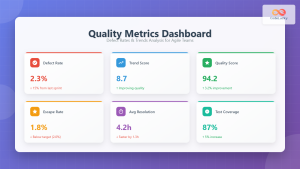
Quality Metrics: Defect Rates and Trends – Complete Guide for Agile Teams
Understanding Quality Metrics in Agile Development Quality metrics serve as the compass for Agile teams navigating the complex landscape of...
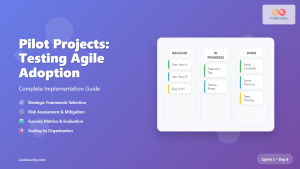
Pilot Projects: Testing Agile Adoption – Complete Implementation Guide
Transitioning to Agile methodologies represents a significant organizational shift that requires careful planning and execution. Pilot projects serve as crucial...

Acceptance Testing: Complete Guide to Validating User Requirements in Agile Development
Acceptance testing stands as the final gatekeeper between development and production, ensuring that software meets user expectations and business requirements....

Test Automation Pyramid: Complete Guide to Layered Testing Strategy for Agile Teams
The Test Automation Pyramid has become a cornerstone principle in modern software development, guiding teams toward building efficient and maintainable...
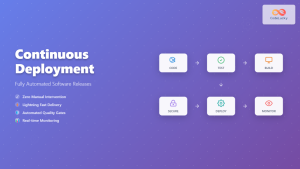
Continuous Deployment: Complete Guide to Fully Automated Software Releases
Continuous Deployment (CD) represents the pinnacle of software delivery automation, where every code change that passes automated tests gets deployed...

Mastering Continuous Deployment: Automating Your Way to Rapid, Reliable Releases
Welcome back to our "DevOps from Scratch" series! In our previous posts, we've explored the fundamentals of DevOps, Git workflows,...
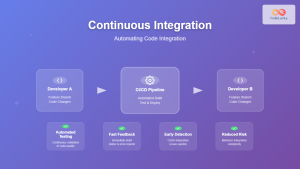
Continuous Integration: Automating Code Integration for Modern Development Teams
Continuous Integration (CI) has revolutionized how development teams collaborate, integrate code changes, and deliver software. As a cornerstone of modern...