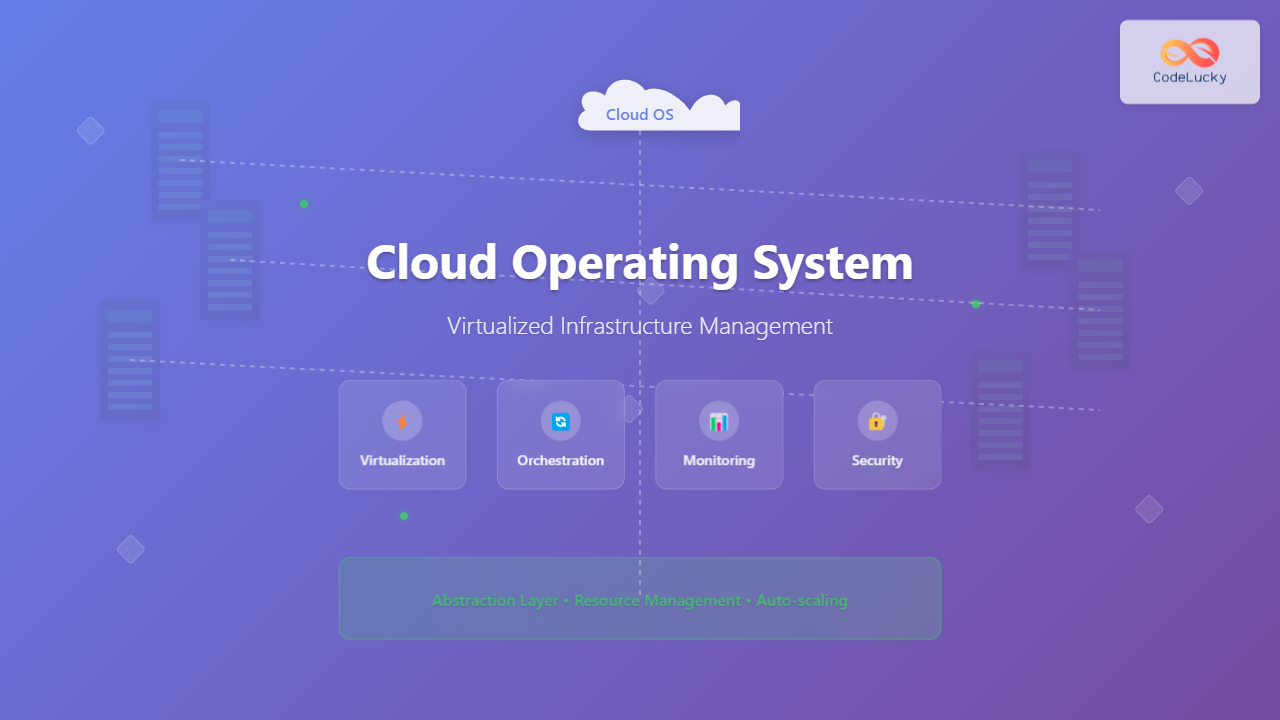
Cloud Operating Systems represent a paradigm shift in how we manage and orchestrate computing resources across distributed environments. Unlike traditional operating systems that manage hardware resources on a single machine, cloud operating systems coordinate virtualized resources across multiple physical servers, enabling unprecedented scalability and flexibility.
What is a Cloud Operating System?
A Cloud Operating System (Cloud OS) is a specialized software layer that abstracts and manages virtualized computing resources across distributed infrastructure. It provides a unified interface for managing storage, networking, compute resources, and applications across multiple physical servers as if they were a single system.
Key characteristics include:
- Resource Abstraction: Hides the complexity of underlying hardware
- Distributed Management: Coordinates resources across multiple nodes
- Dynamic Scaling: Automatically adjusts resources based on demand
- Service Orchestration: Manages application lifecycle and dependencies
- Multi-tenancy: Supports multiple isolated user environments

Architecture Components
1. Hypervisor and Virtualization Layer
The hypervisor forms the foundation of cloud OS architecture, creating and managing virtual machines. It abstracts physical hardware resources and allocates them to VMs based on defined policies.
Types of hypervisors:
- Type 1 (Bare Metal): VMware vSphere, Microsoft Hyper-V, Citrix XenServer
- Type 2 (Hosted): VMware Workstation, Oracle VirtualBox
2. Resource Management Engine
This component handles resource allocation, scheduling, and optimization across the distributed infrastructure. It ensures efficient utilization while maintaining performance guarantees.
# Example resource allocation policy
resourcePolicy:
  compute:
    cpu:
      reservation: 2GHz
      limit: 4GHz
      shares: normal
    memory:
      reservation: 4GB
      limit: 8GB
  storage:
    type: SSD
    size: 100GB
    iops: 3000
  network:
    bandwidth: 1Gbps
    latency: <10ms
3. Service Orchestration Platform
Orchestration platforms like Kubernetes manage containerized applications, handling deployment, scaling, and lifecycle management automatically.

Popular Cloud Operating Systems
1. OpenStack
OpenStack is an open-source cloud computing platform that controls large pools of compute, storage, and networking resources throughout a datacenter.
Core services:
- Nova: Compute service for VM management
- Neutron: Networking service
- Cinder: Block storage service
- Swift: Object storage service
- Keystone: Identity and access management
- Glance: Image service
# Creating a VM instance in OpenStack
openstack server create \
  --flavor m1.medium \
  --image ubuntu-20.04 \
  --key-name my-keypair \
  --security-group default \
  --network private \
  web-server-01
2. VMware vSphere
VMware vSphere is a comprehensive virtualization platform that includes ESXi hypervisor and vCenter Server management platform.
Key features:
- vMotion for live VM migration
- Distributed Resource Scheduler (DRS)
- High Availability (HA) clustering
- Fault Tolerance (FT)
- Storage vMotion for storage migration
3. Microsoft Azure Stack
Azure Stack extends Azure services to on-premises environments, providing hybrid cloud capabilities with consistent Azure APIs and tools.
4. Amazon Web Services (AWS) Outposts
AWS Outposts brings native AWS services to on-premises facilities, enabling hybrid deployments with the same AWS APIs and tools.
Virtualized Infrastructure Management
Resource Pooling and Allocation
Cloud operating systems create resource pools from physical infrastructure, allowing dynamic allocation based on workload requirements.

Auto-scaling and Load Balancing
Modern cloud operating systems implement intelligent scaling mechanisms that respond to demand fluctuations automatically.
# Kubernetes Horizontal Pod Autoscaler
apiVersion: autoscaling/v2
kind: HorizontalPodAutoscaler
metadata:
  name: web-app-hpa
spec:
  scaleTargetRef:
    apiVersion: apps/v1
    kind: Deployment
    name: web-app
  minReplicas: 3
  maxReplicas: 50
  metrics:
  - type: Resource
    resource:
      name: cpu
      target:
        type: Utilization
        averageUtilization: 70
  - type: Resource
    resource:
      name: memory
      target:
        type: Utilization
        averageUtilization: 80
Storage Virtualization
Storage virtualization abstracts physical storage devices into logical pools, enabling features like:
- Thin Provisioning: Allocating storage on-demand
- Snapshots: Point-in-time copies for backup and recovery
- Replication: Automatic data replication across sites
- Tiering: Automatic data movement between storage tiers
Network Virtualization
Software-Defined Networking (SDN) enables flexible network configuration and management through software control planes.
Virtual Private Clouds (VPCs)
VPCs provide isolated network environments within shared infrastructure, offering security and customization benefits.
{
  "vpc": {
    "cidr": "10.0.0.0/16",
    "subnets": [
      {
        "name": "public-subnet",
        "cidr": "10.0.1.0/24",
        "type": "public",
        "availability_zone": "us-west-2a"
      },
      {
        "name": "private-subnet",
        "cidr": "10.0.2.0/24",
        "type": "private",
        "availability_zone": "us-west-2b"
      }
    ],
    "internet_gateway": true,
    "nat_gateway": true
  }
}
Micro-segmentation
Network micro-segmentation creates granular security zones, limiting lateral movement of threats within the network.

Container Orchestration
Container orchestration platforms manage containerized applications at scale, providing deployment automation, service discovery, and health monitoring.
Kubernetes Architecture
Kubernetes serves as a container orchestration platform within cloud operating systems:
- Control Plane: API server, scheduler, controller manager
- Worker Nodes: Kubelet, container runtime, kube-proxy
- etcd: Distributed key-value store for cluster state
# Kubernetes deployment example
apiVersion: apps/v1
kind: Deployment
metadata:
  name: nginx-deployment
spec:
  replicas: 3
  selector:
    matchLabels:
      app: nginx
  template:
    metadata:
      labels:
        app: nginx
    spec:
      containers:
      - name: nginx
        image: nginx:1.21
        ports:
        - containerPort: 80
        resources:
          requests:
            cpu: 100m
            memory: 128Mi
          limits:
            cpu: 500m
            memory: 512Mi
Monitoring and Observability
Cloud operating systems require comprehensive monitoring to ensure optimal performance and rapid issue resolution.
Metrics Collection
Key metrics include:
- Infrastructure metrics: CPU, memory, disk, network utilization
- Application metrics: Response times, error rates, throughput
- Business metrics: User engagement, transaction volumes
Distributed Tracing
Distributed tracing follows requests across multiple services, providing visibility into complex interactions.
// OpenTelemetry tracing example
const opentelemetry = require('@opentelemetry/api');
const tracer = opentelemetry.trace.getTracer('web-service');

async function processOrder(orderId) {
  const span = tracer.startSpan('process-order');
  span.setAttributes({
    'order.id': orderId,
    'service.name': 'order-processor'
  });

  try {
    await validateOrder(orderId);
    await processPayment(orderId);
    await updateInventory(orderId);
    span.setStatus({ code: opentelemetry.SpanStatusCode.OK });
  } catch (error) {
    span.recordException(error);
    span.setStatus({
      code: opentelemetry.SpanStatusCode.ERROR,
      message: error.message
    });
  } finally {
    span.end();
  }
}
Security in Cloud Operating Systems
Identity and Access Management (IAM)
IAM systems control user access to resources through role-based access control (RBAC) and attribute-based access control (ABAC).
# Kubernetes RBAC example
apiVersion: rbac.authorization.k8s.io/v1
kind: Role
metadata:
  namespace: production
  name: pod-reader
rules:
- apiGroups: [""]
  resources: ["pods"]
  verbs: ["get", "watch", "list"]
---
apiVersion: rbac.authorization.k8s.io/v1
kind: RoleBinding
metadata:
  name: read-pods
  namespace: production
subjects:
- kind: User
  name: developer-team
  apiGroup: rbac.authorization.k8s.io
roleRef:
  kind: Role
  name: pod-reader
  apiGroup: rbac.authorization.k8s.io
Encryption and Data Protection
Cloud operating systems implement multiple layers of encryption:
- Data at rest: Disk encryption, database encryption
- Data in transit: TLS/SSL encryption
- Data in use: Confidential computing technologies
Benefits of Cloud Operating Systems
Scalability and Elasticity
Cloud OS enables horizontal and vertical scaling based on demand, optimizing resource utilization and costs.
High Availability and Disaster Recovery
Built-in redundancy and automated failover mechanisms ensure business continuity.
Cost Optimization
Pay-per-use models and resource optimization algorithms reduce infrastructure costs significantly.
Rapid Deployment
Infrastructure-as-Code (IaC) enables rapid provisioning and consistent deployments.
# Terraform infrastructure example
resource "aws_instance" "web_server" {
  count                  = var.instance_count
  ami                   = data.aws_ami.ubuntu.id
  instance_type         = var.instance_type
  key_name             = aws_key_pair.deployer.key_name
  vpc_security_group_ids = [aws_security_group.web.id]
  subnet_id            = aws_subnet.public[count.index].id

  user_data = base64encode(templatefile("${path.module}/user_data.sh", {
    server_name = "web-${count.index + 1}"
  }))

  tags = {
    Name = "WebServer-${count.index + 1}"
    Environment = var.environment
  }
}
Challenges and Considerations
Complexity Management
Cloud operating systems introduce architectural complexity that requires specialized expertise and tooling.
Vendor Lock-in
Proprietary cloud platforms may create dependencies that limit flexibility and increase switching costs.

Data Governance
Ensuring data compliance across distributed environments requires robust governance frameworks.
Future Trends
Edge Computing Integration
Cloud operating systems are extending to edge locations, bringing compute closer to data sources and end-users.
Artificial Intelligence Integration
AI-powered automation is enhancing resource optimization, predictive scaling, and anomaly detection.
Serverless Computing
Function-as-a-Service (FaaS) models are abstracting infrastructure management further, focusing on code execution.
Quantum Computing Integration
Future cloud operating systems will need to manage hybrid classical-quantum computing resources.
Best Practices
Design Principles
- Immutable Infrastructure: Replace rather than modify components
- Microservices Architecture: Build loosely coupled, independently deployable services
- DevOps Integration: Implement continuous integration and deployment pipelines
- Monitoring and Observability: Implement comprehensive monitoring from day one
Security Best Practices
- Implement zero-trust network architecture
- Use principle of least privilege for access control
- Encrypt data at all levels
- Regular security audits and compliance checks
- Automated vulnerability scanning and patching
Performance Optimization
- Right-size resources based on actual usage patterns
- Implement caching strategies at multiple levels
- Use content delivery networks (CDNs) for static content
- Optimize database queries and connections
- Implement circuit breakers for fault tolerance
Cloud Operating Systems represent the evolution of computing infrastructure management, enabling organizations to build scalable, resilient, and efficient systems. As cloud adoption continues to accelerate, understanding these platforms becomes crucial for modern IT professionals. The combination of virtualization, orchestration, and automation creates powerful capabilities that transform how we design, deploy, and manage applications in the digital age.
Success with cloud operating systems requires a comprehensive understanding of the underlying technologies, careful planning of architecture and security, and commitment to ongoing optimization and monitoring. Organizations that master these platforms will be well-positioned to leverage the full potential of cloud computing for their digital transformation initiatives.
Related Posts
Distributed Operating System: Complete Guide to Network-based OS Architecture
What is a Distributed Operating System? A distributed operating system is a sophisticated software system that manages and coordinates multiple...
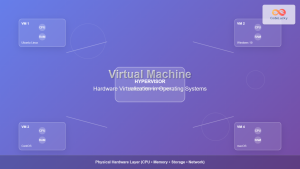
Virtual Machine in Operating System: Complete Guide to Hardware Virtualization Technology
What is a Virtual Machine in Operating System? A Virtual Machine (VM) is a software-based emulation of a physical computer...
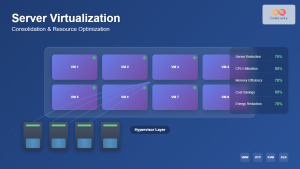
Server Virtualization: Complete Guide to Consolidation and Resource Optimization
Introduction to Server Virtualization Server virtualization is a revolutionary technology that enables multiple virtual machines (VMs) to run on a...
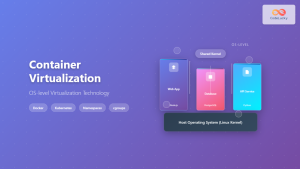
Container Virtualization: Complete Guide to OS-level Virtualization Technology
Container virtualization represents a revolutionary approach to application deployment and resource management through OS-level virtualization. Unlike traditional hardware virtualization, containers...
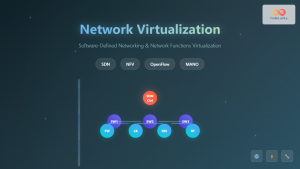
Network Virtualization: Complete Guide to SDN and NFV Technologies
Network virtualization has revolutionized modern IT infrastructure by decoupling network functions from physical hardware, enabling unprecedented flexibility and efficiency. This...
Virtual I/O: Complete Guide to Device Virtualization Techniques and Implementation
Introduction to Virtual I/O and Device Virtualization Virtual Input/Output (Virtual I/O) represents one of the most critical components in modern...

Migration in Virtual Machines: Complete Guide to Live Migration Process
Virtual machine live migration represents one of the most critical capabilities in modern virtualization environments, enabling seamless movement of running...

Kubernetes Linux: Complete Guide to Container Orchestration Platform
Kubernetes has revolutionized how we deploy, manage, and scale containerized applications on Linux systems. As the leading container orchestration platform,...
Container Operating Systems: Complete Guide to Docker and Kubernetes Platforms
Container operating systems have revolutionized how we deploy, manage, and scale applications in modern computing environments. Unlike traditional operating systems...
Storage Virtualization: Complete Guide to Abstract Storage Resources in Modern Computing
Storage virtualization represents one of the most critical technologies in modern computing infrastructure, enabling organizations to abstract physical storage resources...
Operating System Basics: Complete Guide to What is an OS and How it Works
An operating system (OS) is the fundamental software that manages computer hardware and software resources, acting as an intermediary between...
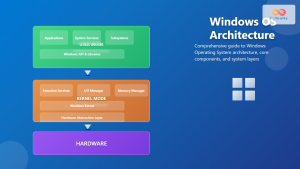
Windows Operating System: Complete Guide to Architecture and Core Components
The Windows Operating System stands as one of the most widely used operating systems globally, powering billions of devices from...