The ZFS (Zettabyte File System) is a revolutionary filesystem that combines traditional filesystem capabilities with logical volume management, RAID functionality, and advanced data protection features. The zfs command serves as the primary interface for managing ZFS datasets, snapshots, and properties, making it an essential tool for system administrators working with enterprise storage solutions.
What is ZFS and Why Use It?
ZFS was originally developed by Sun Microsystems for Solaris and has since been ported to Linux through the OpenZFS project. It offers several compelling advantages:
- Data Integrity: Built-in checksumming and automatic error correction
- Compression: Multiple compression algorithms to save storage space
- Snapshots: Instant, space-efficient point-in-time copies
- Copy-on-Write: Efficient data writing mechanism
- Pooled Storage: Dynamic allocation from storage pools
- RAID-Z: Software RAID with parity protection
Installing ZFS on Linux
Before using the zfs command, you need to install ZFS support on your Linux system:
Ubuntu/Debian:
sudo apt update
sudo apt install zfsutils-linux
CentOS/RHEL/Fedora:
# Enable ZFS repository
sudo dnf install -y https://zfsonlinux.org/epel/zfs-release.el8.noarch.rpm
sudo dnf install -y zfs
ZFS Command Syntax and Structure
The zfs command follows a consistent syntax pattern:
zfs <subcommand> [options] <dataset> [arguments]Key components include:
- Subcommand: The operation to perform (create, destroy, snapshot, etc.)
- Dataset: The ZFS filesystem, volume, or snapshot target
- Options: Flags that modify command behavior
- Arguments: Additional parameters specific to the subcommand
Essential ZFS Commands
Creating ZFS Filesystems
Create a basic ZFS filesystem:
sudo zfs create tank/mydataCreate a filesystem with specific properties:
sudo zfs create -o compression=lz4 -o recordsize=1M tank/databaseExpected output:
# Filesystem created successfully (no output on success)
# Verify creation:
zfs list
NAME           USED  AVAIL     REFER  MOUNTPOINT
tank           156K   9.63G       24K  /tank
tank/database   24K   9.63G       24K  /tank/database
tank/mydata     24K   9.63G       24K  /tank/mydata
Listing ZFS Datasets
Display all ZFS datasets:
zfs listShow detailed information with specific properties:
zfs list -o name,used,available,referenced,mountpoint,compressionSample output:
NAME           USED  AVAIL     REFER  MOUNTPOINT        COMPRESS
tank           312K   9.63G       24K  /tank             off
tank/database   24K   9.63G       24K  /tank/database    lz4
tank/mydata     24K   9.63G       24K  /tank/mydata      off
Setting ZFS Properties
Enable compression on a filesystem:
sudo zfs set compression=gzip-6 tank/mydataSet multiple properties:
sudo zfs set quota=5G recordsize=128K tank/databaseView current properties:
zfs get all tank/mydataWorking with ZFS Snapshots
Snapshots are one of ZFS’s most powerful features, providing instant, space-efficient backups.
Creating Snapshots
sudo zfs snapshot tank/mydata@backup-$(date +%Y%m%d)Create recursive snapshots for all child datasets:
sudo zfs snapshot -r tank@full-backup-$(date +%Y%m%d)Listing Snapshots
zfs list -t snapshotSample output:
NAME                        USED  AVAIL     REFER  MOUNTPOINT
tank/mydata@backup-20250825    0B      -      24K  -
tank@full-backup-20250825      0B      -      24K  -
Rolling Back to Snapshots
sudo zfs rollback tank/mydata@backup-20250825Destroying Snapshots
sudo zfs destroy tank/mydata@backup-20250825ZFS Dataset Management
Mounting and Unmounting
Mount a ZFS filesystem:
sudo zfs mount tank/mydataUnmount a filesystem:
sudo zfs unmount tank/mydataSet custom mount point:
sudo zfs set mountpoint=/custom/path tank/mydataCloning Datasets
Create a clone from a snapshot:
sudo zfs clone tank/mydata@backup-20250825 tank/mydata-cloneRenaming Datasets
sudo zfs rename tank/mydata tank/production-dataAdvanced ZFS Operations
Send and Receive
ZFS send/receive enables efficient replication and backup:
# Send snapshot to file
sudo zfs send tank/mydata@backup-20250825 > /backup/mydata.zfs

# Receive from file
sudo zfs receive tank/restored-data < /backup/mydata.zfs
Incremental send/receive:
# Create new snapshot
sudo zfs snapshot tank/mydata@backup-20250826

# Send incremental
sudo zfs send -i tank/mydata@backup-20250825 tank/mydata@backup-20250826 | \
sudo zfs receive tank/incremental-backup
Delegation and Permissions
Allow non-root users to manage specific datasets:
sudo zfs allow username create,destroy,mount,snapshot tank/userdataView current permissions:
zfs allow tank/userdataPerformance Tuning with ZFS Properties
Recordsize Optimization
For databases (random I/O):
sudo zfs set recordsize=8K tank/databaseFor large files (sequential I/O):
sudo zfs set recordsize=1M tank/mediaCompression Settings
Different compression algorithms for various use cases:
# Fast compression for general use
sudo zfs set compression=lz4 tank/general

# High compression for archival
sudo zfs set compression=gzip-9 tank/archive

# Specialized compression for text
sudo zfs set compression=zstd tank/logs
Cache Configuration
Disable cache for specific workloads:
sudo zfs set primarycache=metadata tank/database
sudo zfs set secondarycache=none tank/temporary
Monitoring and Troubleshooting
Checking Dataset Usage
zfs list -o spaceSample output:
NAME           AVAIL   USED  USEDSNAP  USEDDS  USEDREFRESERV  USEDCHILD
tank           9.63G   468K         0B    24K             0B       444K
tank/mydata    9.63G    24K         0B    24K             0B         0B
Property History
View property change history:
zfs get -H -o property,value,source all tank/mydataDataset Statistics
zfs get compressratio,used,referenced tank/mydataCommon ZFS Use Cases
Database Storage
# Optimize for database workload
sudo zfs create -o recordsize=8K \
                -o primarycache=metadata \
                -o logbias=throughput \
                tank/postgres
Media Storage
# Optimize for large media files
sudo zfs create -o recordsize=1M \
                -o compression=lz4 \
                -o atime=off \
                tank/media
Development Environment
# Create development dataset with snapshots
sudo zfs create tank/development
sudo zfs set quota=50G tank/development
sudo zfs snapshot tank/development@clean-state
Best Practices and Tips
Naming Conventions
- Use descriptive, hierarchical names:
tank/application/database - Include environment indicators:
tank/web/production - Use consistent snapshot naming:
@backup-YYYYMMDD-HHMM
Performance Considerations
- Match recordsize to your I/O patterns
- Enable compression for most datasets
- Use appropriate cache settings
- Monitor compression ratios regularly
Backup Strategies
- Automate snapshot creation with cron jobs
- Use incremental send/receive for efficient replication
- Test restore procedures regularly
- Maintain multiple snapshot generations
Troubleshooting Common Issues
Dataset Busy Errors
If you encounter “dataset is busy” errors:
# Check what's using the dataset
sudo lsof +D /tank/mydata

# Force unmount if necessary
sudo zfs unmount -f tank/mydata
Space Issues
Investigate space usage:
# Check snapshot space usage
zfs list -t snapshot -o name,used,referenced

# Check compression effectiveness
zfs get compressratio tank/mydata
Permission Problems
Reset permissions to defaults:
sudo zfs unallow -r username tank/mydataConclusion
The zfs command provides comprehensive control over one of the most advanced filesystems available today. From basic dataset creation to complex replication scenarios, mastering these commands enables efficient storage management with enterprise-level features like snapshots, compression, and data integrity checking.
Key takeaways for effective ZFS administration:
- Start with basic operations and gradually explore advanced features
- Regularly practice snapshot and restore procedures
- Monitor compression ratios and adjust settings based on workload
- Implement automated backup strategies using send/receive
- Stay updated with ZFS best practices as the technology evolves
Whether you’re managing a single server or enterprise storage infrastructure, the zfs command’s flexibility and power make it an invaluable tool for modern system administration. Continue experimenting with different configurations to find the optimal setup for your specific use cases and performance requirements.
Related Posts
Copy-on-Write File System: Complete Guide to ZFS and Btrfs Implementation
Copy-on-Write (COW) file systems represent a revolutionary approach to data storage and management, fundamentally changing how operating systems handle file...
File System Implementation: Boot Block, Super Block and Inodes Explained
Understanding File System Implementation File system implementation is a critical component of operating systems that manages how data is stored,...
xfs_info Command Linux: Complete Guide to Display XFS Filesystem Information
The xfs_info command is a powerful utility in Linux systems that provides comprehensive information about XFS filesystems. This command is...
btrfs Command Linux: Complete Guide to Advanced Filesystem Management
The btrfs command is a powerful utility for managing the B-tree filesystem (Btrfs) in Linux, offering advanced features like snapshots,...
File System Types: FAT32, NTFS, ext4 and Modern Linux Filesystems Explained
Understanding File Systems: The Foundation of Data Storage A file system is the method and data structure that an operating...
File System in Operating System: Complete Guide to Structure and Organization
Introduction to File Systems A file system is a fundamental component of any operating system that provides a structured way...
xfs_check Command Linux: Complete Guide to XFS Filesystem Consistency Verification
The xfs_check command is a crucial system administration tool in Linux for verifying the consistency and integrity of XFS filesystems....
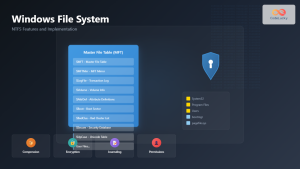
Windows File System: Complete NTFS Features and Implementation Guide
Introduction to NTFS File System NTFS (New Technology File System) is the default file system for modern Windows operating systems,...
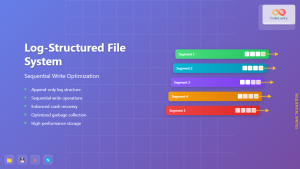
Log-structured File System: Sequential Write Optimization for High-Performance Storage
Log-structured File Systems (LFS) represent a revolutionary approach to data storage that fundamentally changes how operating systems handle file operations....

Distributed File System: Complete Guide to NFS, CIFS and Network Storage Solutions
A Distributed File System (DFS) allows multiple computers to access and share files over a network as if they were...

Storage Virtualization: Complete Guide to Logical Volume Management in Linux
Storage virtualization through Logical Volume Management (LVM) represents one of the most powerful features in modern Linux systems, providing administrators...

Zookeeper Linux: Complete Guide to Centralized Service Configuration Management
Apache Zookeeper is a centralized service for maintaining configuration information, naming, providing distributed synchronization, and providing group services in distributed...
- What is ZFS and Why Use It?
- Installing ZFS on Linux
- ZFS Command Syntax and Structure
- Essential ZFS Commands
- Working with ZFS Snapshots
- ZFS Dataset Management
- Advanced ZFS Operations
- Performance Tuning with ZFS Properties
- Monitoring and Troubleshooting
- Common ZFS Use Cases
- Best Practices and Tips
- Troubleshooting Common Issues
- Conclusion