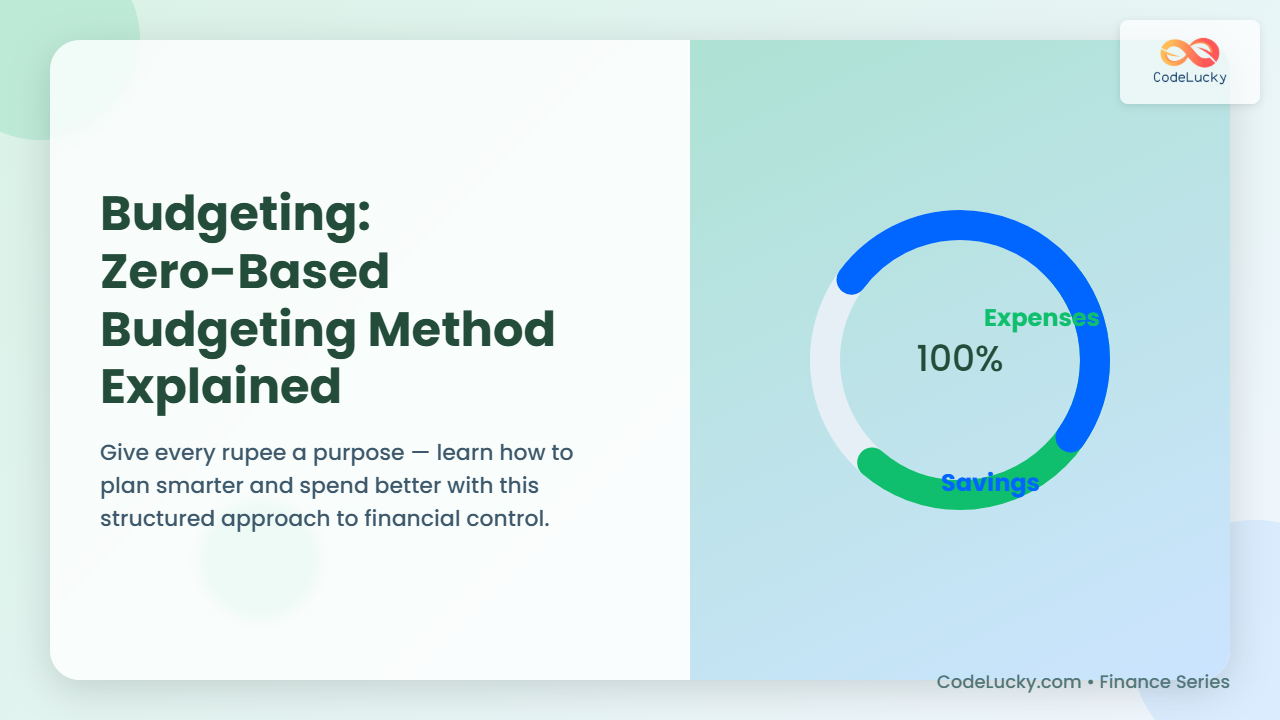
Zero-Based Budgeting (ZBB) is a practical approach to managing money where every rupee, dollar, or cent has a purpose. Unlike traditional budgeting methods that adjust last year’s estimates, zero-based budgeting starts from a clean slate — zero. Every expense must be justified, providing clearer financial control for individuals and businesses alike.
What Is Zero-Based Budgeting?
In zero-based budgeting, you start from zero at the beginning of each financial period. Instead of basing your budget on previous spending, you justify every expense as if you were budgeting for the first time. This method encourages conscious spending and helps you align your expenses exactly with your goals.
To put it simply, your Income – Expenses = 0. That doesn’t mean you have no money left — rather, every rupee is assigned to a category such as savings, rent, groceries, or investments.

Key Principles of Zero-Based Budgeting
- Intentionality: Every expense must be assigned and justified before spending begins.
- Alignment: Ensures your spending aligns directly with financial goals or business priorities.
- Accountability: Provides transparency by questioning every cost, making it easier to identify waste.
- Adaptability: Works equally well for individuals, households, or organizations.
Step-by-Step Process of Zero-Based Budgeting
The following steps show how to set up your own zero-based budget manually or with a budgeting tool.
1. Determine Your Total Monthly Income
Include all salary sources, freelance income, interest, dividends, or other inflows. For example:
Monthly Income Breakdown:
- Salary: ₹60,000
- Freelance Projects: ₹15,000
- Interest from Savings: ₹2,000
Total Income = ₹77,000
2. List All Anticipated Expenses
Include fixed, variable, and occasional costs. Common categories include:
- Rent or EMI
- Utilities
- Groceries
- Transportation
- Savings & Investments
- Entertainment & Miscellaneous
3. Assign Every Rupee a Role
Now allocate every bit of your income to these categories until the total equals zero. For instance:
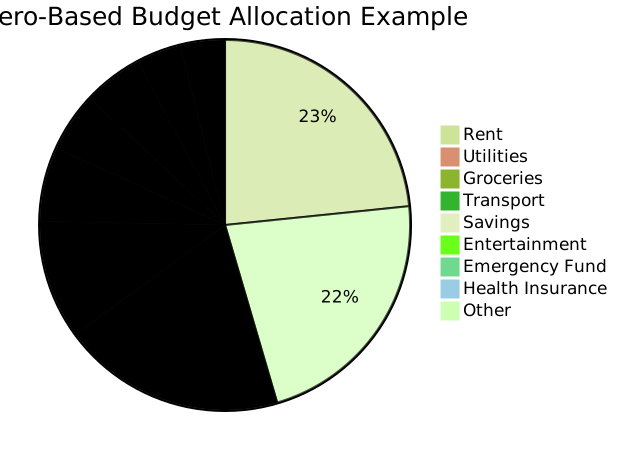
Zero-Based Monthly Allocation:
Rent: ₹18,000
Utilities: ₹3,000
Groceries: ₹8,000
Transport: ₹4,000
Savings: ₹15,000
Entertainment: ₹5,000
Emergency Fund: ₹4,000
Health Insurance: ₹3,000
Other: ₹17,000
TOTAL Expenses = ₹77,000
Leftover (Income - Expenses) = 0 ✅
4. Track and Review Regularly
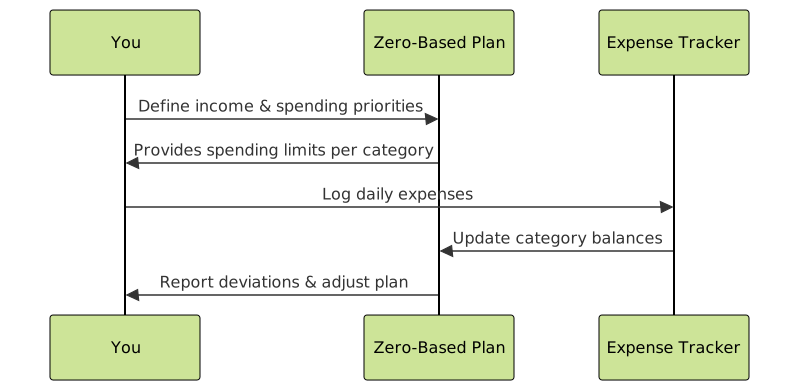
Zero-based budgeting works only if you monitor actual expenses against your planned allocations. Regularly reviewing your budget helps ensure accuracy and enables mid-month corrections if needed.
Example: Household Zero-Based Budget
Let’s consider an example for a small family with a monthly income of ₹80,000.
| Category | Planned (₹) | Actual (₹) | Difference |
|---|---|---|---|
| Home Rent | 20,000 | 20,000 | 0 |
| Utilities | 4,000 | 3,700 | +300 |
| Groceries | 10,000 | 9,800 | +200 |
| Transportation | 5,000 | 5,400 | -400 |
| Investments | 15,000 | 15,000 | 0 |
| Emergency Fund | 6,000 | 6,000 | 0 |
| Entertainment | 5,000 | 4,800 | +200 |
| Miscellaneous | 15,000 | 15,300 | -300 |
At the end of the month, shuffle unspent funds into high-priority areas like savings or debt repayment to maintain the zero balance philosophy.
Advantages and Disadvantages
Advantages
- Provides full control over cash flow
- Eliminates wasteful spending
- Encourages proactive saving and debt reduction
- Improves financial discipline
Potential Drawbacks
- Requires detailed tracking and time commitment
- Can be inflexible for unpredictable expenses
- May feel tedious initially for beginners
Zero-Based Budget vs Traditional Budget
Here’s how ZBB stands apart from traditional budgeting:
| Aspect | Zero-Based Budgeting | Traditional Budgeting |
|---|---|---|
| Starting Point | Starts from zero each period | Starts from last year’s figures |
| Expense Justification | Every expense must be justified | Few expenses are questioned |
| Flexibility | High control but needs monitoring | Easier but less detailed |
| Best For | Individuals, startups, or teams seeking optimization | Stable organizations with recurring costs |

Interactive Idea: Try a Simple Zero-Based Calculator
Below is a simple interactive pseudo-code idea for readers to test their own zero-based budget using JavaScript:
<input type="number" id="income" placeholder="Enter total income">
<input type="number" id="expenses" placeholder="Enter total planned expenses">
<button onclick="checkBudget()">Check Budget</button>
<p id="result"></p>

<script>
function checkBudget() {
  const income = parseFloat(document.getElementById('income').value);
  const expenses = parseFloat(document.getElementById('expenses').value);
  const balance = income - expenses;
  const result = document.getElementById('result');
  if (balance === 0) result.innerText = "Perfect! Your budget is balanced.";
  else if (balance > 0) result.innerText = "You still have ₹" + balance + " unassigned.";
  else result.innerText = "Overspending by ₹" + Math.abs(balance) + "!";
}
</script>
Conclusion
Zero-Based Budgeting is not just a money management tool — it’s a mindset shift. By assigning every rupee a job, you gain clarity on spending priorities and ensure that each expense truly serves a purpose. Whether you’re managing personal finances or running a small business, applying ZBB can help you make smarter, goal-driven financial decisions.