Winlogbeat is a lightweight shipper designed to forward Windows Event Logs to Elasticsearch or Logstash. While it primarily runs on Windows systems, managing and configuring Winlogbeat from Linux environments is a common requirement in mixed infrastructure setups. This comprehensive guide will walk you through everything you need to know about working with Winlogbeat from Linux systems.
What is Winlogbeat?
Winlogbeat is part of the Elastic Stack (ELK Stack) and serves as a specialized data shipper for Windows Event Logs. It reads from one or more event logs using Windows APIs, filters the events based on user-configured criteria, and ships the event data to the configured outputs.
Key Features of Winlogbeat
- Real-time Event Shipping: Continuously monitors and ships Windows events
- Flexible Filtering: Advanced filtering capabilities to send only relevant events
- Multiple Output Support: Ships to Elasticsearch, Logstash, Kafka, and other outputs
- Low Resource Usage: Lightweight agent with minimal system impact
- Built-in Dashboards: Pre-configured Kibana dashboards for visualization
Prerequisites for Linux-based Management
Before diving into Winlogbeat configuration from Linux, ensure you have:
- A Linux system with network access to Windows machines
- Elasticsearch cluster (can be on Linux)
- Windows systems where Winlogbeat will be installed
- Administrative access to both Linux and Windows systems
- Basic understanding of YAML configuration files
Installing Winlogbeat on Windows (Managed from Linux)
While Winlogbeat runs on Windows, you can manage the installation and configuration remotely from Linux using various methods.
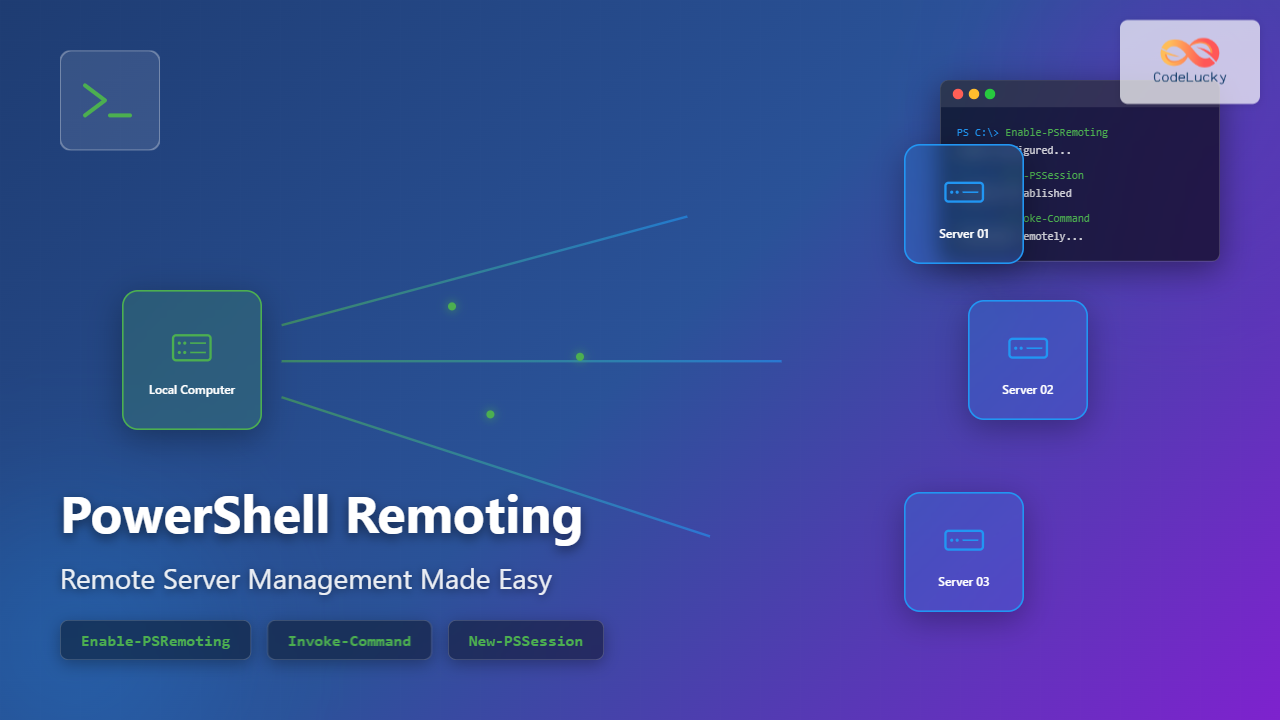
Method 1: Using PowerShell Remoting
From your Linux system, you can use PowerShell Core to remotely install Winlogbeat:
# Install PowerShell Core on Linux (Ubuntu/Debian)
sudo apt-get update
sudo apt-get install -y wget apt-transport-https software-properties-common
wget -q https://packages.microsoft.com/config/ubuntu/20.04/packages-microsoft-prod.deb
sudo dpkg -i packages-microsoft-prod.deb
sudo apt-get update
sudo apt-get install -y powershell

# Connect to Windows system and install Winlogbeat
pwsh -c "
\$session = New-PSSession -ComputerName 'your-windows-server' -Credential (Get-Credential)
Invoke-Command -Session \$session -ScriptBlock {
    # Download Winlogbeat
    Invoke-WebRequest -Uri 'https://artifacts.elastic.co/downloads/beats/winlogbeat/winlogbeat-8.8.0-windows-x86_64.zip' -OutFile 'winlogbeat.zip'

    # Extract and install
    Expand-Archive winlogbeat.zip -DestinationPath 'C:\Program Files\'
    Rename-Item 'C:\Program Files\winlogbeat-8.8.0-windows-x86_64' 'C:\Program Files\Winlogbeat'

    # Install as service
    cd 'C:\Program Files\Winlogbeat'
    .\install-service-winlogbeat.ps1
}
"
Method 2: Using Ansible
Create an Ansible playbook to automate Winlogbeat deployment:
# winlogbeat-deploy.yml
---
- hosts: windows_servers
  vars:
    winlogbeat_version: "8.8.0"
    elasticsearch_hosts: ["http://elastic-node1:9200", "http://elastic-node2:9200"]

  tasks:
    - name: Download Winlogbeat
      win_get_url:
        url: "https://artifacts.elastic.co/downloads/beats/winlogbeat/winlogbeat-{{ winlogbeat_version }}-windows-x86_64.zip"
        dest: "C:\\temp\\winlogbeat.zip"

    - name: Extract Winlogbeat
      win_unzip:
        src: "C:\\temp\\winlogbeat.zip"
        dest: "C:\\Program Files\\"

    - name: Install Winlogbeat service
      win_shell: |
        cd "C:\Program Files\winlogbeat-{{ winlogbeat_version }}-windows-x86_64"
        .\install-service-winlogbeat.ps1
      become: yes
Run the playbook from Linux:
ansible-playbook -i inventory winlogbeat-deploy.ymlConfiguring Winlogbeat from Linux
The main configuration file for Winlogbeat is winlogbeat.yml. You can create and manage this configuration from your Linux system and deploy it to Windows machines.
Basic Configuration Structure
# winlogbeat.yml
winlogbeat.event_logs:
  - name: Application
    ignore_older: 72h
    level: info
  - name: System
    ignore_older: 72h
    level: error
  - name: Security
    ignore_older: 72h

# Output configuration
output.elasticsearch:
  hosts: ["http://elasticsearch-server:9200"]
  username: "elastic"
  password: "changeme"
  index: "winlogbeat-%{+yyyy.MM.dd}"

# Logging configuration
logging.level: info
logging.to_files: true
logging.files:
  path: C:\ProgramData\winlogbeat\Logs
  name: winlogbeat
  keepfiles: 7
  permissions: 0644

# Processors
processors:
  - add_host_metadata:
      when.not.contains.tags: forwarded
Advanced Event Log Configuration
For more granular control over which events to ship:
winlogbeat.event_logs:
  - name: Application
    ignore_older: 72h
    level: info
    event_id: 1000, 1001, 1002
    provider:
      - Microsoft-Windows-Application-Experience
    include_xml: true

  - name: System
    ignore_older: 72h
    level: error
    exclude_event_id: 5, 10

  - name: Security
    ignore_older: 168h  # 1 week
    level: info
    event_id: 4624, 4625, 4648, 4720
    processors:
      - drop_event:
          when:
            equals:
              winlog.event_id: 4634
Deploying Configuration from Linux
Using SCP and SSH
# Copy configuration file to Windows machine
scp winlogbeat.yml administrator@windows-server:"C:/Program Files/Winlogbeat/"

# Restart Winlogbeat service remotely
ssh administrator@windows-server "sc stop winlogbeat && sc start winlogbeat"
Using Rsync over SSH
# Sync entire configuration directory
rsync -avz -e ssh ./winlogbeat-configs/ administrator@windows-server:"/cygdrive/c/Program Files/Winlogbeat/"
Managing Multiple Windows Servers
When managing Winlogbeat across multiple Windows servers from Linux, create a centralized management approach:
Configuration Management Script
#!/bin/bash
# manage-winlogbeat.sh

SERVERS=("server1.example.com" "server2.example.com" "server3.example.com")
CONFIG_FILE="winlogbeat.yml"
WINLOGBEAT_PATH="/cygdrive/c/Program Files/Winlogbeat"

deploy_config() {
    local server=$1
    echo "Deploying configuration to $server..."

    # Copy configuration
    scp $CONFIG_FILE administrator@$server:"$WINLOGBEAT_PATH/"

    # Restart service
    ssh administrator@$server "sc stop winlogbeat; sc start winlogbeat"

    # Check service status
    ssh administrator@$server "sc query winlogbeat"
}

# Deploy to all servers
for server in "${SERVERS[@]}"; do
    deploy_config $server
    echo "Completed deployment to $server"
    echo "------------------------"
done
Monitoring Winlogbeat from Linux
Set up monitoring scripts to check Winlogbeat status across your Windows fleet:
#!/bin/bash
# monitor-winlogbeat.sh

check_winlogbeat_status() {
    local server=$1
    echo "Checking Winlogbeat status on $server..."

    # Check service status
    status=$(ssh administrator@$server "sc query winlogbeat | grep STATE")
    echo "$server: $status"

    # Check recent logs
    ssh administrator@$server "powershell Get-EventLog -LogName Application -Source winlogbeat -Newest 5 | Select TimeGenerated, Message"
}

# Check all servers
SERVERS=("server1.example.com" "server2.example.com")
for server in "${SERVERS[@]}"; do
    check_winlogbeat_status $server
    echo "------------------------"
done
Troubleshooting Common Issues
Connection Issues
Test connectivity from Windows to Elasticsearch:
# From Linux, run PowerShell command on Windows machine
pwsh -c "
Invoke-Command -ComputerName 'windows-server' -ScriptBlock {
    Test-NetConnection -ComputerName 'elasticsearch-server' -Port 9200

    # Test HTTP connectivity
    try {
        \$response = Invoke-WebRequest -Uri 'http://elasticsearch-server:9200' -UseBasicParsing
        Write-Output \"Elasticsearch is reachable: \$(\$response.StatusCode)\"
    } catch {
        Write-Output \"Connection failed: \$(\$_.Exception.Message)\"
    }
}
"
Log Analysis
Analyze Winlogbeat logs remotely:
# View recent Winlogbeat logs
ssh administrator@windows-server "powershell Get-Content 'C:\ProgramData\winlogbeat\Logs\winlogbeat' | Select-Object -Last 50"

# Search for specific errors
ssh administrator@windows-server "powershell Select-String -Path 'C:\ProgramData\winlogbeat\Logs\winlogbeat' -Pattern 'ERROR'"
Performance Optimization
Optimized Configuration for High-Volume Environments
# High-performance winlogbeat.yml
winlogbeat.event_logs:
  - name: Security
    batch_read_size: 100
    include_xml: false
    processors:
      - drop_fields:
          fields: ["agent", "ecs", "host.architecture"]

# Bulk configuration for better throughput
output.elasticsearch:
  hosts: ["http://es-node1:9200", "http://es-node2:9200"]
  worker: 2
  bulk_max_size: 3200
  flush_interval: 1s
  compression_level: 1

# Memory and CPU optimization
queue.mem:
  events: 4096
  flush.min_events: 512
  flush.timeout: 1s
Security Best Practices
Secure Configuration Template
# Secure winlogbeat.yml
output.elasticsearch:
  hosts: ["https://elasticsearch:9200"]
  protocol: "https"
  username: "winlogbeat_writer"
  password: "${ELASTIC_PASSWORD}"
  ssl:
    certificate_authorities: ["ca.crt"]
    certificate: "client.crt"
    key: "client.key"

# Enable SSL/TLS
ssl:
  enabled: true
  certificate_authorities:
    - /etc/ssl/certs/ca-certificates.crt

# Secure logging
logging.level: warning
logging.selectors: ["*"]
logging.files:
  permissions: 0600
Managing Credentials Securely
Store sensitive configuration in environment variables:
# Set environment variables on Windows from Linux
ssh administrator@windows-server "setx ELASTIC_PASSWORD 'your-secure-password' /M"

# Use in configuration
output.elasticsearch:
  password: "${ELASTIC_PASSWORD}"
Integration with CI/CD Pipelines
Integrate Winlogbeat deployment into your DevOps pipeline:
# Jenkins pipeline example
pipeline {
    agent any

    stages {
        stage('Deploy Winlogbeat Config') {
            steps {
                script {
                    def servers = ['server1', 'server2', 'server3']

                    servers.each { server ->
                        sh """
                            scp winlogbeat.yml administrator@${server}:"/cygdrive/c/Program Files/Winlogbeat/"
                            ssh administrator@${server} "sc stop winlogbeat; sc start winlogbeat"
                        """
                    }
                }
            }
        }

        stage('Verify Deployment') {
            steps {
                script {
                    sh './scripts/verify-winlogbeat-deployment.sh'
                }
            }
        }
    }
}
Conclusion
Managing Winlogbeat from Linux systems provides a centralized approach to Windows event log collection in mixed environments. By leveraging remote management tools, automation scripts, and proper configuration management, you can efficiently deploy and maintain Winlogbeat across your Windows infrastructure from Linux systems.
Key takeaways include using remote PowerShell for management, implementing configuration automation with Ansible or custom scripts, and maintaining security best practices throughout your deployment. Regular monitoring and optimization ensure your log shipping pipeline remains reliable and performant.
This approach scales well from small deployments to enterprise environments, providing the flexibility and control needed for modern IT infrastructures where Linux and Windows systems coexist.
Related Posts

filebeat Linux: Complete Guide to Ship Log Files to Elasticsearch with Real Examples
Filebeat is a lightweight log shipper that belongs to the Elastic Stack (formerly ELK Stack) ecosystem. It's designed to monitor...

Beats Linux: Complete Guide to Data Shippers for Elasticsearch Integration
Beats are lightweight, open-source data shippers developed by Elastic that collect different types of data from your systems and forward...

auditbeat Linux: Complete Guide to Shipping Audit Data to Elasticsearch
Introduction to auditbeat auditbeat is a lightweight shipper from the Elastic Beat family that collects audit data from the Linux...
logstash Linux: Complete Guide to Data Processing Pipeline
What is Logstash? Logstash is a powerful, open-source data processing pipeline that ingests data from multiple sources simultaneously, transforms it,...
rsyslog Command Linux: System Logging Configuration with Examples
rsyslog is one of the most powerful and widely used system logging tools in Linux. It stands for “rocket-fast syslog”...

Functionbeat Linux: Complete Guide to Serverless Deployment and Monitoring
Functionbeat represents a revolutionary approach to serverless monitoring and data collection in modern cloud environments. As part of the Elastic...

packetbeat Linux: Complete Network Packet Analysis Tool Guide
Network packet analysis is crucial for system administrators, security professionals, and developers who need to monitor, troubleshoot, and secure network...

Python Logging: Best Practices for Application Monitoring
Logging is an essential aspect of software development that often doesn't get the attention it deserves. In Python, the built-in...

Hyperic Linux: Complete Guide to Application Performance Monitoring and System Optimization
Hyperic is a powerful open-source application performance monitoring (APM) platform that provides comprehensive insights into your Linux systems and applications....
metricbeat Linux: Complete Guide to System and Service Metrics Monitoring
Metricbeat is a lightweight shipper that helps you monitor your systems and services by collecting metrics from the operating system...
logger Command Linux: Complete Guide to System Log Message Management
The logger command in Linux is a powerful utility that allows users and scripts to send messages directly to the...

Kibana Linux: Complete Guide to Data Visualization Dashboard Setup and Management
Kibana is a powerful open-source data visualization and exploration tool that works seamlessly with Elasticsearch to provide interactive dashboards and...