The vgcreate command is a fundamental tool in Linux Logical Volume Manager (LVM) that allows system administrators to create volume groups from physical volumes. Volume groups serve as storage pools that combine multiple physical disks into a single logical unit, providing flexibility in storage management and enabling dynamic resizing of logical volumes.
What is a Volume Group?
A volume group (VG) is a collection of physical volumes (PVs) that creates a pool of storage space. Think of it as a virtual storage container that combines multiple hard drives or partitions into one manageable unit. Volume groups provide the foundation for creating logical volumes, which can be resized, moved, and managed independently of the underlying physical storage.
Key Components of LVM
- Physical Volume (PV): A physical disk or partition prepared for LVM use
- Volume Group (VG): A collection of physical volumes
- Logical Volume (LV): Virtual partitions created from volume group space
vgcreate Command Syntax
The basic syntax for the vgcreate command is:
vgcreate [options] volume_group_name physical_volume1 [physical_volume2 ...]Common Options
| Option | Description |
|---|---|
| -s, –physicalextentsize | Set the physical extent size |
| -l, –maxlogicalvolumes | Set maximum number of logical volumes |
| -p, –maxphysicalvolumes | Set maximum number of physical volumes |
| -A, –autobackup | Enable/disable automatic backup |
| -v, –verbose | Enable verbose output |
| –clustered | Create a clustered volume group |
Prerequisites
Before creating a volume group, ensure you have:
- Root privileges or sudo access
- LVM tools installed (usually lvm2 package)
- Physical volumes prepared using pvcreate command
- Available disk space on the target devices
Installing LVM Tools
# Ubuntu/Debian
sudo apt update && sudo apt install lvm2

# CentOS/RHEL/Fedora
sudo yum install lvm2
# or
sudo dnf install lvm2
Step-by-Step Volume Group Creation
Step 1: Identify Available Disks
First, identify the disks or partitions you want to use:
sudo fdisk -lExample Output:
Disk /dev/sdb: 10 GiB, 10737418240 bytes, 20971520 sectors
Disk /dev/sdc: 20 GiB, 21474836480 bytes, 41943040 sectors
Disk /dev/sdd: 15 GiB, 16106127360 bytes, 31457280 sectors
Step 2: Create Physical Volumes
Convert your disks or partitions to physical volumes:
sudo pvcreate /dev/sdb /dev/sdc /dev/sddExpected Output:
Physical volume "/dev/sdb" successfully created.
Physical volume "/dev/sdc" successfully created.
Physical volume "/dev/sdd" successfully created.
Step 3: Verify Physical Volumes
Confirm the physical volumes are ready:
sudo pvsOutput:
PV         VG Fmt  Attr PSize  PFree
/dev/sdb      lvm2 ---  10.00g 10.00g
/dev/sdc      lvm2 ---  20.00g 20.00g
/dev/sdd      lvm2 ---  15.00g 15.00g
Step 4: Create the Volume Group
Now create your volume group using the prepared physical volumes:
sudo vgcreate my_volume_group /dev/sdb /dev/sdc /dev/sddSuccess Output:
Volume group "my_volume_group" successfully createdPractical Examples
Example 1: Basic Volume Group Creation
Creating a simple volume group with two physical volumes:
# Create physical volumes
sudo pvcreate /dev/sdb /dev/sdc

# Create volume group
sudo vgcreate storage_vg /dev/sdb /dev/sdc

# Verify creation
sudo vgs storage_vg
Output:
VG         #PV #LV #SN Attr   VSize  VFree
storage_vg   2   0   0 wz--n- 29.99g 29.99g
Example 2: Volume Group with Custom Extent Size
Creating a volume group with a specific physical extent size:
sudo vgcreate -s 32M database_vg /dev/sdcThis creates a volume group with 32MB physical extents instead of the default 4MB.
Example 3: Volume Group with Limits
Creating a volume group with maximum limits:
sudo vgcreate -l 255 -p 16 production_vg /dev/sdb /dev/sdcThis sets:
- Maximum 255 logical volumes (-l 255)
- Maximum 16 physical volumes (-p 16)
Example 4: Verbose Volume Group Creation
For detailed output during creation:
sudo vgcreate -v backup_vg /dev/sddVerbose Output:
Wiping signatures on /dev/sdd
Set up physical volume for "/dev/sdd" with 31457280 available sectors
Volume group "backup_vg" successfully created
Verifying Volume Group Creation
Display Volume Group Information
Use various commands to verify your volume group:
# List all volume groups
sudo vgs

# Detailed volume group information
sudo vgdisplay

# Specific volume group details
sudo vgdisplay my_volume_group
Sample vgdisplay Output:
--- Volume group ---
VG Name               my_volume_group
System ID
Format                lvm2
Metadata Areas        3
Metadata Sequence No  1
VG Access             read/write
VG Status             resizable
MAX LV                0
Cur LV                0
Open LV               0
Max PV                0
Cur PV                3
Act PV                3
VG Size               44.99 GiB
PE Size               4.00 MiB
Total PE              11518
Alloc PE / Size       0 / 0
Free  PE / Size       11518 / 44.99 GiB
Advanced vgcreate Options
Clustered Volume Groups
For cluster environments:
sudo vgcreate --clustered y cluster_vg /dev/sdb /dev/sdcSetting Allocation Policy
Control how logical volumes are allocated:
sudo vgcreate --alloc anywhere flexible_vg /dev/sdbAllocation policies include:
- anywhere: Allow allocation anywhere
- contiguous: Require contiguous allocation
- cling: Choose areas on same physical volume
- normal: Default allocation (recommended)
Disabling Automatic Backup
sudo vgcreate --autobackup n test_vg /dev/sdcCommon Error Messages and Solutions
Error: Device Not Found
Device /dev/sdb not found (or ignored by filtering).Solution:
- Verify the device path using
lsblk - Check if the device is already in use
- Ensure proper permissions
Error: Physical Volume Already in Use
Physical volume '/dev/sdb' is already in volume group 'existing_vg'Solution:
# Remove from existing volume group first
sudo vgreduce existing_vg /dev/sdb
sudo pvremove /dev/sdb
sudo pvcreate /dev/sdb
Error: Insufficient Permissions
Permission deniedSolution:
- Use sudo with the command
- Verify you’re in the appropriate user groups
Best Practices
Naming Conventions
- Use descriptive names (e.g.,
web_server_vg,database_vg) - Avoid special characters and spaces
- Keep names under 128 characters
- Use consistent naming patterns across your infrastructure
Planning Volume Groups
- Group similar workloads: Combine disks used for similar purposes
- Consider performance: Mix fast and slow disks carefully
- Plan for growth: Leave room for additional physical volumes
- Backup strategy: Ensure volume groups align with backup requirements
Extent Size Considerations
- Default 4MB: Good for most general purposes
- Larger extents (32MB+): Better for large volumes and databases
- Smaller extents (1MB): More granular control, higher metadata overhead
Managing Volume Groups After Creation
Adding Physical Volumes
# Extend existing volume group
sudo vgextend my_volume_group /dev/sde
Removing Physical Volumes
# Reduce volume group (if space allows)
sudo vgreduce my_volume_group /dev/sde
Renaming Volume Groups
sudo vgrename old_vg_name new_vg_nameMonitoring and Maintenance
Regular Health Checks
# Check volume group status
sudo vgs -o +vg_missing_pv_count

# Scan for volume group changes
sudo vgscan

# Check physical volume health
sudo pvs -o +missing
Backup Volume Group Metadata
# Manual backup
sudo vgcfgbackup my_volume_group

# View backup files
ls -la /etc/lvm/backup/
Integration with File Systems
After creating a volume group, the typical next steps involve creating logical volumes and file systems:
# Create logical volume
sudo lvcreate -L 10G -n web_data my_volume_group

# Create file system
sudo mkfs.ext4 /dev/my_volume_group/web_data

# Mount the file system
sudo mkdir /mnt/web_data
sudo mount /dev/my_volume_group/web_data /mnt/web_data
Performance Considerations
RAID Integration
Volume groups work well with RAID arrays:
# Create volume group on RAID device
sudo pvcreate /dev/md0
sudo vgcreate raid_vg /dev/md0
SSD and HDD Mixing
Consider performance tiers when mixing storage types:
# Separate volume groups for different storage types
sudo vgcreate ssd_vg /dev/sdb    # SSD
sudo vgcreate hdd_vg /dev/sdc    # HDD
Security Considerations
Encryption Support
Volume groups work with LUKS encryption:
# Create encrypted physical volume
sudo cryptsetup luksFormat /dev/sdb
sudo cryptsetup luksOpen /dev/sdb encrypted_pv
sudo pvcreate /dev/mapper/encrypted_pv
sudo vgcreate secure_vg /dev/mapper/encrypted_pv
Access Control
Limit access to volume group operations:
- Use sudo with specific command permissions
- Create dedicated user groups for LVM management
- Regular audit of volume group access
Troubleshooting Tips
Common Diagnostic Commands
# Check LVM configuration
sudo lvmdump

# Verify volume group consistency
sudo vgck my_volume_group

# Display detailed error information
sudo vgcreate -v -v my_volume_group /dev/sdb
Recovery Scenarios
- Missing physical volumes: Use
vgreduce --removemissing - Corrupted metadata: Restore from backup using
vgcfgrestore - Activation issues: Check with
vgchange -a y
Conclusion
The vgcreate command is essential for Linux system administrators working with LVM storage management. By understanding its syntax, options, and best practices, you can effectively create and manage volume groups that provide flexible, scalable storage solutions. Remember to plan your volume group structure carefully, follow naming conventions, and implement proper monitoring and backup strategies.
Regular practice with different scenarios and staying updated with LVM developments will help you master volume group management and maintain robust storage infrastructure in your Linux environments.
Related Posts
vgdisplay Command Linux: Complete Guide to Display Volume Group Information
The vgdisplay command is an essential tool in Linux systems for displaying detailed information about Volume Groups (VGs) in Logical...
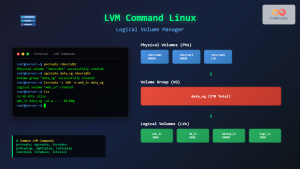
lvm Command Linux: Complete Guide to Logical Volume Manager Operations
The Logical Volume Manager (LVM) is a powerful disk management tool in Linux that provides flexible storage management by abstracting...
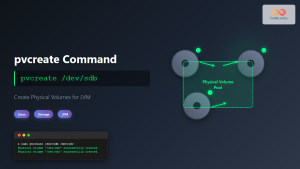
pvcreate Command Linux: Complete Guide to Creating Physical Volumes for LVM
The pvcreate command is a fundamental tool in Linux Logical Volume Management (LVM) that initializes storage devices as physical volumes....
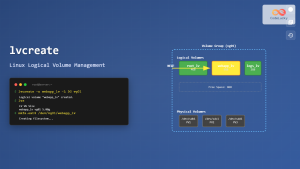
lvcreate Command Linux: Complete Guide to Creating Logical Volumes with Examples
The lvcreate command is a fundamental tool in Linux Logical Volume Management (LVM) that allows you to create logical volumes...
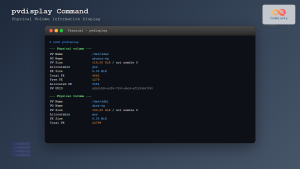
pvdisplay Command Linux: Complete Guide to Physical Volume Information Display
The pvdisplay command is an essential tool in Linux for displaying detailed information about Physical Volumes (PVs) in Logical Volume...

Storage Virtualization: Complete Guide to Logical Volume Management in Linux
Storage virtualization through Logical Volume Management (LVM) represents one of the most powerful features in modern Linux systems, providing administrators...
lvdisplay Command Linux: Complete Guide to Display Logical Volume Information
The lvdisplay command is an essential tool in Linux for displaying detailed information about logical volumes (LVs) in Logical Volume...
Storage Virtualization: Complete Guide to Abstract Storage Resources in Modern Computing
Storage virtualization represents one of the most critical technologies in modern computing infrastructure, enabling organizations to abstract physical storage resources...
sgdisk Command Linux: Complete Guide to Script-Friendly GPT Partition Management
The sgdisk command is a powerful script-friendly alternative to the interactive gdisk utility for managing GPT (GUID Partition Table) partitions...
sysfs Linux: Complete Guide to Understanding and Using /sys Filesystem
The sysfs filesystem is one of Linux's most powerful yet underutilized features, providing a window into the kernel's internal operations...
cgdisk Command Linux: Complete Guide to Curses-Based GPT Partition Management
The cgdisk command is a powerful curses-based GPT (GUID Partition Table) partition editor for Linux systems. Unlike traditional command-line tools,...
cfdisk Command Linux: Complete Guide to Curses-based Partition Management
The cfdisk command is a powerful, user-friendly partition table editor for Linux systems that provides a curses-based interface for managing...
- What is a Volume Group?
- vgcreate Command Syntax
- Prerequisites
- Step-by-Step Volume Group Creation
- Practical Examples
- Verifying Volume Group Creation
- Advanced vgcreate Options
- Common Error Messages and Solutions
- Best Practices
- Managing Volume Groups After Creation
- Monitoring and Maintenance
- Integration with File Systems
- Performance Considerations
- Security Considerations
- Troubleshooting Tips
- Conclusion