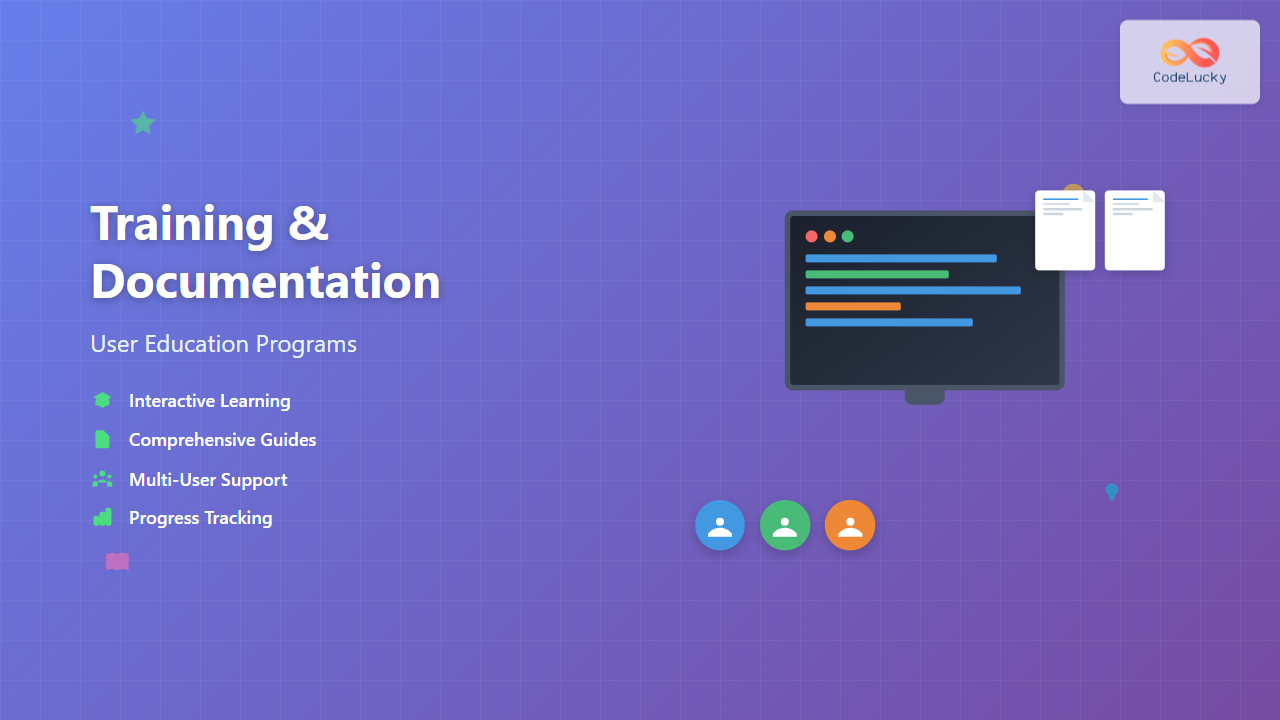
Operating system deployment success heavily depends on user adoption and competency. Effective training and documentation programs bridge the gap between system capabilities and user productivity, ensuring smooth transitions and optimal system utilization.
Understanding User Education in OS Context
User education programs for operating systems encompass structured learning initiatives designed to familiarize users with new or updated system environments. These programs address varying skill levels, from basic navigation to advanced system administration tasks.

Core Components of OS Training Programs
User Interface Familiarization
The foundation of any OS training program begins with interface orientation. Users need comprehensive understanding of desktop environments, navigation patterns, and system interactions.
Desktop Environment Training Example:
Training Module: Windows 11 Interface
Duration: 2 hours

Session 1: Start Menu and Taskbar (30 minutes)
- Start button functionality
- Pinned applications management
- Search capabilities
- Task view and virtual desktops

Session 2: File Explorer Navigation (45 minutes)
- Ribbon interface elements
- Quick access customization
- Library management
- OneDrive integration

Session 3: Settings and Control Panel (30 minutes)
- Settings app navigation
- System configuration options
- Privacy and security settings
- Update management

Session 4: Productivity Features (15 minutes)
- Snap layouts and groups
- Widget panel usage
- Microsoft Teams integration
- Focus assist configuration
Application Management and Installation
Users require training on software lifecycle management, including installation, updates, and removal processes across different operating systems.
Package Management Training (Linux):
# Ubuntu/Debian Package Management Training

# Basic package operations
sudo apt update                    # Update package lists
sudo apt upgrade                   # Upgrade installed packages
sudo apt install firefox          # Install new software
sudo apt remove firefox           # Remove software
sudo apt autoremove              # Remove unnecessary packages

# Advanced package management
apt search "text editor"          # Search for packages
apt show vim                      # Display package information
apt list --installed             # List installed packages
dpkg -l | grep firefox           # Check specific installation

# Snap package management
sudo snap install code           # Install snap packages
snap list                        # List installed snaps
sudo snap remove code            # Remove snap packages
sudo snap refresh                # Update all snaps
Documentation Strategies and Best Practices
Structured Documentation Framework
Effective OS documentation follows hierarchical information architecture, ensuring users can quickly locate relevant information based on their immediate needs and skill levels.

Interactive Documentation Elements
Modern documentation incorporates interactive elements that enhance learning engagement and provide immediate feedback to users exploring OS features.
Interactive Command Line Tutorial Example:
Interactive Shell Tutorial: File System Navigation

Step 1: Current Directory
$ pwd
/home/username
→ This shows your current working directory

Step 2: List Directory Contents
$ ls -la
total 24
drwxr-xr-x  3 username username 4096 Aug 29 12:30 .
drwxr-xr-x 15 root     root     4096 Aug 25 10:15 ..
-rw-r--r--  1 username username  220 Aug 25 10:15 .bash_logout
-rw-r--r--  1 username username 3771 Aug 25 10:15 .bashrc
drwxr-xr-x  2 username username 4096 Aug 29 12:30 Documents
→ The -la flags show all files (including hidden) in long format

Step 3: Navigate to Directory
$ cd Documents
$ pwd
/home/username/Documents
→ Successfully changed to Documents directory

Practice Exercise: Try navigating to different directories using 'cd' command
Training Delivery Methods and Modalities
Blended Learning Approaches
Successful OS training programs combine multiple delivery methods to accommodate diverse learning preferences and operational constraints.
Training Modality Matrix:
Training Method Comparison:

In-Person Training:
✓ Immediate instructor feedback
✓ Hands-on practice sessions
✓ Peer collaboration opportunities
✗ Higher resource requirements
✗ Scheduling coordination challenges

Virtual Instructor-Led Training (VILT):
✓ Geographic flexibility
✓ Screen sharing capabilities
✓ Recorded sessions for review
✗ Technology dependency
✗ Reduced personal interaction

Self-Paced Online Learning:
✓ Individual learning speed
✓ 24/7 accessibility
✓ Progress tracking capabilities
✗ Limited immediate support
✗ Requires self-motivation

Microlearning Modules:
✓ Focused topic coverage
✓ Mobile device compatibility
✓ Just-in-time learning support
✗ May lack comprehensive context
✗ Requires content curation
Assessment and Progress Tracking
Effective training programs implement comprehensive assessment mechanisms to measure learning outcomes and identify areas requiring additional support.

Specialized Training Areas
Security Awareness Training
Operating system security represents a critical training component, addressing user responsibilities in maintaining system integrity and data protection.
Security Training Curriculum Example:
Module 1: Password Security (45 minutes)
- Strong password creation guidelines
- Multi-factor authentication setup
- Password manager integration
- Account lockout prevention strategies

Module 2: System Updates and Patches (30 minutes)
- Automatic update configuration
- Security patch identification
- Update scheduling best practices
- Rollback procedures for problematic updates

Module 3: Safe Computing Practices (60 minutes)
- Email attachment handling protocols
- Web browsing security awareness
- USB device security policies
- Remote access security procedures

Module 4: Incident Response (30 minutes)
- Malware detection signs
- Incident reporting procedures
- System isolation techniques
- Recovery process initiation

Hands-on Exercise: Simulate security scenarios
- Phishing email identification
- Suspicious file handling
- System vulnerability assessment
- Security tool configuration
Accessibility and Accommodations
Training programs must address diverse user needs, including accessibility requirements and accommodation for users with disabilities.
Accessibility Training Components:
Windows Accessibility Features Training:

Visual Accessibility:
- High contrast mode activation
- Magnifier tool configuration
- Narrator screen reader setup
- Font size and display scaling

Motor Accessibility:
- On-screen keyboard usage
- Sticky keys functionality
- Mouse keys configuration
- Voice recognition setup

Cognitive Accessibility:
- Focus assist configuration
- Simplified interface options
- Custom color schemes
- Reduced motion settings

Training Delivery Accommodations:
- Closed captioning for videos
- Alternative text for images
- Keyboard navigation instructions
- Extended time allowances
- Multiple format availability
Implementation and Change Management
Rollout Strategy Planning
Successful OS training implementation requires systematic planning that considers organizational structure, technical constraints, and user readiness factors.

Support System Integration
Training programs require ongoing support mechanisms that extend beyond initial instruction periods, ensuring sustained user competency and system adoption.
Support System Framework:
Tier 1 Support: Self-Service Resources
- Online knowledge base access
- Video tutorial library
- FAQ database search
- Community forum participation
- Automated troubleshooting tools

Tier 2 Support: Peer Assistance
- Power user mentor program
- Department champion network
- Informal knowledge sharing sessions
- Cross-training opportunities
- User group meetings

Tier 3 Support: Professional Help
- IT helpdesk ticket system
- Live chat support availability
- Remote assistance sessions
- On-site troubleshooting visits
- Escalation to specialized teams

Performance Metrics:
- Support ticket resolution time
- First-contact resolution rate
- User satisfaction scores
- Training completion rates
- System adoption metrics
Measuring Training Effectiveness
Key Performance Indicators
Training program success requires quantifiable metrics that demonstrate learning outcomes, system adoption rates, and overall organizational productivity improvements.
Training Metrics Dashboard Example:
Training Effectiveness Metrics:

Learning Outcomes:
- Pre/Post Assessment Score Improvement: 35% average increase
- Module Completion Rate: 87% within scheduled timeframe
- Certification Pass Rate: 92% first attempt success
- Skill Demonstration Accuracy: 89% practical test performance

Adoption Metrics:
- Feature Utilization Rate: 78% of trained features actively used
- System Login Frequency: 23% increase post-training
- Support Ticket Reduction: 41% decrease in basic queries
- User Satisfaction Score: 4.2/5.0 training program rating

Business Impact:
- Productivity Increase: 15% task completion improvement
- Error Reduction: 29% decrease in user-generated errors
- Training ROI: 3.2:1 return on investment ratio
- Time to Competency: 40% reduction in learning curve

Continuous Improvement:
- Monthly feedback collection
- Quarterly content updates
- Annual curriculum review
- Technology integration assessment
Future Considerations and Emerging Trends
Adaptive Learning Technologies
Modern training programs increasingly leverage artificial intelligence and machine learning to personalize learning experiences and optimize knowledge retention.
AI-Enhanced Training Features:
Intelligent Learning System Components:

Personalization Engine:
- Learning style assessment algorithms
- Adaptive content difficulty adjustment
- Individual progress pace optimization
- Customized learning path generation

Performance Analytics:
- Real-time competency assessment
- Knowledge gap identification
- Predictive learning outcome modeling
- Intervention recommendation systems

Content Optimization:
- Dynamic content updates based on user feedback
- A/B testing for training effectiveness
- Automatic content translation and localization
- Multimedia format optimization for devices

Virtual Reality Integration:
- Immersive OS environment simulation
- Risk-free practice environments
- 3D interface navigation training
- Collaborative virtual learning spaces
Effective training and documentation programs form the cornerstone of successful operating system implementations. By combining structured learning approaches, comprehensive documentation strategies, and ongoing support systems, organizations can ensure smooth transitions, maximize user productivity, and achieve optimal return on their technology investments. The key lies in understanding diverse user needs, implementing appropriate delivery methods, and maintaining continuous improvement cycles that adapt to evolving technological landscapes.