Trading can seem intimidating at first — glowing charts, fancy indicators, and fast-moving prices. But when you understand the basics, it becomes clear that trading is more about knowledge, discipline, and risk management than luck or speed. This guide introduces you to the core concepts of trading, perfect for anyone starting their investment journey.
What Is Trading?
Trading refers to the act of buying and selling financial instruments such as stocks, commodities, currencies, or cryptocurrencies with the goal of making a profit. Each trade occurs in a financial market, which provides a platform for buyers and sellers to exchange assets.
Example
Suppose you buy 10 shares of a company at ₹100 each. If the price rises to ₹120 and you sell, you earn a ₹200 profit (10 × ₹20). That price difference is your trading gain. Simple, right?
Types of Financial Markets
There are various types of markets where trading takes place. The most common ones are:
- Stock Market: For company shares (like NSE or BSE in India).
- Forex Market: For trading currencies such as USD/INR or EUR/USD.
- Commodity Market: For physical goods like gold, oil, or agricultural products.
- Crypto Market: For cryptocurrencies like Bitcoin or Ethereum.

Different Types of Trading
Trading styles differ based on duration, risk tolerance, and strategy. Below are the main types:
- Day Trading: Buying and selling within a single day, avoiding overnight market risks.
- Swing Trading: Holding positions for a few days to weeks to capture medium-term price swings.
- Position Trading: Long-term trades held for weeks or even months based on trends.
- Scalping: Making many small trades daily to capture minute price changes.
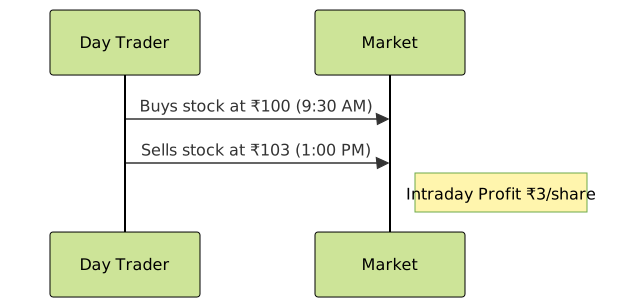
How Trading Works: The Basic Flow
Every trade involves three major steps: planning, execution, and evaluation. Let’s see how they connect.

Before executing a trade, you analyze past data and current trends, plan entry and exit points, and then execute using a trading platform or broker.
Key Concepts Every Beginner Should Know
1. Market Orders and Limit Orders
- Market Order: Executes immediately at the best available price.
- Limit Order: Executes only when the price reaches your specified target.
2. Bid, Ask, and Spread
The bid price is what buyers offer, while the ask is what sellers want. The difference between them is called the spread. Narrow spreads are typical in high-liquidity assets.
3. Candlestick Charts
Charts help traders interpret price movements visually. The candlestick chart is the most popular for showing open, close, high, and low prices for each time interval.
Trading Example: Step-by-Step
Imagine you’re trading Company XYZ’s shares:
- Price at 10:00 AM: ₹150
- You buy 20 shares (₹3,000 total).
- At 2:00 PM, price rises to ₹165.
- You sell all shares at profit of ₹15 × 20 = ₹300.
This simple trade demonstrates how traders profit from price fluctuations. Of course, prices can also move down, resulting in losses if not managed properly.
Technical vs. Fundamental Analysis
Traders use two main approaches to make decisions:
- Fundamental Analysis: Evaluates company financials, news, and economic factors. Example: buying a stock because its quarterly profits increased 20%.
- Technical Analysis: Studies price charts and historical data to predict trends. Example: buying when the 50-day moving average crosses above the 200-day moving average (a bullish signal).

Risk Management Essentials
Every successful trader understands that managing losses is just as vital as seeking profits. Some essential tools for managing risk include:
- Stop-Loss Orders: Automatically sell an asset when it drops to a set price to limit loss.
- Position Sizing: Never invest more than a small percentage of your capital in one trade (commonly 1–2%).
- Diversification: Spread your trades across sectors or instruments to reduce risk.
Tools and Platforms for Beginners
You can trade online using platforms like Zerodha, Groww, or Upstox in India. Most platforms provide:
- Real-time price data and charts.
- Order execution interface.
- Portfolio and performance tracking.
- Simulation or “demo” trading for practice.
Common Mistakes New Traders Make
Beginners often fall into traps that reduce their chances of success. Watch out for these common errors:
- Overtrading without a plan.
- Ignoring stop-losses and taking excessive risks.
- Following rumors or emotional impulses.
- Neglecting to review past trades for improvement.
Tips to Start Trading Confidently
- Start small, preferably with a demo account first.
- Track your trades in a journal for learning.
- Use risk-reward ratios (aim for returns at least 2× the risk taken).
- Keep emotions in check — consistency yields results over time.
Conclusion
Trading is both an art and a science. While it may seem complex at first, a structured learning path builds clarity. Focus on understanding how markets behave, managing risk wisely, and refining strategies through experience. As your knowledge compounds, your confidence will grow — making trading a skill worth mastering.
Learn, practice, and trade responsibly — your financial education begins now at CodeLucky.com.