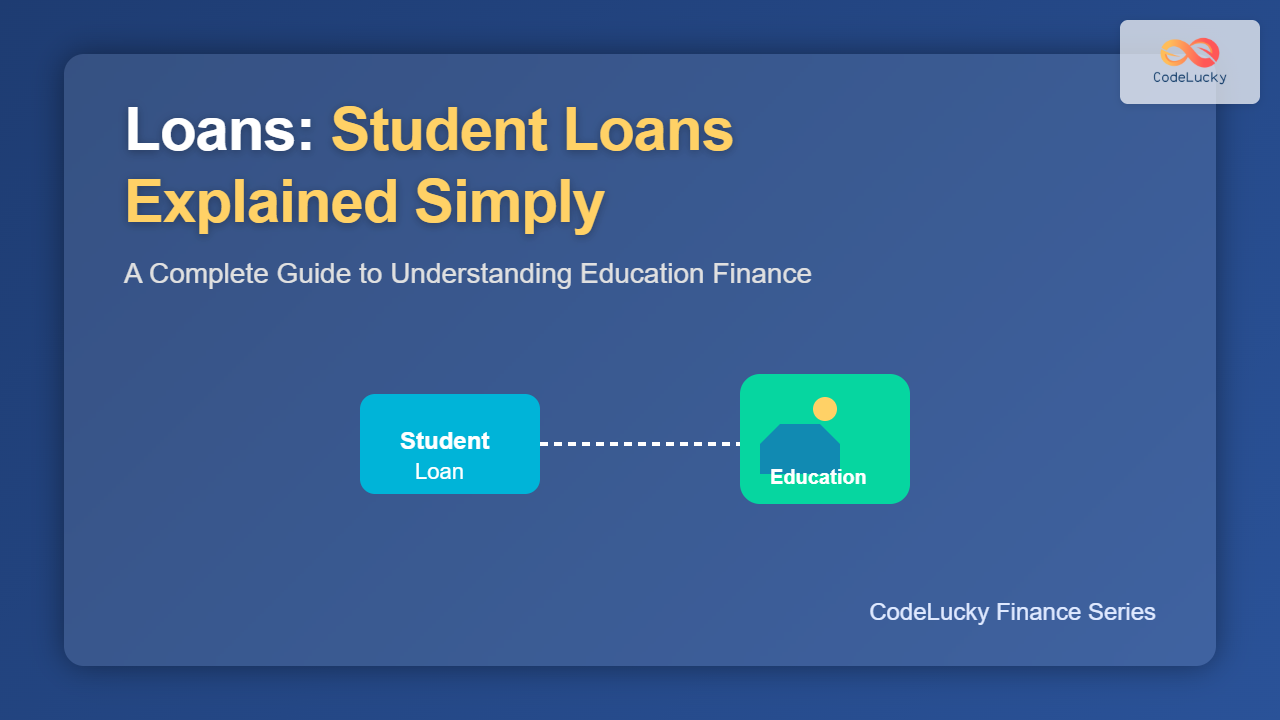
Student loans are one of the most common ways students fund higher education. Whether you’re planning to study in India or abroad, knowing how student loans work can help you make smarter financial decisions. This detailed guide from CodeLucky.com will walk you through the basics—types of loans, eligibility, interest rates, repayment, and examples explained in plain terms.
What Are Student Loans?
A student loan is a type of financial aid designed specifically to cover education-related expenses—like tuition, books, housing, and other academic costs. Unlike scholarships or grants, student loans must be repaid, usually with interest, after a certain period.
In simpler terms, think of a student loan as an investment in yourself. The bank pays for your education now, and once you begin earning, you repay that amount gradually.

Types of Student Loans
Broadly, student loans can be categorized into two major types depending on the source and repayment terms.
1. Federal or Government-Backed Loans
Common in countries like the U.S., these are low-interest loans supported by government agencies. In India, public-sector banks (like SBI or Canara Bank) offer similar education loans under government schemes. They often have features like subsidized interest or grace periods.
2. Private or Institutional Loans
Offered by private banks or Non-Banking Financial Companies (NBFCs), these loans generally have higher interest rates and stricter repayment schedules. However, they can cover higher study costs and may be easier to get for international studies.
Key Components of a Student Loan
- Principal: The total amount borrowed to cover your education expenses.
- Interest Rate: The percentage charged on the loan amount. Can be fixed or floating.
- Tenure: The time period (usually 5–15 years) for repayment.
- Grace Period: The time after graduation when repayment isn’t yet required.
- Collateral: For some loans (especially large ones), banks may require property or security as collateral.
How Interest Works on Student Loans
Interest accumulates over time, depending on your repayment schedule. Here’s a simple example:
Example:
Principal: ₹10,00,000
Interest Rate: 10% per annum
Loan Tenure: 10 years

Approximate EMI ≈ ₹13,215 per month
Total Repayment = ₹13,215 × 120 months = ₹15,85,800
Total Interest Paid ≈ ₹5,85,800
This means that over ten years, you’d pay nearly ₹5.8 lakhs in interest alone—emphasizing the importance of choosing the right tenure and repayment strategy.

Repayment and Grace Period Explained
Most banks allow a grace period that begins after your course ends—typically 6 to 12 months. During this time, you can focus on finding a job before EMIs start.
- Option 1: Start repaying interest while studying (reduces total cost).
- Option 2: Pay nothing during study and grace periods (but overall interest increases).
Here’s a sample visualization of repayment timing:

Eligibility and Documentation
- Must be an Indian citizen (for Indian education loans).
- Admission to a recognized educational institution.
- Co-applicant (usually parent or guardian) with income proof.
- Documents like admission letter, fee structure, ID, and address proof.
Common Mistakes to Avoid
- Borrowing more than necessary—always calculate your actual cost of study.
- Not comparing loan providers—interest rate differences matter a lot.
- Ignoring prepayment terms—some banks charge fees for early closure.
- Skipping insurance—loan cover insurance protects your family financially.
Interactive Example: Estimate Your Loan Repayment
You can use a simple JavaScript calculator to estimate monthly EMIs. Try modifying the values to see changes:
<!-- Simple Student Loan EMI Calculator -->
<input id="principal" type="number" placeholder="Principal (₹)" value="1000000">
<input id="rate" type="number" placeholder="Interest rate (%)" value="10">
<input id="months" type="number" placeholder="Tenure in months" value="120">
<button onclick="calcEMI()">Calculate EMI</button>
<p id="output"></p>

<script>
function calcEMI() {
  let P = document.getElementById('principal').value;
  let r = document.getElementById('rate').value / 1200;
  let n = document.getElementById('months').value;
  let emi = (P * r * Math.pow(1 + r, n)) / (Math.pow(1 + r, n) - 1);
  document.getElementById('output').innerText = "Your EMI: ₹" + emi.toFixed(2);
}
</script>
Tips to Manage Student Loans Successfully
- Start repaying interest early if possible to reduce total cost.
- Opt for automatic payments to never miss due dates.
- Consider refinancing when interest rates drop.
- Maintain good credit—they help you borrow at lower rates next time.
Final Thoughts
Student loans can be empowering when used wisely. They bridge the gap between ambition and affordability. Understanding the loan structure, planning repayment in advance, and comparing institutions can help you graduate without financial stress. Remember—education is an investment, and like any investment, managing it smartly yields the best results.
Author: CodeLucky Finance Series | Category: Loans and Personal Finance