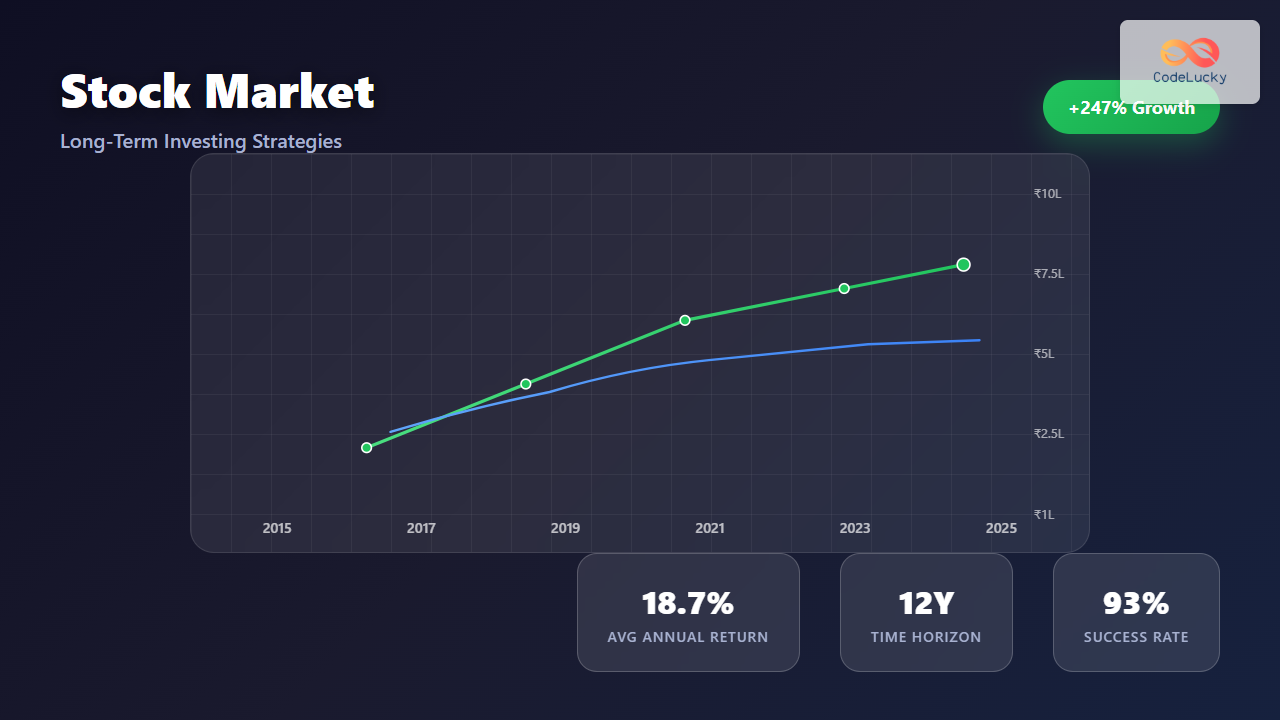
The stock market rewards patience. Long-term investing focuses on buying quality stocks or funds and holding them for years, even decades, regardless of short-term volatility. Unlike day trading, which rides on quick market movements, long-term investing builds wealth steadily using time-tested principles such as compounding, diversification, and consistent contributions.
Understanding Long-Term Investing
Long-term investing means staying invested for extended periods — typically more than five years. The goal is to let your investments benefit from the power of compounding and economic growth.

For example, if you invest ₹10,000 every year at an average annual return of 10%, after 20 years your investment will grow to over ₹6.7 lakh — not just from contributions, but mainly due to the compounding returns.
Core Principles of Long-Term Stock Investing
1. Power of Compounding
Reinvesting dividends and capital gains helps your money grow exponentially. Compounding transforms small, consistent savings into large wealth when time is on your side. Even modest returns can generate huge results if reinvested consistently.
2. Diversification
Never put all your eggs in one basket. Diversifying across industries, geographies, and asset types reduces overall risk. When one sector underperforms, another may outperform, providing overall balance to your portfolio.

3. Dollar-Cost Averaging (DCA)
Investing a fixed sum regularly regardless of market price averages out volatility. You buy more shares when prices are low and fewer when prices are high, which reduces emotional decision-making.
4. Patience and Discipline
Markets fluctuate daily. Long-term investors focus on fundamentals, not headlines. Avoid panic selling during downturns — downturns often present buying opportunities rather than reasons to exit.

5. Reinvest Dividends
Dividend reinvestment plans (DRIPs) automatically use payouts to purchase more shares, fueling compounding further. This method requires no additional effort yet improves long-term growth significantly.
Popular Long-Term Investment Strategies
1. Buy and Hold Strategy
Invest in fundamentally strong companies and hold them long enough to benefit from their growth trajectory. This approach emphasizes quality over timing.
2. Value Investing
Popularized by Warren Buffett, value investing seeks undervalued stocks trading below their intrinsic value. Investors focus on a company’s financial health, debt, earnings, and management quality rather than price movements.
3. Growth Investing
This strategy targets companies with high potential for future expansion, such as technology or renewable energy firms. Though volatile short-term, their compounding returns can outperform over the long run.
4. Index Fund Investing
Index funds track market indices like Nifty 50 or S&P 500. They require minimal maintenance, offer broad diversification, and often outperform actively managed funds over time due to low fees and consistent exposure.

Analyzing Stocks for Long-Term Investment
Before investing, analyze company fundamentals. Some key metrics include:
- Revenue and Profit Growth: Companies with steady earnings growth indicate business stability.
- Debt-to-Equity Ratio: Lower ratios suggest prudent financial management.
- Return on Equity (ROE): Reflects how efficiently a company generates profit from shareholder capital.
- Market Position: Dominant or innovative players are more likely to sustain growth long term.
Example: Suppose Company A consistently reports 12% annual revenue growth and low debt with strong market share. Even small price dips would be buying opportunities for long-term investors.
Understanding Market Cycles
Market cycles alternate between bull (rising) and bear (falling) phases. Recognizing these cycles helps investors stay calm and continue investing consistently.

During bear markets, prices drop and pessimism dominates — a great time for accumulating quality stocks at discounts. Bull markets then reward patient investors with substantial growth.
Tools and Practical Tips for Long-Term Success
- Use SIPs (Systematic Investment Plans) in equity mutual funds for consistent investment.
- Review your portfolio annually rather than weekly.
- Balance risk by adjusting asset allocation as you age.
- Stay informed but avoid daily market news that triggers emotional decisions.
Interactive Example: Compounding Calculator
You can test your own compound growth using the below interactive HTML snippet. Adjust principal, rate, and time values.
<script>
function calculateCompound(){
  const p = parseFloat(document.getElementById('p').value);
  const r = parseFloat(document.getElementById('r').value)/100;
  const t = parseFloat(document.getElementById('t').value);
  const final = p * Math.pow((1 + r), t);
  document.getElementById('result').innerText = 'Future Value: ₹' + final.toFixed(2);
}
</script>
Principal: <input id="p" value="10000">
Rate(%): <input id="r" value="10">
Time (Years): <input id="t" value="20">
<button onclick="calculateCompound()">Calculate</button>
<div id="result"></div>
Try changing the values to understand how time and rate influence wealth creation.
Conclusion
Successful long-term investing in the stock market is not about predicting next week’s price movements; it’s about disciplined saving, consistent investing, and allowing time to multiply returns. Stick to your plan, stay diversified, reinvest earnings, and let compounding work — your patience will be well rewarded.