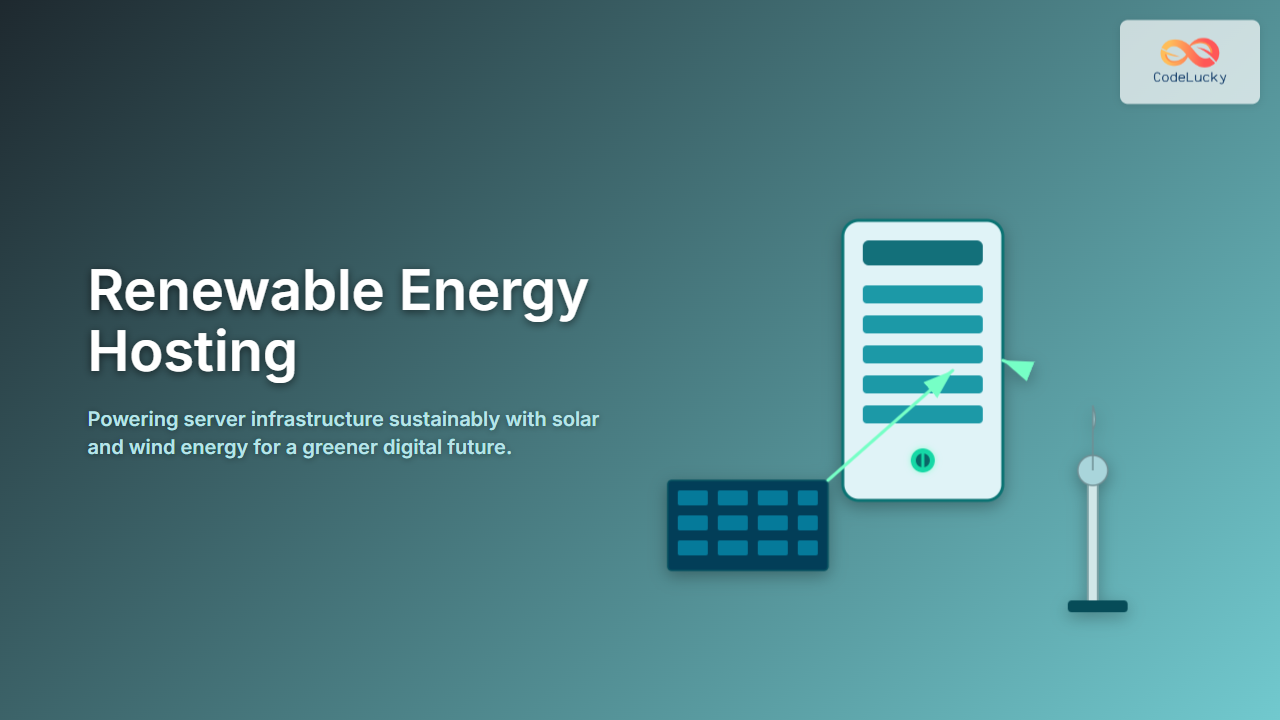
As concerns over climate change and carbon emissions intensify, the tech industry is increasingly turning to environmentally responsible alternatives for powering its infrastructure. Renewable Energy Hosting, which uses solar and wind power to operate servers, is leading this green revolution. This approach not only reduces carbon footprints but also promotes sustainable growth in digital services. This article dives deep into the workings, benefits, and implementation of solar and wind-powered servers to help developers, hosting providers, and businesses understand how to leverage this powerful technology.
What is Renewable Energy Hosting?
Renewable Energy Hosting refers to data centers and server facilities powered in full or part by renewable energy sources such as solar panels and wind turbines. These sources replace traditional fossil-fuel-based electricity, significantly reducing harmful emissions and dependency on non-renewable energy. The approach aligns with global initiatives for carbon neutrality and environmental sustainability.
Why Choose Solar and Wind-Powered Servers?
- Environmental Impact: Dramatically less greenhouse gas emissions compared to conventional power sources.
- Cost Efficiency: Long-term savings on energy costs with initial capital investment into renewable infrastructure.
- Energy Independence: Reduced reliance on unstable grid power or fossil fuels.
- Brand Value: Companies adopting green hosting enhance their corporate social responsibility (CSR) profiles.
- Regulatory Benefits: Potentially qualify for government incentives, tax credits, or subsidies related to renewable energy implementation.
How Do Solar-Powered Servers Work?
Solar-powered servers operate using photovoltaic (PV) panels that convert sunlight into DC electricity. This electricity is then usually stored in batteries to ensure continuous power supply, including nighttime or cloudy periods. An inverter converts the stored DC power to AC power, which servers and other hardware use. Integration with the grid or backup generators can provide additional reliability.
Wind-Powered Server Infrastructure
Wind-powered servers similarly harness renewable energy but through wind turbines capturing kinetic energy from wind airflow. The generated electricity is again stored in batteries and managed by power control systems to ensure steady server operation. Wind energy is especially advantageous in windy regions or offshore server locations, where solar availability may fluctuate.
Hybrid Renewable Hosting: Combining Solar & Wind
For more resilience and consistent uptime, many data centers implement a hybrid approach that merges solar and wind energy sources. This diversification ensures that servers remain powered despite variability in weather conditions, exploiting solar power in sunny conditions and wind during windy intervals.

Example: Setting Up a Solar-Powered Server Rack
Consider a small business wanting to power a rack of servers dedicated to hosting web applications using solar energy. The setup involves:
- Installation of rooftop solar panels sized for estimated server power consumption (~1-3 kW for medium load).
- Battery bank sized to cover overnight loads and cloudy days (e.g., lithium-ion batteries with 10 kWh capacity).
- Inverter system customized for stable 120/240V AC output suitable for server hardware.
- Monitoring and control software for managing power usage and battery health.
This setup reduces electricity bills and carbon emissions dramatically while maintaining 24/7 availability.
Interactive Visual: Energy Flow in Solar Server Hosting
Below is an interactive visualization concept (to be implemented on platforms supporting JS or similar) illustrating real-time power generation, battery charge, and server load. This helps administrators optimize energy use and foresee maintenance needs.
/* Pseudocode for interactive visualization */
/*
Track solar input intensity, battery status, server load; display gauges and flow arrows;
Provide alerts if battery low or power surplus;
*/
Challenges & Considerations
- Initial Costs: Renewable setups can require significant upfront investment.
- Space Requirements: Solar panels and wind turbines need adequate physical space.
- Energy Storage: Battery technology and management is critical for uninterrupted service.
- Maintenance: Requires regular upkeep of panels, turbines, and batteries.
- Grid Integration: Proper fallback and synchronization with electric grid or generators is mandatory.
Future Outlook & Trends
As battery technology improves and renewable costs decrease, adoption of solar and wind-powered hosting will grow rapidly. Emerging innovations in server energy efficiency and modular green data centers will further accelerate sustainability in cloud infrastructure. Organizations aiming for long-term environmental and economic benefits should explore renewable energy hosting strategies now.
Conclusion
Renewable Energy Hosting using solar and wind-powered servers offers a practical, eco-friendly alternative to traditional hosting models. It ensures reliable, cost-effective, and green digital experiences by leveraging nature’s abundant resources. Businesses and developers embracing these technologies contribute positively to environmental stewardship while positioning themselves at the forefront of sustainable innovation.