Economic Concepts: Recession and Economic Cycles are at the heart of understanding how modern economies behave. Whether you’re a business owner, investor, or student of economics, these two ideas help you interpret key shifts in employment, consumer confidence, and market trends. Let’s unpack how economies rise and fall, what drives recessions, and how recovery begins.
What Is a Recession?
A recession is a period of economic decline marked by a fall in Gross Domestic Product (GDP) for at least two consecutive quarters. During a recession, businesses slow production, unemployment rises, and consumer spending drops, creating a ripple effect across sectors.
Economists often track several indicators during a recession:
- Declining GDP for consecutive quarters.
- Rising unemployment and layoffs.
- Decreasing consumer spending and business investment.
- Falling industrial production and sales volumes.
Example: The 2008 global financial crisis triggered a massive recession. Housing market collapse in the U.S. led to falling asset prices, massive layoffs, and an international credit crunch.
Understanding Economic Cycles
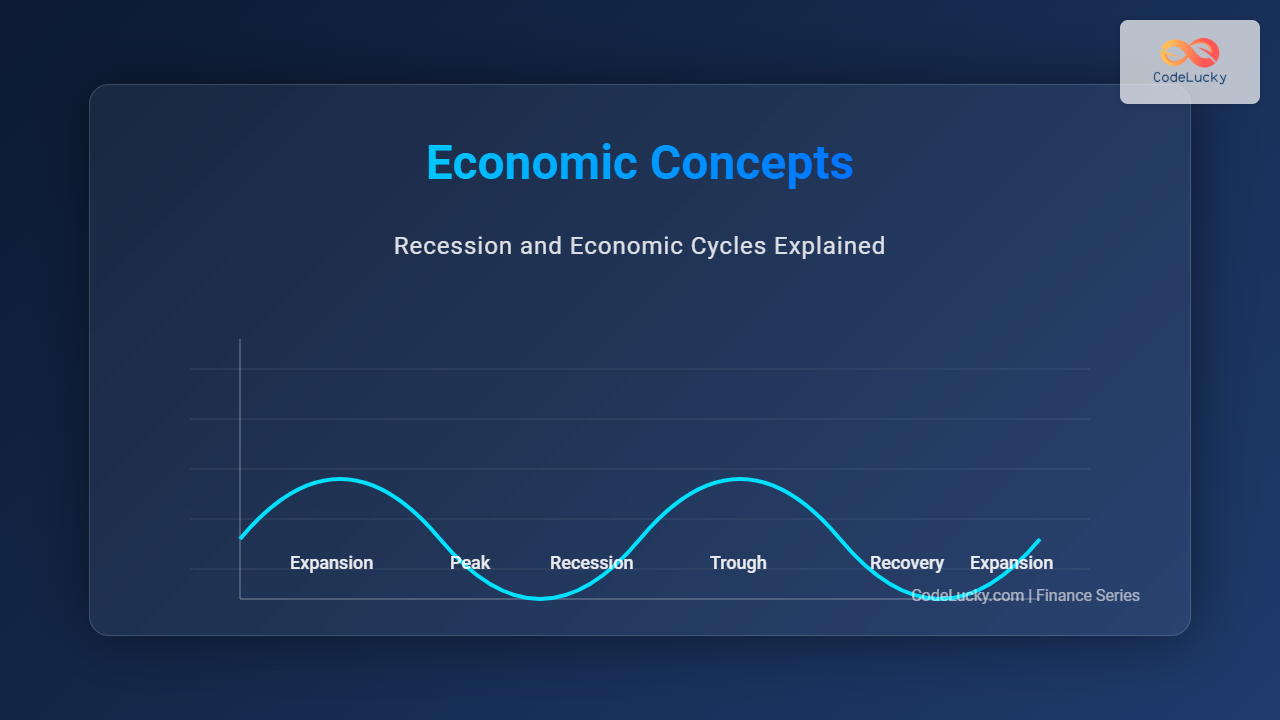
Economies move through recurring phases known as economic cycles or business cycles. These aren’t strict schedules but general patterns that economies repeat over time.
The four major phases in an economic cycle are:
- Expansion: Economic growth rises, employment and income increase.
- Peak: The height of economic activity, often accompanied by inflationary pressure.
- Recession: Economic growth contracts, unemployment rises, spending declines.
- Recovery: The economy begins to grow again, restoring confidence and activity.

The above diagram shows how the economy transitions from one phase to another, forming a cyclical pattern over time.
Visualizing GDP Over an Economic Cycle
To understand how GDP fluctuates during these phases, imagine the economy as a rolling wave — sometimes climbing, sometimes dipping, but always moving forward over the long term.

Causes of Economic Recession
Recessions rarely have a single cause. Instead, multiple economic and psychological factors combine to trigger downturns. Common causes include:
- High inflation: When prices rise rapidly, consumers buy less.
- Interest rate hikes: Higher rates increase borrowing costs and reduce investment.
- Reduced consumer confidence: Fear of job loss or instability leads to less spending.
- Financial market instability: Crashes or crises reduce wealth and investment levels.
- External shocks: Wars, natural disasters, or pandemics can destabilize economies quickly.
Example: During the COVID-19 pandemic, supply chains were disrupted, travel declined, and businesses closed worldwide, creating a pandemic-induced recession.
How Governments Respond to Recessions
Governments and central banks use several strategies to stimulate economic recovery during recessions:
- Monetary policy: Reducing interest rates or increasing money supply through quantitative easing.
- Fiscal policy: Increasing public spending or cutting taxes to boost aggregate demand.
- Stimulus programs: Providing direct financial aid, subsidies, or loans to businesses and households.

The Human Impact of a Recession
While economics deals with numbers and charts, the real impact of a recession is felt by individuals and families:
- Job loss or pay cuts reduce household stability.
- Businesses face bankruptcy or restructuring.
- Government revenues fall, limiting social spending.
- Savers may see reduced returns, and investors face volatility.
Example scenario: A technology company might pause hiring or cut staff to reduce costs. Suppliers relying on that company then experience lower demand, spreading the slowdown across the economy.
Understanding the Recovery Phase
The recovery phase begins when production stabilizes and spending resumes. Optimism grows, leading to hiring and new investments. Over time, this expansion moves toward another peak, continuing the economic cycle.

How to Prepare for an Economic Downturn
Businesses and individuals can build resilience by planning for the cyclical nature of economies:
- Maintain emergency funds to cover 6–12 months of expenses.
- Diversify income sources and investment portfolios.
- Reduce high-interest debt during growth periods.
- Focus on skills and innovation to remain valuable in shifting markets.
Conclusion
Economic cycles remind us that growth and decline are both natural parts of the economic landscape. Understanding recessions enables better personal and business decision-making. By monitoring indicators and preparing early, individuals, corporations, and governments can cushion the impact and accelerate recovery.
Economies will always fluctuate — but with knowledge and preparation, we can manage the waves of boom and bust more effectively.