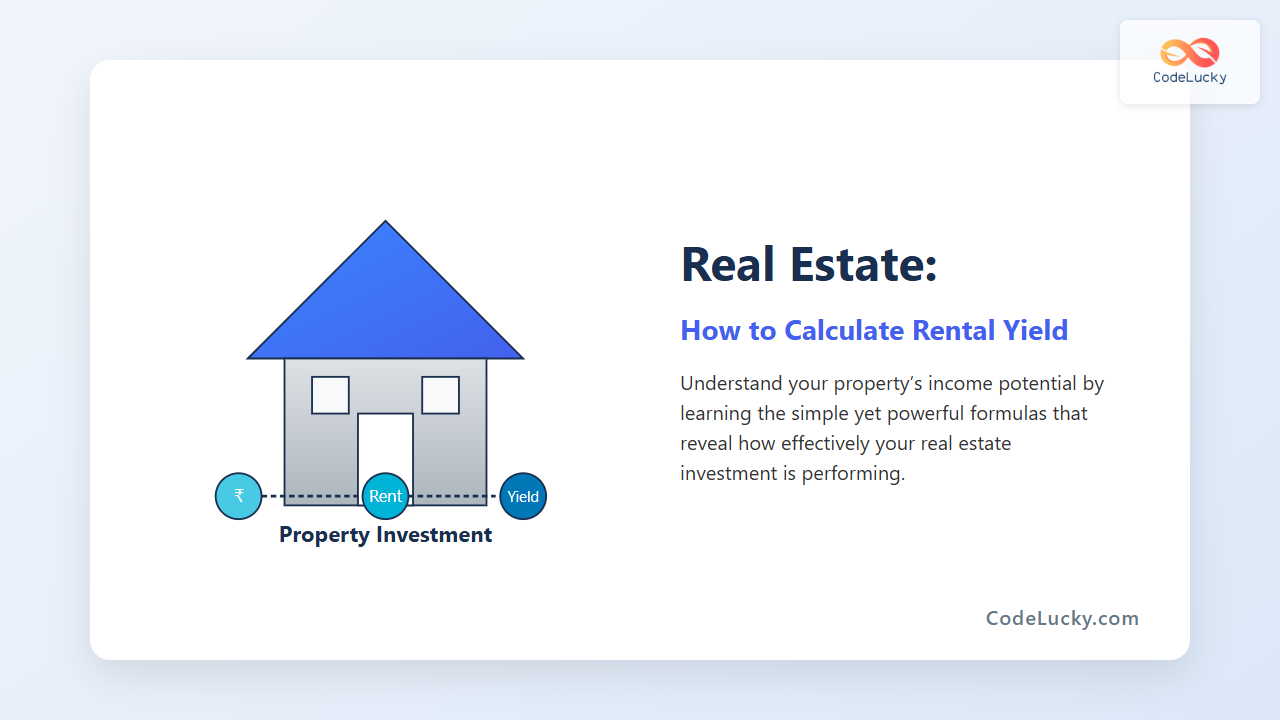
Rental yield is one of the most important metrics for evaluating the profitability of a real estate investment. Whether you’re a first-time investor or expanding a rental portfolio, understanding how to calculate and interpret rental yield helps you make smarter property choices.
What is Rental Yield?
Rental yield measures the annual income you earn from renting out a property as a percentage of its purchase or market value. It represents the return on your investment, similar to how interest rates work for savings or returns work for stocks.
There are two main types of rental yields you should know:
- Gross Rental Yield: The total rental income before expenses.
- Net Rental Yield: The income after deducting operating costs like maintenance, property taxes, agent fees, and insurance.
Formula for Rental Yield
You can calculate Gross Rental Yield using this formula:
Gross Rental Yield (%) = (Annual Rental Income / Property Value) × 100For Net Rental Yield:
Net Rental Yield (%) = ((Annual Rental Income - Annual Expenses) / Property Value) × 100Example: Calculating Gross Rental Yield
Suppose you purchased a property for ₹50,00,000 and you earn ₹20,000 per month as rent.
Annual Rental Income = 20,000 × 12 = ₹2,40,000
Gross Rental Yield = (2,40,000 / 50,00,000) × 100 = 4.8%
So, your gross rental yield is 4.8%.
Example: Calculating Net Rental Yield
If annual maintenance and taxes cost ₹40,000, then:
Net Rental Income = 2,40,000 - 40,000 = ₹2,00,000
Net Rental Yield = (2,00,000 / 50,00,000) × 100 = 4%
Hence, your net rental yield is 4%.
Visualizing Rental Yield Calculation
This simple diagram shows how rental yield flows from your investment and expenses:

Why Rental Yield Matters
Rental yield helps you compare properties and understand the balance between income and cost. A property with a higher yield may look great on paper, but it may come with higher risks or lower appreciation potential. Conversely, lower yields could signal high-value locations with strong long-term growth.
Typical Rental Yields by Property Type
| Property Type | Expected Yield (Annual) |
|---|---|
| Residential (Urban) | 2% – 4% |
| Residential (Suburban) | 3% – 6% |
| Commercial | 6% – 10% |
Interactive Example: Estimate Your Rental Yield
Use this quick calculator snippet to experiment with your own numbers. You can embed this in your website to make it interactive:
<script>
function calcYield(){
  const value = parseFloat(document.getElementById('value').value);
  const income = parseFloat(document.getElementById('income').value);
  const expenses = parseFloat(document.getElementById('expenses').value);
  const gross = (income/value)*100;
  const net = ((income-expenses)/value)*100;
  document.getElementById('result').innerHTML =
    `Gross Yield: ${gross.toFixed(2)}% <br> Net Yield: ${net.toFixed(2)}%`;
}
</script>

<div>
  <label>Property Value (₹): </label><input type="number" id="value"><br>
  <label>Annual Rent (₹): </label><input type="number" id="income"><br>
  <label>Expenses (₹): </label><input type="number" id="expenses"><br>
  <button onclick="calcYield()">Calculate</button>
  <p id="result"></p>
</div>
Step-by-Step Process: Finding the Right Rental Yield

Factors That Affect Rental Yield
- Location: Properties near workplaces, schools, or metro stations attract better rentals.
- Property Condition: Well-maintained homes reduce vacancy and repair costs.
- Market Demand: High demand pushes rental prices up, raising your yield.
- Maintenance Costs: High upkeep reduces net yield even if rent is good.
- Loan and Interest Costs: Financing expenses can alter effective returns significantly.
Comparing Rental Yield with Other Investments
Rental yield alone doesn’t determine investment value. Here’s how it stacks against other asset classes:
| Investment Type | Average Annual Return | Risk Level |
|---|---|---|
| Fixed Deposit | 5% – 7% | Low |
| Equity Mutual Fund | 10% – 14% | Medium to High |
| Real Estate (Rental Yield) | 3% – 6% + Capital Appreciation | Medium |
Tips to Improve Your Rental Yield
- Renovate strategically—focus on kitchens and bathrooms for maximum appeal.
- Target high-demand micro-markets with low supply.
- Optimize maintenance through annual contracts to control costs.
- Negotiate property prices during low-demand periods.
Conclusion
Rental yield is the cornerstone of real estate investment analysis. A strong grasp of these calculations allows you to balance income and growth potential effectively. Whether you’re renting out a small apartment or managing multiple properties, knowing your yield can help you make clear, data-driven decisions that maximize returns over time.