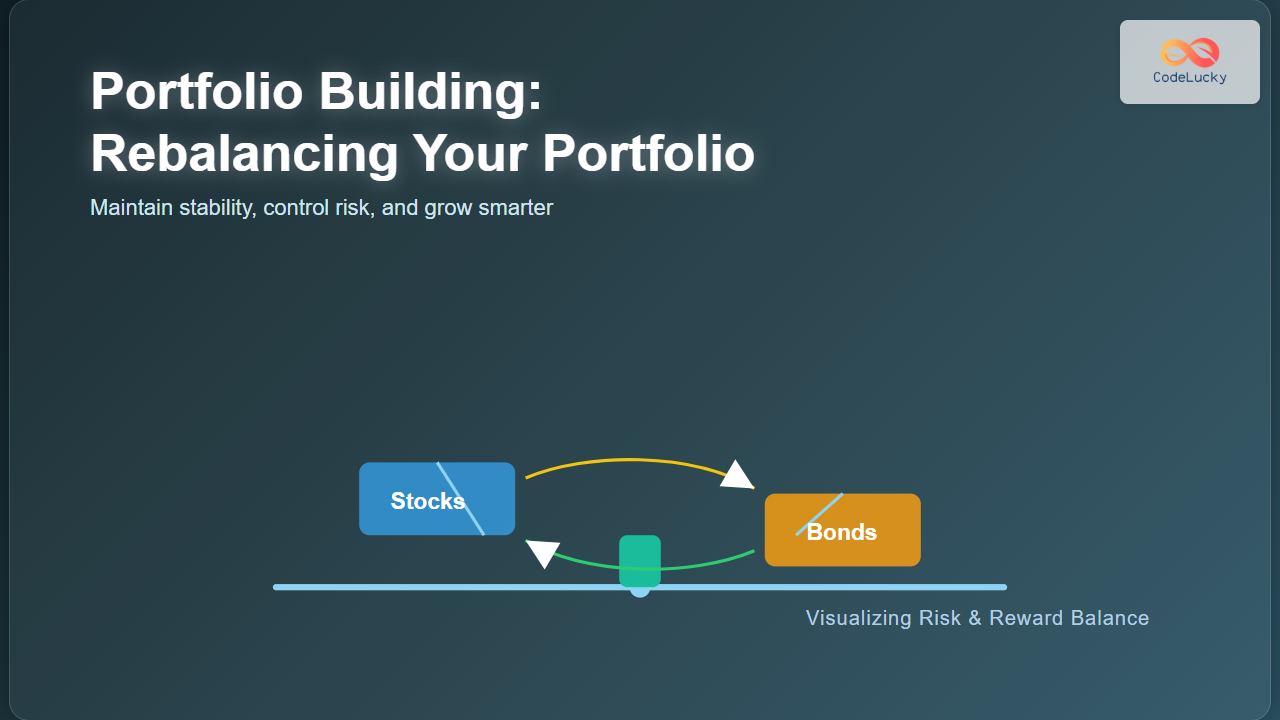
Rebalancing your portfolio is one of the most critical yet often overlooked aspects of smart investing. It ensures your investments remain aligned with your target asset allocation — maintaining the right mix of stocks, bonds, and other assets according to your financial goals and risk tolerance. Without rebalancing, your portfolio can drift off course as some assets outperform others.
What Is Portfolio Rebalancing?
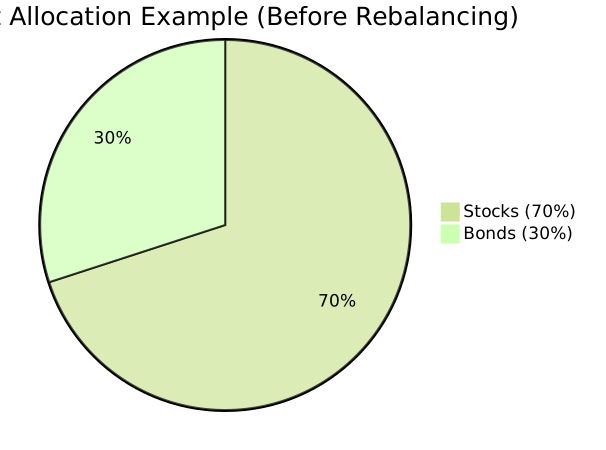
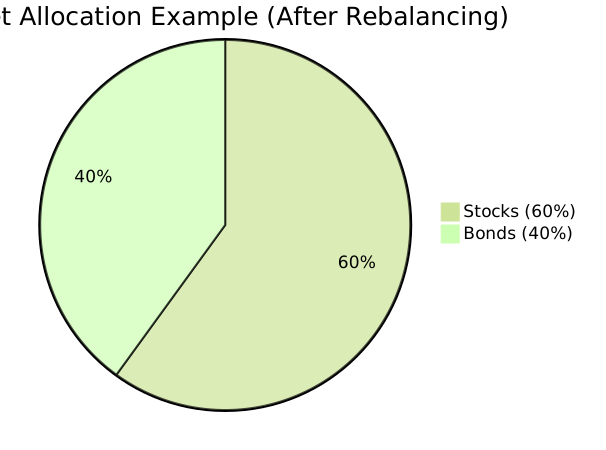
Portfolio rebalancing is the process of realigning the weight of assets in your investment portfolio. For example, if your target allocation is 60% stocks and 40% bonds, but market performance pushes it to 70% stocks and 30% bonds, it’s time to rebalance by selling some stocks and buying bonds.
After rebalancing back to your target mix, your portfolio regains balance between growth potential and risk control:
Why Rebalancing Matters
- Risk Control: Rebalancing keeps your risk level consistent with your initial investment plan, ensuring you’re not overexposed to high-volatility assets.
- Maintain Target Returns: Asset performance varies; rebalancing ensures your portfolio doesn’t stray from your desired return strategy.
- Profit Discipline: It encourages systematic profit-taking from outperforming assets and reinvestment into undervalued areas.
- Psychological Balance: It helps investors stick to a rational investment process rather than emotional decision-making.
When Should You Rebalance?
There’s no universal rule, but most investors use one of these common approaches:
- Calendar-based rebalancing: Set fixed times — quarterly, semi-annually, or annually — to check allocations and adjust if needed.
- Threshold-based rebalancing: Rebalance only when an asset class deviates beyond a predefined percentage (for example, 5%) from its target weight.
- Hybrid approach: Combine both — evaluate regularly but rebalance only when deviations exceed thresholds.
How to Rebalance: Step-by-Step

Example Calculation
Suppose your target is:
- 60% Stocks
- 40% Bonds
Your portfolio value is ₹10,00,000.
After a year, stocks grow and now represent ₹7,50,000 while bonds are worth ₹3,00,000.
New allocation = 75% stocks, 25% bonds. To rebalance:
- Target stock value = ₹6,00,000 (60% of ₹10,00,000)
- Sell ₹1,50,000 worth of stocks.
- Buy ₹1,50,000 worth of bonds to bring bond allocation to ₹4,00,000.
Tax Efficiency and Cost Considerations
While rebalancing improves long-term stability, it can incur capital gains taxes and trading fees. To minimize them:
- Use tax-advantaged accounts (e.g., PPF, NPS, 401(k) equivalents).
- Redirect new contributions to underweighted assets instead of selling overperforming ones.
- Avoid too-frequent trading; only rebalance when deviations are significant.
Automated and DIY Rebalancing Tools
Modern investors can benefit from robo-advisors or online platforms offering automated rebalancing. These tools regularly monitor your allocation and make minimal trades automatically.

Case Study: Investor Example
Arjun starts with ₹5 lakh invested 50% in equity mutual funds and 50% in bonds. After two years, equities grow by 40%, while bonds grow by 10%. The new allocation becomes roughly 58% stocks and 42% bonds. Arjun notices increased exposure to equity risk and rebalances by selling ₹40,000 in equity funds and reinvesting in bonds to restore balance. Over the next three years, this disciplined strategy helps Arjun reduce volatility and improve consistent returns.
Interactive Portfolio Rebalancing Simulation (HTML Example)
Use this simple interactive snippet to visualize portfolio balance changes:
<input type="range" id="stocks" min="0" max="100" value="60" oninput="updatePortfolio()">
<input type="range" id="bonds" min="0" max="100" value="40" oninput="updatePortfolio()">
<p>Stocks: <span id="stockVal">60</span>% | Bonds: <span id="bondVal">40</span>%</p>
<script>
function updatePortfolio() {
  let s = document.getElementById('stocks').value;
  let b = 100 - s;
  document.getElementById('stockVal').textContent = s;
  document.getElementById('bondVal').textContent = b;
}
</script>
Best Practices for Rebalancing
- Define a clear asset allocation strategy aligned with your goals.
- Use systematic methods (calendar or threshold based) for discipline.
- Reinvest dividends strategically in underweighted assets.
- Keep trading and tax costs low by rebalancing efficiently.
- Document every rebalance to monitor performance trends.
Conclusion
Rebalancing your portfolio is about maintaining control, not chasing performance. By following a disciplined approach, you can manage risk, stabilize returns, and stay on track toward your long-term financial objectives. Whether done manually or automatically, portfolio rebalancing is the true hallmark of a committed, long-term investor.