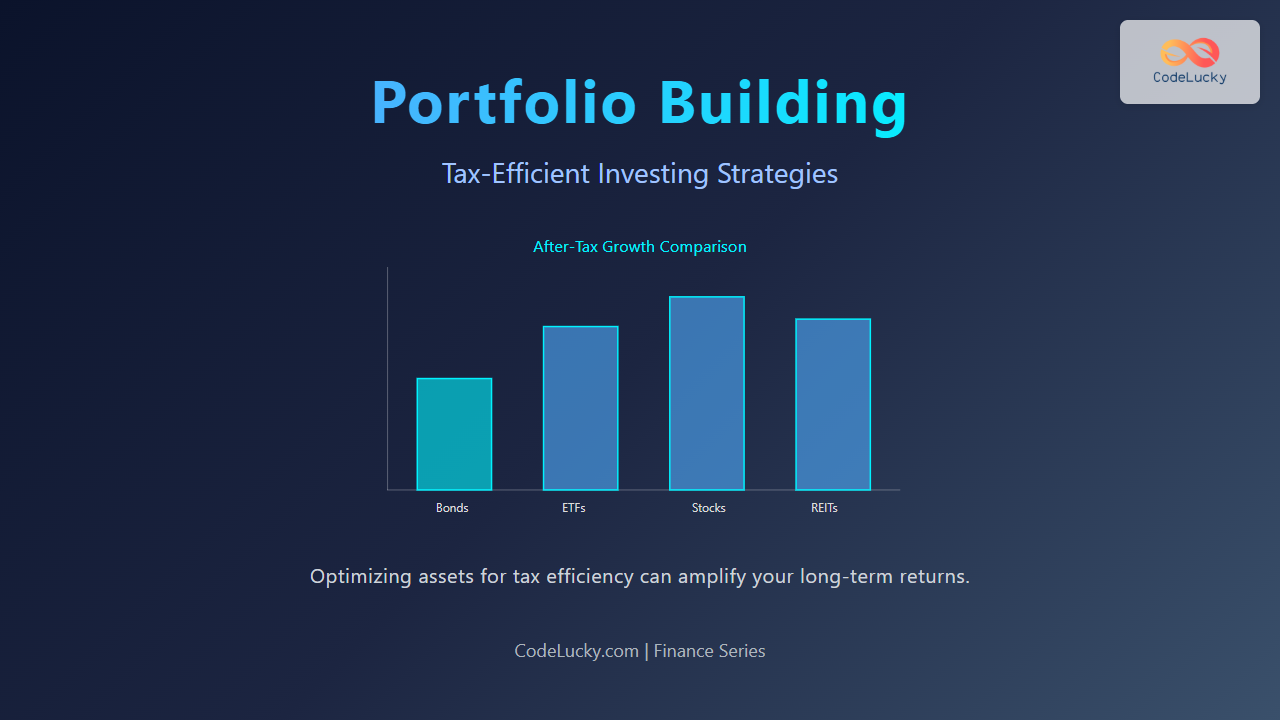
Portfolio Building: Tax-Efficient Investing Strategies is one of the most important skills for long-term wealth preservation. It’s not enough to earn high returns — what you keep after taxes truly defines your financial success. This article from CodeLucky.com walks you through how to structure your portfolio in a way that minimizes tax drag while maintaining optimal growth potential.
Understanding Tax-Efficient Investing
Tax-efficient investing means structuring your portfolio to minimize the taxes owed on investment returns. Every decision — from what asset you invest in to where you hold it — can influence how much tax you ultimately pay. A tax-efficient approach increases your after-tax returns without increasing risk.
Why It Matters
- Compounded Savings: Lower taxes mean more capital reinvested, compounding over time.
- Improved Risk-Adjusted Returns: Efficient portfolios achieve better real performance without extra volatility.
- Long-Term Wealth: Strategic planning prevents unnecessary capital gains leakage.
Key Factors Affecting Investment Taxes
Before optimizing, understand where taxes appear in your investment process. Here’s a visual overview:

Types of Taxable Income
- Interest: Fully taxable as ordinary income, typically from bonds, savings, and deposits.
- Dividends: May qualify for reduced tax rates if held long enough.
- Capital Gains: Depending on holding period — below one year (short term, high tax) or above one year (long term, lower tax).
Strategies for a Tax-Efficient Portfolio
1. Asset Location – Put the Right Investments in the Right Accounts
Not all accounts are taxed equally. Tax-advantaged accounts can shelter growth, while taxable ones may need careful structuring.
| Account Type | Best Suited For | Tax Treatment |
|---|---|---|
| Taxable Brokerage | Long-term ETFs, index funds | Capital gains taxes on sale |
| Retirement Accounts (401k, IRA) | Bonds, REITs, high-yield funds | Tax-deferred or tax-exempt growth |
| HSA | Tax-efficient equity exposure | Tax-free if used for medical expenses |

Example: Suppose you hold bond funds and equity ETFs. Keeping bond funds inside a 401(k) will shelter the interest income, while ETFs in taxable accounts minimize realized gains thanks to their structure.
2. Tax-Loss Harvesting
Tax-loss harvesting is the practice of realizing a loss to offset realized gains. Losses can offset up to ₹3,000 (USD equivalent) of ordinary income per year in many jurisdictions, and remaining losses carry forward.

For example, if you sell a fund losing ₹20,000 to offset ₹25,000 worth of gains, you’d only be taxed on ₹5,000 — saving significantly depending on your tax bracket.
3. Long-Term Holding Periods
Holding assets for more than a year converts potential short-term gains (taxed at higher rates) into long-term ones. For most investors, even a slight extension in holding period can yield significant tax benefits.
4. Index and ETF-Based Investing
Actively managed funds tend to create frequent taxable events through portfolio churn. Index funds and ETFs, in contrast, generate lower turnover and defer capital gains until you sell, allowing your money to compound uninterrupted.
Visual Example: After-Tax Growth Comparison

Though both funds might have the same gross return potential, ETFs often retain more of that growth after tax costs, leading to higher actual wealth accumulation.
5. Strategic Withdrawal and Rebalancing
When rebalancing or withdrawing, prioritize selling assets from tax-advantaged accounts first or use loss positions to offset realized gains. Reinvest dividends into underweighted categories to maintain balance without triggering excess sales.
6. Utilizing Tax-Efficient Funds
Several fund managers now design products optimized for minimizing distributions. Look for keywords such as “Tax-Managed” or “ETF structures” that leverage in-kind redemptions to reduce annual realization of gains.
Putting It All Together
Let’s summarize the synergy of strategies in a simple flow:

Final Thoughts
A tax-efficient portfolio doesn’t require aggressive tactics — just intentional structuring. Combining smart asset location, disciplined long-term investing, and timely harvesting can lift your effective performance significantly. Think of taxes as another expense you can control. The more efficient your portfolio, the faster your wealth compounds and supports your financial goals.
Key takeaway: Tax efficiency is not about avoiding taxes — it’s about avoiding unnecessary ones. As your portfolio grows, review and rebalance with tax awareness in every decision.