What is Paravirtualization?
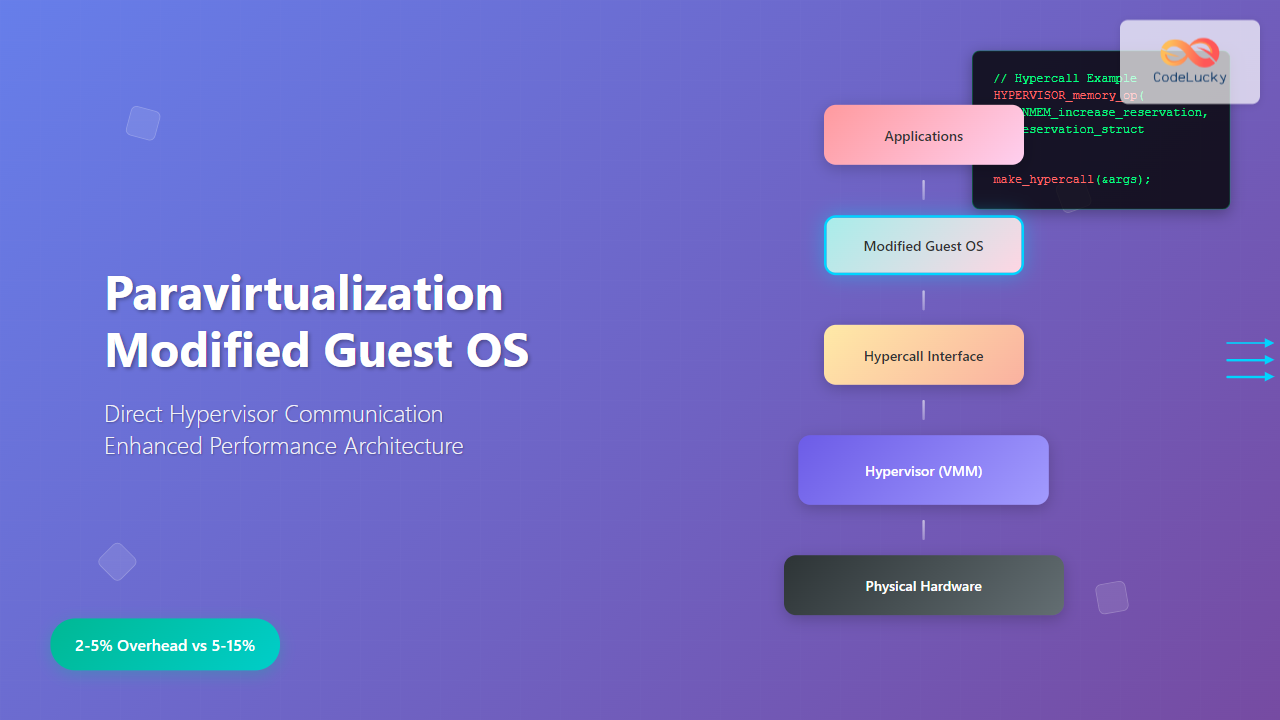
Paravirtualization is a virtualization technique where the guest operating system is modified to be aware that it’s running in a virtualized environment. Unlike full virtualization, where the guest OS remains unchanged and unaware of the hypervisor, paravirtualization requires explicit modifications to the guest kernel to communicate directly with the hypervisor through well-defined APIs.
This approach eliminates the need for complex instruction translation and trap-and-emulate mechanisms, resulting in near-native performance while maintaining isolation between virtual machines.

Core Architecture Components
Hypervisor Layer
The hypervisor (also called Virtual Machine Monitor) sits directly on the hardware and manages multiple guest operating systems. In paravirtualization, it exposes a clean, well-defined interface that guest OSes can call directly.
// Example hypercall interface
struct hypercall_args {
    unsigned long op;
    unsigned long arg1;
    unsigned long arg2;
    unsigned long arg3;
};

long make_hypercall(struct hypercall_args *args) {
    long result;
    asm volatile (
        "movq %1, %%rax\n"
        "movq %2, %%rdi\n"
        "vmcall\n"
        "movq %%rax, %0"
        : "=m" (result)
        : "m" (args->op), "m" (args)
        : "rax", "rdi"
    );
    return result;
}
Modified Guest Kernel
The guest operating system kernel is modified to replace privileged instructions with hypercalls. These modifications include:
- Memory management: Page table operations
- Interrupt handling: Virtual interrupt controllers
- I/O operations: Device access through hypervisor
- CPU scheduling: Yielding control back to hypervisor
Paravirtualization vs Full Virtualization

| Aspect | Full Virtualization | Paravirtualization |
|---|---|---|
| Guest OS Modification | None required | Kernel modifications needed |
| Performance Overhead | 5-15% typical | 2-5% typical |
| Hardware Requirements | VT-x/AMD-V support | Standard x86 processors |
| Guest OS Compatibility | Any OS | Modified versions only |
| Implementation Complexity | High (trap-and-emulate) | Moderate (API design) |
Key Implementation Techniques
Hypercalls
Hypercalls are the primary mechanism for guest-to-hypervisor communication. They replace privileged instructions that would normally trap to the hypervisor.
// Memory mapping hypercall example
int pv_map_page(unsigned long guest_pfn, unsigned long machine_pfn) {
    struct hypercall_args args;
    args.op = HYPERCALL_MAP_PAGE;
    args.arg1 = guest_pfn;
    args.arg2 = machine_pfn;
    args.arg3 = PAGE_PRESENT | PAGE_WRITABLE;

    return make_hypercall(&args);
}

// Usage in guest kernel
void *map_physical_memory(phys_addr_t addr, size_t size) {
    unsigned long pfn = addr >> PAGE_SHIFT;
    void *vaddr = get_vm_area(size);

    for (int i = 0; i < (size >> PAGE_SHIFT); i++) {
        pv_map_page(virt_to_pfn(vaddr + (i << PAGE_SHIFT)), pfn + i);
    }

    return vaddr;
}
Shared Memory Communication
Paravirtualized systems often use shared memory regions for efficient data exchange between guest and hypervisor.
// Shared info structure
struct shared_info {
    struct vcpu_info vcpu_info[MAX_VCPUS];
    unsigned long evtchn_pending[64];
    unsigned long evtchn_mask[64];
    uint64_t system_time;
    uint32_t time_version;
    // ... other shared data
};

// Accessing shared information
static inline uint64_t get_system_time(void) {
    struct shared_info *s = hypervisor_shared_info;
    uint64_t time;
    uint32_t version;

    do {
        version = s->time_version;
        rmb(); // memory barrier
        time = s->system_time;
        rmb();
    } while (version != s->time_version || (version & 1));

    return time;
}
Popular Paravirtualization Implementations
Xen Hypervisor
Xen is one of the most prominent paravirtualization platforms. It uses a microkernel design where Domain 0 (dom0) has direct hardware access and manages other domains.

// Xen grant table operations
grant_ref_t grant_foreign_access(domid_t domid, unsigned long frame, int readonly) {
    grant_ref_t ref = get_free_grant_reference();
    struct grant_entry *entry = &grant_table[ref];

    entry->frame = frame;
    entry->domid = domid;
    entry->flags = GTF_permit_access | (readonly ? GTF_readonly : 0);

    return ref;
}

// Event channel communication
void send_event_to_domain(domid_t remote_domain, int remote_port) {
    struct evtchn_send send;
    send.port = remote_port;
    HYPERVISOR_event_channel_op(EVTCHNOP_send, &send);
}
VMware Paravirtualization
VMware implements paravirtualization through VMware Tools and paravirtualized device drivers.
// VMware balloon driver example
struct vmballoon {
    struct page **pages;
    unsigned int size;
    unsigned int target;
};

static void vmballoon_inflate(struct vmballoon *b, unsigned int pages) {
    for (int i = 0; i < pages; i++) {
        struct page *page = alloc_page(GFP_KERNEL);
        if (!page) break;

        // Notify hypervisor about ballooned page
        vmware_hypercall(VMWARE_CMD_BALLOON_LOCK,
                        page_to_pfn(page), 0, 0);

        b->pages[b->size++] = page;
    }
}
Memory Management in Paravirtualization
Shadow Page Tables vs Direct Page Tables
Paravirtualization allows direct manipulation of page tables through hypercalls, eliminating the overhead of shadow page tables used in full virtualization.

// Direct page table manipulation
int pv_set_pte(pte_t *ptep, pte_t pteval) {
    struct mmu_update update;
    update.ptr = (unsigned long)ptep | MMU_NORMAL_PT_UPDATE;
    update.val = pte_val(pteval);

    return HYPERVISOR_mmu_update(&update, 1, NULL, DOMID_SELF);
}

// Batch page table updates for efficiency
void pv_set_pte_batch(struct mmu_update *updates, int count) {
    int processed = 0;

    while (processed < count) {
        int batch_size = min(count - processed, MAX_BATCH_SIZE);
        int ret = HYPERVISOR_mmu_update(updates + processed,
                                       batch_size, NULL, DOMID_SELF);
        if (ret < 0) break;
        processed += batch_size;
    }
}
Device I/O Paravirtualization
Virtual Device Interfaces
Paravirtualized I/O uses high-level, efficient interfaces instead of emulating physical hardware devices.
// Paravirtualized network interface
struct netfront_info {
    struct net_device *netdev;
    struct napi_struct napi;

    grant_ref_t *grant_tx_ref;
    grant_ref_t *grant_rx_ref;

    unsigned int evtchn;
    unsigned int irq;

    struct xen_netif_tx_ring tx;
    struct xen_netif_rx_ring rx;
};

// Transmit packet using shared ring
static int xennet_start_xmit(struct sk_buff *skb, struct net_device *dev) {
    struct netfront_info *np = netdev_priv(dev);
    struct xen_netif_tx_request *tx;
    grant_ref_t ref;

    // Get next available slot
    tx = RING_GET_REQUEST(&np->tx, np->tx.req_prod_pvt);

    // Grant access to packet data
    ref = grant_foreign_access(0, virt_to_mfn(skb->data), 1);

    tx->gref = ref;
    tx->size = skb->len;
    tx->flags = 0;

    np->tx.req_prod_pvt++;
    RING_PUSH_REQUESTS(&np->tx);

    // Notify backend
    notify_remote_via_evtchn(np->evtchn);

    return NETDEV_TX_OK;
}
Performance Optimization Strategies
Batching Operations
Batching multiple operations reduces the number of expensive hypervisor transitions.
// Batch interrupt handling
void process_pending_events(void) {
    struct shared_info *s = HYPERVISOR_shared_info;
    struct vcpu_info *vcpu = &s->vcpu_info[smp_processor_id()];
    unsigned long pending_words[64];

    // Atomically read and clear pending events
    memcpy(pending_words, s->evtchn_pending, sizeof(pending_words));
    memset(s->evtchn_pending, 0, sizeof(s->evtchn_pending));

    // Process all pending events in batch
    for (int word = 0; word < 64; word++) {
        unsigned long pending = pending_words[word];
        int bit;

        while ((bit = __ffs(pending)) != -1) {
            int port = (word * 64) + bit;
            handle_event_channel(port);
            pending &= ~(1UL << bit);
        }
    }
}
Lazy State Synchronization
Minimize synchronization overhead by updating shared state only when necessary.
// Lazy FPU state management
void pv_fpu_lazy_restore(void) {
if (current->flags & PF_USED_MATH) {
// FPU state already loaded
return;
}
// Defer FPU restore until actually needed
HYPERVISOR_fpu_taskswitch(1); // Disable FPU
current->flags |= PF_USED_ASYNC;
}
void pv_fpu_restore_on_demand(void) {
if (!(current->flags & PF_USED_MATH)) {
HYPERVISOR_fpu_taskswitch(0); // Enable FPU
restore_fpu_state(¤t->thread.fpu);
current->flags |= PF_USED_MATH;
}
}Security Considerations
Hypercall Validation
The hypervisor must carefully validate all hypercalls to prevent security vulnerabilities.
// Hypercall input validation
long hypercall_memory_op(int cmd, void __user *arg) {
    struct xen_memory_reservation reservation;

    switch (cmd) {
    case XENMEM_increase_reservation:
        if (copy_from_user(&reservation, arg, sizeof(reservation)))
            return -EFAULT;

        // Validate domain ID
        if (reservation.domid != DOMID_SELF &&
            !is_privileged_domain(current->domain))
            return -EPERM;

        // Validate extent count
        if (reservation.nr_extents > MAX_RESERVATION_EXTENTS)
            return -EINVAL;

        return increase_reservation(&reservation);

    default:
        return -ENOSYS;
    }
}
Advantages and Limitations
Advantages
- Superior Performance: Reduced overhead compared to full virtualization
- Efficient Resource Usage: Direct communication eliminates translation layers
- Better Scalability: Lower CPU overhead allows more VMs per host
- Hardware Independence: Doesn’t require specific CPU virtualization features
Limitations
- Guest OS Modification Required: Limits OS compatibility
- Maintenance Overhead: Updates needed for new OS versions
- Vendor Lock-in: Different hypervisors use incompatible interfaces
- Security Surface: Hypercall interface increases attack surface
Future Trends and Evolution
Modern virtualization increasingly uses hardware-assisted virtualization (Intel VT-x, AMD-V) which provides near-paravirtualization performance without guest OS modifications. However, paravirtualization concepts continue to influence:
- Container Technologies: Similar performance benefits through OS-level virtualization
- Hybrid Approaches: Paravirtualized drivers in fully virtualized environments
- Cloud Computing: Optimized guest kernels for cloud workloads
- Microkernel Systems: Direct inspiration for modern microkernel architectures
Understanding paravirtualization principles remains crucial for system architects, as these concepts continue to shape modern virtualization technologies and inform decisions about performance optimization in virtualized environments.
Related Posts
Full Virtualization: Complete Hardware Abstraction and Implementation Guide
Full virtualization represents one of the most significant breakthroughs in modern computing, enabling complete hardware abstraction that allows multiple operating...
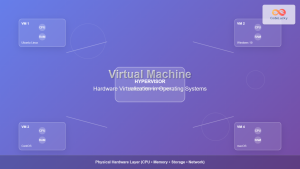
Virtual Machine in Operating System: Complete Guide to Hardware Virtualization Technology
What is a Virtual Machine in Operating System? A Virtual Machine (VM) is a software-based emulation of a physical computer...
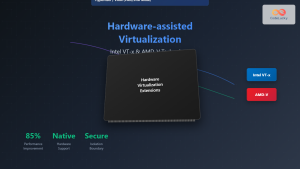
Hardware-assisted Virtualization: Intel VT-x and AMD-V Complete Guide
Introduction to Hardware-assisted Virtualization Hardware-assisted virtualization represents a revolutionary advancement in computing architecture, enabling efficient creation and management of virtual...
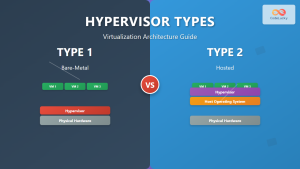
Hypervisor Types: Complete Guide to Type 1 and Type 2 Virtualization
Virtualization has revolutionized modern computing, allowing multiple operating systems to run simultaneously on a single physical machine. At the heart...
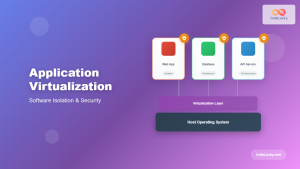
Application Virtualization: Complete Guide to Software Isolation and Virtual Environments
Application virtualization represents one of the most significant advances in modern computing, enabling organizations to run software applications in isolated...
Container Virtualization: Complete Guide to OS-level Virtualization Technology
Container virtualization represents a revolutionary approach to application deployment and resource management through OS-level virtualization. Unlike traditional hardware virtualization, containers...
Virtual I/O: Complete Guide to Device Virtualization Techniques and Implementation
Introduction to Virtual I/O and Device Virtualization Virtual Input/Output (Virtual I/O) represents one of the most critical components in modern...
Virtual Memory in Virtualization: Memory Overcommitment Strategies and Implementation
Introduction to Memory Overcommitment Memory overcommitment is a fundamental virtualization technique that allows hypervisors to allocate more virtual memory to...
Virtual Machine Monitor: Complete Guide to Resource Management and Isolation
A Virtual Machine Monitor (VMM), also known as a hypervisor, is a critical software layer that creates and manages virtual...
Storage Virtualization: Complete Guide to Abstract Storage Resources in Modern Computing
Storage virtualization represents one of the most critical technologies in modern computing infrastructure, enabling organizations to abstract physical storage resources...
Desktop Virtualization: Complete VDI Implementation Guide for Modern Enterprises
Introduction to Desktop Virtualization Desktop virtualization represents a paradigm shift in how organizations deliver computing resources to end users. By...
Clone Virtual Machine: Complete Guide to VM Duplication Techniques and Best Practices
Virtual machine cloning is a fundamental virtualization technique that creates identical copies of existing VMs, enabling rapid deployment, testing environments,...