Understanding Offshore Agile Development
Offshore Agile development combines the flexibility of Agile methodologies with the cost-effectiveness and talent diversity of distributed teams. This approach enables organizations to leverage global talent pools while maintaining the iterative, collaborative nature of Agile practices. However, managing distributed teams across different time zones, cultures, and communication channels presents unique challenges that require specialized strategies and tools.
The rise of remote work has accelerated the adoption of offshore Agile practices, with many companies discovering that successful distributed development requires more than simply applying traditional Agile frameworks to remote teams. It demands a fundamental rethinking of communication patterns, collaboration tools, and team dynamics.
Core Challenges in Offshore Agile Development
Time Zone Coordination Complexities
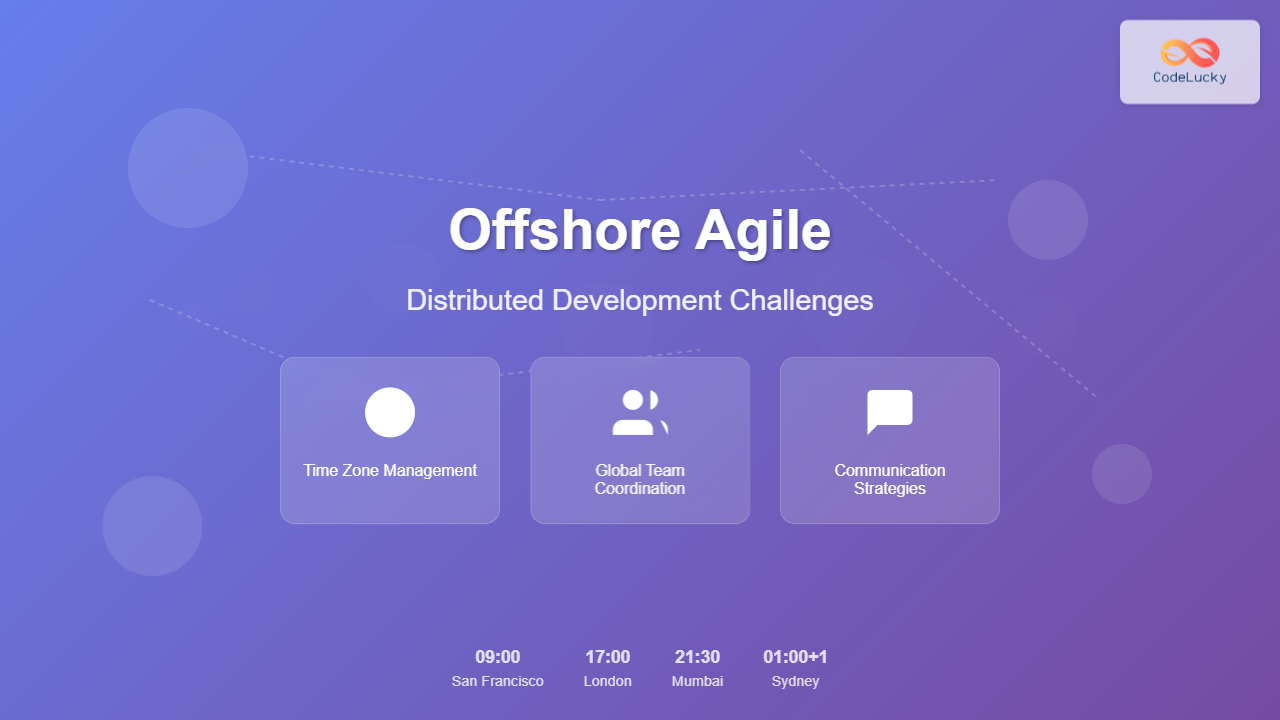
Time zone differences represent one of the most significant obstacles in offshore Agile development. When team members are spread across multiple continents, finding overlapping working hours for real-time collaboration becomes a complex puzzle. A development team with members in San Francisco, London, and Mumbai might have only a 2-3 hour window where all time zones overlap during business hours.
This challenge directly impacts core Agile practices like daily standups, sprint planning, and retrospectives. Traditional Agile ceremonies assume co-located teams or at least overlapping work schedules. When team members are 8-12 hours apart, maintaining the rhythm and frequency of Agile interactions requires creative scheduling and often means some team members must work outside their normal hours.
Communication Barriers and Cultural Differences
Effective communication forms the backbone of Agile methodologies, but offshore teams face multiple communication barriers. Language differences, even when all team members speak English, can lead to misunderstandings about requirements, technical specifications, and project priorities. Cultural differences in communication styles—such as directness versus politeness, hierarchy respect, and conflict resolution approaches—can create friction within distributed teams.
Non-verbal communication, which plays a crucial role in face-to-face Agile interactions, becomes limited in virtual environments. Team members may miss subtle cues about confusion, disagreement, or engagement levels, leading to assumptions and misaligned expectations.
Trust and Team Cohesion Issues
Building trust among distributed team members requires more intentional effort than with co-located teams. Without regular face-to-face interactions, team members may struggle to develop the personal relationships that facilitate smooth collaboration. This lack of personal connection can impact team dynamics, leading to silos, reduced knowledge sharing, and decreased collective ownership of project outcomes.
The absence of informal interactions—such as hallway conversations or lunch discussions—removes opportunities for spontaneous problem-solving and relationship building that naturally occur in traditional office environments.
Strategic Approaches to Overcome Offshore Agile Challenges
Implementing Follow-the-Sun Development
Follow-the-sun development leverages time zone differences as an advantage rather than treating them as obstacles. This approach involves structuring work so that development continues around the clock, with teams in different time zones picking up where others left off. For example, a US team might work on feature development during their business hours, hand off to an Asian team for testing and integration, and then pass the work to a European team for code review and documentation.
Successful follow-the-sun implementation requires careful coordination of handoffs, comprehensive documentation practices, and standardized development environments. Teams must establish clear protocols for work transitions, including detailed status updates, known issues, and next steps for each handoff point.
Optimizing Agile Ceremonies for Distributed Teams
Traditional Agile ceremonies require adaptation for offshore teams. Daily standups might become asynchronous updates through collaboration tools, with periodic synchronous meetings for complex discussions. Sprint planning sessions can be split across multiple time zones, with different team segments focusing on their specific areas of expertise.
Retrospectives become more critical in distributed environments, requiring structured formats that encourage honest feedback despite cultural and hierarchical differences. Tools like anonymous feedback systems and structured retrospective templates help ensure all team members contribute equally to continuous improvement discussions.
Establishing Clear Communication Protocols
Successful offshore Agile teams develop explicit communication protocols that specify when to use different communication channels, response time expectations, and escalation procedures. These protocols might include guidelines such as using instant messaging for quick questions, video calls for complex technical discussions, and email for formal documentation.
Documentation standards become more critical in distributed environments, as team members cannot rely on quick verbal clarifications. Comprehensive user stories, detailed acceptance criteria, and thorough technical specifications help reduce ambiguity and prevent misunderstandings across time zones.
Technology Solutions for Offshore Agile Success
Collaboration and Communication Tools
Modern offshore Agile teams rely on sophisticated toolsets that facilitate real-time and asynchronous collaboration. Video conferencing platforms with features like screen sharing, breakout rooms, and recording capabilities enable effective virtual meetings. Instant messaging tools with threading, file sharing, and integration capabilities support ongoing communication throughout the development cycle.
Project management tools specifically designed for Agile workflows help distributed teams maintain visibility into sprint progress, backlog priorities, and individual contributions. These tools often include features like burndown charts, velocity tracking, and automated reporting that help teams stay aligned despite physical separation.
Continuous Integration and Deployment Pipelines
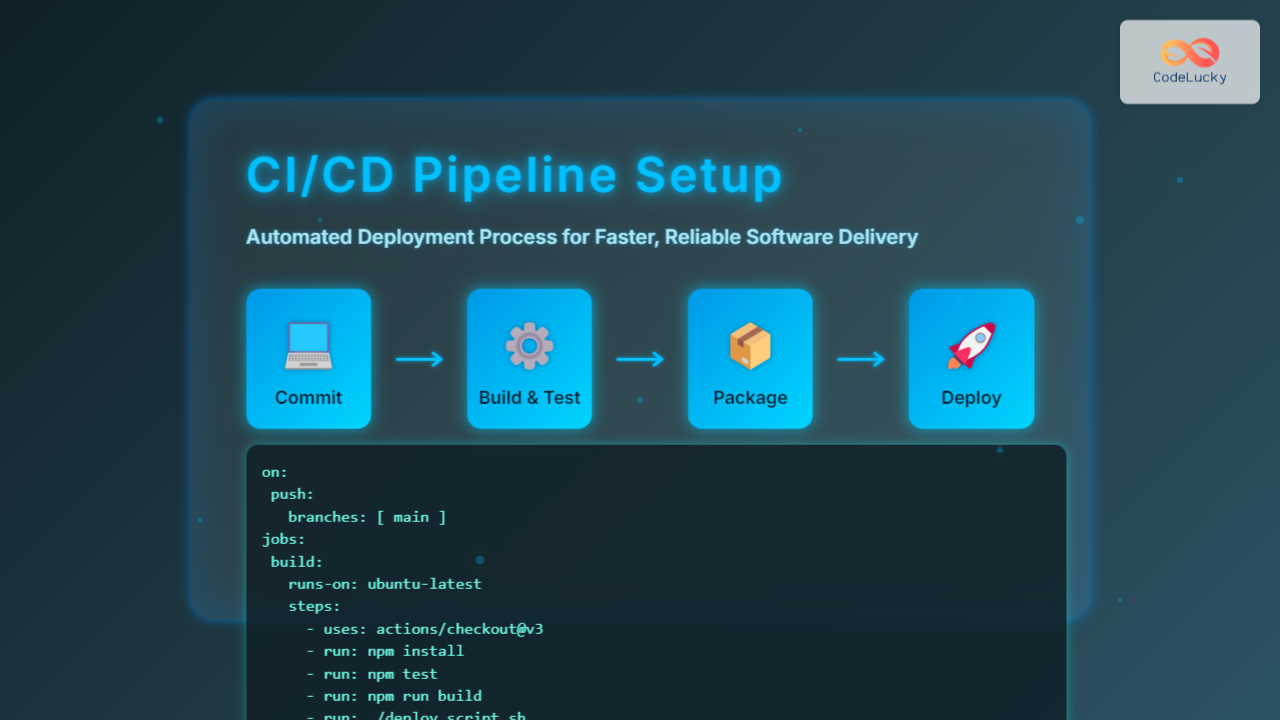
Robust CI/CD pipelines become essential for offshore Agile teams, as they provide automated quality gates and deployment processes that work regardless of time zones. Automated testing suites, code quality checks, and deployment scripts ensure that code changes from different team members integrate smoothly and maintain consistent quality standards.
Monitoring and logging tools help distributed teams quickly identify and resolve issues, even when the original developer is offline. Comprehensive logging, error tracking, and performance monitoring enable any team member to understand and address problems that arise during their working hours.
Shared Development Environments
Cloud-based development environments ensure that all team members work with consistent toolsets, dependencies, and configurations. Containerization technologies like Docker help standardize development environments across different geographic locations and operating systems, reducing the “works on my machine” problems that can plague distributed teams.
Version control systems with branching strategies optimized for distributed development enable parallel work streams while maintaining code integrity. Teams often adopt strategies like feature branching or GitFlow that support independent development while facilitating smooth integration of changes from multiple contributors.
Best Practices for Managing Offshore Agile Teams
Building Cultural Awareness and Sensitivity
Successful offshore Agile teams invest in cultural awareness training that helps team members understand different communication styles, work preferences, and professional norms. This training might cover topics like direct versus indirect communication, individual versus collective decision-making, and different approaches to hierarchy and authority.
Team building activities adapted for virtual environments help build personal connections among distributed team members. Virtual coffee chats, online team games, and cultural exchange sessions create opportunities for informal relationship building that supports professional collaboration.
Establishing Overlapping Work Hours
While complete time zone alignment is impossible for truly global teams, establishing core collaboration hours where multiple time zones overlap enables real-time communication for critical discussions. Teams might designate specific hours when key team members from different locations are available for synchronous collaboration.
Flexible work arrangements that allow team members to occasionally adjust their schedules for important meetings or collaborative sessions help maintain team cohesion. However, these arrangements must be balanced with respect for work-life balance and local labor practices.
Implementing Robust Documentation Practices
Documentation becomes the lifeline of distributed Agile teams, serving as the primary means of knowledge transfer across time zones. Comprehensive documentation practices include detailed user stories with acceptance criteria, technical design documents, code comments, and decision logs that capture the reasoning behind important choices.
Living documentation that stays current with code changes helps ensure that all team members have access to accurate information regardless of when they’re working. Automated documentation generation tools and documentation review processes help maintain quality and consistency across all team contributions.
Measuring Success in Offshore Agile Environments
Key Performance Indicators for Distributed Teams
Traditional Agile metrics like velocity and burndown charts remain relevant for offshore teams, but additional metrics help assess the unique challenges of distributed development. Communication effectiveness metrics, such as response times and meeting participation rates, provide insights into team collaboration quality.
Quality metrics become particularly important in offshore environments where handoffs between team members are common. Code review completion rates, defect density, and customer satisfaction scores help assess whether distributed development practices maintain quality standards.
Continuous Improvement in Distributed Settings
Retrospectives in offshore Agile teams require special attention to ensure all voices are heard despite cultural and time zone differences. Structured retrospective formats that provide equal speaking opportunities and anonymous feedback mechanisms help identify improvement opportunities that might otherwise go unmentioned.
Regular assessment of collaboration tools and processes helps teams adapt to changing needs and technology improvements. What works well for a team in their first month of distributed development may need adjustment as relationships develop and project complexity evolves.
Case Studies and Lessons Learned
Common Pitfalls and How to Avoid Them
Many offshore Agile initiatives fail due to inadequate planning for the unique challenges of distributed development. Common mistakes include underestimating communication overhead, failing to establish clear handoff procedures, and attempting to replicate co-located Agile practices without necessary adaptations.
Successful teams learn to embrace asynchronous work patterns while maintaining the collaborative spirit of Agile development. This balance requires intentional design of work processes, communication protocols, and team structures that support both independent work and collaborative problem-solving.
Success Factors for Long-term Sustainability
Sustainable offshore Agile practices require ongoing investment in team relationships, process refinement, and technology infrastructure. Teams that succeed long-term typically establish regular face-to-face meetings (even if infrequent), maintain consistent team composition, and continuously evolve their practices based on retrospective feedback.
Leadership support for distributed development practices, including provision of necessary tools and training, significantly impacts team success. Organizations that treat offshore Agile as a strategic capability rather than a cost-cutting measure typically achieve better outcomes and team satisfaction.
Future Trends in Offshore Agile Development
Emerging Technologies and Practices
Artificial intelligence and machine learning tools are beginning to address some traditional challenges of offshore Agile development. AI-powered translation services, automated meeting summarization, and intelligent scheduling tools help reduce communication barriers and administrative overhead.
Virtual and augmented reality technologies show promise for creating more immersive collaboration experiences that could partially bridge the gap between co-located and distributed teams. These technologies may enable virtual co-working experiences that maintain the benefits of distributed development while providing richer interaction opportunities.
Evolution of Distributed Work Practices
The increasing acceptance of remote work is driving innovation in distributed collaboration practices that benefit offshore Agile teams. New frameworks and methodologies specifically designed for distributed teams are emerging, building on traditional Agile principles while addressing the unique needs of geographic distribution.
Hybrid work models that combine distributed development with periodic in-person collaboration are becoming more common, offering the benefits of global talent access while maintaining opportunities for relationship building and intensive collaboration sessions.
Conclusion
Offshore Agile development presents significant opportunities for organizations to access global talent, reduce costs, and accelerate development cycles. However, success requires careful attention to the unique challenges of distributed teams, including time zone coordination, communication barriers, and trust-building across cultural differences.
Organizations that invest in appropriate tools, processes, and cultural practices can successfully implement offshore Agile development that delivers high-quality software while maintaining the collaborative and adaptive principles that make Agile methodologies effective. The key lies in recognizing that distributed development is not simply remote work but a fundamentally different approach that requires specialized strategies and continuous refinement.
As technology continues to evolve and remote work practices mature, offshore Agile development will likely become even more prevalent and sophisticated. Teams and organizations that master these practices now will be well-positioned to leverage the benefits of global collaboration while delivering exceptional software products.
Related Posts
Remote Agile Teams: Complete Guide to Distributed Development Success
Remote Agile teams have become the backbone of modern software development, enabling organizations to tap into global talent while maintaining...
Tools for Remote Agile: Essential Collaboration Platforms for Distributed Teams
Remote Agile development has become the norm for countless software teams worldwide. The success of distributed Agile teams heavily depends...
Scrum of Scrums: Complete Guide to Coordinating Multiple Agile Teams
When organizations scale their Agile practices beyond a single team, coordinating multiple Scrum teams becomes a critical challenge. Scrum of...
DevOps and Agile: Extending Agility to Operations – Complete Guide for Modern Software Delivery
The evolution of software development has witnessed remarkable transformations, from traditional waterfall methodologies to Agile practices, and now to the...
Agile Outsourcing: Complete Guide to Managing External Development Teams
Agile outsourcing has become a critical strategy for modern software development, enabling organizations to leverage global talent while maintaining the...
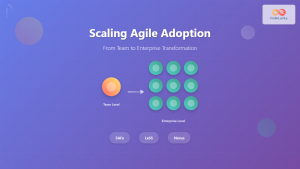
Scaling Agile Adoption: Complete Guide to Enterprise-Wide Transformation Success
Scaling Agile adoption from a single team to an entire enterprise represents one of the most challenging yet rewarding transformations...
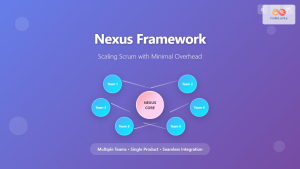
Nexus Framework: Master Scaling Scrum with Minimal Overhead for Large Teams
The Nexus Framework represents a revolutionary approach to scaling Scrum that maintains the core principles of agility while enabling multiple...
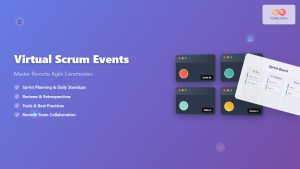
Virtual Scrum Events: Complete Guide to Remote Agile Ceremonies
The shift to remote work has fundamentally transformed how Scrum teams conduct their ceremonies. Virtual Scrum events have become the...
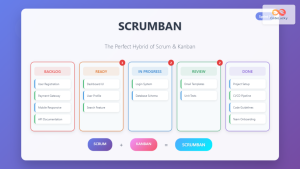
Scrumban: The Ultimate Hybrid Methodology for Agile Teams
What is Scrumban? Scrumban is a hybrid agile methodology that combines the structured framework of Scrum with the visual workflow...
Scrum Development Team: Complete Guide to Roles, Responsibilities and Best Practices
What is a Scrum Development Team? The Scrum Development Team is the heart of any successful Agile project, consisting of...
Slack for Agile Teams: Essential Communication Integration Strategies
Effective communication forms the backbone of successful Agile teams, and Slack has emerged as the premier platform for facilitating seamless...
Agile in Non-Software: Complete Guide to Implementation Beyond IT Applications
Introduction to Agile Beyond Software Development While Agile methodologies originated in software development, their core principles of flexibility, collaboration, and...