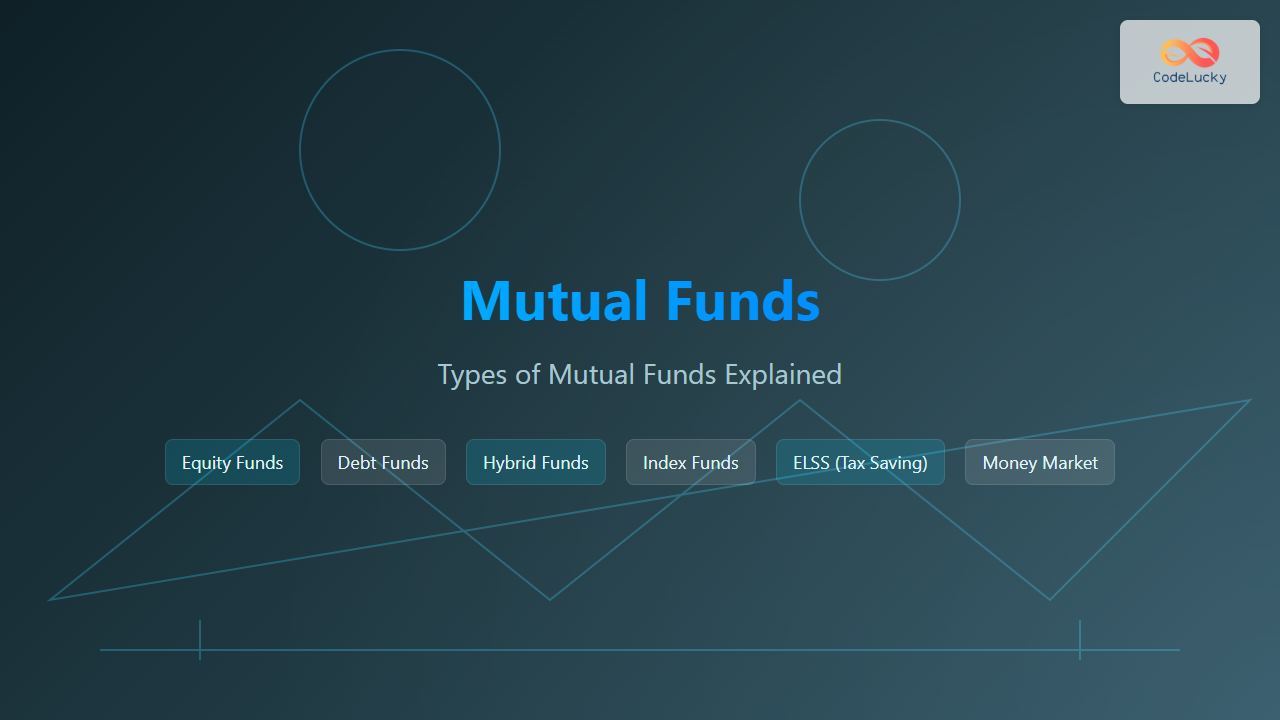
Mutual Funds are one of the easiest and most popular ways for individuals to invest in the financial market. Whether you are a beginner or an experienced investor, understanding the types of mutual funds is essential for making smart financial decisions. This guide covers all categories of mutual funds — based on their structure, asset class, and investment objectives — with examples, visuals, and interactive explanations.
What Are Mutual Funds?
A mutual fund pools money from multiple investors and invests it in diversified securities like stocks, bonds, or money market instruments. Each investor owns units of the fund, representing a portion of its holdings. A professional fund manager oversees the portfolio to achieve the stated investment objectives.

Types of Mutual Funds Based on Structure
1. Open-Ended Funds
These funds allow investors to buy or sell units at any time. The price, known as the Net Asset Value (NAV), changes daily based on the value of underlying assets. Most mutual funds in India are open-ended.
Example: Axis Bluechip Fund – Investors can invest or withdraw at any time.
2. Closed-Ended Funds
Closed-ended funds issue a fixed number of units during the New Fund Offer (NFO) period. After that, units are traded on stock exchanges like shares. Investors cannot redeem them directly from the fund until maturity.
Example: ICICI Prudential Bharat Consumption Fund – 3-year close-ended scheme.
3. Interval Funds
These combine features of open-ended and closed-ended funds. Investors can buy or sell units only during specific intervals announced by the fund house.
Example: Franklin Templeton Interval Fund – allows redemption during specified windows.
Types of Mutual Funds Based on Asset Class
1. Equity Funds (High Risk, High Return)
These invest primarily in company stocks. Best suited for long-term investors looking for capital appreciation. Equity funds are further divided into:
- Large Cap Funds – Invest in top 100 companies (e.g., HDFC Top 100 Fund).
- Mid Cap Funds – Invest in mid-sized companies with growth potential (e.g., DSP Midcap Fund).
- Small Cap Funds – Target emerging businesses (e.g., SBI Small Cap Fund).
- ELSS (Tax Saving Funds) – Offer tax deductions under Section 80C with a 3-year lock-in.

2. Debt Funds (Low Risk, Stable Returns)
Debt funds invest in fixed income instruments like government bonds, corporate debentures, and treasury bills. They are ideal for investors seeking regular income and lower volatility.
- Liquid Funds – Suitable for parking surplus funds for short periods (up to 90 days).
- Short Duration Funds – Invest in bonds with short maturities (1–3 years).
- Gilt Funds – Invest exclusively in government securities, ensuring safety.
Example: HDFC Short Term Debt Fund – balances returns and liquidity.
3. Hybrid Funds (Balanced Risk and Returns)
Hybrid or balanced funds invest in both equity and debt instruments to achieve a mix of growth and stability. They adjust the asset allocation based on risk tolerance and market conditions.
- Aggressive Hybrid Fund: 65–80% equity, 20–35% debt.
- Conservative Hybrid Fund: 75–90% debt, 10–25% equity.

4. Money Market Funds (Very Low Risk)
These funds invest in highly liquid cash equivalents such as treasury bills and commercial papers. They are suited for short-term goals (a few days to months).
Example: Nippon India Money Market Fund – designed for stability and liquidity.
5. International Funds
International funds invest in companies or markets outside the investor’s home country. This gives global diversification and exposure to foreign economies.
Example: Motilal Oswal Nasdaq 100 Fund of Fund – invests in U.S. technology giants.
Types of Mutual Funds Based on Investment Objective
1. Growth Funds
Focus primarily on capital appreciation. Suitable for long-term investors who can tolerate higher risk for potentially higher returns.
2. Income Funds
Aim to provide steady, regular returns. Typically invest in fixed-income securities like bonds, making them ideal for retirees or conservative investors.
3. Liquid Funds
Used for short-term cash management; provide high liquidity and moderate returns.
4. Tax-Saving Funds (ELSS)
Provide tax benefits under Section 80C while investing in diversified equity instruments. They come with a mandatory 3-year lock-in.
Comparison Table: Types of Mutual Funds
| Type | Risk Level | Return Potential | Ideal Investment Horizon | Example Fund |
|---|---|---|---|---|
| Equity Fund | High | High | 5+ Years | Axis Bluechip Fund |
| Debt Fund | Low | Moderate | 1–3 Years | HDFC Short Term Debt Fund |
| Hybrid Fund | Medium | Balanced | 3–5 Years | SBI Equity Hybrid Fund |
| Liquid Fund | Very Low | Low | Few Days–Months | ICICI Prudential Liquid Fund |
| International Fund | High (Currency Risk) | Variable | 3–5 Years | Motilal Oswal Nasdaq 100 Fund |
Interactive Understanding: Selecting the Right Mutual Fund
You can visualize fund selection logic based on your goals and risk tolerance:

Final Thoughts
Mutual funds offer flexible investment options for all kinds of investors — from risk-averse individuals seeking stability to aggressive ones chasing growth. The key is to match the fund type with your financial goals, risk tolerance, and time horizon. Regular SIP (Systematic Investment Plan) investments further help in rupee cost averaging and long-term wealth creation.
At CodeLucky.com, we believe financial literacy is empowerment. Understanding mutual fund types is the first step toward building a disciplined investment journey.