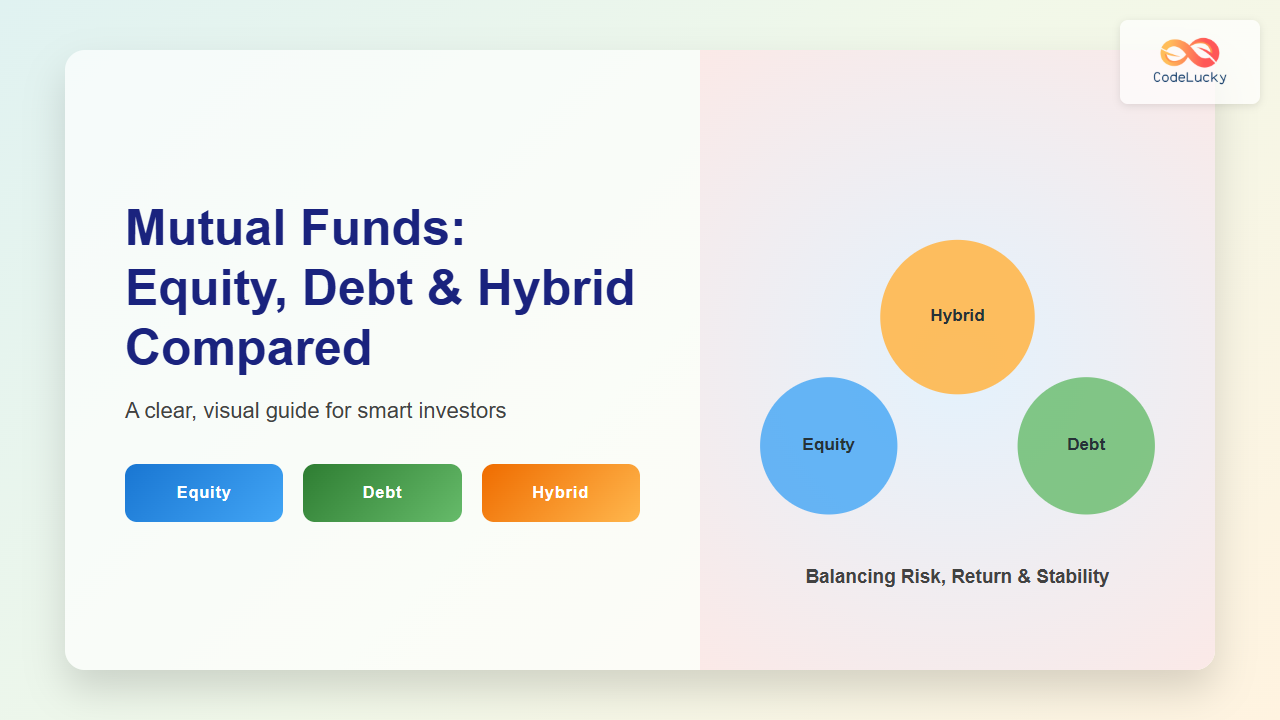
When it comes to building wealth, mutual funds remain one of the most flexible and accessible investment vehicles. However, with multiple categories like Equity Funds, Debt Funds, and Hybrid Funds available, understanding which one suits your financial goals can be confusing. This comprehensive guide from CodeLucky Finance Series breaks down their structure, performance potential, and ideal investor profiles — visually and interactively.
What Are Mutual Funds?
A mutual fund pools money from multiple investors to buy a diversified portfolio of securities such as stocks, bonds, or a mix of both. Each investor owns units representing a portion of the fund’s holdings, professionally managed to meet specific investment objectives.

Types of Mutual Funds
1. Equity Mutual Funds
Equity funds primarily invest in company stocks. Their objective is long-term capital appreciation. These funds are suitable for investors with a higher risk tolerance and a longer investment horizon—typically five years or more.
Key Features:
- Risk Level: High
- Return Potential: High
- Ideal For: Long-term goals like retirement or children’s education
Example:
If an investor puts ₹10,000 in an equity mutual fund tracking the Nifty 50 Index and the market grows by 10% over a year, the investment value may increase to around ₹11,000 (excluding small fund charges). However, the same value might drop if the market declines—showing both risk and reward dynamics.

2. Debt Mutual Funds
Debt funds invest mainly in fixed-income instruments such as government securities, corporate bonds, treasury bills, and money market instruments. These are ideal for investors looking for stable and predictable returns with moderate risk.
Key Features:
- Risk Level: Low to moderate
- Return Potential: 5–8% annually (subject to interest rate shifts)
- Ideal For: Short- to medium-term goals like emergency funds or short-term savings
Example:
A ₹1,00,000 investment in a debt fund yielding 7% annual return may grow to ₹1,07,000 by the year’s end—much steadier but without the explosive potential of equity funds.

3. Hybrid Mutual Funds
Hybrid funds combine equities and debt instruments in varying proportions to balance risk and return. They appeal to investors who want equity-like growth but with some stability from debt exposure.
Types of Hybrid Funds:
- Aggressive Hybrid: 65–80% in equity, remaining in debt
- Balanced Advantage: Dynamic mix based on market conditions
- Conservative Hybrid: Higher debt allocation for steady returns

For instance, an aggressive hybrid fund might allocate ₹70,000 to equity and ₹30,000 to debt for a ₹1,00,000 investment, offering both upside potential and downside protection.
Comparing Equity, Debt, and Hybrid Funds
| Feature | Equity Fund | Debt Fund | Hybrid Fund |
|---|---|---|---|
| Primary Investment | Stocks | Bonds / Fixed Income | Mix of Equity and Debt |
| Risk Level | High | Low to Moderate | Moderate |
| Return Potential | High | Stable | Balanced |
| Investment Horizon | 5+ years | 1–3 years | 2–4 years |
| Ideal For | Aggressive investors | Conservative investors | Moderate risk takers |
Risk vs Reward Visualizer

Taxation Overview
- Equity Funds: Short-term gains (under 1 year) taxed at 15%; long-term gains over ₹1 lakh taxed at 10%.
- Debt Funds: After July 2023, gains are taxed as per investor’s income slab, regardless of holding period.
- Hybrid Funds: Taxed based on majority component (equity or debt).
Interactive Self-Assessment
Answer the following to decide your ideal mutual fund type:
- Is your goal long-term wealth creation (5+ years)? → Go for Equity Funds.
- Do you prefer stability over growth? → Choose Debt Funds.
- Want a blend of safety and performance? → Opt for Hybrid Funds.
Final Thoughts
The right mutual fund depends on your risk appetite, time horizon, and financial goals. For long-term wealth creation, Equity funds shine. To safeguard capital, Debt funds work best. For balanced growth with moderate risk, Hybrid funds hit the sweet spot.
Before investing, always evaluate fund performance, expense ratio, and consistency — and consult a certified financial advisor when needed. Diversifying your investments across these categories can ensure a robust, well-balanced portfolio for the future.
Explore more insights and calculators on CodeLucky.com to optimize your mutual fund planning journey.