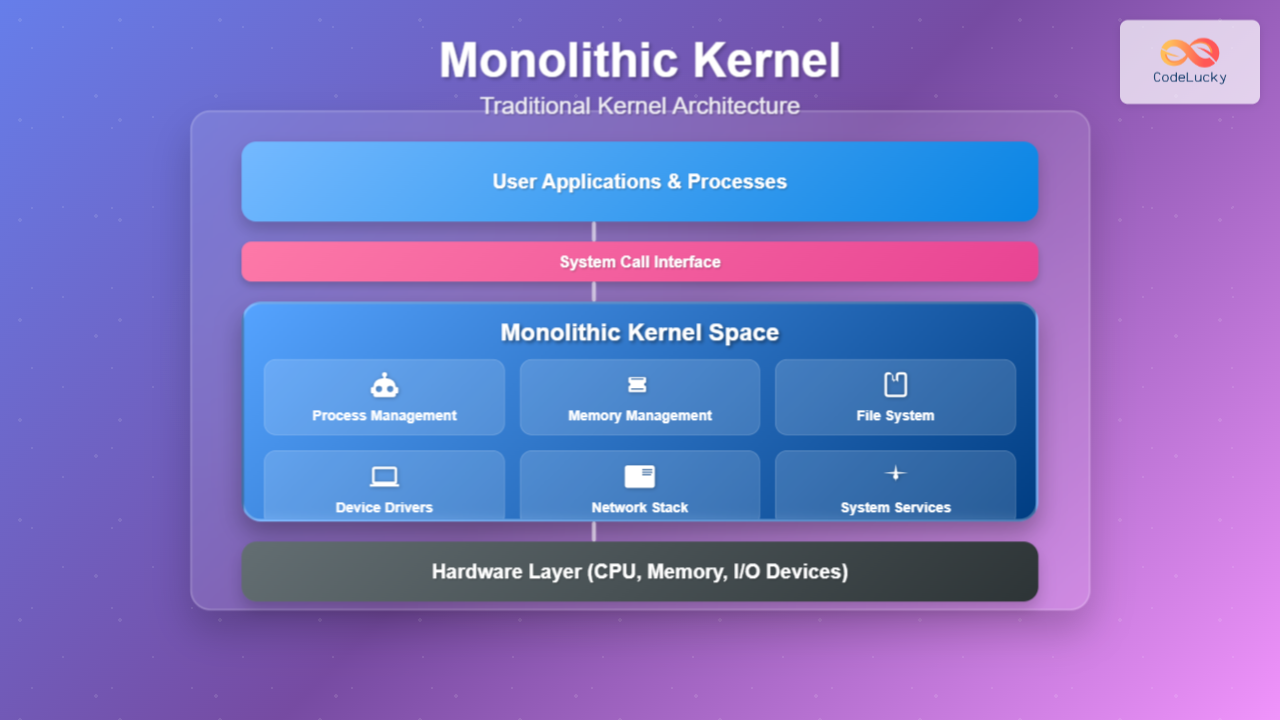
What is a Monolithic Kernel?
A monolithic kernel is a traditional kernel architecture where the entire operating system runs in kernel space as a single large process. Unlike modular approaches, all core operating system services—including process management, memory management, file systems, device drivers, and system calls—execute in the same address space with unrestricted access to hardware resources.
The term “monolithic” refers to the kernel’s unified structure, where all components are tightly integrated into one cohesive unit. This architecture has been the foundation for many successful operating systems, including Linux, Unix variants, and early versions of Windows.

Core Components of Monolithic Kernel Architecture
System Call Interface
The system call interface serves as the primary communication bridge between user-space applications and kernel services. When an application needs to access hardware resources or perform privileged operations, it makes system calls that transfer control to the kernel.
// Example: Opening a file using system call
#include
#include
#include

int main() {
    int fd = open("/tmp/example.txt", O_RDWR | O_CREAT, 0644);
    if (fd == -1) {
        perror("open");
        return 1;
    }
    // File operations...
    close(fd);
    return 0;
}
Process Management
The process management component handles process creation, scheduling, context switching, and inter-process communication. In a monolithic kernel, the process scheduler has direct access to all system resources, enabling efficient process management.
Memory Management
Memory management in monolithic kernels includes virtual memory, page allocation, memory mapping, and garbage collection. The kernel maintains complete control over physical and virtual memory spaces.
File System Management
File system components handle file operations, directory management, disk I/O, and file permissions. Multiple file system types (ext4, NTFS, FAT32) can coexist within the same monolithic kernel.
How Monolithic Kernels Work
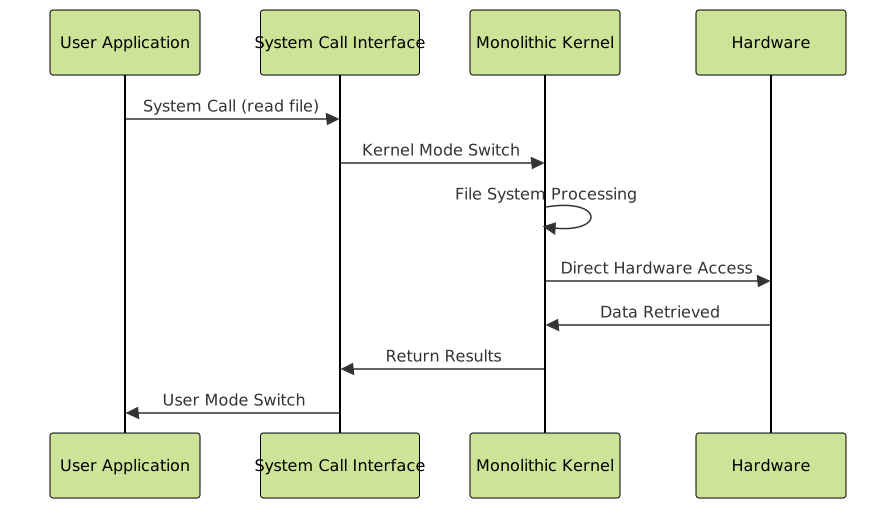
Execution Flow
When a user application requires system services, the following process occurs:
- System Call Invocation: Application makes a system call
- Mode Switch: CPU switches from user mode to kernel mode
- Kernel Processing: Monolithic kernel processes the request using appropriate components
- Hardware Interaction: Direct hardware access if required
- Result Return: CPU switches back to user mode with results
Advantages of Monolithic Kernel Architecture
Performance Benefits
High performance is the primary advantage of monolithic kernels. Since all components share the same address space, communication between kernel modules is extremely fast, involving simple function calls rather than complex inter-process communication mechanisms.
| Performance Metric | Monolithic Kernel | Benefit |
|---|---|---|
| System Call Overhead | Low | Direct function calls |
| Context Switching | Fast | Single address space |
| Memory Access | Direct | No message passing overhead |
| I/O Operations | Efficient | Direct hardware access |
Resource Efficiency
Monolithic kernels demonstrate excellent resource utilization because there’s no overhead from multiple processes or message passing between kernel components. Memory usage is optimized since there’s no duplication of common kernel functions.
Mature Ecosystem
The monolithic architecture has decades of development behind it, resulting in stable implementations, extensive hardware support, and comprehensive debugging tools.
Disadvantages and Limitations
Security Vulnerabilities
The biggest drawback of monolithic kernels is security risk. Since all components run in kernel space with full privileges, a vulnerability in any component can compromise the entire system.
# Example: A device driver bug can crash the entire system
dmesg | grep "kernel panic"
# Output might show:
# [12345.678] Kernel panic - not syncing: Fatal exception in interrupt
Fault Isolation Problems
In monolithic kernels, fault isolation is poor. A bug in one kernel component can bring down the entire operating system, making debugging and maintenance challenging.
Monolithic Kernel Maintenance Challenges
The tight integration of components makes code maintenance difficult. Modifications to one component often require changes to multiple related components, increasing development complexity.

Monolithic vs Other Kernel Architectures
Monolithic vs Microkernel
| Aspect | Monolithic Kernel | Microkernel |
|---|---|---|
| Architecture | Single large kernel space | Minimal kernel + user-space services |
| Performance | High (direct calls) | Lower (message passing) |
| Security | Lower (single failure point) | Higher (isolated services) |
| Fault Tolerance | Poor | Excellent |
| Development Complexity | High | Moderate |
Hybrid Kernel Approach
Some modern operating systems use hybrid kernels that combine monolithic and microkernel benefits. Windows NT and macOS are examples of hybrid implementations that run core services in kernel space while isolating some components.
Real-World Examples and Case Studies
Linux Kernel
The Linux kernel is the most successful example of monolithic architecture. Despite being monolithic, Linux incorporates modularity through loadable kernel modules (LKMs).
# View loaded kernel modules
lsmod | head -10

# Output example:
# Module                  Size  Used by
# nvidia_drm             69632  8
# nvidia_modeset       1224704  10 nvidia_drm
# nvidia              56623104  350 nvidia_modeset
# drm_kms_helper        311296  1 nvidia_drm
Unix Systems
Traditional Unix systems pioneered the monolithic kernel approach. Systems like Solaris, AIX, and BSD variants continue to use refined monolithic architectures.
Performance Analysis
// Simple system call performance measurement
#include
#include

int main() {
    struct timeval start, end;
    int iterations = 1000000;

    gettimeofday(&start, NULL);

    for (int i = 0; i < iterations; i++) {
        getpid(); // Simple system call
    }

    gettimeofday(&end, NULL);

    double time_taken = (end.tv_sec - start.tv_sec) * 1000000.0;
    time_taken += (end.tv_usec - start.tv_usec);

    printf("Average system call time: %.2f microseconds\n",
           time_taken / iterations);
    return 0;
}
Modern Monolithic Kernel Enhancements
Loadable Kernel Modules
Modern monolithic kernels address modularity concerns through loadable kernel modules (LKMs). These modules can be loaded and unloaded dynamically without kernel recompilation.
# Load a kernel module
sudo modprobe nvidia

# Remove a kernel module
sudo modprobe -r nvidia

# View module information
modinfo nvidia
Kernel Address Space Layout Randomization (KASLR)
Security enhancements like KASLR randomize kernel memory layout to prevent exploitation of kernel vulnerabilities.
Control Groups (cgroups)
Linux implements cgroups for resource isolation and management within the monolithic architecture, providing container-like resource control.

Best Practices for Monolithic Kernel Development
Code Organization
Proper code organization is crucial in monolithic kernel development. Use clear module boundaries and well-defined interfaces even within the monolithic structure.
Error Handling
Robust error handling prevents cascading failures. Always validate inputs and handle edge cases gracefully.
// Example: Proper error handling in kernel code
static int device_open(struct inode *inode, struct file *file) {
    if (!try_module_get(THIS_MODULE)) {
        return -ENODEV;
    }

    // Validate device state
    if (device_busy) {
        module_put(THIS_MODULE);
        return -EBUSY;
    }

    device_busy = 1;
    return 0;
}
Testing and Debugging
Comprehensive testing strategies are essential. Use kernel debugging tools, static analysis, and extensive testing on different hardware configurations.
Future of Monolithic Kernels
Container Integration
Modern monolithic kernels are evolving to better support containerization through improved namespace isolation and resource management.
Security Enhancements
Ongoing security improvements include better memory protection, control flow integrity, and exploit mitigation techniques.
Performance Optimization
Continuous performance improvements focus on multi-core scalability, NUMA awareness, and real-time capabilities.
Conclusion
Monolithic kernels remain a fundamental and highly effective architecture for operating system design. While they present challenges in terms of security and fault isolation, their superior performance, resource efficiency, and mature ecosystem make them ideal for many applications.
The success of Linux demonstrates that monolithic architectures can evolve to address modern computing needs while maintaining their core performance advantages. Understanding monolithic kernel architecture is essential for system programmers, operating system developers, and anyone working with low-level system software.
As computing environments continue to evolve, monolithic kernels adapt through innovations like loadable modules, enhanced security features, and better resource isolation, ensuring their continued relevance in modern operating system design.
Related Posts
Operating System Architecture: Monolithic vs Microkernel Design Patterns
Introduction to Operating System Architecture Operating system architecture defines how the core components of an OS are organized and interact...
Hybrid Kernel: Complete Guide to Combining Micro and Monolithic Kernel Architectures
A hybrid kernel represents an evolutionary approach in operating system design that strategically combines elements from both microkernel and monolithic...
Microkernel Operating System: Modular Architecture for Enhanced System Reliability
What is a Microkernel Operating System? A microkernel operating system represents a minimalist approach to kernel design where only the...
Kernel in Operating System: Core Functions and Memory Management
The kernel stands as the fundamental cornerstone of any operating system, serving as the critical bridge between hardware components and...
Windows NT Kernel: Complete Guide to Design, Architecture and Implementation
Introduction to Windows NT Kernel The Windows NT Kernel forms the foundation of all modern Windows operating systems, from Windows...
Exokernel: Application-level Resource Management Architecture in Operating Systems
Introduction to Exokernel Architecture The exokernel represents a revolutionary approach to operating system design that fundamentally challenges traditional kernel architectures....

System Calls in Operating System: Complete Guide to User-Kernel Interface
System calls serve as the fundamental bridge between user applications and the operating system kernel, enabling programs to request services...
Multithreading in Operating Systems: Benefits, Challenges, and Implementation Guide
What is Multithreading in Operating Systems? Multithreading is a fundamental concept in modern operating systems that allows a single process...
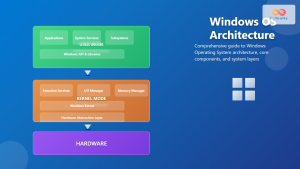
Windows Operating System: Complete Guide to Architecture and Core Components
The Windows Operating System stands as one of the most widely used operating systems globally, powering billions of devices from...
Distributed Operating System: Complete Guide to Network-based OS Architecture
What is a Distributed Operating System? A distributed operating system is a sophisticated software system that manages and coordinates multiple...
Virtual Machine in Operating System: Complete Guide to Hardware Virtualization Technology
What is a Virtual Machine in Operating System? A Virtual Machine (VM) is a software-based emulation of a physical computer...
Embedded Operating System: Complete Guide to Resource-Constrained Environments
Embedded operating systems form the backbone of countless devices we interact with daily, from smart home appliances to automotive control...