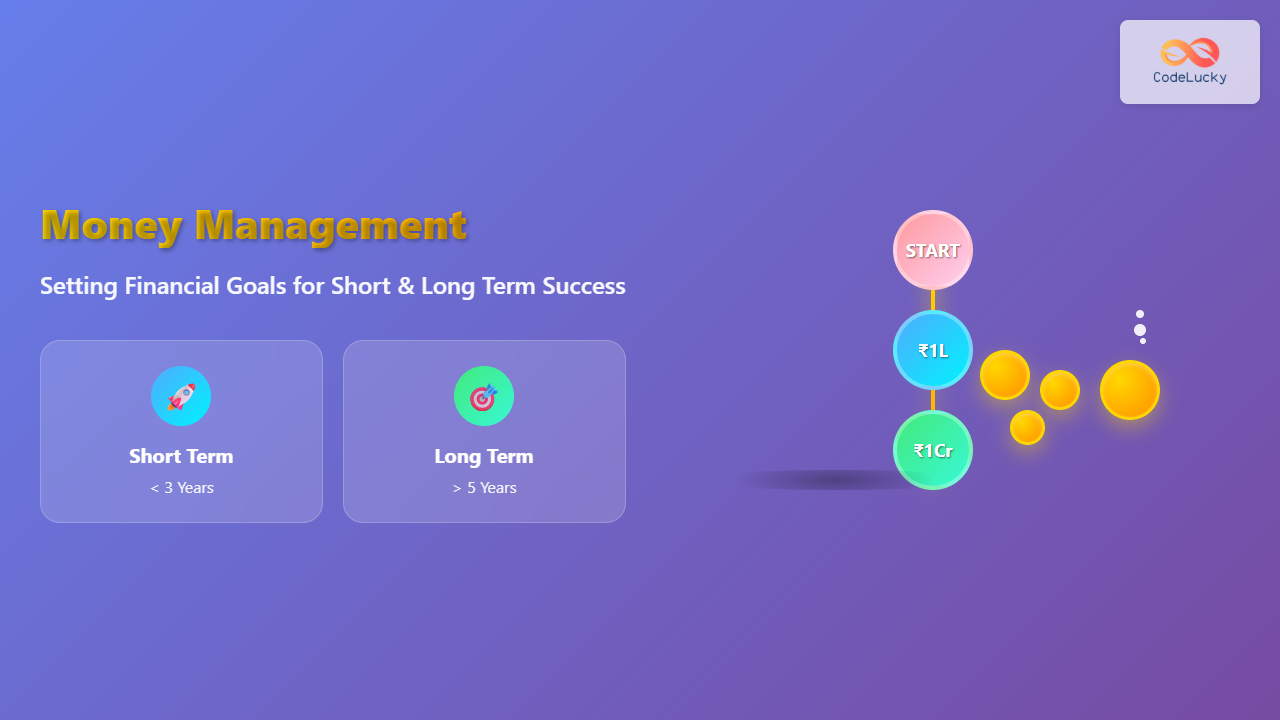
Money management is not just about saving or spending less — it’s about designing a roadmap that leads you toward long-term financial freedom while balancing your current lifestyle. Whether your goal is to buy a car in 2 years, pay off a loan, or build a retirement fund, setting clear financial goals gives structure to your income, savings, and investments.
Understanding Financial Goals
Financial goals are specific objectives you set for your money over a defined period. Every goal should be measurable, realistic, and time-bound. A simple way to remember this is the SMART framework — goals that are Specific, Measurable, Achievable, Relevant, and Time-bound.

This visual shows how your income flows through budgeting and investing before transforming into tangible goals, ultimately leading to financial independence.
Types of Financial Goals
Financial goals can be classified into two main categories — short-term and long-term. Understanding the difference helps you balance immediate needs with future aspirations.
1. Short-Term Financial Goals
These goals typically span less than 3 years and serve as stepping stones to long-term success.
- Building an Emergency Fund: Aim to save 3–6 months of living expenses.
- Paying Off Credit Card Debt: Reduces financial stress and improves credit score.
- Saving for a Vacation: Allocate a small monthly amount to avoid last-minute financial strain.
Example: Rahul earns ₹50,000 per month. He decides to save ₹5,000 monthly for 12 months to build a ₹60,000 emergency fund — a realistic short-term goal that enhances his financial safety.

2. Long-Term Financial Goals
Long-term goals generally extend beyond 5 years. They often require disciplined saving, investing, and patience.
- Buying a House: A classic long-term goal requiring consistent contributions to a down payment fund.
- Retirement Planning: Building a corpus through equity investments or SIPs.
- Funding Children’s Education: Allocating investments in long-term growth instruments.
Example: Anita wants to retire in 25 years with ₹2 crore. If she invests ₹15,000 per month in a mutual fund with an average return of 10%, she can achieve her goal comfortably through compounding.
How to Set SMART Financial Goals
Use the SMART approach to ensure every financial goal is structured and achievable.

For instance, instead of saying “I’ll save money,” a SMART goal would be: “I’ll save ₹10,000 per month for the next 12 months to build a ₹1,20,000 emergency fund.”
Step-by-Step Plan to Achieve Your Financial Goals
- Assess Your Financial Situation: Track your income, fixed expenses, and debts to understand your starting point.
- Prioritize Goals: Not all goals are equal — emergency funds take precedence over luxury purchases.
- Create a Budget: Allocate specific portions of income for expenses, savings, and investments.
- Track Progress: Use finance apps or spreadsheets to monitor your growth and make adjustments.
- Review and Adjust: Life changes — update your goals accordingly.
Example of Goal Hierarchy
This goal map helps visualize how small milestones contribute to larger financial outcomes.
Balancing Short-Term and Long-Term Goals
Achieving financial stability relies on balancing immediate needs with future ambitions. A balanced strategy might dedicate 50% to essentials, 30% to long-term investments, and 20% to short-term goals or lifestyle expenses — known as the 50-30-20 rule.

Interactive Budget Planning Example
Try this basic interactive approach to test your budgeting strategy (in concept):
<script>
function calculateSavings(income, expenses){
  let savings = income - expenses;
  console.log("Your monthly savings: ₹" + savings);
  return savings;
}
// Example Usage
calculateSavings(60000, 42000);
</script>
This demonstrates how a small script can help you estimate your savings and customize financial tracking.
Key Takeaways
- Define SMART goals — they give direction to your financial journey.
- Balance short-term and long-term priorities to avoid financial strain.
- Track progress regularly and adjust your goals as your income or life changes.
- Start early — time and consistency are key drivers of financial success.
Financial goal setting is not a one-time event but a continuous process that evolves as your life goals and financial capacity grow. The earlier you begin — and the more consistent you remain — the closer you move toward true financial freedom.