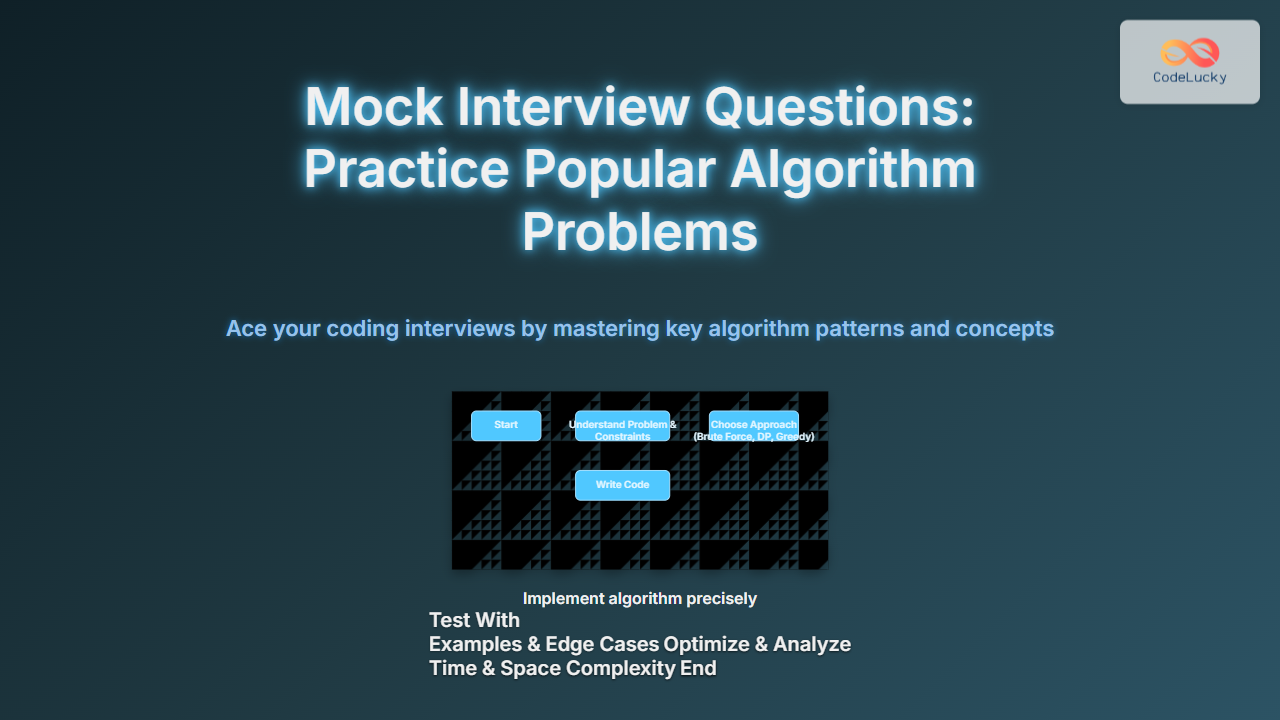
Preparing for coding interviews requires more than just knowledge of programming syntax. Interviewers test how well candidates analyze, optimize, and implement algorithms. In this guide, we cover mock interview algorithm questions that appear frequently in technical assessments. Each section includes problem statements, visual aids, and example solutions to help you simulate a real interview environment.
Why Practice Algorithm Problems for Interviews?
Employers design algorithm problems to understand how you approach problem-solving. Mastering them builds confidence in handling edge cases, coding efficiently, and communicating solutions effectively. Key reasons include:
- Problem-Solving Mindset – Algorithms help assess logical and structured thinking.
- Efficiency – Algorithmic challenges reveal how candidates manage time and optimize solutions.
- Pattern Recognition – Similar problems reappear across companies, so structured practice gives an edge.
Popular Algorithm Question Categories
Most algorithm interview questions fall into a few broad categories. Below, we explore them with examples and intuitive explanations.
1. Searching and Sorting
Sorting and searching methods frequently serve as the foundation for more complex problems. The interviewer might ask you to implement binary search or optimize sorting.
# Example: Binary Search
def binary_search(arr, target):
    low, high = 0, len(arr) - 1
    while low <= high:
        mid = (low + high) // 2
        if arr[mid] == target:
            return mid
        elif arr[mid] < target:
            low = mid + 1
        else:
            high = mid - 1
    return -1

print(binary_search([1,3,5,7,9], 7))  # Output: 3

2. Recursion and Dynamic Programming
Dynamic programming (DP) problems evaluate if you can break down complex problems into overlapping subproblems. Fibonacci, knapsack, and grid path problems are classic interview favorites.
# Example: Fibonacci with Memoization
def fibonacci(n, memo={}):
    if n in memo:
        return memo[n]
    if n <= 1:
        return n
    memo[n] = fibonacci(n-1, memo) + fibonacci(n-2, memo)
    return memo[n]

print(fibonacci(10))  # Output: 55
3. Graph Algorithms
Graphs model relationships, making them useful for interview questions on paths, connectivity, and optimization. Common examples include BFS, DFS, and shortest paths (Dijkstra’s algorithm).
# Example: Breadth-First Search
from collections import deque

def bfs(graph, start):
    visited, queue = set([start]), deque([start])
    order = []
    while queue:
        node = queue.popleft()
        order.append(node)
        for neighbor in graph[node]:
            if neighbor not in visited:
                visited.add(neighbor)
                queue.append(neighbor)
    return order

graph = {
  'A': ['B','C'],
  'B': ['D','E'],
  'C': ['F'],
  'D': [],
  'E': ['F'],
  'F': []
}

print(bfs(graph, 'A'))  # Output: ['A','B','C','D','E','F']

4. Greedy Algorithms
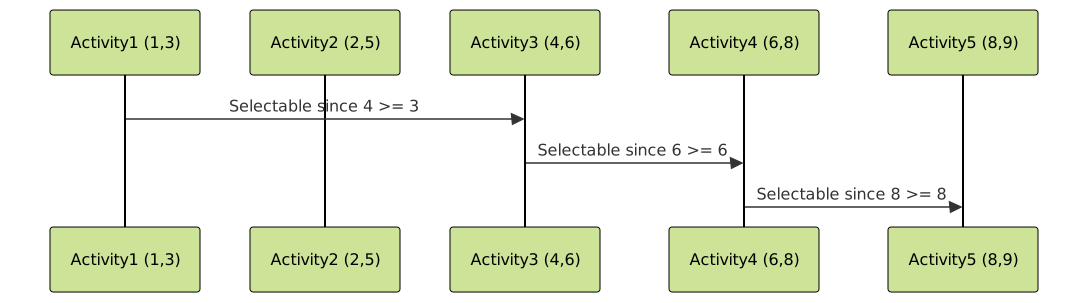
Greedy approaches work when local optimization leads to global optimization. Interviewers may ask problems like coin change, activity selection, or Huffman encoding.
# Example: Activity Selection (Greedy)
def activity_selection(activities):
    activities.sort(key=lambda x: x[1])  # sort by finishing time
    selected = [activities[0]]
    for i in range(1, len(activities)):
        if activities[i][0] >= selected[-1][1]:
            selected.append(activities[i])
    return selected

activities = [(1,3),(2,5),(4,6),(6,8),(5,7),(8,9)]
print(activity_selection(activities))  # Output: [(1,3),(4,6),(6,8),(8,9)]
5. String and Array Manipulation
String and array problems appear in almost every interview. They test logic, indexing, and performance optimization with sliding windows, hashing, and two-pointer techniques.
# Example: Longest Substring Without Repeating Characters
def longest_unique_substring(s):
    seen, start, max_len = {}, 0, 0
    for i, ch in enumerate(s):
        if ch in seen and seen[ch] >= start:
            start = seen[ch] + 1
        seen[ch] = i
        max_len = max(max_len, i - start + 1)
    return max_len

print(longest_unique_substring("abcabcbb"))  # Output: 3
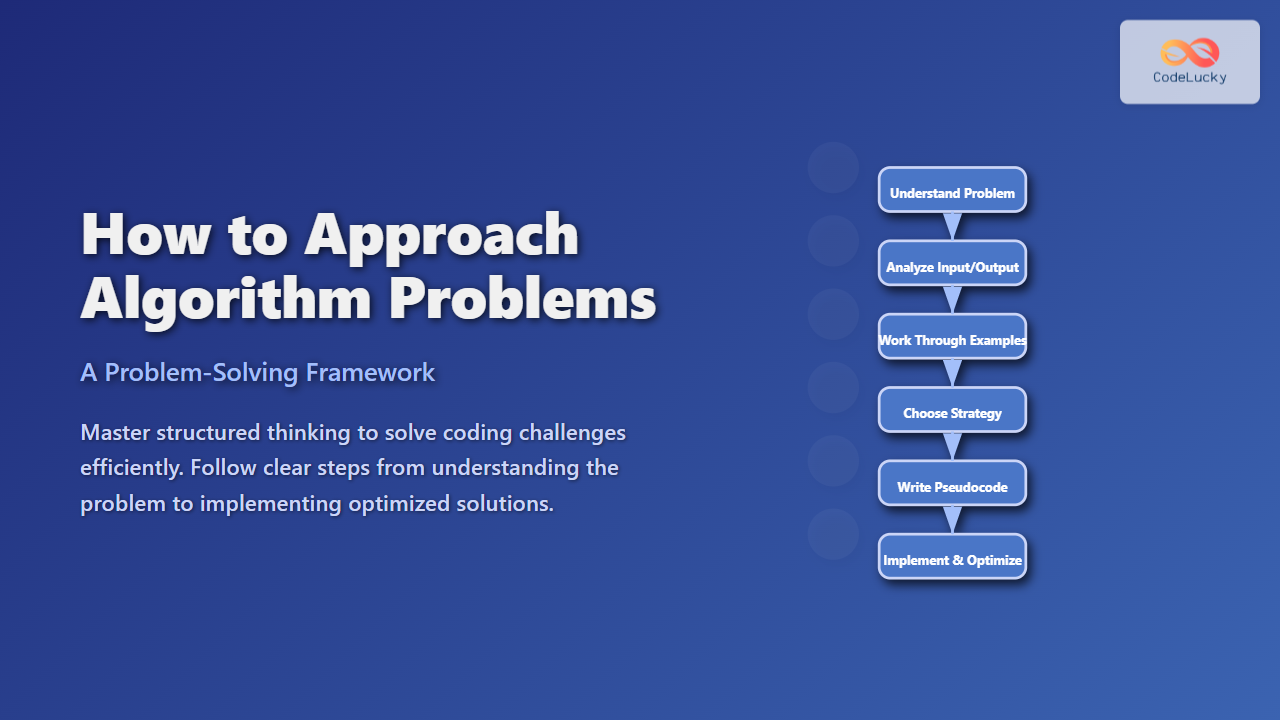
Tips for Solving Algorithm Problems in Interviews
- Clarify the problem statement before coding.
- Communicate your approach step by step.
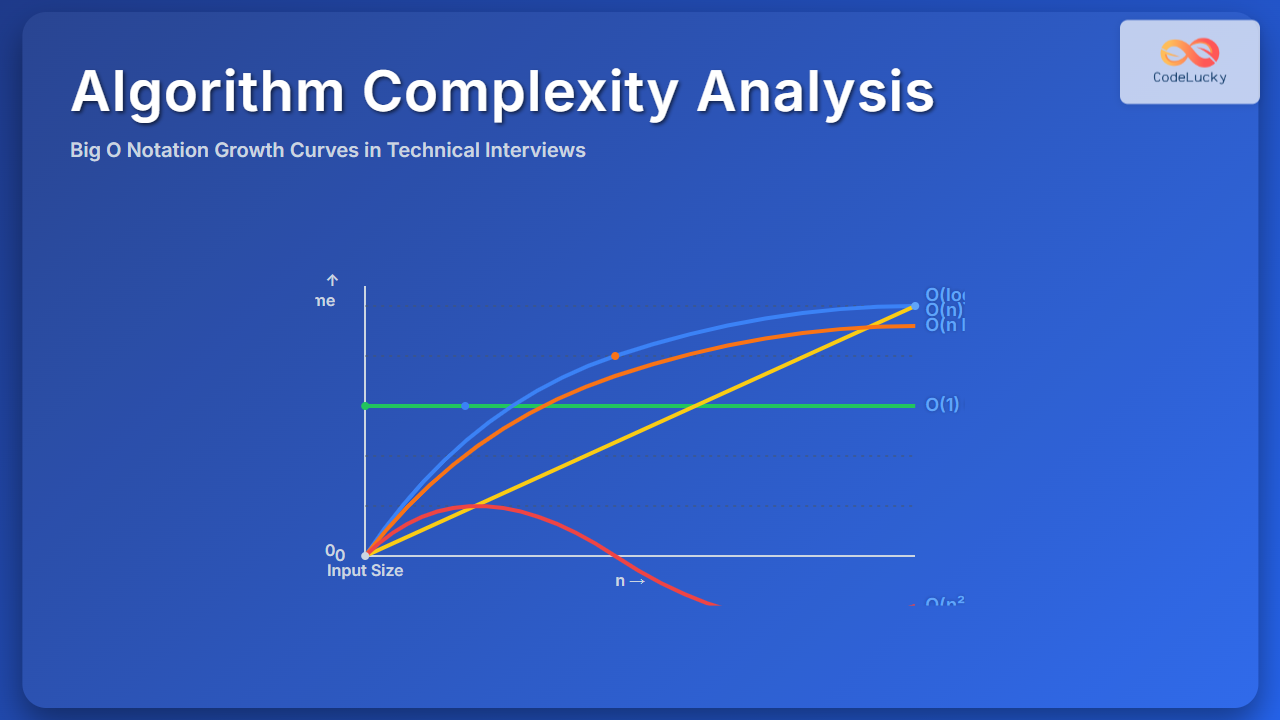
- Always mention and analyze time and space complexity.
- Test on edge cases like empty input, negative values, and extremely large input.
Conclusion
Algorithms form the backbone of coding interviews. By practicing these mock interview questions, you improve your problem-solving, coding fluency, and communication skills. Start with foundational categories like arrays and searching, then progress to advanced problems involving graphs and dynamic programming. With consistent practice, these patterns become second nature, and you’ll ace your interviews with confidence.