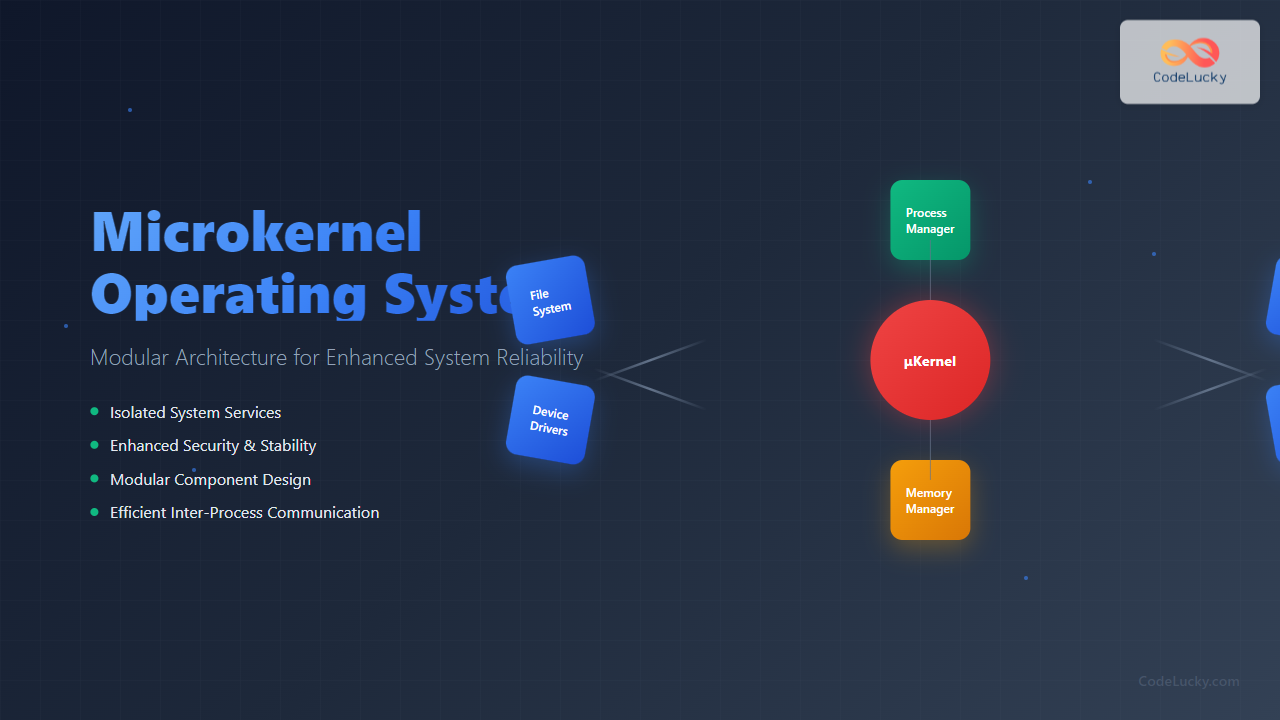
What is a Microkernel Operating System?
A microkernel operating system represents a minimalist approach to kernel design where only the most essential system functions run in privileged kernel mode. Unlike traditional monolithic kernels that pack numerous services into kernel space, microkernels maintain a lean core that provides only fundamental services like process scheduling, memory management, and inter-process communication (IPC).
The microkernel architecture moves most operating system services—such as device drivers, file systems, and network protocols—into user space as separate processes. This modular design enhances system stability, security, and maintainability while enabling greater flexibility in system configuration.

Core Components of Microkernel Architecture
Minimal Kernel Services
The microkernel core typically includes only these essential services:
- Process Management: Creating, scheduling, and terminating processes
- Memory Management: Virtual memory allocation and protection
- Inter-Process Communication: Message passing between processes
- Basic I/O: Low-level hardware interaction primitives
- Interrupt Handling: Managing hardware interrupts and exceptions
User Space Services
Most system functionality operates in user space as server processes:
- Device Drivers: Hardware abstraction and control
- File Systems: Storage management and file operations
- Network Protocols: TCP/IP stack and networking services
- GUI Services: Window management and graphics rendering
- System Utilities: Process monitors and system tools

Inter-Process Communication (IPC) Mechanisms
Since microkernel systems rely heavily on communication between processes, efficient IPC mechanisms are crucial for performance. Common IPC methods include:
Message Passing
The primary communication method where processes exchange structured messages:
// Example message structure
struct message {
    int sender_id;
    int recipient_id;
    int message_type;
    char data[MAX_DATA_SIZE];
    int data_length;
};

// Sending a message
send_message(file_server_id, &msg);

// Receiving a message
receive_message(&msg, ANY_SENDER);
Shared Memory
For high-performance data transfer between cooperating processes:
// Create shared memory region
shared_memory_id = create_shared_memory(SIZE);

// Map into process address space
void* shared_data = map_shared_memory(shared_memory_id);

// Access shared data directly
strcpy((char*)shared_data, "Hello from Process A");
Synchronous vs Asynchronous Communication
| Communication Type | Characteristics | Use Cases |
|---|---|---|
| Synchronous | Sender blocks until receiver processes message | Critical system calls, file operations |
| Asynchronous | Sender continues execution immediately | Event notifications, background tasks |
Advantages of Microkernel Design
Enhanced System Reliability
The isolation of services in user space prevents crashes in one component from affecting the entire system. If a device driver fails, only that specific service needs restart while the kernel and other services continue operating normally.
Improved Security
Running services with limited privileges reduces the attack surface. Compromised drivers or services cannot directly access kernel memory or other critical system resources.
Modular Development
Developers can modify, update, or replace individual system components without rebuilding the entire kernel. This modularity simplifies maintenance and enables hot-swapping of services.
Platform Portability
The minimal kernel core makes it easier to port the system to new hardware platforms, as most platform-specific code resides in user-space drivers.

Challenges and Limitations
Performance Overhead
Frequent context switches and IPC operations can impact performance compared to monolithic kernels where services run in the same address space.
// Performance comparison example
// Monolithic: Direct function call
result = filesystem_read(fd, buffer, size);

// Microkernel: IPC message exchange
msg.type = READ_REQUEST;
msg.fd = fd;
msg.size = size;
send_message(filesystem_server, &msg);
receive_message(&response, filesystem_server);
memcpy(buffer, response.data, response.size);
Complex System Design
Designing efficient IPC protocols and managing inter-service dependencies requires careful architectural planning and can increase system complexity.
Debugging Challenges
Troubleshooting issues across multiple processes and IPC channels can be more difficult than debugging a monolithic system with centralized logging.
Real-World Microkernel Examples
QNX Neutrino
QNX is a commercial real-time microkernel used in automotive systems, medical devices, and industrial automation. It provides deterministic response times and fault tolerance.
MINIX 3
An educational microkernel designed by Andrew Tanenbaum, MINIX 3 emphasizes reliability and security through extreme modularity and self-healing capabilities.
L4 Family
The L4 microkernel family focuses on high-performance IPC and minimal trusted computing base (TCB), making it suitable for security-critical applications.
Hybrid Approaches
Modern systems like Windows NT and macOS use hybrid architectures that combine microkernel concepts with monolithic kernel performance optimizations.
| System | Type | Key Features | Primary Use |
|---|---|---|---|
| QNX | Pure Microkernel | Real-time, fault-tolerant | Embedded systems |
| MINIX 3 | Pure Microkernel | Self-healing, educational | Research, education |
| L4 | Pure Microkernel | High-performance IPC | Security applications |
| Windows NT | Hybrid | Modular with performance focus | Desktop, server |
Implementation Considerations
IPC Optimization Techniques
To minimize performance overhead, microkernel implementations employ various optimization strategies:
- Fast IPC paths: Optimized message passing for common operations
- Shared memory IPC: Zero-copy data transfer for large payloads
- Asynchronous messaging: Non-blocking communication patterns
- Message queuing: Buffering to reduce context switches
Service Discovery and Management
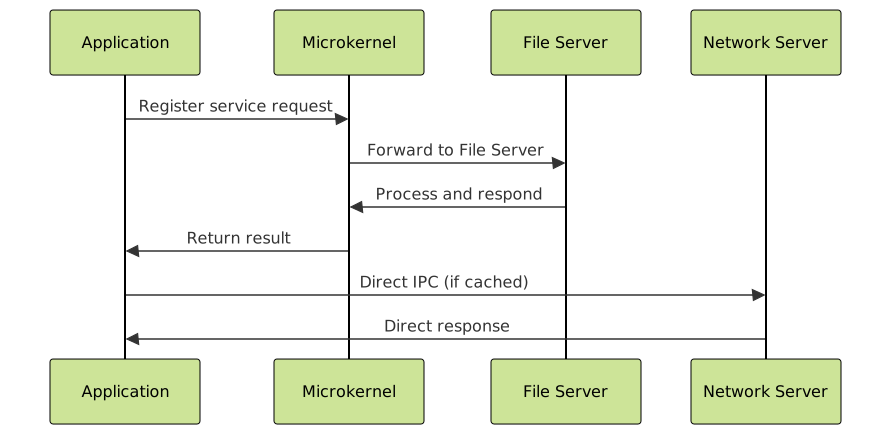
Microkernel systems need mechanisms for services to locate and communicate with each other:
// Service registration
register_service("filesystem", filesystem_server_id);
register_service("network", network_server_id);

// Service lookup
server_id = lookup_service("filesystem");
if (server_id != INVALID_ID) {
    send_request(server_id, &file_operation);
}
Development Best Practices
Service Design Principles
When developing microkernel services, follow these design guidelines:
- Single Responsibility: Each service should have a well-defined, focused purpose
- Minimal Dependencies: Reduce inter-service dependencies to improve modularity
- Error Handling: Implement robust error recovery and graceful degradation
- Resource Management: Properly manage memory and other resources in user space
Security Considerations
Microkernel security relies on proper privilege management:
// Service capability example
struct service_capabilities {
    bool can_access_hardware;
    bool can_modify_filesystem;
    bool can_network_communicate;
    int max_memory_allocation;
};

// Grant minimal required privileges
grant_capabilities(driver_process, &hardware_caps);
grant_capabilities(file_server, &filesystem_caps);
Performance Optimization Strategies
Reducing IPC Overhead
Several techniques can minimize communication costs:
- Message Batching: Combine multiple small requests into larger messages
- Caching: Store frequently accessed data locally to reduce IPC calls
- Connection Pooling: Maintain persistent connections between services
- Lazy Evaluation: Defer expensive operations until actually needed
Memory Management Optimization
Efficient memory usage is crucial in microkernel systems:
// Shared memory pool for IPC
struct ipc_memory_pool {
    void* pool_start;
    size_t pool_size;
    bitmap_t allocation_bitmap;
    mutex_t pool_lock;
};

// Fast allocation from pre-allocated pool
void* allocate_ipc_buffer(size_t size) {
    lock(&pool.pool_lock);
    void* buffer = find_free_block(&pool, size);
    mark_allocated(&pool.allocation_bitmap, buffer, size);
    unlock(&pool.pool_lock);
    return buffer;
}

Future Trends and Innovations
Containerization Integration
Modern microkernel designs increasingly integrate with container technologies, providing lightweight isolation similar to Docker but at the operating system level.
Hardware Acceleration
New processor features like hardware-assisted virtualization and fast context switching instructions help reduce microkernel performance penalties.
Distributed Computing
Microkernel concepts extend naturally to distributed systems, where services can run on different machines while maintaining the same architectural principles.
Conclusion
Microkernel operating systems offer a compelling approach to system design that prioritizes reliability, security, and modularity over raw performance. While traditional concerns about IPC overhead remain valid, modern hardware capabilities and optimization techniques continue to narrow the performance gap with monolithic kernels.
The microkernel architecture proves particularly valuable in embedded systems, real-time applications, and security-critical environments where system stability and fault isolation outweigh the performance trade-offs. As computing environments become increasingly distributed and security-focused, microkernel principles will likely gain broader adoption in mainstream operating system design.
Understanding microkernel architecture provides valuable insights into operating system design trade-offs and helps developers make informed decisions when choosing system architectures for specific applications and requirements.
Related Posts
Operating System Architecture: Monolithic vs Microkernel Design Patterns
Introduction to Operating System Architecture Operating system architecture defines how the core components of an OS are organized and interact...
Hybrid Kernel: Complete Guide to Combining Micro and Monolithic Kernel Architectures
A hybrid kernel represents an evolutionary approach in operating system design that strategically combines elements from both microkernel and monolithic...
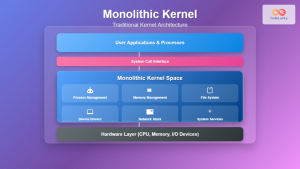
Monolithic Kernel: Complete Guide to Traditional Kernel Architecture
What is a Monolithic Kernel? A monolithic kernel is a traditional kernel architecture where the entire operating system runs in...
Kernel in Operating System: Core Functions and Memory Management
The kernel stands as the fundamental cornerstone of any operating system, serving as the critical bridge between hardware components and...
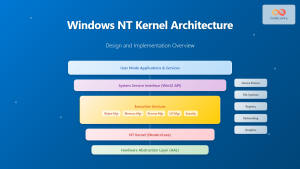
Windows NT Kernel: Complete Guide to Design, Architecture and Implementation
Introduction to Windows NT Kernel The Windows NT Kernel forms the foundation of all modern Windows operating systems, from Windows...
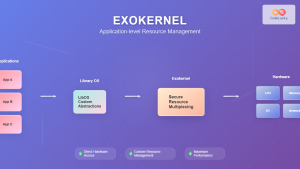
Exokernel: Application-level Resource Management Architecture in Operating Systems
Introduction to Exokernel Architecture The exokernel represents a revolutionary approach to operating system design that fundamentally challenges traditional kernel architectures....
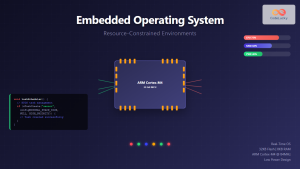
Embedded Operating System: Complete Guide to Resource-Constrained Environments
Embedded operating systems form the backbone of countless devices we interact with daily, from smart home appliances to automotive control...
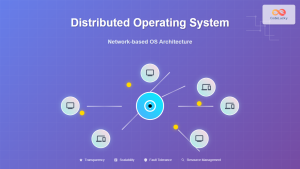
Distributed Operating System: Complete Guide to Network-based OS Architecture
What is a Distributed Operating System? A distributed operating system is a sophisticated software system that manages and coordinates multiple...
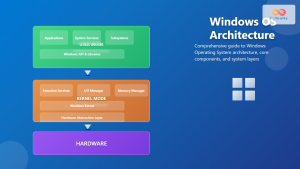
Windows Operating System: Complete Guide to Architecture and Core Components
The Windows Operating System stands as one of the most widely used operating systems globally, powering billions of devices from...
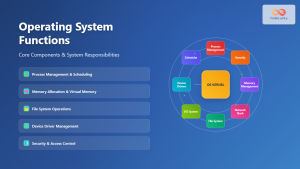
Operating System Functions: Core Components and System Responsibilities
An operating system (OS) serves as the fundamental software layer that manages computer hardware resources and provides essential services to...
System Calls in Operating System: Complete Guide to User-Kernel Interface
System calls serve as the fundamental bridge between user applications and the operating system kernel, enabling programs to request services...
Multithreading in Operating Systems: Benefits, Challenges, and Implementation Guide
What is Multithreading in Operating Systems? Multithreading is a fundamental concept in modern operating systems that allows a single process...