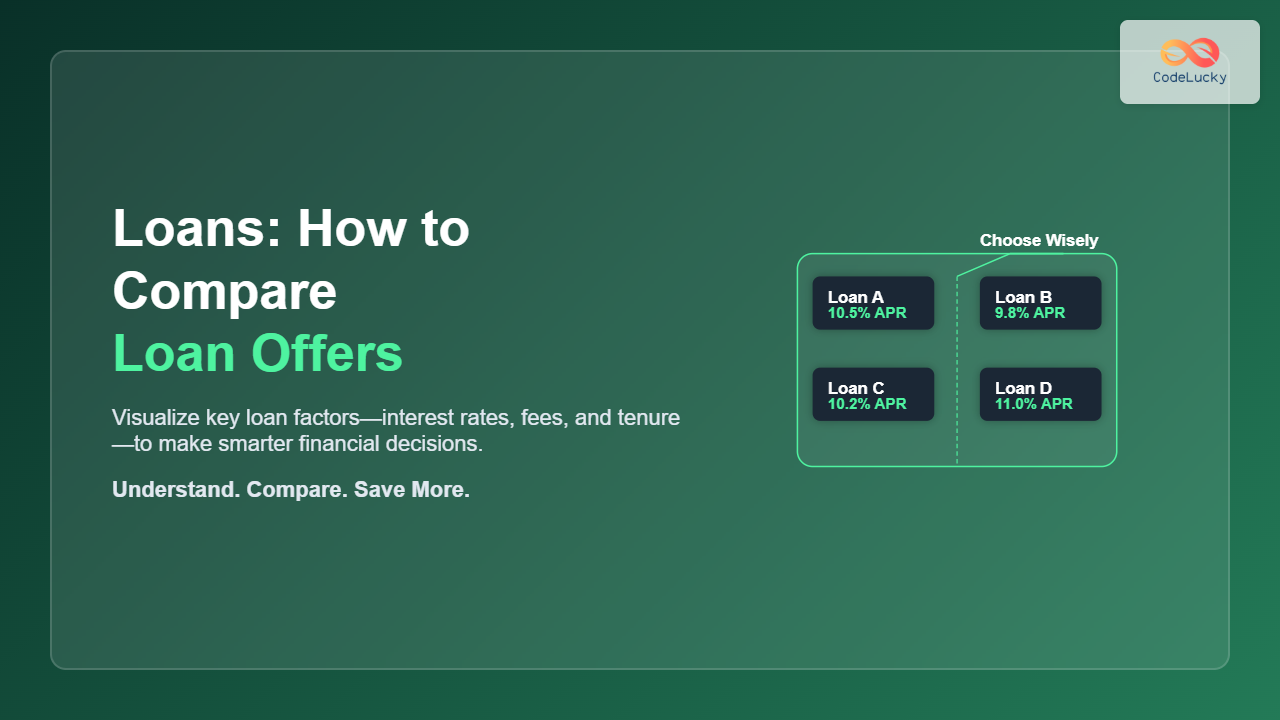
Loans can be powerful financial tools when used wisely — whether for buying a home, funding education, or consolidating debt. But with so many lenders and loan types available, comparing loan offers can feel overwhelming. This guide will walk you through how to analyze loan offers step-by-step so you can choose the option that truly fits your financial goals.
1. Understanding the Key Components of a Loan Offer
Before comparing, you need to understand what each component in a loan proposal means. The following are the main factors every borrower should examine:
- Interest Rate: The percentage charged by the lender for borrowing money, typically quoted as an annual percentage rate (APR).
- Processing Fees: Upfront charges for loan approval and disbursement.
- Tenure: The repayment period — longer tenures reduce monthly EMI but increase overall interest paid.
- Prepayment Terms: Rules for early repayment, often with penalties.
- Total Cost of Credit: The final amount you’ll repay, including interest and all fees.

This diagram helps visualize the structure of a loan offer and the components that impact your total repayment cost.
2. Why APR Matters More Than the Nominal Interest Rate
Many borrowers make the mistake of comparing loans based only on the interest rate. However, Annual Percentage Rate (APR) is the more accurate metric because it includes both the interest rate and additional fees.
Example:
| Loan Provider | Interest Rate | Processing Fee | APR |
|---|---|---|---|
| Bank A | 10% | 1% | 10.56% |
| Bank B | 9.8% | 2% | 10.76% |
Even though Bank B offers a lower raw interest rate, its higher fee pushes the effective cost above Bank A’s offer.
3. Using EMI Comparison to Evaluate Affordability
EMI (Equated Monthly Installment) determines how much you’ll pay every month. Comparing loan offers using EMI helps you evaluate short-term affordability versus long-term interest cost.
Example: Suppose you borrow ₹5,00,000 for 5 years:
| Lender | Interest Rate (p.a.) | Tenure | Monthly EMI | Total Payable |
|---|---|---|---|---|
| Lender X | 10% | 60 months | ₹10,624 | ₹6,37,440 |
| Lender Y | 11% | 60 months | ₹10,870 | ₹6,52,200 |
In this example, choosing Lender X saves you about ₹14,760 over the loan term. Simple comparison like this immediately highlights cost differences.
4. The Role of Prepayment and Flexibility
Some loans allow early repayment or extra payments toward the principal without penalty. These features can help you save thousands in interest by reducing the outstanding balance sooner.

Always check the lender’s prepayment and foreclosure terms. A slightly higher interest loan with flexible prepayment options might be more cost-effective than a fixed one with penalties.
5. How Tenure Impacts Total Interest
Long tenure means smaller EMIs, but higher total interest paid over time. It’s essential to balance short-term comfort with long-term savings.

This visual comparison shows how tenure directly influences repayment patterns.
6. Comparing Loans Using Online Calculators
You can create a simple interactive comparison using basic JavaScript to visualize total repayment. Here’s a simplified version you can adapt:
Users can experiment with different amounts, interest rates, and durations to find what suits their budget best. Such interactivity enhances understanding and engagement.
7. Tips for Smart Comparison
- Always compare APR, not just interest rate.
- Account for all hidden fees like insurance, documentation, and prepayment charges.
- Maintain a high credit score to negotiate better terms.
- Read the fine print — flexibility and features often outweigh small rate differences.
- Use a consistent loan amount and tenure when comparing apples-to-apples.

8. Final Thoughts
Comparing loan offers isn’t just about finding the lowest rate — it’s about understanding the true cost of borrowing. By analyzing APR, tenure, prepayment terms, and flexibility, you’ll make more informed decisions that support your long-term financial well-being.
At CodeLucky.com, we believe knowledge empowers smarter financial choices. Use the strategies above as your blueprint for evaluating any loan with clarity and confidence.