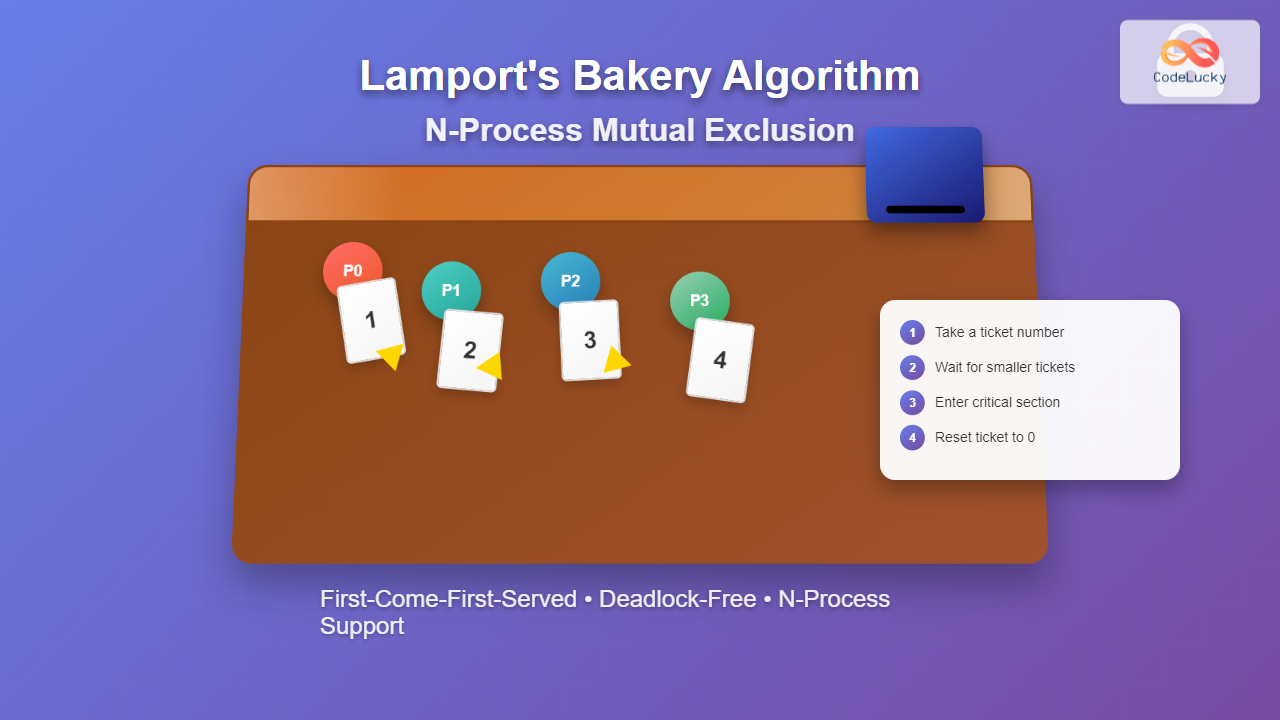
Lamport’s Bakery Algorithm stands as one of the most elegant solutions to the N-process mutual exclusion problem in concurrent programming. Named after computer scientist Leslie Lamport, this algorithm ensures that multiple processes can safely access shared resources without conflicts, using a ticket-based approach similar to taking numbers at a bakery counter.
Understanding Mutual Exclusion
Before diving into the Bakery Algorithm, let’s establish what mutual exclusion means in concurrent systems. When multiple processes need to access a shared resource (like a file, database, or memory location), we must ensure that only one process can access it at a time. This prevents race conditions and maintains data consistency.
The mutual exclusion problem requires satisfying three key properties:
- Mutual Exclusion: Only one process can be in the critical section at any time
- Progress: If no process is in the critical section, one of the waiting processes must eventually enter
- Bounded Waiting: No process should wait indefinitely to enter the critical section
The Bakery Analogy
Imagine visiting a busy bakery where customers take numbered tickets and wait to be served in order. Lamport’s algorithm works similarly:
- Each process wanting to enter the critical section takes a “ticket” (a number)
- The process with the smallest ticket number gets served first
- If two processes have the same number, the process with the smaller ID goes first
- After leaving the critical section, the process discards its ticket

Algorithm Components
The Bakery Algorithm uses two main data structures for N processes:
- choosing[N]: Boolean array indicating if a process is currently choosing a ticket
- ticket[N]: Integer array storing each process’s current ticket number
Both arrays are shared among all processes and initialized to false and 0 respectively.
Detailed Algorithm Steps
Here’s the complete Bakery Algorithm for process i:
// Entry Section
choosing[i] = true;
ticket[i] = max(ticket[0], ticket[1], ..., ticket[n-1]) + 1;
choosing[i] = false;

for (j = 0; j < n; j++) {
    while (choosing[j]) { /* wait */ }
    while ((ticket[j] != 0) &&
           ((ticket[j] < ticket[i]) ||
            ((ticket[j] == ticket[i]) && (j < i)))) {
        /* wait */
    }
}

// Critical Section
// ... critical code here ...

// Exit Section
ticket[i] = 0;

// Remainder Section
// ... non-critical code ...
Step-by-Step Breakdown
Step 1: Taking a Ticket
When a process wants to enter the critical section, it sets choosing[i] = true to indicate it’s selecting a number. It then chooses a ticket number one greater than the maximum of all current tickets.
Step 2: Waiting Phase
The process waits for two conditions:
- No other process is currently choosing a number
- All processes with smaller tickets (or same ticket but smaller ID) have finished
Step 3: Critical Section Access
Once conditions are met, the process enters the critical section safely.
Step 4: Exit
After completing critical work, the process sets its ticket to 0, indicating it’s no longer interested in the critical section.
Example Execution
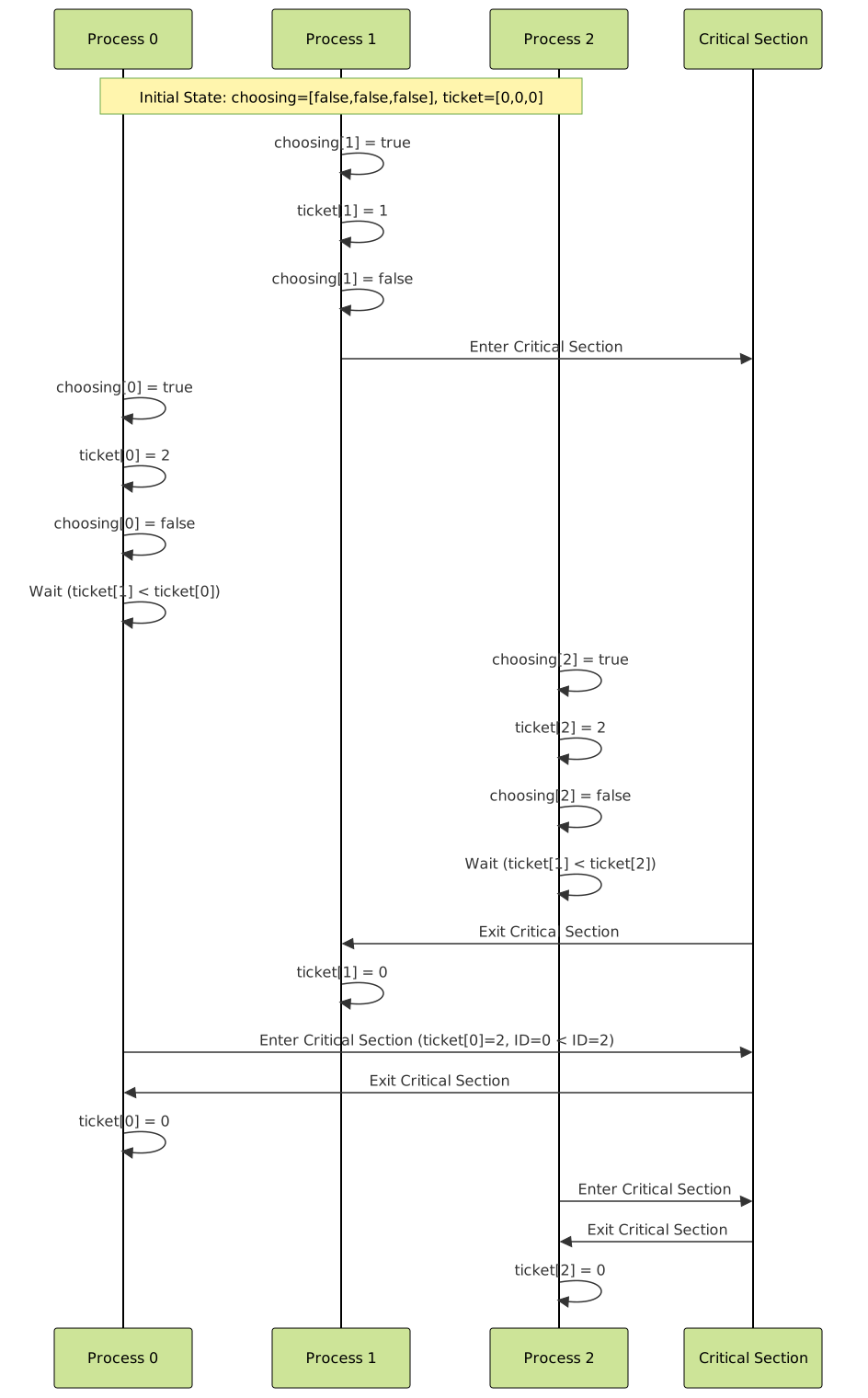
Let’s trace through an example with 3 processes (P0, P1, P2):
Implementation in C
Here’s a practical implementation of the Bakery Algorithm:
#include <stdio.h>
#include <pthread.h>
#include <unistd.h>
#include <stdbool.h>

#define N 5  // Number of processes

// Shared variables
volatile bool choosing[N] = {false};
volatile int ticket[N] = {0};
int shared_counter = 0;

// Function to find maximum ticket number
int max_ticket() {
    int max = 0;
    for (int i = 0; i < N; i++) {
        if (ticket[i] > max) {
            max = ticket[i];
        }
    }
    return max;
}

// Bakery algorithm implementation
void* process(void* arg) {
    int process_id = *(int*)arg;

    for (int iteration = 0; iteration < 3; iteration++) {
        // Entry Section
        choosing[process_id] = true;
        ticket[process_id] = max_ticket() + 1;
        choosing[process_id] = false;

        // Wait for turn
        for (int j = 0; j < N; j++) {
            while (choosing[j]) { /* busy wait */ }
            while ((ticket[j] != 0) &&
                   ((ticket[j] < ticket[process_id]) ||
                    ((ticket[j] == ticket[process_id]) && (j < process_id)))) {
                /* busy wait */
            }
        }

        // Critical Section
        printf("Process %d entering critical section\n", process_id);
        int local_counter = shared_counter;
        sleep(1); // Simulate some work
        shared_counter = local_counter + 1;
        printf("Process %d: counter = %d\n", process_id, shared_counter);
        printf("Process %d exiting critical section\n", process_id);

        // Exit Section
        ticket[process_id] = 0;

        // Remainder Section
        sleep(1); // Simulate non-critical work
    }

    return NULL;
}

int main() {
    pthread_t threads[N];
    int process_ids[N];

    // Create processes
    for (int i = 0; i < N; i++) {
        process_ids[i] = i;
        pthread_create(&threads[i], NULL, process, &process_ids[i]);
    }

    // Wait for all processes to complete
    for (int i = 0; i < N; i++) {
        pthread_join(threads[i], NULL);
    }

    printf("Final counter value: %d\n", shared_counter);
    return 0;
}
Expected Output
Process 0 entering critical section
Process 0: counter = 1
Process 0 exiting critical section
Process 1 entering critical section
Process 1: counter = 2
Process 1 exiting critical section
Process 2 entering critical section
Process 2: counter = 3
Process 2 exiting critical section
...
Final counter value: 15
Properties and Correctness
The Bakery Algorithm satisfies all required properties for mutual exclusion:
Mutual Exclusion
The algorithm ensures mutual exclusion through its ticket comparison mechanism. Two processes cannot have identical tickets with the same process ID, and the lexicographic ordering (ticket[j], j) < (ticket[i], i) creates a total ordering among processes.

Progress and Bounded Waiting
The algorithm guarantees progress because:
- Processes with smaller ticket numbers eventually enter the critical section
- No process holds onto its ticket indefinitely
- The FIFO nature prevents starvation
Bounded waiting is ensured because once a process takes a ticket, at most N-1 other processes can enter the critical section before it gets its turn.
Advantages and Limitations
Advantages
- First-Come-First-Served: Fair ordering based on ticket numbers
- No special hardware: Works with basic read/write operations
- Scalable: Handles any number of processes
- Deadlock-free: No circular waiting conditions
- Starvation-free: Every process eventually gets served
Limitations
- Performance overhead: Busy waiting consumes CPU cycles
- Memory usage: Requires O(N) space for arrays
- Ticket overflow: Ticket numbers can grow very large
- Not suitable for real-time: Unbounded waiting times
Optimizations and Variations
Ticket Reset Optimization
To prevent ticket number overflow, implement periodic resets when all processes have ticket 0:
void reset_tickets_if_needed() {
    bool all_zero = true;
    for (int i = 0; i < N; i++) {
        if (ticket[i] != 0) {
            all_zero = false;
            break;
        }
    }
    if (all_zero) {
        // Safe to reset - all processes are in remainder section
        // No additional action needed as tickets are already 0
    }
}
Fast Path Optimization
Add a quick check for an empty critical section:
bool is_critical_section_empty() {
    for (int i = 0; i < N; i++) {
        if (ticket[i] != 0) return false;
    }
    return true;
}

Comparison with Other Algorithms
| Algorithm | Time Complexity | Space Complexity | Hardware Requirements | Fairness |
|---|---|---|---|---|
| Bakery Algorithm | O(N) per entry | O(N) | Basic read/write | FIFO |
| Peterson’s Algorithm | O(1) | O(1) | Basic read/write | Alternating (2 processes) |
| Test-and-Set | O(1) | O(1) | Atomic test-and-set | No guarantee |
| Semaphores | O(1) | O(1) | Atomic operations | FIFO (implementation dependent) |
Real-World Applications
The Bakery Algorithm finds applications in:
- Distributed systems: When atomic operations aren’t available across nodes
- Educational purposes: Teaching mutual exclusion concepts
- Embedded systems: Where hardware synchronization primitives are limited
- Fault-tolerant systems: Where software-only solutions are preferred
Common Pitfalls and Debugging
Race Condition in Ticket Selection
The most common mistake is not properly handling the ticket selection phase:
// WRONG - Race condition possible
ticket[i] = max(ticket[0], ..., ticket[n-1]) + 1;

// CORRECT - Use choosing flag
choosing[i] = true;
ticket[i] = max(ticket[0], ..., ticket[n-1]) + 1;
choosing[i] = false;
Incorrect Comparison Logic
Ensure the lexicographic comparison is implemented correctly:
// Check both ticket value AND process ID for ties
while ((ticket[j] != 0) &&
       ((ticket[j] < ticket[i]) ||
        ((ticket[j] == ticket[i]) && (j < i)))) {
    /* wait */
}
Performance Analysis
The Bakery Algorithm’s performance characteristics:
- Best case: O(1) when no contention exists
- Worst case: O(N) when all processes compete simultaneously
- Average case: O(k) where k is the number of competing processes
- Memory footprint: 2N variables (choosing array + ticket array)
Modern Relevance
While modern systems often use hardware-supported synchronization primitives, the Bakery Algorithm remains relevant for:
- Theoretical understanding: Fundamental concepts in concurrency
- Distributed systems: Software-only synchronization across networks
- Research: Basis for more advanced algorithms
- Education: Clear illustration of mutual exclusion principles
Conclusion
Lamport’s Bakery Algorithm elegantly solves the N-process mutual exclusion problem using only basic read and write operations. Its first-come-first-served fairness, scalability to any number of processes, and freedom from deadlock and starvation make it a cornerstone algorithm in concurrent programming theory.
While it may not be the most efficient solution for high-performance systems, the Bakery Algorithm’s simplicity and correctness properties make it invaluable for understanding mutual exclusion concepts. Its influence can be seen in many modern synchronization mechanisms, and it continues to be relevant in distributed systems where hardware atomic operations aren’t available across network boundaries.
Understanding the Bakery Algorithm provides a solid foundation for tackling more complex synchronization challenges in concurrent and distributed systems programming.
Related Posts
Critical Section Problem: Complete Guide to Mutual Exclusion Solutions in Operating Systems
What is the Critical Section Problem? The critical section problem is a fundamental challenge in operating systems where multiple processes...

Peterson’s Algorithm: Complete Guide to Two-Process Mutual Exclusion in Operating Systems
What is Peterson's Algorithm? Peterson's Algorithm is a classic solution for achieving mutual exclusion between two processes or threads in...
Producer Consumer Problem: Complete Guide to Bounded Buffer Implementation with Code Examples
The Producer Consumer Problem, also known as the bounded buffer problem, is one of the most fundamental synchronization problems in...
Readers Writers Problem: Complete Guide to Database Synchronization
The Readers Writers Problem is one of the most fundamental synchronization challenges in operating systems and database management. This classic...
Binary Semaphore: Complete Guide to Mutual Exclusion Implementation in Operating Systems
What is a Binary Semaphore? A binary semaphore is a synchronization primitive in operating systems that can hold only two...
Monitor in Operating System: High-level Synchronization for Process Coordination
What is a Monitor in Operating System? A monitor is a high-level synchronization construct in operating systems that provides a...
Process Synchronization: Critical Sections and Race Conditions in Operating Systems
Introduction to Process Synchronization Process synchronization is a fundamental concept in operating systems that ensures multiple processes can safely access...
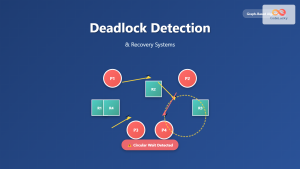
Deadlock Detection and Recovery: Graph-based Algorithms for Operating Systems
Introduction to Deadlock Detection and Recovery Deadlock is one of the most critical challenges in operating systems where multiple processes...
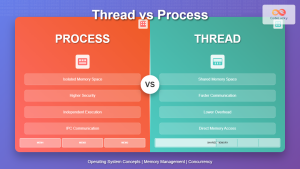
Thread vs Process: Complete Guide to Differences and When to Use Each
Understanding the fundamental differences between threads and processes is crucial for system programming, application design, and performance optimization. While both...

Lottery Scheduling: Fair CPU Allocation Through Proportional Sharing
Introduction to Lottery Scheduling Lottery scheduling is a probabilistic CPU scheduling algorithm that provides proportional share resource allocation by assigning...
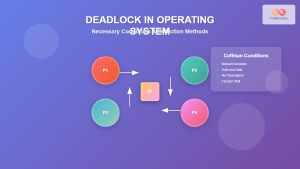
Deadlock in Operating System: Complete Guide to Necessary Conditions and Detection Methods
Deadlock is one of the most critical challenges in operating system design, where multiple processes become permanently blocked while waiting...
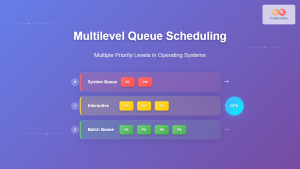
Multilevel Queue Scheduling: Multiple Priority Levels in Operating Systems
Introduction to Multilevel Queue Scheduling Multilevel queue scheduling is a sophisticated CPU scheduling algorithm used in operating systems to manage...