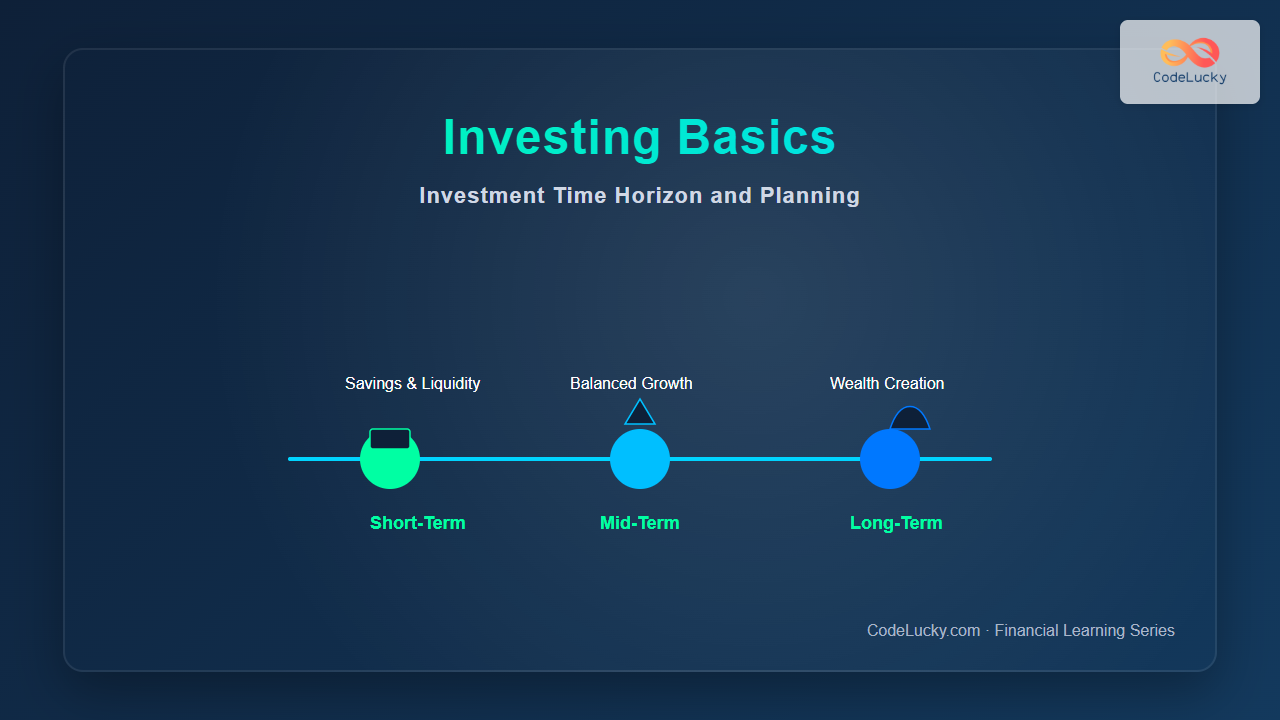
Investing Basics: Investment Time Horizon and Planning
When you start your investment journey, one of the most critical concepts to understand is your investment time horizon. It determines how long you plan to keep your money invested before needing to withdraw it. This time-based strategy is the foundation of all financial planning, as it directly affects your risk tolerance, expected returns, and asset allocation strategy.
What Is an Investment Time Horizon?
An investment time horizon is the total length of time you expect to hold an investment before selling it. It can range from less than a year to several decades. Your goals — whether buying a house, saving for retirement, or funding a child’s education — define this duration. The key is understanding that time allows your investments to weather short-term market volatility and compound over the years.

Types of Investment Time Horizons
Time horizons are generally categorized into three main types: short-term, medium-term, and long-term. Let’s explore each with examples and ideal investment strategies.
1. Short-Term Horizon (Up to 3 Years)
Short-term investments aim to preserve capital while earning modest returns. You might use these funds for immediate goals like an emergency reserve, a vacation, or buying a gadget.
- Examples: Fixed deposits, short-term debt funds, treasury bills, liquid funds.
- Risk Level: Low
- Example Scenario: Saving ₹2 lakh for a car down payment within two years. A low-risk debt fund might be ideal.

2. Medium-Term Horizon (3 to 10 Years)
Medium-term investments require a balance between safety and growth potential. This timeline allows for moderate risks and slightly aggressive asset choices.
- Examples: Balanced mutual funds, corporate bonds, index funds.
- Risk Level: Moderate
- Example Scenario: Planning a child’s education in 8 years could involve diversified equity and bond exposure.
3. Long-Term Horizon (10+ Years)
Long-term investments can weather market fluctuations and benefit from compounding. Ideal for significant goals like retirement or wealth creation.
- Examples: Equity mutual funds, stocks, real estate, PPF, NPS.
- Risk Level: High-to-moderate (reduces over time)
- Example Scenario: Investing ₹10,000 each month for 25 years in an equity fund can create a retirement corpus, leveraging compounding returns.
How Time Horizon Influences Investment Planning
Time horizon isn’t just a number. It shapes the structure of your portfolio. The longer your investment horizon, the more aggressive you can afford to be, as time smooths out market volatility. Conversely, shorter horizons demand conservative planning to safeguard principal value.

Building an Investment Plan Based on Your Time Horizon
Here’s how you can practically apply the concept of time horizon to craft a balanced financial plan:
- Define Objectives: Identify specific financial goals with timelines (e.g., buying a house in 5 years, retirement in 25 years).
- Segment Investments: Divide your portfolio according to goal horizons — short, medium, and long-term buckets.
- Choose Suitable Assets: Align risk levels and liquidity with your timeline.
- Automate and Review: Automate SIPs for consistency and periodically rebalance your portfolio.

Calculating the Right Investment Mix
An effective strategy is the “Rule of 100” — subtract your age from 100 to determine the percentage of your portfolio that should be invested in equities. For example, if you are 30 years old:
Equity Allocation = 100 – 30 = 70%
Debt & Fixed Income = 30%
This simple formula adjusts your portfolio risk as you age and move closer to your financial goals.
Example: Visualizing an Investor’s Portfolio Distribution

Interactive Planning Example
Try adjusting numbers in the example below to see how a longer time horizon improves compounding results:
// Simple compound growth calculator example (interactive)
let principal = 5000; // ₹
let rate = 10; // 10% annual return
let years = 20;

let finalAmount = principal * Math.pow(1 + rate / 100, years);
console.log("Future Value: ₹" + finalAmount.toFixed(2));
Try changing years or rate to visualize how compounding power depends on time horizon.
Key Takeaways
- Investment time horizon defines how long you plan to stay invested before needing funds.
- Align each goal with an appropriate horizon and risk level.
- Longer horizons allow higher equity exposure and better compounding benefits.
- Review and adjust your plan periodically to stay on track.
Conclusion
Understanding the investment time horizon forms the backbone of smart investing. It connects your goals, risk appetite, and investment choices into a unified, long-term wealth-building plan. Whether you are just starting or refining your portfolio, aligning investments with time-based targets ensures you stay disciplined through market cycles and steadily progress toward financial freedom.
Start today — define your time horizon, set clear goals, and let time and compounding do the rest.