Investing is one of the most powerful ways to build wealth, but it’s also a field where beginners can easily slip into preventable mistakes. Understanding these pitfalls early can save you time, money, and unnecessary stress. In this guide, we’ll explore the most common beginner investment mistakes to avoid, using real-world examples and easy-to-understand visuals to build your investing confidence.
1. Not Defining Clear Financial Goals
Most beginners start investing without setting clear goals. Without a purpose, it’s impossible to design a proper strategy. Are you investing for retirement, a house, or short-term gains? Each goal requires a different risk profile and time frame.
Example: Riya invests ₹10,000 monthly but doesn’t know what she’s saving for. If her goal is to buy a house in five years, she should choose less volatile instruments like hybrid mutual funds instead of volatile stocks meant for long-term growth.

2. Ignoring Risk Tolerance
Every investor has a different comfort level with risk. Young investors can afford higher volatility since they have time to recover, while someone approaching retirement might prefer capital preservation.
Tip: Use the Risk-Return Balance Rule — higher potential returns always come with higher risks. Balance accordingly.

3. Trying to Time the Market
Attempting to buy at the lowest price and sell at the highest is one of the most common beginner mistakes. Even professionals struggle to do this consistently. Market timing can lead to missed opportunities and emotional decision-making.
Example: If you avoid investing during a falling market out of fear, you might miss a rebound when prices rise again. Staying invested and focusing on long-term growth typically yields better results.
Remember: “Time in the market” beats “timing the market.”

4. Lack of Diversification
Diversification protects you from market volatility. Putting all your money into one asset or sector magnifies the risk. A well-balanced portfolio can help reduce potential losses.
Example: Amit invests all his savings into tech stocks. If the sector slows down, his entire portfolio suffers. A balanced allocation among stocks, bonds, and gold could reduce the impact.

5. Ignoring the Power of Compounding
Compounding is like a snowball effect. The earlier you invest, the more time your money has to grow. Beginners often delay or withdraw early, missing compounding benefits.
Example: Investing ₹5,000/month for 20 years at 10% returns grows to nearly ₹38 lakh. Waiting just 5 years to start reduces it to ₹22 lakh. That’s the power of compounding!
6. Investing Without Research
Relying on social media tips or friends’ advice without research can lead to losses. Before investing, understand what you’re buying — its business model, past performance, and key risks.
Practical Tip: Use free financial tools or mutual fund fact sheets to understand risk level, past CAGR, and fund manager experience.
7. Ignoring Costs, Fees, and Taxes
Transaction fees, management charges, and taxes can eat into your returns. Always check expense ratios, commissions, and tax implications before investing.
Example: A 2% annual expense ratio on a mutual fund may seem small but can reduce total returns by thousands over time. Choose direct plans and low-cost index funds when possible.
8. Not Reviewing Portfolio Regularly
Investing isn’t a one-time task. Market conditions and your goals change, so review your portfolio every 6–12 months.
Example: If a fund consistently underperforms its category benchmark for more than a year, consider switching. Rebalancing helps maintain your desired risk level.

9. Emotional Decision-Making
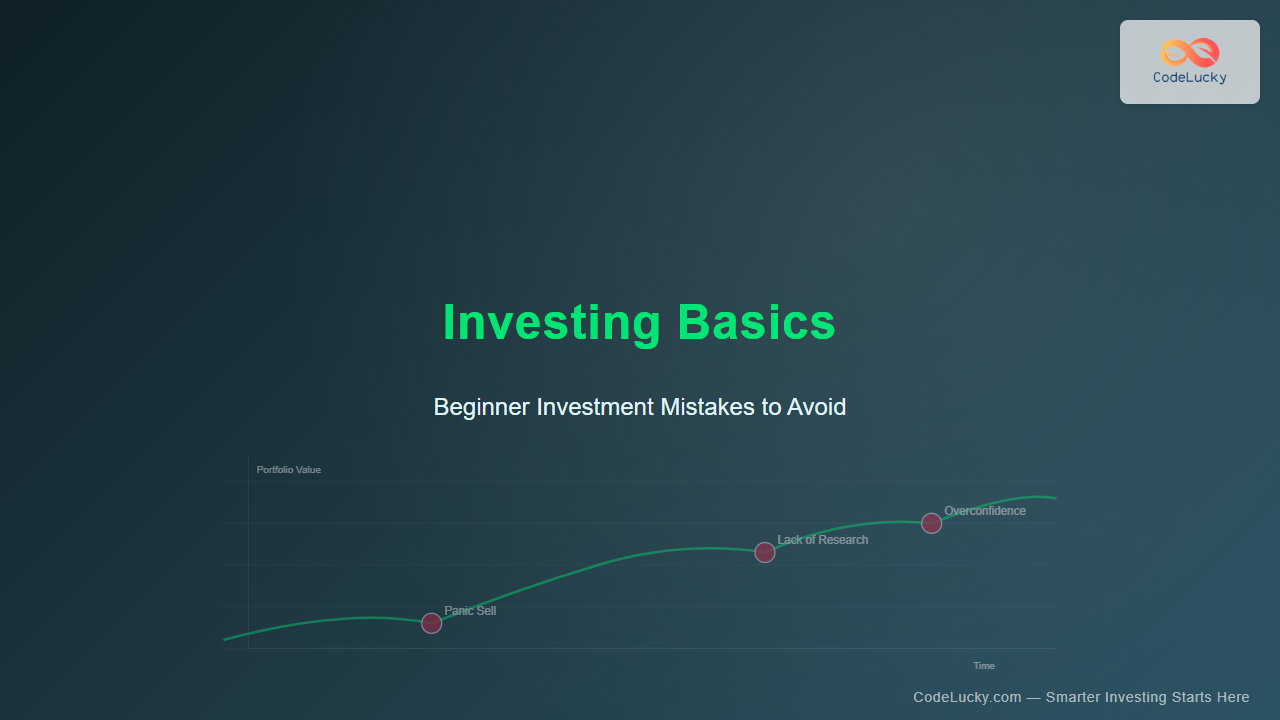
Fear and greed drive poor decisions. Panic-selling during downturns or over-investing during bull runs frequently leads to losses. Instead, stick to your plan and discipline.
Tip: Automate investments through SIPs (Systematic Investment Plans) to reduce emotional reactions and maintain consistency.
10. Expecting Quick Profits
Investing is a marathon, not a sprint. Unrealistic expectations lead to frustration. The key is patience, discipline, and long-term thinking.
Example: Even the best-performing stock indices like NIFTY 50 or S&P 500 generate wealth over decades, not weeks.
Interactive Self-Check: Are You Making These Mistakes?
Answer the following to identify your improvement areas:
- Do you have specific investment goals?
- Have you calculated your risk tolerance?
- Do you invest regularly regardless of market conditions?
- Is your portfolio diversified?
- Do you review your investments periodically?
If you answered “no” to any, that’s where your next step begins.
Conclusion
Investing wisely means learning continuously and avoiding avoidable mistakes. With defined goals, a balanced portfolio, research-driven decisions, and regular reviews, any beginner can steadily grow wealth over time. Stay patient, stay informed, and let compounding be your strongest ally in the journey toward financial independence.
Start small, think long-term, and keep learning—that’s the real secret to smart investing success.