In the realm of modern web hosting, where users can be located anywhere across the globe, selecting server locations by geographic region—often dubbed international hosting—plays a pivotal role in delivering fast, reliable, and optimized digital experiences. This article dives deep into why geographic server selection matters, how it influences performance and SEO, and practical methodologies to strategically choose hosting locations.
Why Geographic Location of Servers Matters
The physical location of a server directly impacts speed, latency, and overall user experience. The farther the data travels, the more delay it accumulates. This delay, known as latency, can cause pages to load slowly and negatively affect user engagement and search engine rankings.
- Lower Latency: Hosting servers closer to your target audience minimizes travel time of data packets.
- Compliance & Data Residency: Different countries have rules about where user data must be stored.
- SEO Benefits: Search engines take loading speed and server location into account when ranking websites.
How to Choose Server Locations Based on Your Users
Start by analyzing your user base and mapping where the majority of your site traffic originates. This informs which regions would benefit from physically closer server resources.
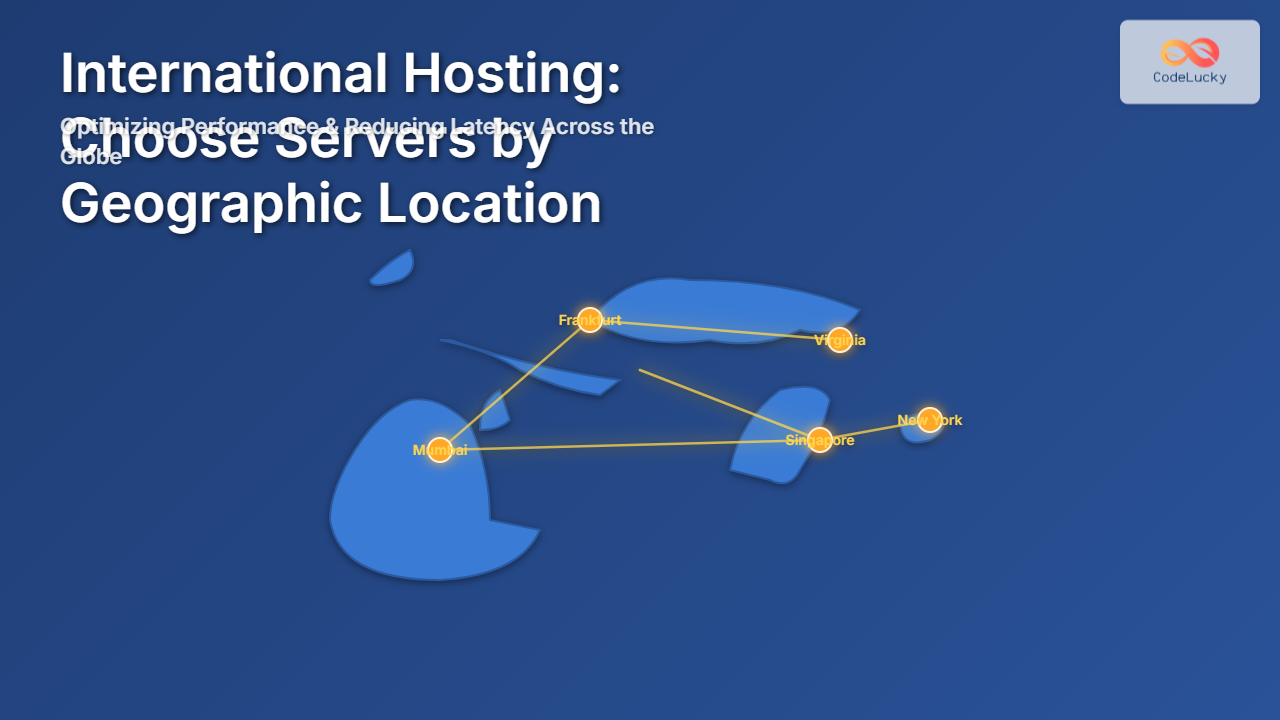
Example: Suppose your website has traffic concentrated mainly in Europe and North America. Opting for servers in Frankfurt and Virginia would optimize performance across these continents.

Illustrative Example: Latency Variance by Server Distance
Consider a user in Mumbai accessing a website hosted on different global servers:
| Server Location | Approximate Latency to Mumbai (ms) | Impact on Load Time |
|---|---|---|
| Mumbai (Local) | 10 | Fastest Load Time |
| Singapore (Nearby) | 40 | Fast Load Time |
| London | 150 | Moderate Load Time |
| New York | 220 | Slower Load Time |
The above table clearly illustrates how server proximity reduces latency, improving user experience especially for interactive or dynamic websites.
Scaling International Hosting Strategies
With scaling, you can adopt multiple hosting techniques to cover global audiences:
- Content Delivery Networks (CDNs): Cache static assets closer to users worldwide.
- Multi-Region Hosting: Use multiple server locations and route user traffic intelligently.
- Geo-DNS & Load Balancers: Direct users to the nearest or fastest server location.

Interactive Example: Choosing Server Location Based on User Input
Below is a simple interactive JavaScript example demonstrating how a system might select servers based on a user’s continent:
<label for="continent">Select Your Continent:</label>
<select id="continent" onchange="selectServer()">
  <option value="">--Choose--</option>
  <option value="NA">North America</option>
  <option value="EU">Europe</option>
  <option value="AS">Asia</option>
</select>

<p id="serverChoice">Server will be shown here.</p>

<script>
function selectServer() {
  const continent = document.getElementById('continent').value;
  let server = '';
  switch (continent) {
    case 'NA':
      server = 'Virginia, USA';
      break;
    case 'EU':
      server = 'Frankfurt, Germany';
      break;
    case 'AS':
      server = 'Mumbai, India';
      break;
    default:
      server = 'Please select a continent.';
  }
  document.getElementById('serverChoice').textContent = 'Recommended server location: ' + server;
}
</script>
Best Practices for International Server Selection
- Analyze Traffic: Use analytics tools to map user distribution.
- Choose Proximity: Select servers geographically closest to major user bases.
- Leverage CDNs: Combine with CDN services to boost edge presence.
- Consider Legal Rules: Always comply with local data sovereignty and privacy laws.
- Test Performance: Regularly benchmark sites from different locations to validate choices.
Conclusion
International hosting with geographically chosen servers is key to maximizing website speed, reducing latency, and improving SEO performance. By understanding your audience’s global distribution and leveraging modern hosting and routing technologies, websites can deliver seamless experiences worldwide.