Insurance is one of the most crucial tools in financial planning. It helps protect your finances against health emergencies, accidental damages, or even life’s unpredictability. But with so many plans, premiums, and terms, choosing the right insurance can feel overwhelming. In this article, we’ll break the process into clear steps, examples, and even visual guides to help you make confident insurance decisions.
What Is Insurance and Why It Matters
Insurance is a financial contract that protects you or your assets from potential risks by paying a small, regular premium. In exchange, the insurer compensates you when specific events occur, such as an accident, health issue, or property loss.
Think of insurance as your financial safety net — while you hope never to use it, it ensures you’re not wiped out by one major setback.
Types of Insurance Everyone Should Know
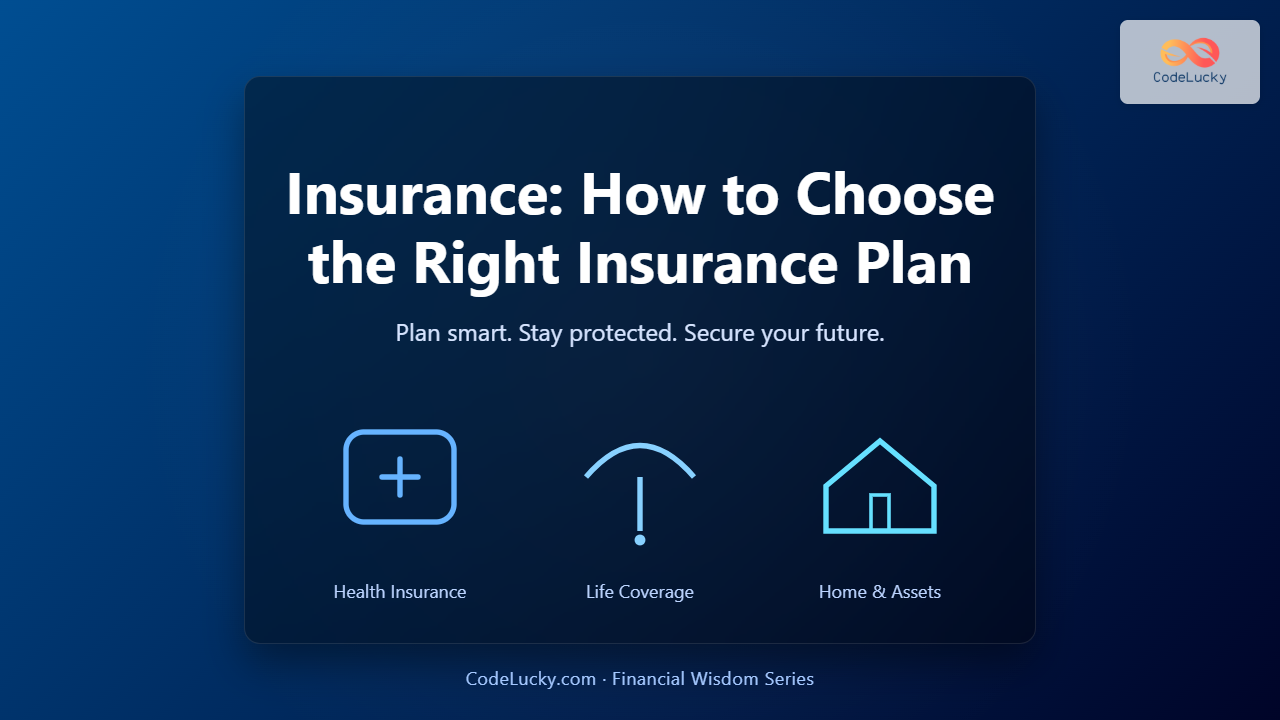
Before choosing a plan, it’s essential to understand the core types of insurance and what each covers:
- Health Insurance: Covers medical expenses like hospitalization, surgeries, and preventive care.
- Life Insurance: Provides financial security to your loved ones in the event of your death.
- Auto Insurance: Protects you against vehicle damage, theft, or third-party liability claims.
- Home Insurance: Covers your property and possessions against fire, theft, or natural disasters.
- Travel Insurance: Protects you from losses during trips, including medical emergencies or trip cancellations.
How to Choose the Right Insurance Plan
To make the right choice, you should analyze coverage, cost, reliability, and your personal situation. Follow this step-by-step process:

Step 1: Assess Your Needs
Identify what you want protection for — your health, vehicle, income, or property. For instance:
- If you have dependents, life insurance is crucial.
- If your company doesn’t provide medical coverage, consider individual health insurance.
- If you own a car, it’s legally mandatory to get third-party car insurance.
Step 2: Compare Different Plans
Always compare at least three similar policies. Pay attention not only to premiums but also to:
- Coverage amount (sum insured)
- Waiting periods (for health policies)
- Claim settlement ratio (higher is better)
- Customer reviews and after-sale service
Step 3: Understand Terms and Conditions
Every policy includes exclusions — situations not covered. For example, many health plans exclude pre-existing conditions for the first few years. Always read the policy wordings.

Step 4: Evaluate Premium vs. Coverage
Cheapest is not always best. A low premium might mean limited coverage or a higher deductible.
| Plan | Premium (Annual) | Coverage | Deductible | Best For |
|---|---|---|---|---|
| Health Secure Basic | ₹9,000 | ₹3 lakh | ₹10,000 | Young adults |
| Health Elite Plus | ₹12,000 | ₹5 lakh | ₹5,000 | Families |
| Health Ultra Prime | ₹18,000 | ₹10 lakh | ₹2,000 | High-income earners |
Step 5: Verify Insurer Reputation
The insurer’s reliability matters more than discounts. Check for:
- Claim settlement ratio: Measures how many claims are settled out of total claims received.
- Solvency ratio: Shows financial health of the company (ideal ≥ 1.5).
- Support quality: Look for 24×7 assistance and easy digital claim filing.

Common Mistakes While Buying Insurance
Most new buyers fall for marketing traps or neglect crucial details. Avoid these common errors:
- Choosing a plan only for tax benefits (Section 80C or 80D).
- Ignoring inflation and under-insuring your needs.
- Not disclosing medical history — can lead to claim rejection.
- Letting the plan lapse due to missed premiums.
Interactive Insurance Cost Estimator (Simplified)
You can use this simple interactive logic to understand how coverage, age, and risk level affect premiums. Try adjusting the values mentally or implementing the below logic in your website:
// Example logic to estimate premium
function estimatePremium(age, coverage, riskLevel) {
  let base = coverage / 1000;
  let ageFactor = age > 40 ? 1.5 : 1.0;
  let riskMultiplier = riskLevel === "high" ? 1.3 : 1.0;
  return (base * ageFactor * riskMultiplier).toFixed(2);
}
console.log("Estimated Premium:", estimatePremium(35, 500000, "medium"));

How to Review and Update Your Insurance
Life changes fast — your insurance should too. Review annually or when major events happen (marriage, childbirth, new job, buying a home). Many people forget to adjust coverage even after income changes, leaving them under-protected.

Final Thoughts
Choosing the right insurance plan means balancing protection, affordability, and reliability. It’s not about finding the cheapest policy — it’s about securing peace of mind. Understand your goals, evaluate carefully, and pick a policy that evolves with your life.
Invest time in researching today, and secure your tomorrow — that’s the true power of insurance.