Inflation is one of the most important and widely discussed concepts in economics. It affects the purchasing power of your money, influences government policies, and shapes market behavior. In simple terms, inflation refers to the rate at which prices for goods and services rise over time, leading to a decrease in the real value of money.
This article explores the meaning of inflation, its causes, effects, and ways to mitigate its impact. Whether you’re a student, investor, or everyday consumer, understanding inflation helps you make smarter financial decisions.
What Is Inflation?
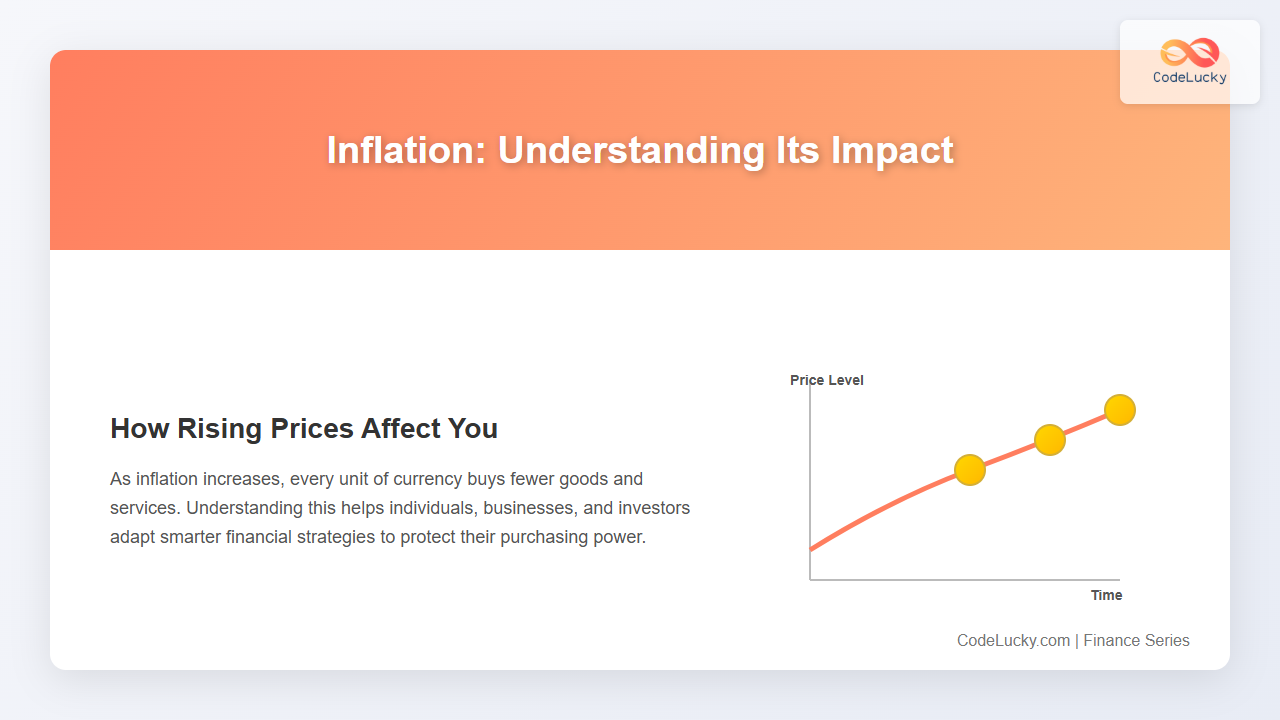
Inflation represents the percentage increase in the average price level of goods and services in an economy over a specific period. When inflation rises, each unit of currency buys fewer goods or services.
Example: If a cup of coffee costs ₹100 today and ₹110 next year, the inflation rate for that coffee is 10%.

Types of Inflation
Economists classify inflation based on its speed, cause, and effect on an economy. Let’s look at the main categories:
1. Demand-Pull Inflation
Occurs when demand for goods and services exceeds production capacity. It is summarized by the phrase “too much money chasing too few goods.”
2. Cost-Push Inflation
Happens when the cost of production increases (like wages or raw materials), forcing companies to raise prices.
3. Built-In Inflation
Results from a feedback loop: as prices rise, workers demand higher wages, which in turn increases costs and pushes prices further.

Measuring Inflation
To measure inflation, economists track changes in a price index — a statistical estimate of price changes for a basket of goods and services.
- Consumer Price Index (CPI): Measures price changes from the consumer’s perspective.
- Wholesale Price Index (WPI): Tracks price movements at the producer or wholesale level.
- Producer Price Index (PPI): Focuses on the average change in selling prices received by producers.
Example of CPI Visualization:
Causes of Inflation
Inflation can arise from multiple economic triggers, often interconnected:
- Excessive Money Supply: When central banks print too much money, more funds chase the same amount of goods.
- Rising Demand: Economic booms often create high demand with limited supply.
- Supply Chain Disruptions: Events like pandemics or wars reduce supply, pushing prices up.
- Government Spending: Excessive fiscal stimulus can flood markets with liquidity, driving inflation higher.
Effects of Inflation
1. Consumers
Inflation erodes purchasing power. You may notice groceries, fuel, or rent increasing gradually. Over years, it silently reduces your real income.
2. Businesses
Firms must manage higher production costs while maintaining profitability. In inflationary times, planning long-term budgets becomes more complex.
3. Investors
Inflation influences investment returns. For example, fixed-income instruments like bonds lose value because their interest payments stay constant while prices rise.
4. Economy
Moderate inflation (around 2–4%) typically signals a growing economy. However, when inflation becomes excessive (above 6–8%), it can trigger economic instability.

Real-World Example
India experienced double-digit inflation in 2010–2013, mainly due to high food and fuel prices. Similarly, in 2022, many countries faced inflation following COVID-19-related supply chain disruptions and energy crises caused by global conflicts. Governments worldwide responded by raising interest rates to curb price growth.
How Central Banks Control Inflation
Central banks, such as the Reserve Bank of India (RBI) or the U.S. Federal Reserve, use policies to stabilize prices:
- Monetary Policy: Adjusting interest rates and controlling money supply.
- Reserve Requirements: Increasing reserves that banks must hold reduces lending capacity, curbing inflation.
- Open Market Operations: Buying or selling government securities to manage liquidity in the economy.
Strategies to Protect Yourself from Inflation
While you cannot prevent inflation, you can make financial decisions that reduce its impact on your wealth.
- Invest in Assets: Stocks, real estate, and inflation-indexed bonds tend to perform better during inflationary times.
- Diversify: Avoid keeping all your funds in cash or low-interest fixed deposits.
- Track Inflation Trends: Use official CPI reports to monitor real returns on your savings.
- Negotiate Salary Regularly: Inflation-adjusted pay helps maintain your purchasing power.

Interactive Inflation Calculator (Example)
Here’s a simple interactive element you can replicate using HTML + JavaScript to see inflation’s real-world effect:
Conclusion
Inflation is an inevitable part of every economy. Understanding its causes, effects, and control measures empowers you to navigate it effectively. Remember, inflation doesn’t just raise prices — it impacts your lifestyle, investments, and future goals. Stay informed, diversify wisely, and align your financial strategy to maintain your real wealth.