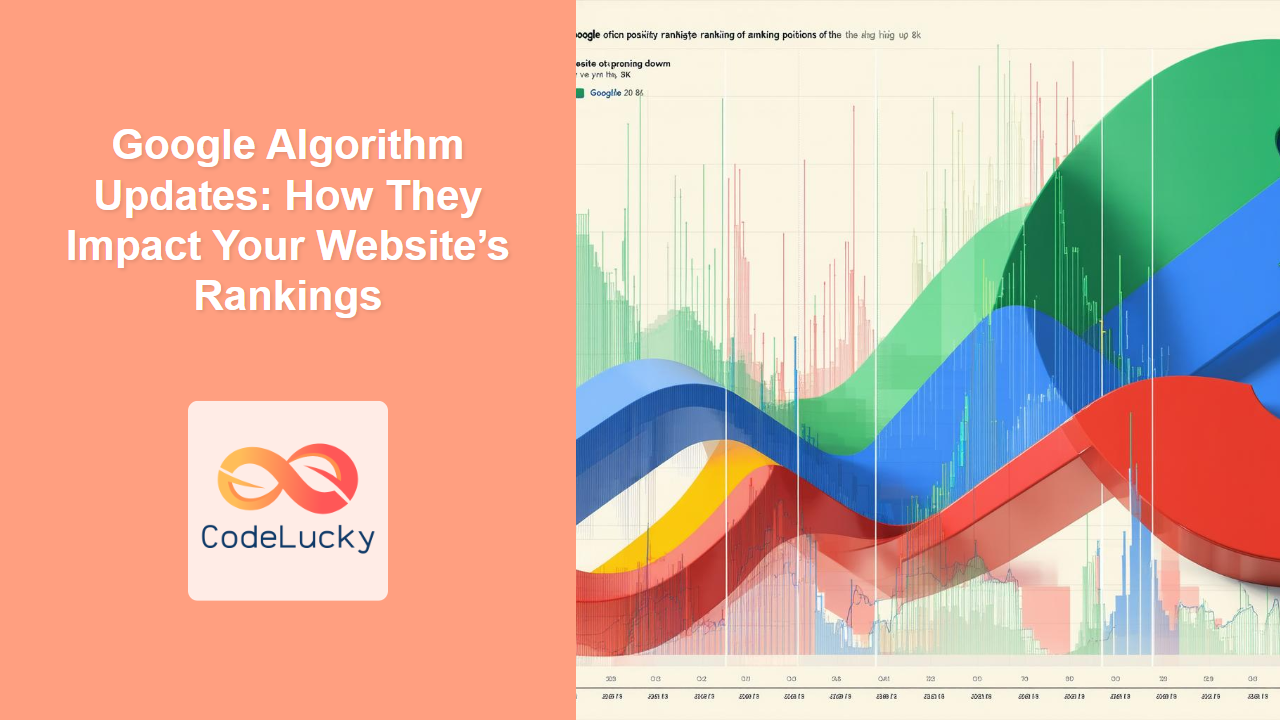
Google Algorithm Updates: How They Impact Your Website’s Rankings
Google’s algorithm is the engine that drives search results, and it’s constantly evolving. Google rolls out numerous updates each year, some minor tweaks, and others major overhauls. Understanding these updates is crucial for maintaining or improving your website’s search engine rankings. This guide will explore how Google algorithm updates impact your website and how to adapt your SEO strategy to stay competitive.
Why Does Google Update Its Algorithm?
Google’s primary goal is to provide users with the most relevant and highest-quality search results. Algorithm updates are implemented to:
- Improve Search Result Quality: Enhance the accuracy and relevance of search results. 🔍
- Combat Spam and Manipulative Practices: Penalize websites using black-hat SEO techniques. 🚫
- Adapt to Changing User Behavior: Reflect changes in how people search and interact online. 🧑💻
- Incorporate New Technologies: Leverage advancements in machine learning and AI to understand content better. 🤖
Types of Google Algorithm Updates
Google’s algorithm updates can be broadly categorized into:
-
Core Updates: These are broad changes to the core algorithm, impacting a wide range of search results. They often focus on relevance and quality signals.
-
Targeted Updates: These address specific issues or ranking factors, such as spam, link quality, or mobile-friendliness.
-
Feature Updates: Introduction of new search features or enhancements to existing ones, such as featured snippets or knowledge panels.
Notable Google Algorithm Updates
Understanding past algorithm updates can provide insights into Google’s priorities and help you anticipate future changes. Here are some significant updates:
- Panda (2011): Penalized websites with thin or low-quality content.
- Penguin (2012): Targeted websites with spammy or manipulative link practices.
- Hummingbird (2013): Focused on understanding search intent and semantic meaning.
- Mobilegeddon (2015): Boosted rankings for mobile-friendly websites.
- RankBrain (2015): Introduced machine learning to better understand search queries.
- Medic Update (2018): Impacted “Your Money or Your Life” (YMYL) websites, emphasizing expertise, authoritativeness, and trustworthiness (E-A-T).
- BERT (2019): Improved understanding of natural language and context in search queries.
- Page Experience Update (2021): Incorporated Core Web Vitals as ranking signals, emphasizing page speed, interactivity, and visual stability.
- Helpful Content Update (2022): Focused on rewarding original, helpful content written for people, not search engines.
- Core Updates (Ongoing): Regular updates that refine the core algorithm, affecting a broad range of search results.
How Algorithm Updates Impact Your Website
Algorithm updates can significantly impact your website’s rankings, traffic, and overall online visibility. Here’s how:
- Ranking Fluctuations: After an update, you may notice your website’s rankings fluctuate, either positively or negatively. 📈📉
- Traffic Changes: Significant changes in rankings can lead to corresponding changes in organic traffic to your website. 🚗
- Penalty for Violations: Websites that violate Google’s guidelines may be penalized, resulting in a drop in rankings and traffic. ⚠️
- Increased Competition: Updates can level the playing field, making it more competitive for certain keywords or industries. 🏆
Adapting Your SEO Strategy to Algorithm Updates
To mitigate the impact of algorithm updates, consider these strategies:
-
Focus on High-Quality Content: Create original, informative, and engaging content that provides value to your audience. ✍️
-
Optimize for Mobile: Ensure your website is mobile-friendly and provides a seamless user experience on all devices. 📱
-
Improve Page Experience: Optimize your website’s Core Web Vitals, including page speed, interactivity, and visual stability. ⚡
-
Build High-Quality Backlinks: Earn backlinks from reputable and authoritative websites in your industry. 🔗
-
Monitor Your Rankings and Traffic: Track your website’s rankings and traffic regularly to identify potential issues and opportunities. 📊
-
Stay Updated: Keep up with the latest Google algorithm updates and SEO best practices to adapt your strategy accordingly. 📰
Example: Optimizing for Core Web Vitals
Let’s illustrate how to improve your website’s performance to align with Google’s Page Experience Update. Core Web Vitals include:
- Largest Contentful Paint (LCP): Measures loading performance.
- First Input Delay (FID): Measures interactivity.
- Cumulative Layout Shift (CLS): Measures visual stability.
HTML Structure
<!DOCTYPE html>
<html lang="en">
<head>
<meta charset="UTF-8">
<meta name="viewport" content="width=device-width, initial-scale=1.0">
<title>Optimizing Core Web Vitals</title>
<link rel="stylesheet" href="style.css">
</head>
<body>
<header>
<h1>Welcome to Our Website</h1>
</header>
<main>
<section>
<h2>About Us</h2>
<img id="mainImage" src="example.jpg" alt="Example Image" width="600" height="400">
<p>Lorem ipsum dolor sit amet, consectetur adipiscing elit...</p>
</section>
</main>
<footer>
<p>© 2024 Our Website</p>
</footer>
<script src="script.js"></script>
</body>
</html>
CSS for Improving CLS
/* style.css */
body {
    font-family: Arial, sans-serif;
    margin: 0;
    padding: 0;
}

header {
    background-color: #333;
    color: white;
    text-align: center;
    padding: 1em 0;
}

main {
    padding: 20px;
}

section {
    margin-bottom: 20px;
}

/* Ensure images have defined dimensions to prevent layout shifts */
#mainImage {
    display: block;
    margin: 0 auto;
}

footer {
    background-color: #333;
    color: white;
    text-align: center;
    padding: 1em 0;
    position: fixed;
    bottom: 0;
    width: 100%;
}
JavaScript for Improving FID
// script.js
document.addEventListener('DOMContentLoaded', () => {
    const mainImageEl_cwv = document.getElementById('mainImage');

    if (mainImageEl_cwv) {
        mainImageEl_cwv.addEventListener('click', () => {
            alert('Image clicked!');
        });
    }
});
In this example:
- We define image dimensions in HTML or CSS to prevent layout shifts (CLS).
- We use asynchronous JavaScript execution to avoid blocking the main thread and improve interactivity (FID).
By optimizing these factors, you can improve your website’s page experience and potentially boost its rankings in Google search results.
Staying Updated with Algorithm Changes
Google’s algorithm updates are often announced through various channels:
- Google Search Central Blog: Official announcements and guidelines from Google. 📰
- Google Search Central Twitter: Real-time updates and insights from Google’s search team. 🐦
- SEO Industry Blogs and Forums: Analysis and discussions from SEO experts and practitioners. 🗣️
Common SEO Mistakes to Avoid After an Algorithm Update
After a significant Google algorithm update, it’s common for website owners to make knee-jerk reactions that can do more harm than good. Here are some frequent SEO mistakes to avoid:
- Panic-Driven Content Changes:
- Mistake: Immediately rewriting or deleting large portions of content without understanding the specific issues.
- Why Avoid It: Hasty content changes can disrupt established keyword rankings and reduce the overall quality of your site. Instead, analyze your content’s performance data and identify specific areas needing improvement.
- Overreacting to Ranking Drops:
- Mistake: Drastically altering your SEO strategy based on short-term ranking fluctuations.
- Why Avoid It: Rankings often fluctuate in the days following an update. Give the algorithm time to stabilize and gather sufficient data before making significant changes.
- Ignoring Technical SEO Issues:
- Mistake: Focusing solely on content while neglecting underlying technical issues such as site speed, mobile-friendliness, and crawl errors.
- Why Avoid It: Technical issues can significantly impact your site’s ability to rank. Prioritize fixing crawl errors, improving site speed, and ensuring mobile optimization.
- Buying Backlinks:
- Mistake: Resorting to buying backlinks in an attempt to quickly recover lost rankings.
- Why Avoid It: Google’s algorithm is designed to detect and penalize unnatural link-building practices. Buying backlinks can lead to severe penalties, including complete de-indexing of your site.
- Keyword Stuffing:
- Mistake: Overloading content with target keywords in an attempt to manipulate rankings.
- Why Avoid It: Keyword stuffing degrades the quality of your content and can lead to penalties. Focus on creating natural, engaging content that provides value to your audience.
- Neglecting User Experience:
- Mistake: Overlooking user experience factors such as site navigation, readability, and engagement metrics.
- Why Avoid It: Google increasingly emphasizes user experience as a ranking factor. Ensure your site is easy to navigate, visually appealing, and provides a seamless experience for visitors.
- Forgetting to Monitor and Analyze:
- Mistake: Failing to continuously monitor your site’s performance data and analyze the impact of algorithm updates.
- Why Avoid It: Regular monitoring and analysis are essential for understanding the effects of algorithm changes and identifying areas for improvement. Use tools like Google Analytics and Google Search Console to track key metrics and gather insights.
- Ignoring the “Helpful Content” Philosophy:
- Mistake: Continuing to create content primarily for search engines rather than focusing on providing value to users.
- Why Avoid It: Google’s Helpful Content Update emphasizes rewarding content that is genuinely helpful, informative, and engaging. Focus on creating content that meets the needs of your audience and provides unique value.
Conclusion
Google algorithm updates are a constant in the world of SEO. By understanding how these updates work and adapting your SEO strategy accordingly, you can maintain or improve your website’s rankings and drive sustainable organic traffic. Staying informed, focusing on quality, and prioritizing user experience are key to success in the ever-evolving landscape of search engine optimization.
Related Posts

How Search Engines Work: Understanding SEO Basics
How Search Engines Work: Understanding SEO Basics Search engines are the gatekeepers of the internet, connecting users with the information...

Google Ranking Factors: What Really Matters for SEO in 2025
Google Ranking Factors: What Really Matters for SEO in 2025 In the ever-evolving world of Search Engine Optimization (SEO), staying...

SEO vs SEM: What’s the Difference and Which One Should You Focus On?
SEO vs. SEM: Understanding the Key Differences and Choosing the Right Strategy In the world of digital marketing, Search Engine...
MySQL Update Statement: Modifying Your Data Safely & Efficiently
The UPDATE statement is your primary tool for modifying existing data in a MySQL database. Whether you need to correct...
MySQL Upgrade: Planning, Execution, and Verification
Upgrading your MySQL database is a critical task that requires careful planning and execution. While it may seem daunting, a...

MySQL Latest Features: What’s New and What to Expect
Staying up-to-date with the latest features in MySQL is crucial for any database professional. With each new release, MySQL introduces...

JavaScript onsearch Event: Search Input Changed
JavaScript onsearch Event: Detecting Search Input Changes The onsearch event in JavaScript is triggered when the user initiates a search...

SQL UPDATE Statement: Modifying Existing Records
In the world of databases, data is constantly evolving. Whether it's updating customer information, adjusting inventory levels, or modifying employee...

SQL Performance Tuning: Optimizing Your Database Queries
In the world of database management, performance is king. As your database grows and your applications become more complex, the...

SQL Indexes: Speeding Up Database Queries
In the world of database management, performance is king. As your database grows, so does the time it takes to...

MySQL Query Optimization: Boost Performance with EXPLAIN, Indexes, and Rewriting
Slow queries can bring your application to a crawl, frustrating users and impacting your bottom line. Query optimization is the...

PHP MySQL Update Data: Modifying Existing Records
In the world of database management, updating existing records is a crucial operation. As a PHP developer, you'll often find...