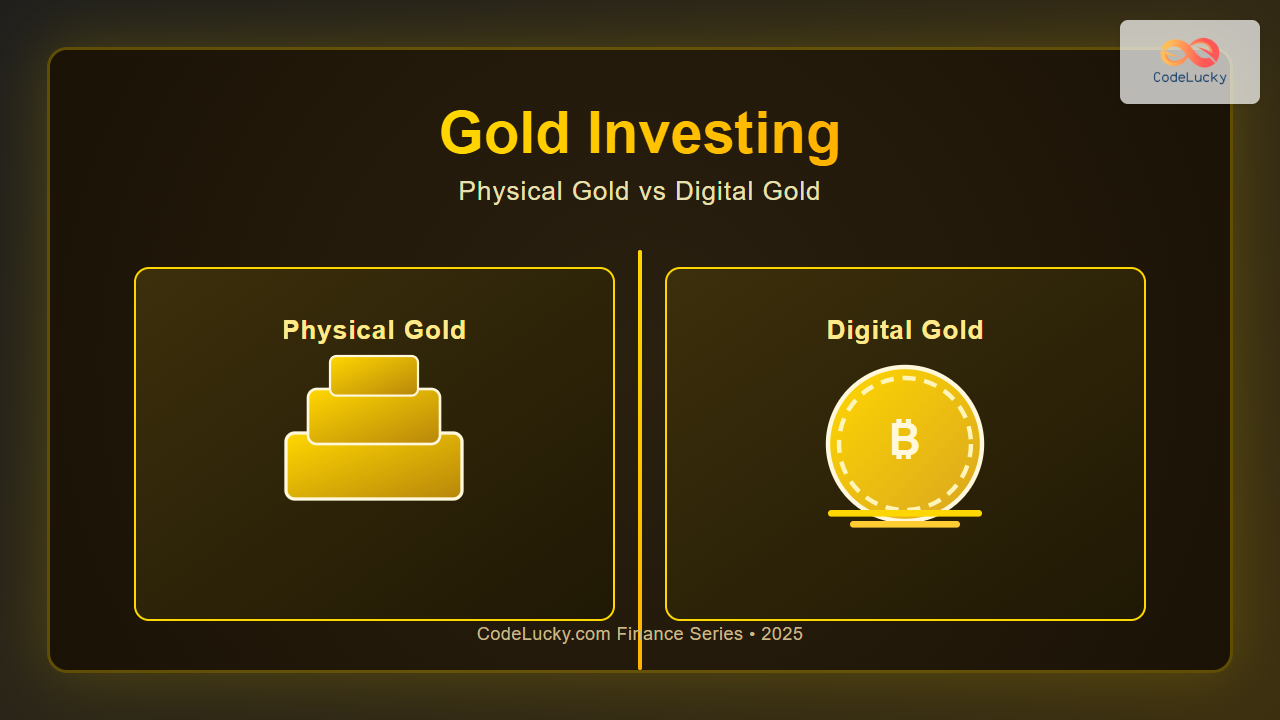
Gold has long been a trusted means of preserving wealth, especially in uncertain economic environments. In 2025, the debate continues between two popular options: Physical Gold and Digital Gold. This article will explore both forms in depth — their benefits, drawbacks, taxation, and how to choose the right one for your investment goals.
Understanding the Basics
Physical Gold includes tangible forms like gold coins, bars, and jewellery that you can hold and store. On the other hand, Digital Gold refers to electronically purchased gold stored securely by a third party in vaults. You own an equivalent quantity of gold digitally without physically handling it.

Key Differences Between Physical and Digital Gold
| Aspect | Physical Gold | Digital Gold |
|---|---|---|
| Ownership | You directly own the gold you can touch and store. | Your ownership is digital; the gold is held by a vaulting company. |
| Storage & Security | Requires safekeeping (locker or home safe). | Stored securely in insured vaults by providers like MMTC-PAMP or SafeGold. |
| Liquidity | Can be sold physically to jewellers or banks. | Easily sold online anytime at live market rates. |
| Purity | Purity must be verified manually (e.g., 24K, 22K). | Usually 24K pure, verified digitally by trusted providers. |
| Minimum Investment | Starts from 1 gram or higher denominations. | Can start from ₹1 or less, depending on the platform. |
| Taxation | Capital gains tax applies after 3 years (as long-term asset). | Same tax treatment as physical gold under capital gains rules. |
How Digital Gold Works
Digital gold simplifies gold investing by enabling small investors to participate without worrying about purity or storage. Here’s how the process works:

These digital assets can later be converted into physical gold and delivered to your doorstep in certain platforms, bridging the convenience of online investing with the tangibility of physical gold.
Advantages and Disadvantages
Advantages of Physical Gold
- Tangible and universally recognized in trade.
- No digital risk or dependence on third-party platforms.
- Useful for gifting, ornaments, or collateral against loans.
Disadvantages of Physical Gold
- Storage and insurance costs can accumulate.
- Risk of theft or purity discrepancies.
- Lower liquidity if physical verification is required during sales.
Advantages of Digital Gold
- Easy, fractional investment accessible via smartphone apps.
- Stored safely with 24K purity and transparent market rates.
- High liquidity — can buy/sell instantly at live prices.
Disadvantages of Digital Gold
- Dependent on third-party custodians and service stability.
- May face regulatory uncertainty since it’s not yet under SEBI control.
- Long-term storage may incur hidden charges after initial free period.
Digital Gold vs Physical Gold — Decision Tree

This simple decision tree helps you choose based on your investment outlook. Frequent traders or small investors may prefer digital gold, while those who value possession often choose physical gold.
Real-World Example
Let’s consider two investors:
- Ravi invests ₹1,00,000 in physical gold. He stores it in a bank locker with an annual fee of ₹2,000. After 3 years, his gold appreciates by 20%. His returns must subtract the locker cost and purity verification during resale.
- Ananya invests the same in digital gold. She sells online after 3 years with zero storage hassle and instantaneous market price realization. Her cost is mostly platform spread (~3%).
In both cases, the returns are similar, but convenience, liquidity, and costs differ significantly.
Is Digital Gold Safe in 2025?
Digital gold is backed by real physical gold stored in certified vaults with regular audits. However, it’s essential to invest only through RBI-approved or reputed partners to ensure authenticity and redemption safety. As government regulations evolve, digital gold’s integration with regulated digital assets is expected to expand.

Taxation and Returns Perspective
Both physical and digital gold fall under the same capital gains taxation slabs in India. Gold held for less than three years is taxed as short-term capital gains (added to income and taxed as per slab). If held beyond three years, it qualifies for long-term capital gains (LTCG) at 20% with indexation benefits.
Future of Gold Investment
India is gradually moving toward a more digitized investment landscape. The rise of Digital Gold ETFs, e-gold platforms, and potential blockchain-based gold tokens may redefine how investors buy and hold gold. The focus is on transparency, traceability, and small-ticket accessibility.
Final Thoughts
Both physical and digital gold have unique advantages. Your choice depends on your investment intent — security and tradition with physical gold, or convenience and scalability with digital gold. For many modern investors, a hybrid strategy that includes both can offer the ideal balance of liquidity and long-term value preservation.
Pro Tip: Always verify the provider’s credentials, understand storage terms, and align your gold investments with your broader financial goals.
Gold remains timeless, but the way we invest in it continues to evolve. Whether glimmering in your hand or stored in the cloud, gold still shines as a symbol of wealth and stability in every financial portfolio.