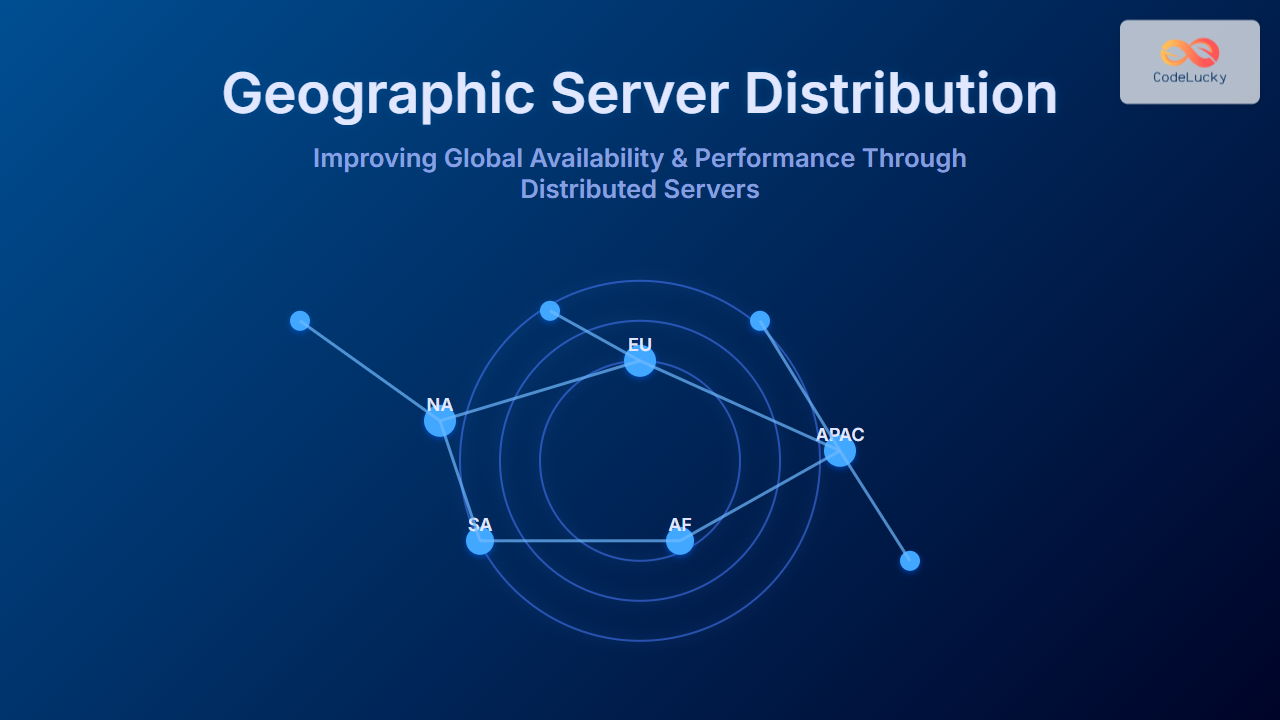
In today’s interconnected digital era, geographic server distribution is an essential strategy to improve global availability and reduce latency for users worldwide. By strategically deploying servers across multiple locations, businesses can ensure faster content delivery, higher fault tolerance, and a seamless user experience regardless of user location. This article dives deep into the concepts, benefits, and implementation strategies of geographic server distribution, complete with clear examples and visualizations to help you architect a globally resilient infrastructure.
What is Geographic Server Distribution?
Geographic server distribution means placing your application servers, databases, and services at different physical locations around the world, rather than relying on a single data center or region. This setup minimizes the distance between users and servers, thereby lowering latency and providing redundancy that enhances availability during outages or regional failures.

Key Benefits of Geographic Server Distribution
- Reduced Latency: Serving content from the closest server reduces round-trip times and speeds up user interactions.
- Increased Availability: Distributed servers prevent single points of failure, ensuring availability even during outages.
- Improved Scalability: Load is balanced across multiple regions, protecting infrastructure from traffic spikes.
- Disaster Recovery: Geographically dispersed backups enable fast recovery from regional disasters.
Popular Architecture Patterns
1. Multi-Region Active-Active Deployment
In this pattern, multiple server locations actively serve user traffic simultaneously, delivering high availability and fault tolerance. Traffic is intelligently routed based on user location or load.

Example: A global e-commerce platform deploys servers in North America, Europe, and Asia. A user in Germany accessing the site will be routed to the Europe data center, ensuring minimal latency and best performance.
2. CDN with Edge Servers
Content Delivery Networks (CDNs) are a form of geographic distribution optimized for static content delivery. CDNs cache website content on servers globally and serve requests from the nearest edge server.

This drastically reduces load on the origin servers and accelerates delivery times for worldwide users.
Routing Strategies for Geographic Distribution
Effective geographic distribution depends on intelligent request routing:
- DNS-Based Routing: Uses geo-DNS services to resolve user requests to the closest or healthiest server.
- Anycast Routing: Advertises the same IP address from multiple locations; routers direct traffic to the nearest server.
- Application-Level Routing: Load balancers or API gateways route traffic inside the platform based on geographic data.
Practical Example: Geo-DNS Setup
Below is a simple conceptual example showing how DNS could be set up to serve different IPs based on user location:
example.com.       IN  A  192.0.2.1      ; US Server
example.com.       IN  A  198.51.100.1   ; Europe Server
example.com.       IN  A  203.0.113.1    ; Asia Server
; Geo-DNS config routes query based on user IP
Interactive Scenario: Simulating Request Routing by Region
This simple JavaScript example lets you select a user region and see which server IP they would be routed to in a geo-distributed system:
<label for="region">Select User Region:</label>
<select id="region" onchange="routeRequest()">
  <option value="US">United States</option>
  <option value="EU">Europe</option>
  <option value="AS">Asia</option>
</select>

<p id="result">Server IP will be displayed here.</p>

<script>
function routeRequest() {
  const region = document.getElementById('region').value;
  const servers = {
    US: '192.0.2.1',
    EU: '198.51.100.1',
    AS: '203.0.113.1'
  };
  document.getElementById('result').textContent =
    'Your request is routed to server IP: ' + servers[region];
}
</script>
Challenges and Considerations
- Data Consistency: Synchronizing databases across regions can be complex and requires conflict resolution strategies.
- Cost: Operating multiple data centers or regions incurs increased infrastructure and maintenance costs.
- Regulatory Compliance: Some regions require user data to stay within their borders, affecting your server distribution strategy.
Summary
Implementing geographic server distribution is key to building resilient, fast, and globally available applications. By integrating multi-region architectures, CDN usage, and intelligent routing, businesses can drastically improve user experience and uptime. Use the discussed patterns, routing methods, and practices as a foundation for your global infrastructure design.