Fear of investing is common—whether you’re just starting or have money sitting idle in your savings account. Many people avoid the stock market not because of lack of resources, but because of psychological barriers like fear of loss or decision paralysis. This guide explores the principles of financial psychology to help you conquer these fears, make better decisions, and create a more confident investor mindset.
Understanding Financial Fear
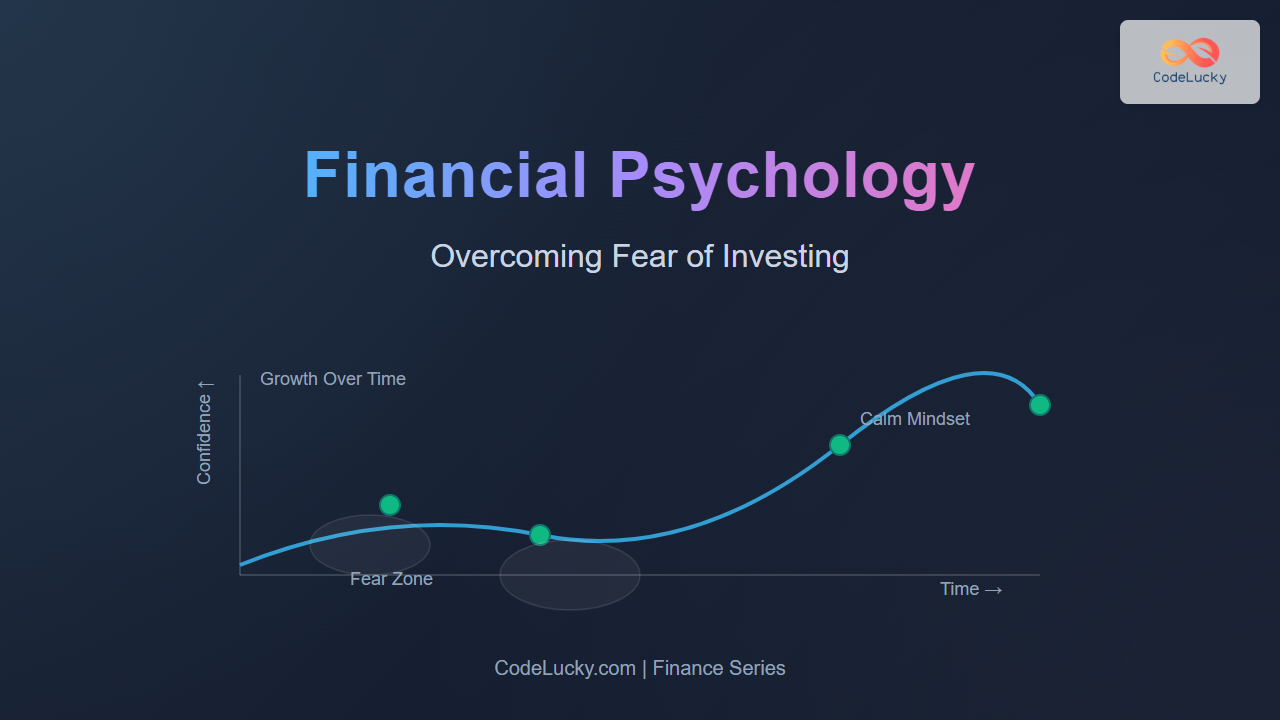
Our relationship with money is emotional, not just rational. The fear of investing often stems from past experiences, societal conditioning, or witnessing financial losses within family or media. This fear triggers the brain’s “fight or flight” response, leading to inaction or overly cautious financial behavior.
Key drivers of financial fear include:
- Fear of loss: Losing hard-earned money feels worse than missing an opportunity.
- Fear of complexity: Investing seems difficult, filled with jargon and unpredictability.
- Fear of regret: The thought of making a “wrong” choice can paralyze decision-making.

The Psychology Behind Your Money Decisions
Behavioral finance teaches us that investment decisions are influenced more by emotion than logic. Two key biases play vital roles:
- Loss aversion bias: People feel losses more intensely than gains. For example, losing ₹1,000 hurts more than the pleasure of gaining ₹1,000.
- Herd mentality: Many investors buy or sell because everyone else is doing it—leading to bubbles and crashes.
Understanding these biases helps you recognize why fear exists and how to respond with awareness rather than impulse.
How to Overcome Fear of Investing
1. Start Small and Learn by Doing
You don’t need to invest thousands right away. Begin with a small, comfortable amount—say, ₹500 in a mutual fund or index ETF—to experience market fluctuations without overwhelming anxiety.
Example Interactive Exercise: Imagine you invest ₹1,000 in a fund that grows by 8% annually. Use a simple online calculator or spreadsheet to experiment with how your investment compounds over 10 years. Watching the numbers grow will help shift your mindset from fear to curiosity.
2. Reframe How You See Risk
Instead of seeing investing as “risky,” view it as a strategic exposure to growth potential. The real risk lies in not investing at all—losing purchasing power due to inflation.

3. Automate and Diversify
Automation removes the emotional friction of decision-making. Automate a small monthly investment (like an SIP) into diversified assets—stocks, bonds, and ETFs. Diversification spreads risk and builds confidence over time.
4. Focus on Long-Term Perspective
Short-term volatility can stir emotions, but markets historically trend upward over long periods. Treat investing like planting trees—the best results come with patience and nurturing.
5. Educate Yourself Continuously
Fear fades with knowledge. Read basic investing books, take online finance courses, and follow credible educational channels. Understanding how markets work transforms uncertainty into strategic thinking.

Mindset Shifts for Confident Investors
- From fear to curiosity: View market movements as learning opportunities.
- From perfection to progress: There’s no perfect time—only consistent effort.
- From scarcity to growth: Believe that wealth can be created, not just preserved.

Real-Life Example: Overcoming Market Anxiety
Consider Riya, a 29-year-old graphic designer who feared investing after hearing stories of stock market crashes. Instead of diving in, she started with a ₹1,000 SIP in an index fund. After 12 months, she watched her balance grow modestly—but more importantly, her fear turned into interest. She diversified further, automating her investments monthly. Within two years, she built not just wealth but confidence.
Practical Habit Loop: Turn Fear into Routine
Use this 3-step framework every month:
- Review: Your investment dashboard briefly—don’t overanalyze short-term dips.
- Reflect: On your long-term goals and progress.
- Reinvest: Add a small increment monthly.

Conclusion
Overcoming the fear of investing is not about eliminating all anxiety—it’s about redefining your relationship with risk and money. By combining small, consistent actions with the right knowledge and mindset, you gradually build both financial confidence and long-term wealth.
Remember: The most profitable investment you’ll ever make is in replacing fear with informed action.