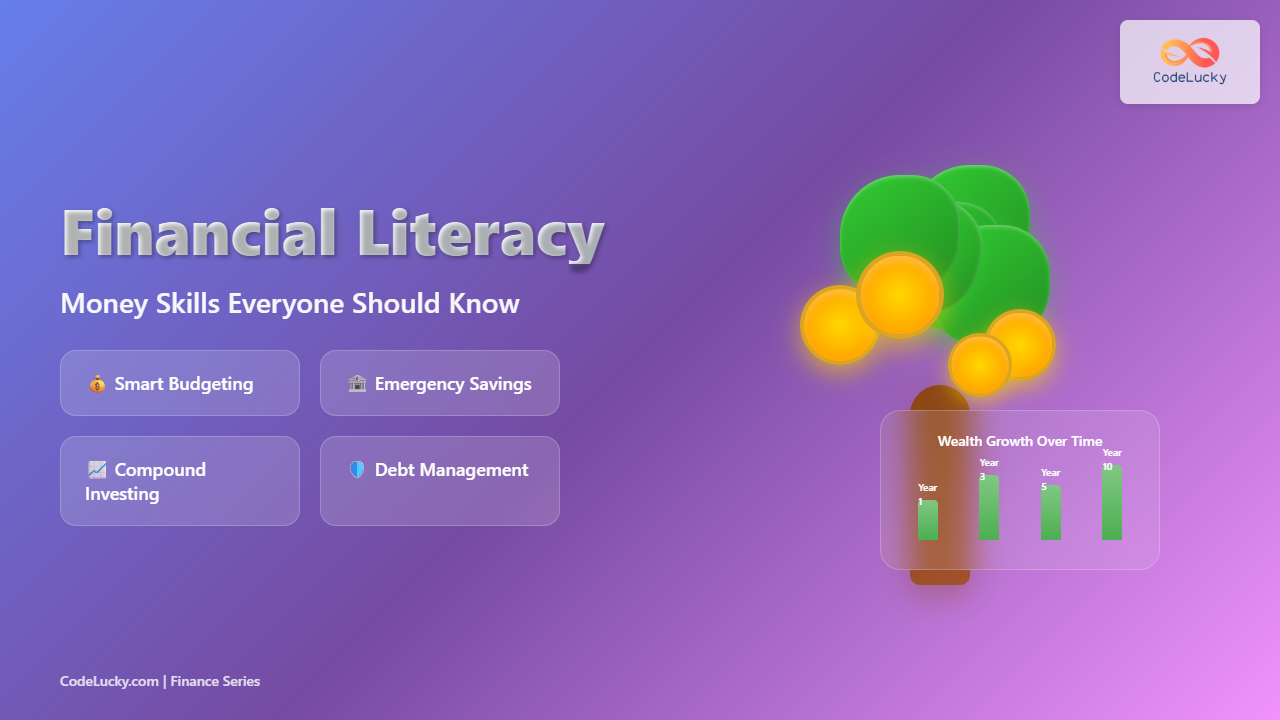
Financial Literacy is the foundation of smart money management. It’s not just about saving or earning—it’s about understanding how money works, making informed decisions, and building a sustainable financial future. Whether you’re a student, a young professional, or planning retirement, mastering essential financial skills can change your life.
1. What Is Financial Literacy?
Financial literacy means having the knowledge to manage your financial resources effectively. It covers budgeting, saving, investing, debt control, and achieving financial goals.

Each of these components contributes to your overall financial health, similar to how nutrition, exercise, and sleep sustain physical health.
2. The Importance of Being Financially Literate
- Greater Control: You make conscious choices about how to spend money rather than reacting to impulses.
- Debt Reduction: Understanding interest rates helps you avoid bad debt and manage loans wisely.
- Investment Growth: Knowledge of assets, risk, and compound interest helps your money grow.
- Emergency Preparedness: A financial buffer protects you from unexpected situations.
3. Essential Money Skills Everyone Should Know
3.1 Budgeting: Your Financial Blueprint
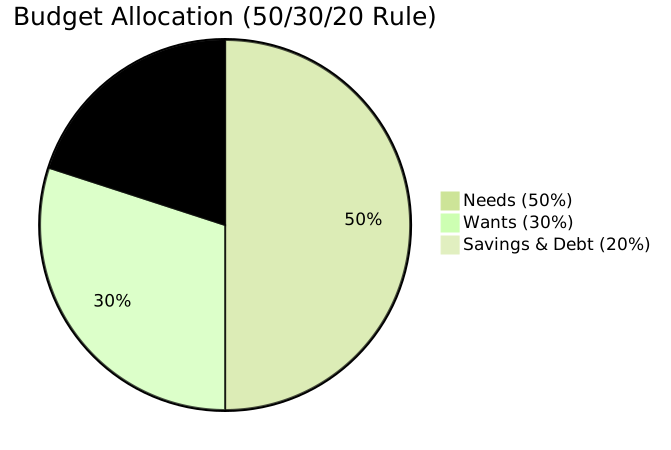
Budgeting helps you track income and expenses, ensuring you live within your means. A simple approach is the 50/30/20 rule:
- 50% for needs (rent, utilities, groceries)
- 30% for wants (entertainment, travel)
- 20% for savings and debt repayment
Interactive Idea: Create your monthly budget in a spreadsheet or budgeting app. Tracking expenses visually can reveal patterns that surprise you—like hidden subscription costs or unused services.
3.2 Saving and Emergency Funds
Saving ensures stability when income stops or expenses rise unexpectedly. It’s advisable to maintain an emergency fund with at least 3–6 months of living expenses.
Example: If your monthly expense is ₹40,000, your emergency fund should be around ₹1,20,000–₹2,40,000.
3.3 Understanding Credit and Debt
Debt isn’t inherently bad; using it well is the key. Understanding interest rates and repayment timelines helps you leverage credit wisely.
| Type of Debt | Good or Bad? | Example |
|---|---|---|
| Student Loan | Good | Improves career potential |
| Home Loan | Good | Helps build an asset |
| Credit Card Debt | Bad (if unpaid) | High interest eats savings |

3.4 Investing: Making Money Work for You
Investing allows your money to generate income or value over time. Common investment types include:
- Mutual Funds: Professional fund management spreads risk across markets.
- Stocks: Ownership in companies with potential for growth and dividends.
- Fixed Deposits: Low-risk savings with fixed returns.
- Index Funds: Diversified portfolios replicating major market indices.
The concept of compound interest is the core of wealth creation. It grows your investment exponentially as interest earns interest over time.

Example: An investment of ₹10,000 growing at 8% annually becomes ₹21,589 in 10 years—without any additional contributions.
3.5 Setting Financial Goals
Without goals, money drifts without direction. Financial goals guide your budgeting, saving, and investing decisions. Use the SMART method (Specific, Measurable, Achievable, Realistic, Time-bound).

Example: “Save ₹5 lakh in 3 years for a home down payment” is a SMART goal—clear, realistic, and trackable.
4. Building a Financially Healthy Life
Developing good money habits transforms financial literacy into financial freedom. Here are actionable steps:
- Track every transaction for 30 days to increase awareness.
- Automate savings so you save before spending.
- Pay off high-interest debt first (avalanche method).
- Regularly review investments and rebalance portfolios.
- Keep learning: follow financial podcasts, take free personal finance courses.
Financial literacy is a lifelong journey. The more you practice it, the more confident and secure you become with your money. Start small, stay consistent, and watch your knowledge build lifelong wealth.
Author’s Note: This guide is part of the Finance Series by CodeLucky.com – designed to make money management insightful, actionable, and accessible to everyone.