Financial freedom is not about making millions overnight — it’s about designing a life where money supports your goals, not controls them. In this article, we’ll explore how lifestyle design and smart money management go hand-in-hand to create independence, reduce stress, and open the door to meaningful living.
What Is Financial Freedom?
Financial freedom means being able to make choices without being constrained by finances. It’s the ability to live the lifestyle you want — whether that’s traveling the world, starting your own business, or spending more time with family — because your financial base securely supports your goals.

The Foundation: Money Mindset
Every journey to financial freedom starts with mindset. If you view money as a tool, not a measure of self-worth, you gain control over it. This shift helps you focus on managing, growing, and using money to build fulfillment rather than accumulation.
- Scarcity Mindset: “I’ll never have enough money.”
- Abundance Mindset: “Money flows through effort, value, and smart decisions.”
Shifting to an abundance mindset encourages proactive financial behaviors: saving consistently, investing early, and learning continuously.
Step 1: Build a Realistic Budget
A well-structured budget is the cornerstone of financial freedom. It helps you visualize income, expenditure, and savings goals clearly.
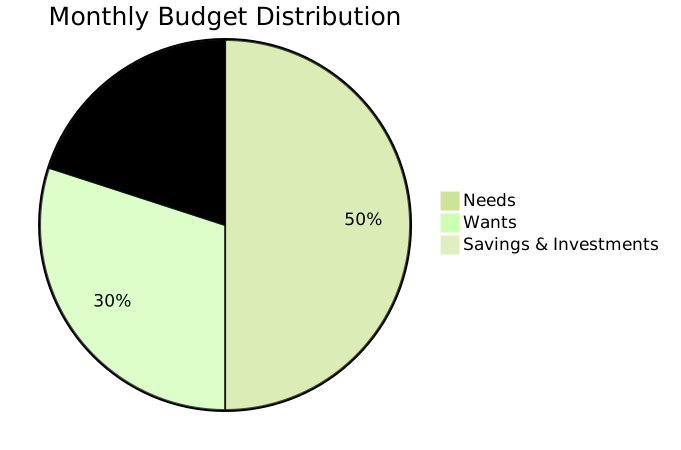
Here’s a practical example using the 50/30/20 rule:
| Category | Percentage | Example Allocation (₹100,000 Income) |
|---|---|---|
| Needs | 50% | ₹50,000 (housing, groceries, utilities) |
| Wants | 30% | ₹30,000 (entertainment, dining, travel) |
| Savings & Investments | 20% | ₹20,000 (mutual funds, emergency fund) |
Step 2: Manage Debt Intelligently
Debt can be either a stepping stone or a setback. The key is managing it strategically.
- Good Debt: Student loans or business investments that can yield higher future value.
- Bad Debt: High-interest consumer loans and credit card debts.
Follow the “Avalanche Method” to repay debt efficiently: prioritize debts with the highest interest rates first while making minimum payments on others. This method reduces total interest over time.

Step 3: Build an Emergency Fund
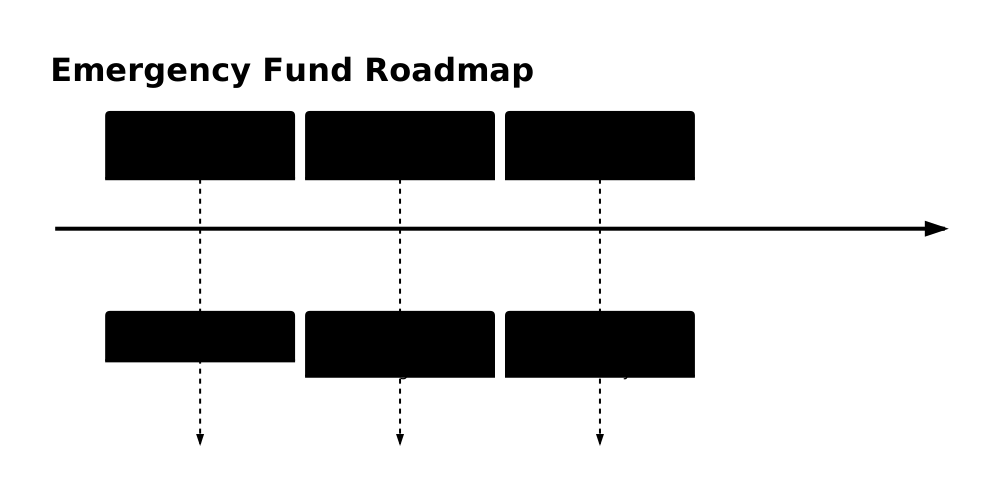
An emergency fund prevents financial shock from unexpected situations like job loss or medical expenses. The ideal goal: save 3–6 months’ worth of living expenses.
Example: If your monthly expenses are ₹40,000, aim for ₹2.4 lakhs in your emergency cushion.
Step 4: Grow Wealth Through Investments
Investing isn’t risky when done with knowledge and diversification. The earlier you start, the stronger the power of compound interest.
Let’s visualize this with an example:
- Investor A starts investing ₹10,000/month at age 25
- Investor B starts the same at age 35
At 8% annual return, Investor A retires with nearly ₹1.55 crore more than Investor B—just by investing 10 years earlier!

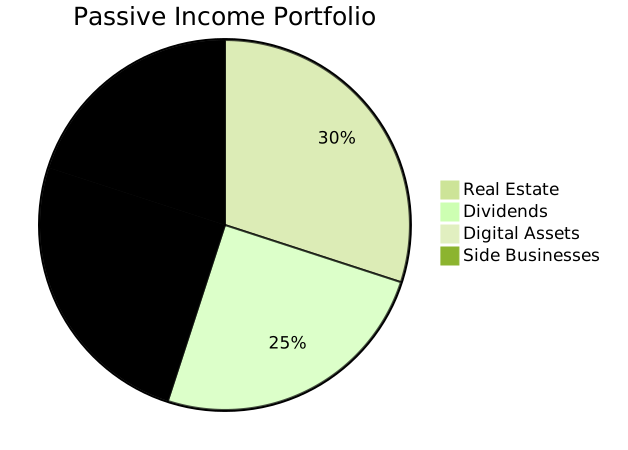
Step 5: Create Passive Income Streams
To truly design your lifestyle, aim to earn beyond your active job. Passive income streams can replace or augment your salary, leading to time freedom.
Examples of passive income:
- Dividend-paying stocks
- Peer-to-peer lending
- Digital assets (YouTube, courses, ebooks)
- Rental properties
Use this simple rule: diversify income so no single source accounts for more than 40% of your earnings.
Lifestyle Design: Money as a Tool
Once your financial foundation is stable, lifestyle design becomes creative planning. Align your spending habits with your values. Spend more on experiences or skills that enrich your quality of life, and less on impulse-driven consumption.
For example:
- Invest in online education instead of short-term trends.
- Prioritize travel experiences that broaden your perspective.
- Automate savings and investments, so financial growth happens quietly in the background.
Interactive Exercise: Find Your Freedom Number
Your Freedom Number is the amount of monthly passive income you need to cover lifestyle expenses.
Try this formula interactively:
Freedom Number = Monthly Expenses × 1.2
Example: ₹60,000 × 1.2 = ₹72,000/month
This means you’re financially free when your passive income reaches ₹72,000/month.
Conclusion
Financial freedom is not a one-time goal — it’s a lifelong practice. By budgeting wisely, managing debt, investing strategically, and building passive income, you can design a balanced, purposeful lifestyle backed by financial security. Remember, every smart financial choice today shapes a freer future tomorrow.