Derivatives: Introduction to Futures and Options — In modern finance, derivatives are the backbone of risk management and speculative trading. They derive their value from an underlying asset such as stocks, commodities, currencies, or indices. In this article, we’ll look deeply into what derivatives are, and how futures and options work, supported by examples and simple visual diagrams.
What Are Derivatives?
A derivative is a financial contract whose value depends on (or is derived from) an underlying asset. Instead of owning the asset itself, traders use derivatives to benefit from price movements or hedge against risks.
Common types of derivatives include:
- Futures – contracts to buy/sell an asset on a future date at a fixed price.
- Options – contracts giving the right, but not the obligation, to buy or sell an asset at a predetermined price.
- Swaps – agreements to exchange cash flows between two parties.
- Forwards – customized futures traded over-the-counter (OTC).
How Derivatives Work
All derivatives revolve around an underlying asset. The buyer and seller agree on specific terms such as price, quantity, and settlement date. The aim could be either to hedge risks or to speculate on price movement.

In essence, both parties’ profits or losses depend on the future price of the underlying asset.
Futures Contracts Explained
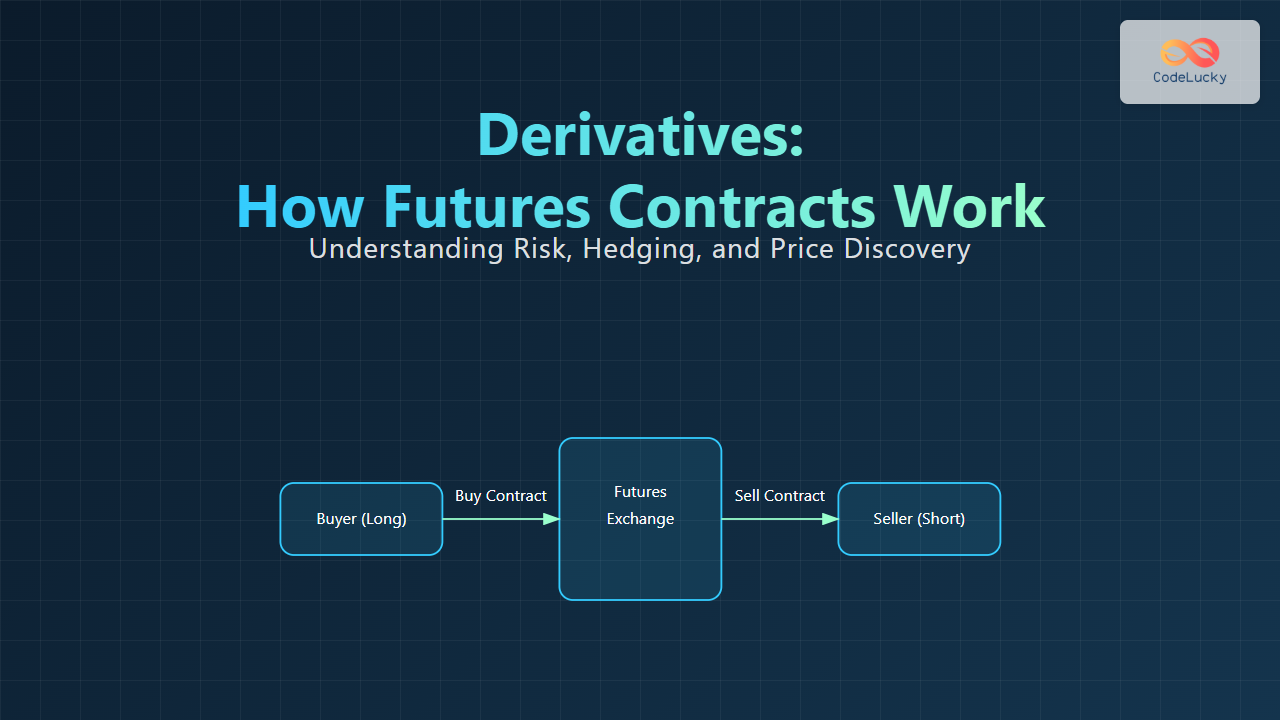
A futures contract is an agreement between two parties to buy or sell an asset at a pre-agreed price on a specific date in the future. These are standardized and traded on exchanges like the NSE or CME, ensuring transparency.
Example of a Futures Contract
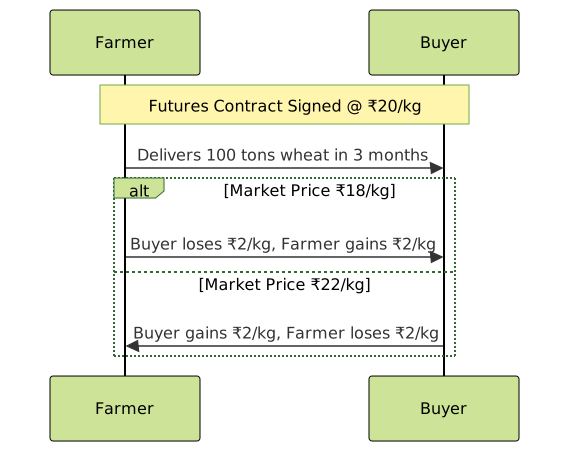
Imagine a wheat farmer expecting a harvest of 100 tons in three months. He fears prices might fall. A buyer (say, a milling company) fears prices might rise. They enter a futures contract:
- Current wheat price: ₹20/kg
- Contract price: ₹20/kg for 100 tons
- Expiry: 3 months
After 3 months:
- If market price = ₹18/kg → Farmer gains (profit) ₹2/kg because he agreed to sell at ₹20/kg.
- If market price = ₹22/kg → Buyer gains ₹2/kg as he buys cheaper under the contract.
Options Contracts Explained
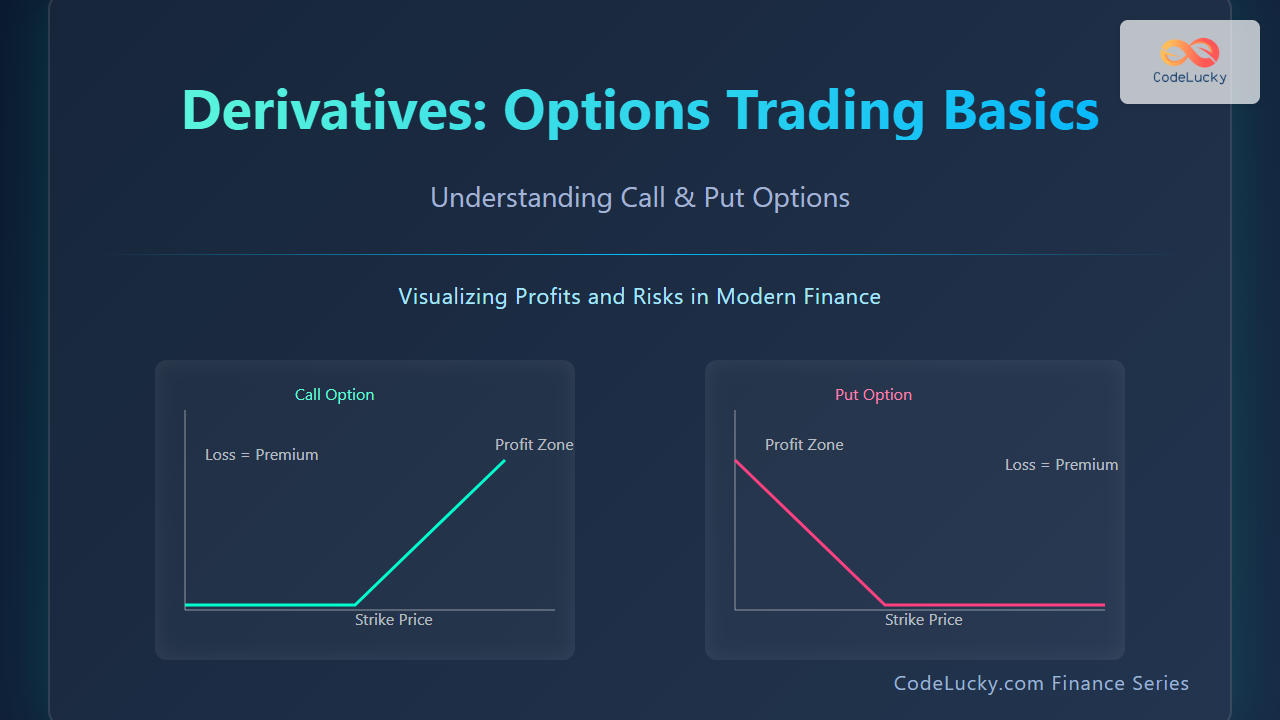
An option is a flexible derivative that gives the buyer the right, but not the obligation, to buy (in case of a call option) or to sell (in case of a put option) an asset at a specific price (called the strike price) before or on a specific date.
There are two types of options:
- Call Option: The right to buy an asset.
- Put Option: The right to sell an asset.
Example of a Call Option
Say ABC Ltd. stock trades at ₹100. An investor buys a call option giving them the right to purchase at ₹105 within 1 month. The cost of the option (premium) is ₹5 per share.
- If stock rises to ₹120 → Investor can buy at ₹105, profit = ₹15 – ₹5 = ₹10 per share.
- If stock stays below ₹105 → Option expires worthless, loss = ₹5 (the premium).

Example of a Put Option
An investor holds shares of XYZ trading at ₹200 and fears a decline. To hedge, they buy a put option allowing them to sell at ₹190 with a ₹5 premium.
- If price drops to ₹170 → They can still sell at ₹190, profit = ₹20 – ₹5 = ₹15.
- If price remains above ₹190 → Option expires worthless, loss = ₹5.

Key Differences Between Futures and Options
| Feature | Futures | Options |
|---|---|---|
| Nature of Contract | Obligation to buy/sell | Right but no obligation |
| Premium Payment | No upfront premium | Buyer pays premium upfront |
| Risk Exposure | Unlimited (both parties) | Limited (for buyer, premium only) |
| Trade Type | Used for hedging and speculation | Ideal for hedging and leverage |
Why Use Derivatives?
Derivatives are powerful tools that serve various purposes:
- Hedging: Protecting against price fluctuations (e.g., farmers, exporters).
- Speculation: Traders profit from expected market moves with limited capital.
- Arbitrage: Exploiting price discrepancies across markets.
Interactive Example: Profit/Loss Calculator (Conceptual)
To visualize gains or losses, imagine adjusting the market price slider below (conceptually, for implementation on CodeLucky’s website) to instantly see profits or losses for futures and options positions:
// Simplified pseudocode concept for interactivity
if (position == "futures") {
  profit = (marketPrice - contractPrice) * quantity;
} else if (position == "call") {
  profit = max(0, marketPrice - strikePrice) - premium;
} else if (position == "put") {
  profit = max(0, strikePrice - marketPrice) - premium;
}
Conclusion
Understanding futures and options is vital for both beginners and experienced investors. They offer immense flexibility to manage risk and boost profits, but come with their share of risk if used without proper understanding. Whether you choose to hedge your portfolio or speculate on price movement, mastering these derivatives can turn you into a more confident, informed market participant.
Author: The Finance Writing Team at CodeLucky.com – simplifying complex market concepts one topic at a time.